
Khaled Nazzal: DFLP Leader Assassinated by the Mossad in Athens, 1986
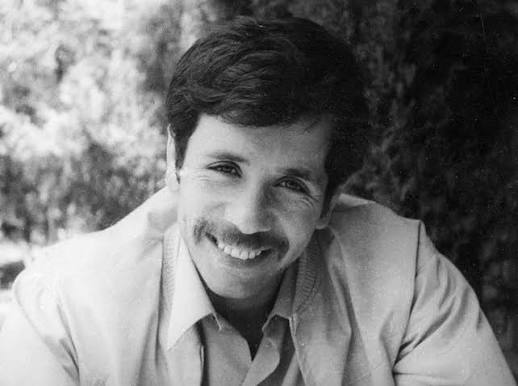
Khaled Nazzal (1948–1986) was a Palestinian leader from Qabatiya near Jenin, a founding leader of the Democratic Front for the Liberation of Palestine (DFLP) and secretary of its Central Committee, and a colonel in the Palestinian revolution’s forces commanding the “Internal Support Forces.” The Israeli Mossad assassinated him in the Greek capital, Athens, on 9 June 1986, and more than thirty years later the occupation was still pursuing his name, demolishing his memorial in Jenin. [1] [2] [3]
This article is part of the series “Assassinated leaders of the Palestinian revolution,” alongside the articles on Majed Abu Sharar, Abu Ali Mustafa and the Limassol martyrs.
Who was Khaled Nazzal?
Khaled Nazzal was a military and political leader of the Democratic Front for the Liberation of Palestine; his 1986 memorial poster called him “overall military chief of the DFLP in both the occupied homeland and the diaspora” [4]. He led the Front in the West Bank, then directed armed resistance from abroad, openly and secretly, until the Mossad killed him in Athens [2]. Writer Wisam Zaghbar calls him “Palestine’s oak,” with a militant record that was “clean and honourable” [3].
Khaled Nazzal at a glance
| Item | Details |
|---|---|
| Name | Khaled Ahmad Nazzal [1] |
| Born | 1948, Qabatiya, Jenin district [1] [2] |
| Education | Schools in Qabatiya, then Palestine Technical College “Kadoorie” in Tulkarm [1] |
| Organisation | Founding leader of the Democratic Front for the Liberation of Palestine and secretary of its Central Committee [1] [3] |
| Rank and role | Colonel in the Palestinian revolution’s forces; commander of the “Internal Support Forces” [1] [3] |
| Family | Father Hajj Ahmad Nazzal, a fighter in the 1936 revolt; wife Rima Kittaneh Nazzal [1] [2] |
| Assassinated | 9 June 1986, Athens, by the Mossad [1] [5] [6] |
| Wake | Yarmouk camp, Damascus, June 1986 [5] [7] |
Timeline
| Year | Event |
|---|---|
| 1948 | Born in Qabatiya, the year of the Nakba [1] [2] |
| 1960s | Studies in Qabatiya schools, then at Kadoorie College in Tulkarm [1] |
| After 1967 | Leads the DFLP in the West Bank, then leaves the homeland secretly after a year on the run [2] |
| 1969 | Among the founding leaders of the Democratic Front for the Liberation of Palestine [1] |
| 1982 | Fights the Israeli invasion of Lebanon [1] |
| 1980s | Takes part in battles to defend the camps in Lebanon [1] |
| 1986 | Assassinated in Athens on 9 June; wake held in Yarmouk camp [1] [5] |
| 2017 | A memorial to him is built in Jenin and demolished twice after Israeli incitement [2] |
Son of Qabatiya and of a 1936 rebel
Khaled Nazzal was born in 1948, the year of the Nakba, in the town of Qabatiya south of Jenin, into a family of fighters [1] [2]. His father, Hajj Ahmad Nazzal, fought in the 1936 revolt alongside Sheikh Izz al-Din al-Qassam [2] [1]. He went to primary and preparatory school in Qabatiya, then enrolled at Palestine Technical College “Kadoorie” in Tulkarm [1].
The Democratic Front and life on the run
Khaled Nazzal was a founding leader of the Democratic Front for the Liberation of Palestine and became secretary of its Central Committee [1]. After the occupation of the West Bank in 1967 he led the Front there; the occupation authorities arrested and deported his wife and siblings and hunted him for a whole year until he left the homeland secretly [2].
Israel holds him responsible for the Tarshiha (Ma’alot) operation of May 1974 and says he headed the “Revolutionary Armed Forces,” the Front’s military wing [3].
In Lebanon: the Internal Support Forces
In Lebanon Khaled Nazzal held the rank of colonel in the Palestinian revolution’s forces and commanded the “Internal Support Forces,” which supported resistance work in the occupied land [1] [3]. He fought the 1982 Israeli invasion of Lebanon and took part in the battles to defend the Palestinian camps [1].
The assassination of Khaled Nazzal: Athens, 9 June 1986
On 9 June 1986 the Israeli Mossad assassinated Khaled Nazzal in the Greek capital, Athens [1] [5]; Israeli agents shot him dead [6]. Al Jazeera’s encyclopedia says he was gunned down at a hotel entrance by two gunmen on a motorcycle [8].
His wife Rima Nazzal says Israel never removed his name from its target lists [2]. His killing was one link in the chain of extrajudicial executions the Mossad carried out against Palestinian leaders in European capitals, from the Mossad assassinations in Europe in the 1970s to Majed Abu Sharar in Rome in 1981, then Munther Abu Ghazaleh in Athens itself just four and a half months later, and on to the Limassol martyrs in 1988.
The wake in Yarmouk camp
His wake was held at the Arab Club in Yarmouk camp in Damascus, where the DFLP’s Secretary-General and Political Bureau members received mourners [5]. Palestinian and Arab delegations came, among them a Popular Front delegation that included Abu Ali Mustafa, as well as delegations from Arab embassies and Syrian parties [7] [1].
The Palestinian Museum Digital Archive holds the Shaheed Khaled Nazzal Collection, with photographs of the funeral and wake, news clippings, obituary statements and condolence telegrams, as related by his wife Rima Nazzal [1].
The memorial that troubles the occupation: Jenin 2017
In mid-June 2017, on the 31st anniversary of his assassination, a memorial to Khaled Nazzal covering more than a hundred square metres was built on Haifa Street in west Jenin, centred on an olive tree brought with its stones from Qabatiya and funded by the family at about $20,000 [2] [3].
Israeli Prime Minister Benjamin Netanyahu quickly attacked the memorial and demanded the Palestinians remove it, claiming it “glorifies terrorism” [2]. It was removed under pressure, then rebuilt; occupation forces demolished it during a raid on Jenin, and his comrades rebuilt it a third time [2]. The DFLP’s Jenin official Jamal Mahamid said: “Every time the monument is removed, we will rebuild it” [2].
Rima Nazzal, a member of the Palestine National Council, called the Israeli demand unjust and urged the Palestinian leadership to reject it, warning against undermining the Palestinian narrative, while Fatah declared that “martyrs will remain red lines that cannot be crossed, whatever the cost” [2].
Legacy and testimonies
The title of Wisam Zaghbar’s article sums up Khaled Nazzal’s story: “a name that haunts the occupation in life and death” [3]. The occupation that killed him in Athens came back three decades later to pursue an olive tree and stones from Qabatiya bearing his name [2]. His wife Rima Nazzal, an activist in the Palestinian women’s movement, still carries his memory and keeps his archive [1] [2].
Video
Conclusion
Born in the year of the Nakba to a father who fought in the 1936 revolt, Khaled Nazzal lived on the run from Qabatiya to Beirut until the Mossad followed him to Athens. Thirty years later, the occupation could not tolerate even a memorial of Qabatiya stone bearing his name.
Also in this series: Majed Abu Sharar, Munther Abu Ghazaleh, the Limassol martyrs.
Frequently asked questions about Khaled Nazzal
Who was Khaled Nazzal?
A Palestinian leader from Qabatiya, a founder of the Democratic Front for the Liberation of Palestine and secretary of its Central Committee, and commander of the “Internal Support Forces.”
When was Khaled Nazzal assassinated?
On 9 June 1986.
Where was Khaled Nazzal assassinated?
In the Greek capital, Athens.
Who killed Khaled Nazzal?
The Israeli Mossad.
Who is Khaled Nazzal’s wife?
Rima Kittaneh Nazzal, a Palestinian activist and member of the Palestine National Council.
What is the story of the Khaled Nazzal memorial in Jenin?
A memorial built in 2017 on Haifa Street in Jenin; Netanyahu attacked it and demanded its removal, it was removed and demolished twice, and his comrades rebuilt it.
Where was Khaled Nazzal’s wake held?
At the Arab Club in Yarmouk camp in Damascus, in June 1986.
Sources and references
Arabic-language sources are listed with translated titles.
- “The Shaheed Khaled Nazzal Collection,” Palestinian Museum Digital Archive.
- Atef Daghlas, “Khaled Nazzal: The Monument Standing Firm Against Israeli Incitement,” Al Jazeera Net, 8 July 2017.
- Wisam Zaghbar, “The Martyr Khaled Nazzal: A Name That Haunts the Occupation in Life and Death,” Tellskuf, June 2017.
- “Martyr / Leader / General / Khaled Nazzal” poster, 1986, Palestine Poster Project Archives.
- “Shahid Khaled Nazzal’s Wake at Yarmouk Refugee Camp, June 1986,” Palestinian Museum Digital Archive.
- “Israel’s History of Assassinating Palestinian Leaders,” Institute for Middle East Understanding (IMEU).
- “A Delegation from the Popular Front for the Liberation of Palestine at Shahid Khaled Nazzal’s Wake, Yarmouk Refugee Camp, June 1986,” Palestinian Museum Digital Archive.
- “Israeli Assassinations: From Lord Moyne to Omar al-Nayef,” Al Jazeera Encyclopedia, 29 February 2016.
More from the archive
 Article
The Ma'alot–Tarshiha Operation 1974 | DFLP Fedayeen on the Nakba Anniversary on Tarshiha's Depopulated Land
 Article
Operation Dispelled Illusion 2006: The Kerem Shalom Tunnel and Shalit's Capture to the Wafa al-Ahrar Exchange
 Article
The Zuqaq al-Mawt Operation 2002: The al-Quds Brigades' Ambush in Wadi al-Nasara, Hebron
 Download Our Palestine App
The whole archive in the palm of your hand: depopulated villages, the Nakba, the massacres and Al-Aqsa — free, with no ads to erase the story.



Comments
No comments yet — be the first to write one.
Add your comment
Name and email are optional. Comments appear after review.