
Munther Abu Ghazaleh: PLO Naval Commander Killed in Athens, 1986
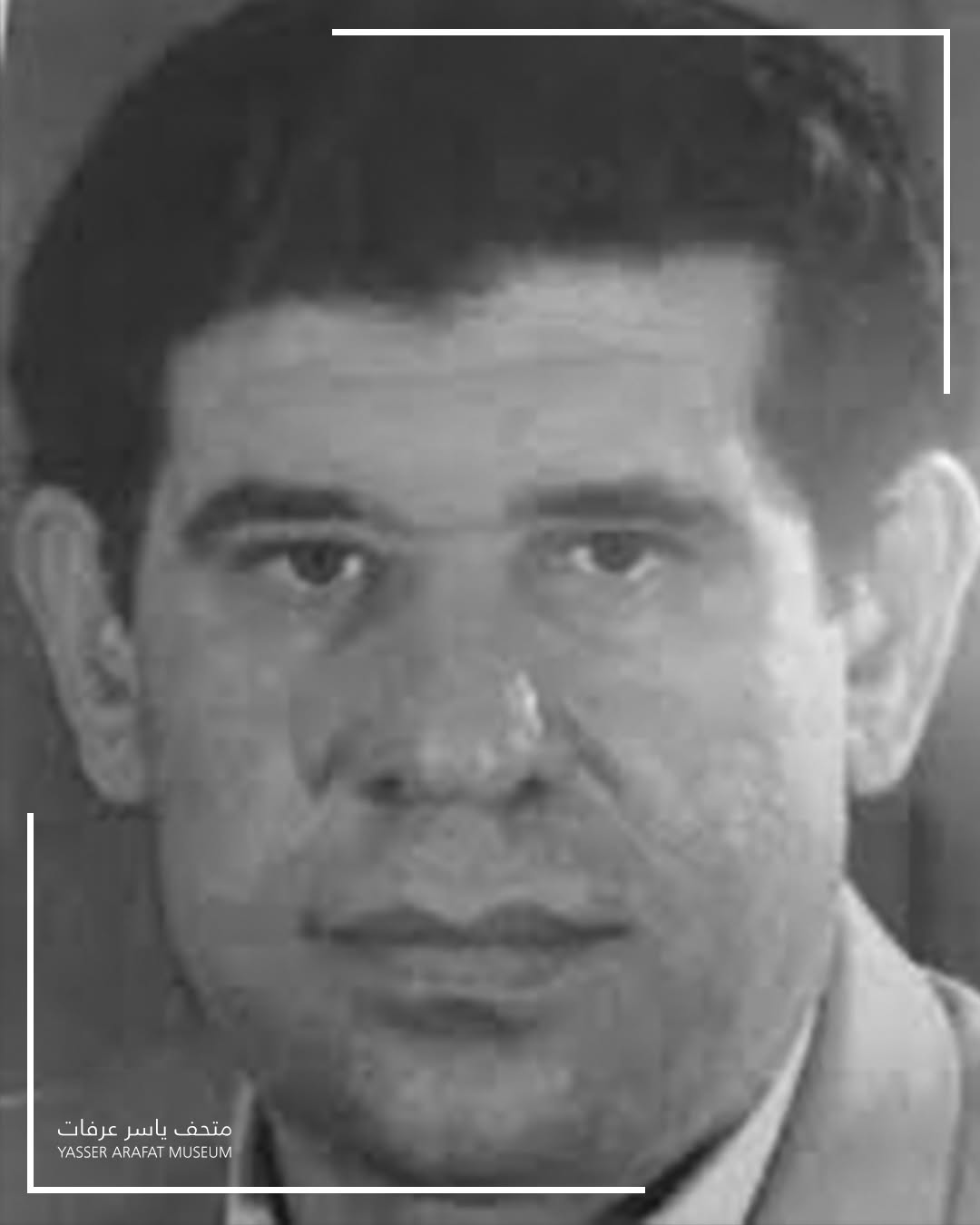
Munther Abu Ghazaleh (1944–1986), “Abu Mazen,” was a Palestinian commander from Gaza City, a brigadier in the Palestinian revolution’s forces and commander of the Palestinian naval forces, and a member of Fatah’s Revolutionary Council and Military Council and of the Palestine National Council. He was killed by a bomb planted in his car in the Greek capital, Athens, in the early hours of 21 October 1986, four and a half months after Khaled Nazzal was assassinated in the same city. [1] [2] [3]
This article is part of the series “Assassinated leaders of the Palestinian revolution,” alongside the articles on Khaled Nazzal, Mamoun Mreish and the Limassol martyrs.
Who was Munther Abu Ghazaleh?
Munther Abu Ghazaleh was one of Fatah’s military commanders; he built and led the Palestinian naval forces for more than a decade and rebuilt them after the departure from Beirut [1] [4]. His comrade Maj. Gen. Arabi Kaloub describes him as a steadfast and sincere commander who sacrificed for the right of return, self-determination and a Palestinian state [4].
Munther Abu Ghazaleh at a glance
| Item | Details |
|---|---|
| Name | Munther Jawdat Tawfiq Abu Ghazaleh, “Abu Mazen” [4] |
| Born | 1944, Gaza City [1] [4] |
| Education | Schools in Gaza, then pharmacy studies in Algeria [1] [4] |
| Organisation | Fatah, from 1965 [1] [4] |
| Rank and role | Brigadier; commander of the Palestinian naval forces from 1975 [1] [2] |
| Memberships | Fatah Military Council, Fatah Revolutionary Council, Palestine National Council [1] [2] |
| Assassinated | 21 October 1986, car bomb in Athens [1] [2] [3] |
| Buried | Amman, 23 October 1986 [1] [4] |
Timeline
| Year | Event |
|---|---|
| 1944 | Born in Gaza City [1] |
| 1965 | Joins Fatah [1] [4] |
| 1967 | His brother Mazen is killed at the battle of Tubas; he leaves his studies in Algeria and commands the Nablus area [1] [4] |
| 1970–1974 | Commands Maysaloun camp, then the Tartus training camp [1] |
| 1971 | Fedayeen commanders’ course in Moscow [1] |
| 1974 | Commander of the north Lebanon region [1] |
| 1975 | Commander of the Palestinian naval forces (formerly the Coastal Sector) [1] [4] |
| 1982–1983 | Moves the naval forces to Hodeidah, Yemen, after the departures from Beirut and Tripoli [1] |
| 21 October 1986 | Assassinated by a car bomb in Athens [1] [2] |
| 23 October 1986 | Buried in Amman [1] |
A son of Gaza
Munther Jawdat Tawfiq Abu Ghazaleh was born in 1944 in Gaza City to a family known for its patriotism, which gave many martyrs [1] [4]. He attended Imam al-Shafi’i primary school, Yarmouk preparatory school and Palestine Secondary School in Gaza [1] [4].
The Palestinian Museum Digital Archive holds a family photograph from the early 1960s showing Munther among relatives from the Abu Ghazaleh family in Gaza; its caption identifies him as “Commander of the Navy in Beirut” [5].
From pharmacy to the fedayeen
Munther Abu Ghazaleh applied to the Egyptian Military Academy but was not accepted, so he went to Algeria to study pharmacy, and joined Fatah there in 1965 [1] [4]. After the 1967 defeat, in which his younger brother Mazen was killed at the battle of Tubas, he left his studies to devote himself to military work, entered the occupied territories and took command of the Nablus area [1] [4].
He went on to command Maysaloun camp and the Tartus training camp (1970–1974), attended a fedayeen commanders’ course in Moscow in 1971, and was appointed commander of the north Lebanon region in 1974 [1] [4].
Commander of the Palestinian navy
In 1975 Munther Abu Ghazaleh was appointed commander of the Palestinian naval forces, previously known as the “Coastal Sector” [1] [4]. During the Lebanese civil war he moved its headquarters from Latakia to Tripoli [1] [4]. He was a member of Fatah’s Military Council and Revolutionary Council and of the Palestine National Council [1] [2].
From Beirut and Tripoli to Hodeidah
After the revolution’s forces left Beirut in 1982 and Tripoli in 1983, the naval forces moved to the port of Hodeidah in Yemen, where Munther Abu Ghazaleh retrained and rebuilt its officers and personnel [1] [4].
The assassination of Munther Abu Ghazaleh: Athens, 21 October 1986
Munther Abu Ghazaleh visited Greece more than four times in 1986 on a mission assigned by the leadership, meeting friends who were ship captains and boat owners with a view to buying boats [4] [1]. His last visit began about thirty days before his death; he stayed in a furnished flat previously used by the bodyguard of Fouad al-Bitar, director of the PLO office in Athens – a flat Arabi Kaloub describes as known and exposed [4] [1].
At about 2:15 a.m. on Tuesday 21 October 1986, a bomb exploded in his car in Athens, killing him instantly [1] [4]. Investigations indicate the device was placed under the passenger seat and detonated by remote control, and attribute the killing to Mossad agents [1] [4]. The international press reported that a car bomb in Athens had killed a high-ranking PLO official [3].
On 23 October 1986 his body was flown from Athens to Amman and buried there, where his family lives [1] [4]. He left a wife and three children: Mazen, Mu’taz and Rula [1] [4].
Part of an assassination campaign
Abu Jihad said the killing of Munther Abu Ghazaleh was “part of the assassination plan” targeting the revolution’s cadres in Athens and Rome, including Mamoun Mreish, Ismail Darwish and Khaled Nazzal, and that the will of the fighters was stronger than the enemy’s crimes and assassinations [1] [4].
The 1980s saw an escalation of Israel’s extrajudicial executions of Palestinian leaders in European capitals, continuing the Mossad assassinations in Europe of the 1970s: Khaled Nazzal in Athens in June 1986, Munther Abu Ghazaleh in the same city in October, then the Limassol martyrs in 1988, followed two months later by Abu Jihad himself in Tunis.
Legacy
Arabi Kaloub writes: “Munther’s heroism will remain immortal in the record of the Palestinian national struggle” [1]. Al Jazeera’s encyclopedia lists his killing in its record of Israeli assassinations, describing him as commander of the Palestinian navy and a member of Fatah’s Revolutionary Council and the PLO’s Military Council [2].
Video
Conclusion
From the schools of Gaza to the hills of Nablus, from the ports of Latakia and Tripoli to Hodeidah, Munther Abu Ghazaleh carried the dream of a Palestinian navy that would one day reach the homeland’s shores, until a Mossad bomb stopped him in the streets of Athens.
Also in this series: Khaled Nazzal, Mamoun Mreish, the Limassol martyrs.
Frequently asked questions about Munther Abu Ghazaleh
Who was Munther Abu Ghazaleh?
A Palestinian commander from Gaza, a brigadier and commander of the Palestinian naval forces, and a member of Fatah’s Revolutionary Council.
When was Munther Abu Ghazaleh assassinated?
In the early hours of 21 October 1986.
Where was Munther Abu Ghazaleh assassinated?
In the Greek capital, Athens.
How was Munther Abu Ghazaleh killed?
By a bomb planted in his car and detonated by remote control.
Who killed Munther Abu Ghazaleh?
Palestinian sources attribute the killing to the Israeli Mossad.
Where is Munther Abu Ghazaleh buried?
In Amman, where his family lives.
How is his killing linked to that of Khaled Nazzal?
Both were assassinated in Athens in 1986 – Khaled Nazzal in June and Munther Abu Ghazaleh in October – in an Israeli assassination campaign against Palestinian leaders in Europe.
Sources and references
Arabic-language sources are listed with translated titles.
- Maj. Gen. Arabi Kaloub, “The Martyr Brigadier Munther Abu Ghazaleh,” Thakirat Watan, 24 May 2019.
- “Israeli Assassinations: From Lord Moyne to Omar al-Nayef,” Al Jazeera Encyclopedia, 29 February 2016.
- “Wednesday, October 22, 1986,” Palestine Chronology, Institute for Palestine Studies.
- Maj. Gen. Arabi Kaloub, “The Martyr Brigadier Munther Jawdat Tawfiq Abu Ghazaleh,” Donia al-Watan, 21 October 2014.
- “Relatives of Abu Ghazaleh Family from Gaza” (1960–1965), Palestinian Museum Digital Archive.
More from the archive
 Article
The Ma'alot–Tarshiha Operation 1974 | DFLP Fedayeen on the Nakba Anniversary on Tarshiha's Depopulated Land
 Article
Operation Dispelled Illusion 2006: The Kerem Shalom Tunnel and Shalit's Capture to the Wafa al-Ahrar Exchange
 Article
The Zuqaq al-Mawt Operation 2002: The al-Quds Brigades' Ambush in Wadi al-Nasara, Hebron
 Download Our Palestine App
The whole archive in the palm of your hand: depopulated villages, the Nakba, the massacres and Al-Aqsa — free, with no ads to erase the story.



Comments
No comments yet — be the first to write one.
Add your comment
Name and email are optional. Comments appear after review.