
Izz al-Din al-Qalaq: The PLO's Paris Envoy, Killed in 1978
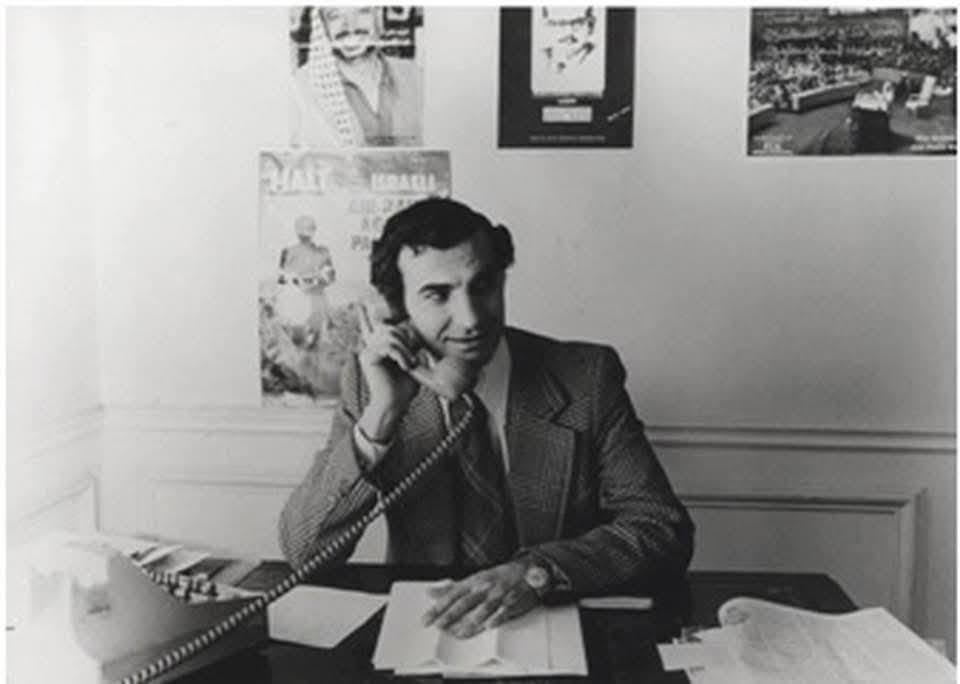
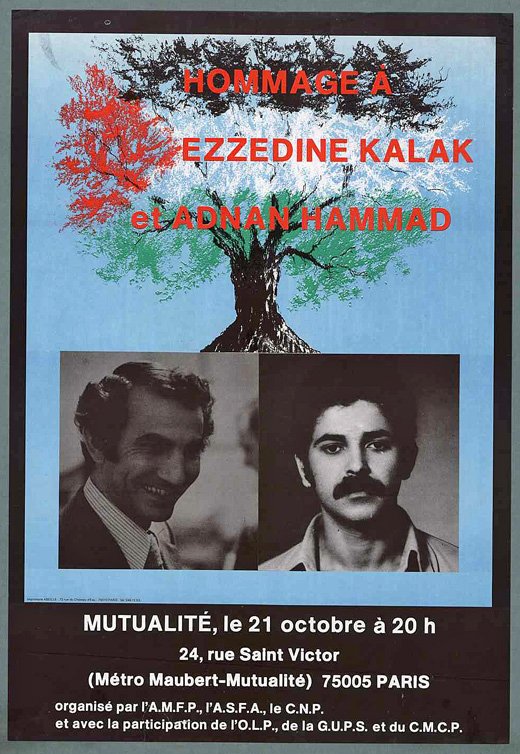
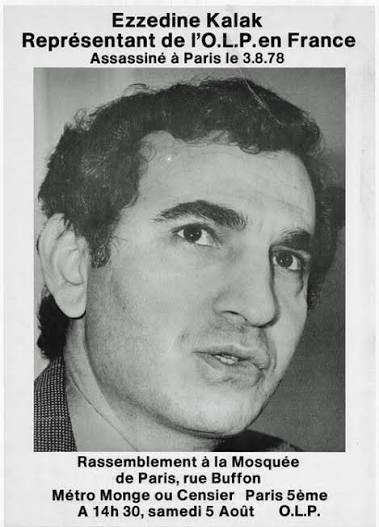
Dr. Izz al-Din al-Qalaq (1936–1978) was a Palestinian diplomat and writer from Haifa, from which Zionist militias drove his family in 1948, and a physical chemist. He succeeded the martyr Mahmoud al-Hamshari as the Palestine Liberation Organisation’s representative in France in 1973 and built wide bridges with French society, until he was shot dead with his assistant Adnan Hammad in the PLO office in Paris on 3 August 1978. [1] [2]
This article is part of the series “Leaders of the Palestinian Revolution Who Were Assassinated,” alongside the articles on Mahmoud al-Hamshari, Said Hammami and Issam Sartawi.
Who was Izz al-Din al-Qalaq?
Izz al-Din al-Qalaq was one of the pioneers of Palestinian cultural diplomacy in Europe: a chemist, short-story writer and collector of Palestine’s visual memory who carried the cause to French parties, unions, intellectuals and journalists [2] [1]. He took up Palestine’s representation in Paris months after the Mossad assassinated his predecessor Mahmoud al-Hamshari, only to fall himself in the same city five years later [1] [2].
Izz al-Din al-Qalaq at a glance
| Item | Details |
|---|---|
| Name | Izz al-Din Muhammad Said al-Qalaq (Ezzedine Kalak) [2] |
| Born | 1936, Haifa; family took refuge in Damascus in 1948 [1] [2] |
| Education | Science degree, University of Damascus (1963); PhD in physical chemistry, University of Poitiers (1969) [1] [2] |
| Union | Head of the French branch of the General Union of Palestinian Students (1969) [1] [2] |
| Post | PLO representative in France from September 1973 [1] [2] |
| Assassinated | 3 August 1978, PLO office in Paris, with his assistant Adnan Hammad [2] [1] |
| Buried | Martyrs’ Cemetery, Damascus [1] [2] |
Timeline
| Date | Event |
|---|---|
| 1936 | Born in Haifa [1] [2] |
| 1948 | Family takes refuge in Damascus [1] [2] |
| 1959–1961 | Imprisoned in Mezzeh over his party membership [2] |
| 1963 | Graduates from the University of Damascus [2] [1] |
| 1965 | Moves to France [1] |
| 1969 | PhD from Poitiers; heads the Palestinian students’ union in France [1] [2] |
| 1 September 1973 | Begins work as PLO representative in France [1] [2] |
| 1975 | Official PLO information and liaison office opens in Paris [2] |
| Early 1978 | First Palestinian official formally invited to the Élysée [1] [2] |
| 3 August 1978 | Assassinated in Paris [1] [2] |
| March 1980 | The two killers sentenced to 15 years [2] |
From Haifa to Damascus
Izz al-Din al-Qalaq was born in Haifa in 1936, the year of the Great Revolt; his father, Muhammad Said, a follower of Izz al-Din al-Qassam, named him after the martyred sheikh [1] [2]. In 1948 the family was forced to leave Haifa, fleeing the terror of the Zionist militias, and took refuge in Damascus [1].
He studied at the Ibn Khaldun school and al-Maydan secondary school in Damascus, then at the Faculty of Science of the University of Damascus [1] [2]. As a student he joined the Syrian Communist Party and was imprisoned in Mezzeh from 1959 to 1961; he graduated in 1963 with a degree in mathematics, physics and chemistry [2] [1]. He then taught science for two years at al-Yamama secondary school in Riyadh [1] [2].
Scientist and student in France
In 1965 al-Qalaq moved to France, studied French and in 1969 earned a doctorate in physical chemistry from the Faculty of Science at the University of Poitiers [1] [2]. He worked at Radio Monte Carlo translating and preparing news bulletins [1] [2].
In France he joined Fatah and in 1969 was elected head of the French branch of the General Union of Palestinian Students, working alongside the PLO representative Mahmoud al-Hamshari [2] [1]. In 1970 he helped found a committee in support of the Palestinian struggle, wrote for the magazine “Fedai,” and toured French cities giving lectures and organising seminars, drawing the attention of pro-Israel circles [2].
Palestine’s representative in Paris
After the Mossad assassinated Mahmoud al-Hamshari, Palestinian students and workers in France chose al-Qalaq as his successor before the PLO formally appointed him, and he began work as its representative on 1 September 1973 [1] [2]. In 1975, after France approved an official PLO information and liaison office, he set it up at the Arab League mission on Boulevard Haussmann in Paris [2].
Al-Qalaq built wide ties with French left-wing and democratic parties, unions, intellectuals and journalists [2]. He represented the PLO at the Inter-Parliamentary Union conference in Madrid, where he met King Juan Carlos, paving the way for an official PLO office in Madrid [2] [1]. In early 1978 he became the first Palestinian official formally invited to the Élysée Palace, for a dinner President Giscard d’Estaing gave for Saudi King Khalid [2] [1]. He was also the first to back a Palestinian woman, Leila Shahid, for the presidency of the students’ union in France; she later became Palestine’s ambassador in Paris [1].
Writer and keeper of memory
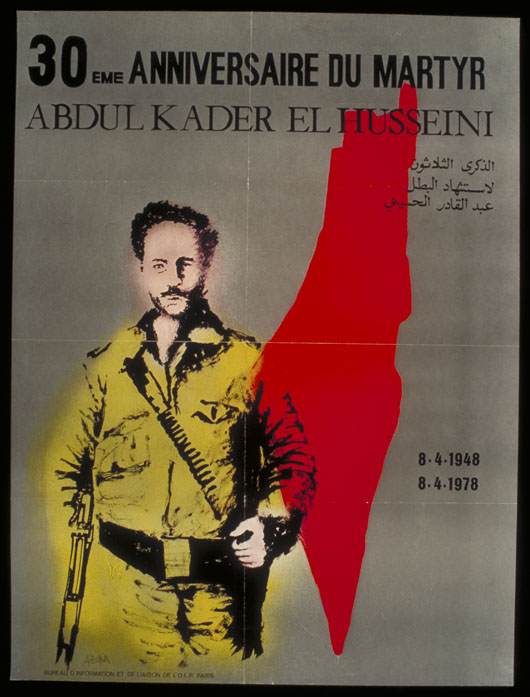
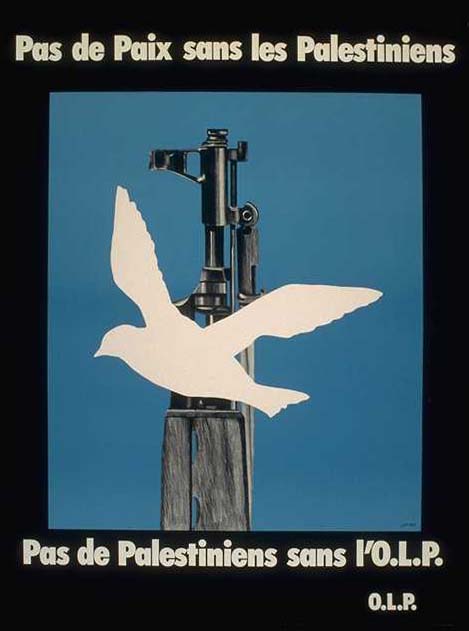
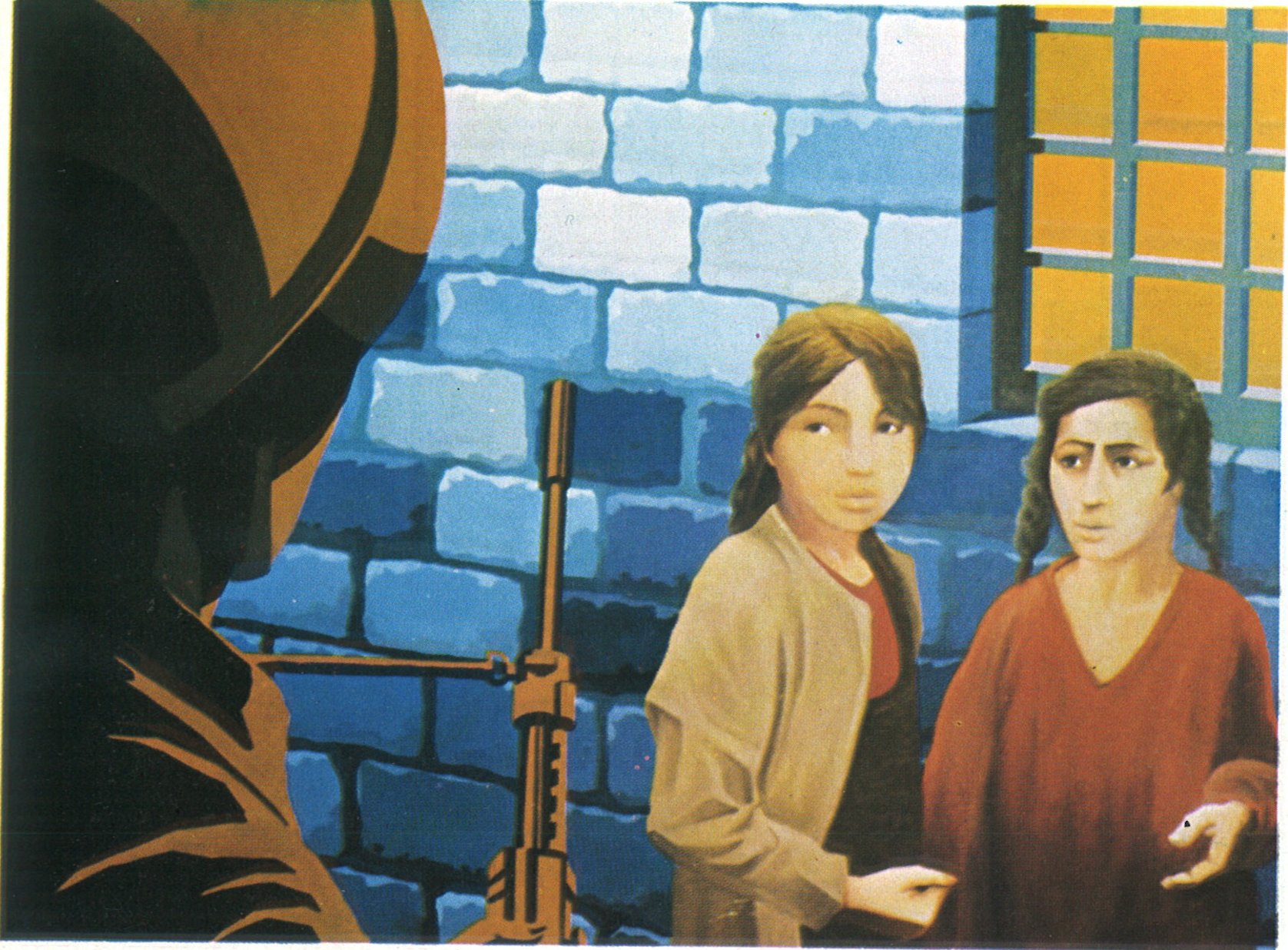
Al-Qalaq wrote short stories from the age of twenty, was a member of the “Wahy al-Qalam” literary league, published his stories in Syrian newspapers and translated American and Chinese stories [1] [2]. He collected Palestinian postcards from the early twentieth century and the largest collection of Palestinian posters, and founded a Palestinian cinema section at the PLO office in Paris [1] [2].
Published after his death were his short-story collection “Martyrs Without Statues” (Beirut, 1978), “The Palestinian Poster” (Beirut, 1979) and “Palestine: Postcards” (Cairo, 1980) [2].
The assassination of Izz al-Din al-Qalaq
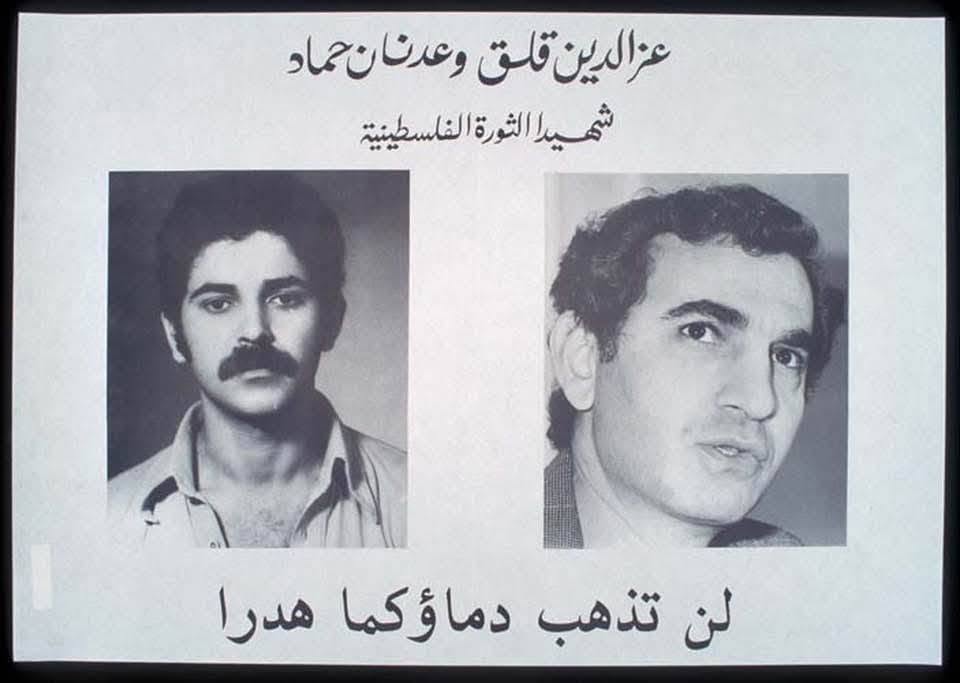
On 3 August 1978 Izz al-Din al-Qalaq and his assistant Adnan Hammad were shot dead in the PLO office in Paris [2] [1]. The PLO officially accused the “Fatah – Revolutionary Council” group led by Sabri al-Banna “Abu Nidal,” describing it as a splinter from Fatah “infiltrated by the Mossad” [1] [2]. The same group had been accused of killing Said Hammami in London seven months earlier [3].
French police arrested the two young men accused; in March 1980 they were sentenced to 15 years in prison but were released after serving half the term [2]. The French Foreign Ministry issued an official statement condemning the killing, saying he had “always worked to build a constructive dialogue with the French authorities” [2] [1].
From the Paris Mosque to the Martyrs’ Cemetery
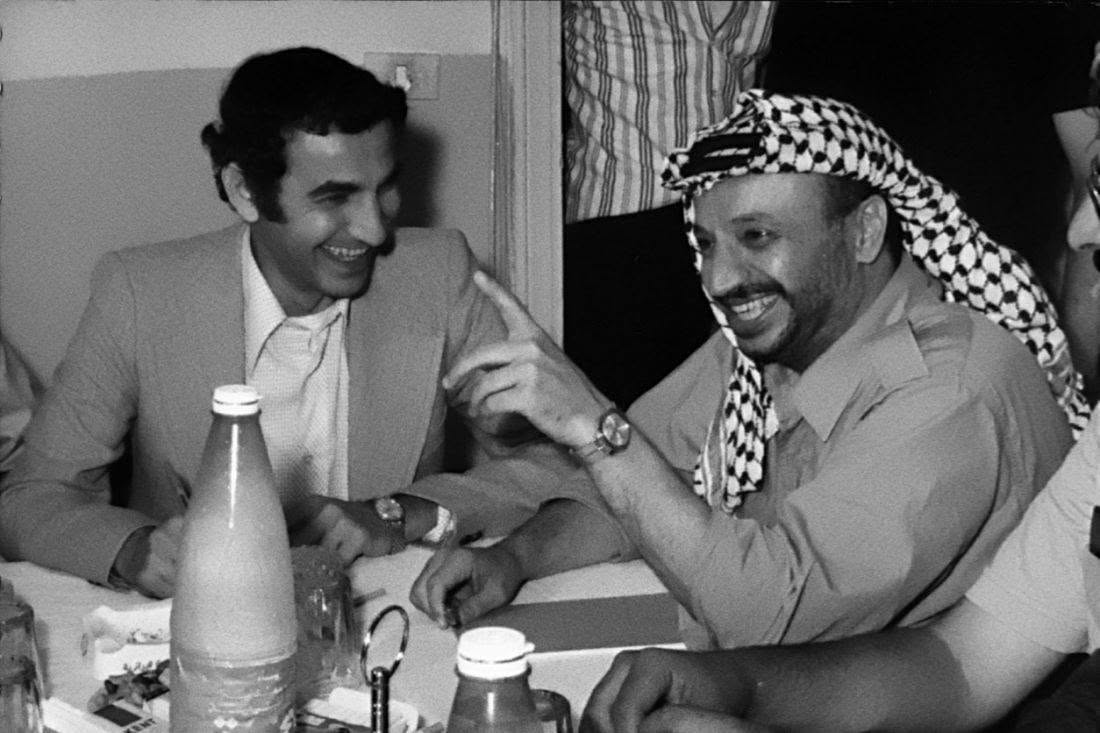
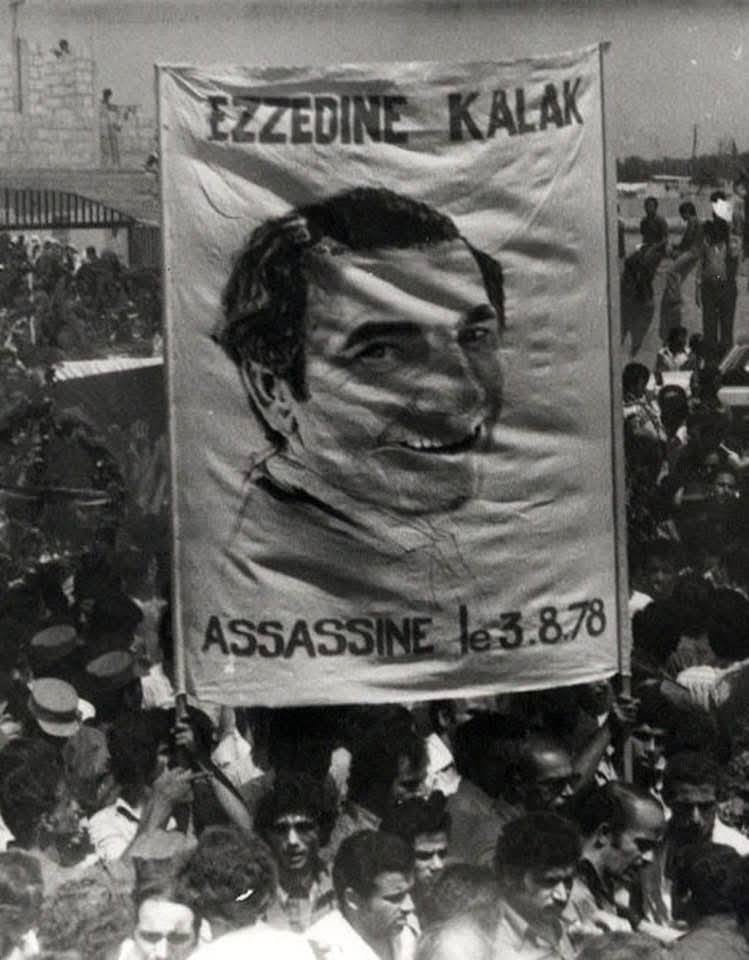
Funeral prayers were held at the Paris Mosque before a large crowd. His body was then flown to Damascus, where tens of thousands of Palestinians and Syrians joined his funeral; Yasser Arafat delivered the eulogy in Yarmouk camp, and he was buried in the Martyrs’ Cemetery beside his comrades [1] [2].
Legacy
Izz al-Din al-Qalaq remains a model of the intellectual diplomat who combined science, literature and national work, and who built the Palestinian revolution’s cultural diplomacy in Europe. The French film collective “Vincent” made a documentary about him shortly after his death [1] [2].
Images and video
Frequently asked questions about Izz al-Din al-Qalaq
Who was Izz al-Din al-Qalaq?
A Palestinian diplomat, writer and chemist from Haifa who represented the PLO in France from 1973 to 1978.
Why was he named Izz al-Din?
His father, a follower of Sheikh Izz al-Din al-Qassam, named him after the sheikh in the year of his birth, 1936.
Who preceded him as PLO representative in Paris?
The martyr Mahmoud al-Hamshari, assassinated by the Mossad.
When was Izz al-Din al-Qalaq assassinated?
On 3 August 1978 in the PLO office in Paris.
Who was killed with Izz al-Din al-Qalaq?
His assistant Adnan Hammad.
Who is accused of killing Izz al-Din al-Qalaq?
The PLO accused the Abu Nidal group, describing it as infiltrated by the Mossad; a French court sentenced two young men to 15 years in prison.
Where is Izz al-Din al-Qalaq buried?
In the Martyrs’ Cemetery in Damascus.
Sources and references
Arabic-language sources are listed with translated titles.
- “Izz al-Din al-Qalaq,” Pioneers, Palestinian National Information Center (WAFA).
- “Izz al-Din al-Qalaq,” Interactive Encyclopedia of the Palestine Question, Institute for Palestine Studies.
- “Abu Nidal: A Palestinian Leader Who Died a Mysterious Death in Iraq,” Al Jazeera Encyclopedia, 15 December 2016.
Photo gallery
More from the archive
 Download Our Palestine App
The whole archive in the palm of your hand: depopulated villages, the Nakba, the massacres and Al-Aqsa — free, with no ads to erase the story.



Comments
No comments yet — be the first to write one.
Add your comment
Name and email are optional. Comments appear after review.