
Abu Youssef al-Najjar: Fatah Leader Killed with His Wife in Beirut
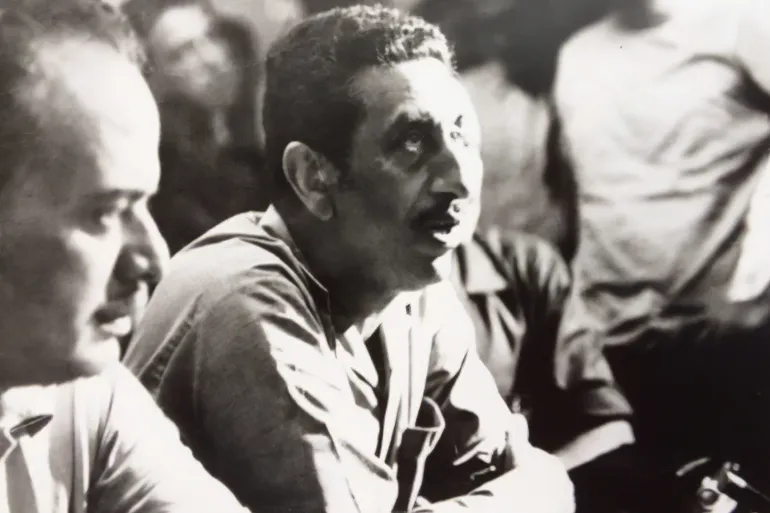
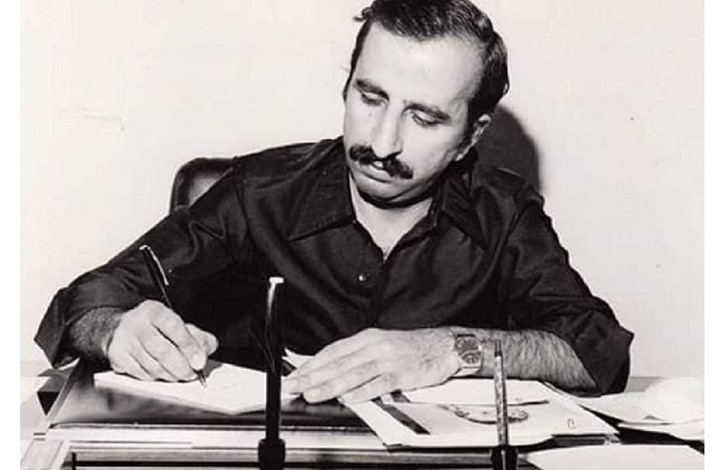
Muhammad Youssef al-Najjar, “Abu Youssef” (1930–1973), was a Palestinian leader from the village of Yibna in the Ramla district, whose people Zionist militias expelled in 1948. A Fatah pioneer and its financial commissioner, he was a member of the PLO Executive Committee and head of its Political Department. An Israeli commando unit killed him and his wife at their home on Verdun Street in Beirut at dawn on 10 April 1973, in the same operation that killed Kamal Adwan and Kamal Nasser. [1] [2]
This article is part of the series “Leaders of the Palestinian Revolution Who Were Assassinated,” alongside the articles on Kamal Adwan, Kamal Nasser and Ali Hassan Salameh, and the article on the Verdun operation.
Who was Abu Youssef al-Najjar?
Abu Youssef al-Najjar belonged to the founding generation of the modern Palestinian revolution and was among the leaders closest to Yasser Arafat [1] [2]. He moved from the camp to exile and from teaching to leading the revolution’s security and political work, until the occupation killed him in his home, killing his wife with him [1] [2].
Abu Youssef al-Najjar at a glance
| Item | Details |
|---|---|
| Name | Muhammad Youssef al-Najjar, “Abu Youssef” |
| Born | 1930, Yibna village, Ramla district [1] |
| Education | Ibrahimiya College, Jerusalem (1946) [1] |
| Refuge | Family driven in 1948 to Rafah camp in the Gaza Strip [1] |
| Founding | A Fatah pioneer and its financial commissioner [1] |
| Posts | PLO Executive Committee (1969); head of Fatah security (1971); head of the Political Department (1973) [1] |
| Assassinated | Dawn of 10 April 1973, his home in Verdun, Beirut, with his wife [1] [2] |
| Honours | Star of Honour (2013); a hospital in Rafah bears his name [1] |
Timeline
| Date | Event |
|---|---|
| 1930 | Born in Yibna [1] |
| 1946 | Graduates from Ibrahimiya College, Jerusalem [1] |
| 1948 | Driven to Rafah camp [1] |
| 1954 | Arrested in Gaza for leading a protest demanding military conscription for Palestinian youth [1] |
| 1955 | Arrested for organising protests against the Sinai resettlement plan [1] |
| 1957 | Moves to Qatar [1] |
| Early 1960s | Helps found Fatah [1] |
| 1969 | Joins the PLO Executive Committee [1] |
| 1971 | Takes command of Fatah’s security apparatus [1] |
| 1973 | Heads the PLO Political Department [1] |
| 10 April 1973 | Assassinated with his wife in Beirut [1] [2] |
| 12 April 1973 | Funeral of the three leaders in Beirut [2] |
From Yibna to Rafah camp
Muhammad Youssef al-Najjar was born in 1930 in the village of Yibna in the Ramla district, about 38 kilometres northwest of Jerusalem [1]. He completed primary and preparatory school in his village, then moved to Jerusalem, graduated from Ibrahimiya College in 1946 and taught in Yibna for a year [1].
With the Nakba of May 1948 he was driven out of Yibna with his family to the Gaza Strip and settled in Rafah refugee camp [1].
Teacher and protester in Gaza
He worked at an UNRWA social services centre and then as a teacher until 1955 [1]. He joined the Palestinian Students’ League early on, then the Muslim Brotherhood and the “al-Najjada” organisation [1]. In 1954 the Egyptian authorities arrested him for leading a demonstration demanding compulsory military service for Palestinian youth, and about a year later he was arrested again for organising protests against a plan to resettle refugees in northern Sinai [1].
From Qatar to founding Fatah
In 1957 he left Gaza by sailing boat for Syria, then moved to Qatar to work in the encyclopedia department of the Ministry of Education. He stayed in teaching until 1967, using his place on a committee that selected Arab teachers to expand political and organisational work, including visits to Gaza and the West Bank [1]. In Qatar he worked alongside Kamal Adwan [3].
In the early 1960s he was among the pioneers who founded Fatah, serving as its financial commissioner, and after the June 1967 war he devoted himself full-time to organisational work [1].
In the PLO leadership
In 1969, at the fifth session of the Palestinian National Council in Cairo, he was elected Fatah’s representative on the PLO Executive Committee [1]. He chaired the Committee for Palestinian Affairs in Lebanon and helped ease tensions between Palestinians and Lebanese [1]. After Fatah’s third congress in 1971 he took command of its security apparatus, with Hamad al-Aidi “Abu Ramzi” as his deputy [1].
In 1973 he was re-elected to the Executive Committee at the eleventh PNC session in Cairo and put in charge of the Political Department, and in March that year he led Palestine’s delegation to the Islamic foreign ministers’ conference in Benghazi [1].
The assassination of Abu Youssef al-Najjar and his wife
On the night of 9 April 1973 an Israeli naval force set out from Haifa carrying commando teams to the Beirut shore on rubber boats, some of whom landed disguised in women’s clothing [2] [3]. At dawn on 10 April they stormed Abu Youssef al-Najjar’s home on Verdun Street; he tried to take shelter with his wife in a nearby room, but they killed them both [2] [1].
In the same attack the Israeli teams assassinated Kamal Adwan and Kamal Nasser, and an Italian neighbour who tried to raise the alarm was killed [2] [1]. Some 30 Palestinians were killed in the operation, and Lebanese Prime Minister Saeb Salam resigned [3].
Farewell in Beirut
On 12 April 1973 Beirut bore the coffins of the three leaders in a massive funeral procession [2].
Legacy
In 2013 President Mahmoud Abbas awarded Abu Youssef al-Najjar’s family the Star of Honour; the Palestinian Authority named a main junction in Gaza after him, and a hospital in Rafah – the town that took in his family after the Nakba – bears his name [1].
Images and video
Frequently asked questions about Abu Youssef al-Najjar
Who was Abu Youssef al-Najjar?
Muhammad Youssef al-Najjar, a Palestinian leader from Yibna, a Fatah pioneer and member of the PLO Executive Committee.
Where was Abu Youssef al-Najjar from?
From the village of Yibna in the Ramla district, whose people were expelled in 1948.
What posts did he hold?
Fatah’s financial commissioner and head of its security apparatus, and member of the PLO Executive Committee and head of its Political Department.
When was Abu Youssef al-Najjar assassinated?
At dawn on 10 April 1973 at his home on Verdun Street, Beirut.
Was Abu Youssef al-Najjar’s wife killed?
Yes; the Israeli commandos killed her with him.
Who else was killed in the same operation?
Kamal Adwan and Kamal Nasser.
What bears Abu Youssef al-Najjar’s name?
A hospital in Rafah and a main junction in Gaza.
Sources and references
Arabic-language sources are listed with translated titles.
- “Abu Youssef al-Najjar: Symbol of the Palestinian Revolution and Fatah Leader,” Al Jazeera Encyclopedia, 20 August 2025.
- Sami Moubayed, “‘Spring of Youth’: Remembering Israel’s Assassination of Palestinian Leaders in Beirut,” Al Majalla, April 2024.
- “The Martyr Kamal Adwan: The Fedayee Who Brought Explosives into Palestinian Resistance,” Al Jazeera Encyclopedia, 8 March 2024.
Photo gallery
More from the archive
 Download Our Palestine App
The whole archive in the palm of your hand: depopulated villages, the Nakba, the massacres and Al-Aqsa — free, with no ads to erase the story.



Comments
No comments yet — be the first to write one.
Add your comment
Name and email are optional. Comments appear after review.