
The Dead Sea Scrolls: How the Israeli Occupation Seized a Palestinian Treasure Found on the Eve of the Nakba
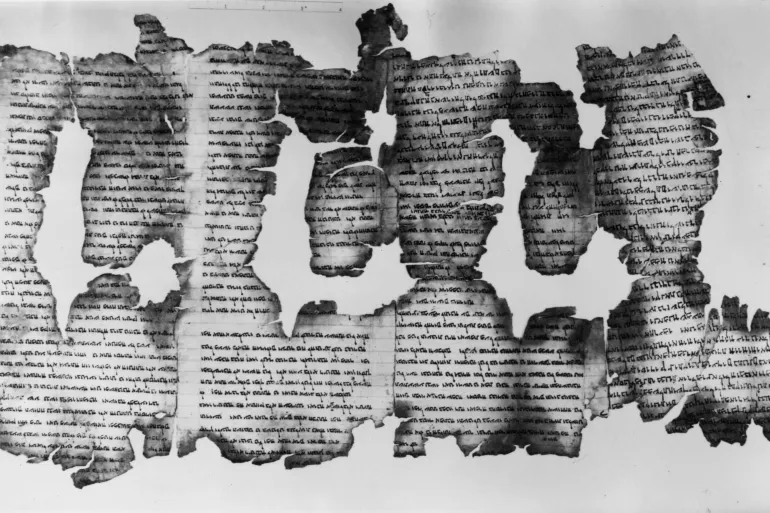
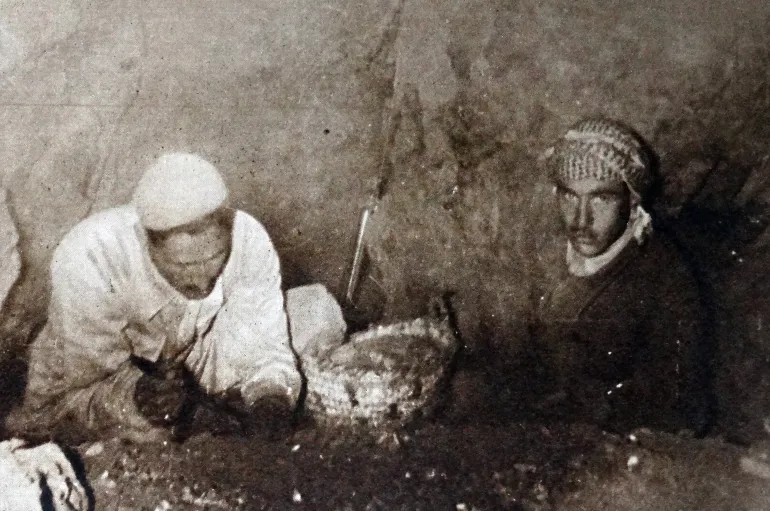
In the winter of 1947, just months before the Nakba, a young Palestinian shepherd from the Ta'amireh Bedouin was searching for a stray goat among the cliffs of the wilderness east of Bethlehem, near the northwestern shore of the Dead Sea. He threw a stone towards the mouth of a cave and heard a clay pot shatter. The next day he returned with a friend, and inside they found ancient jars holding scrolls more than 2,000 years old.
So began the story of the Dead Sea Scrolls, the most important archaeological discovery of the 20th century. They were found on Palestinian land, by Palestinians, and kept for years at the Palestine Archaeological Museum in Jerusalem. Today they are shown to the world as an "Israeli national treasure," after the Israeli occupation seized them in 1967. This article tells how the scrolls travelled from the caves of Qumran to the "Shrine of the Book" in West Jerusalem, and why Palestinians and Jordan still demand their return.
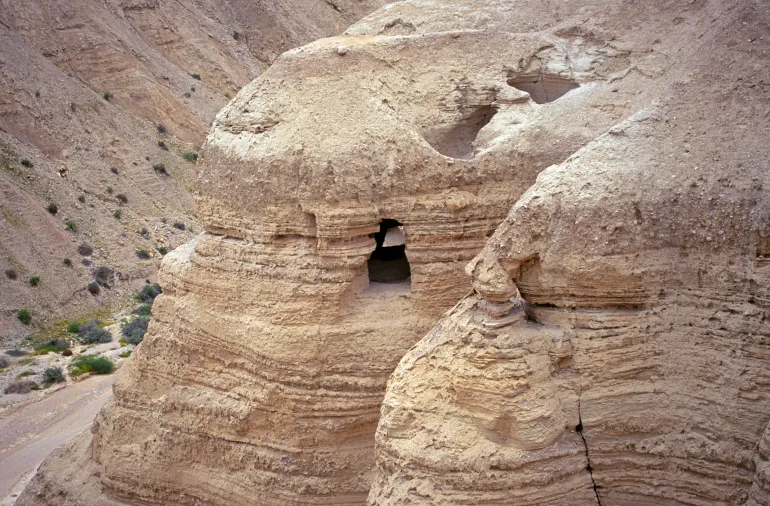
The discovery: a Ta'amireh shepherd and a cave at Qumran
In early 1947, the shepherd Muhammad edh-Dhib of the Ta'amireh Bedouin found the first scroll cave at Khirbet Qumran, about 20 km east of Jerusalem, according to the Al Jazeera Encyclopedia. At the time, the area was part of Mandate Palestine.
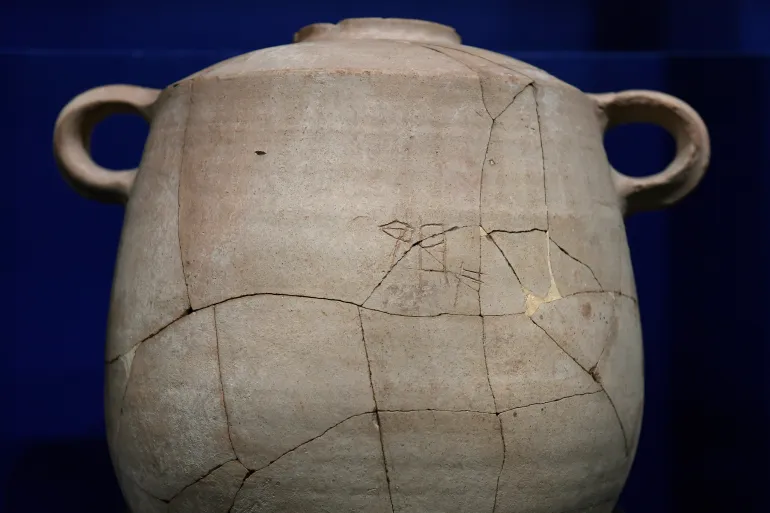
The shepherds found seven complete scrolls. They took them to Khalil Iskander Shahin, known as "Kando," a cobbler and antiquities dealer in Bethlehem. Kando sold four scrolls to Metropolitan Athanasius Yeshue Samuel of St Mark's Syrian Orthodox Church in Jerusalem, while the other three went to a professor at the Hebrew University, according to the Center for Online Judaic Studies (COJS).
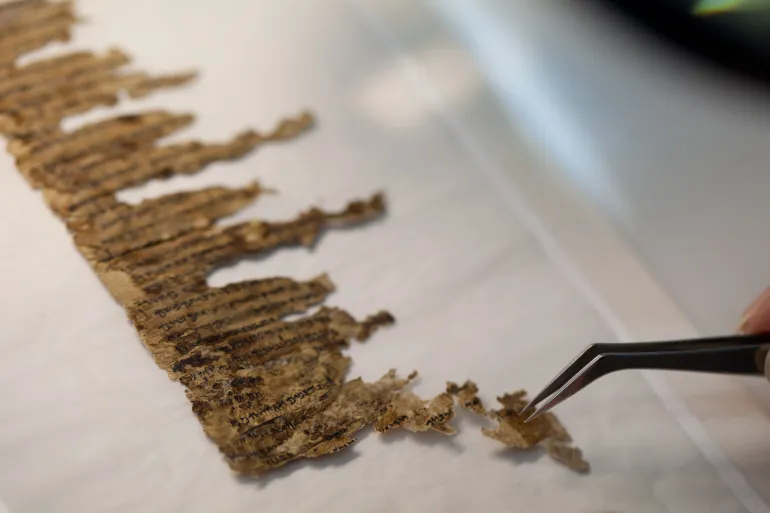
Between 1947 and 1956, manuscripts were found in 11 caves in the Qumran valley, and Palestinian Ta'amireh Bedouin played a major role in finding many of them. In total there are about 900 manuscripts, spread across some 15,000 pieces, most of them scraps and fragments.
| Fact | Details |
|---|---|
| Place of discovery | The caves of Khirbet Qumran, northwest of the Dead Sea, about 20 km east of Jerusalem |
| First discoverers | Palestinian shepherds of the Ta'amireh Bedouin (Bethlehem area) |
| Years of discovery | 1947 to 1956 |
| Number of caves | 11 caves in the Qumran valley |
| Number of manuscripts | About 900, in roughly 15,000 pieces |
| Languages | Hebrew, Aramaic and Greek |
| Materials | Leather and papyrus |
| Approximate age | 3rd century BCE to 2nd century CE |
| Where they are today | Mostly in the Shrine of the Book at the Israel Museum in Jerusalem; the Copper Scroll is at the Jordan Museum in Amman |
What do the scrolls contain?
According to the Al Jazeera Encyclopedia, the scrolls include every book of the Old Testament except Esther, along with non-biblical religious texts and commentaries. Texts of the Hebrew Bible make up only about a quarter of the manuscripts, which also include works such as the Book of Enoch, the Book of Jubilees and the Book of Tobit.
Most are linked to the Essenes, a community that called itself "the Union." Among its best-known texts are the "Community Rule" and the "War Scroll," which describes the victory of the "Sons of Light" over the "Sons of Darkness." Each manuscript has a code beginning with the number of the cave where it was found, such as "1QM" for the War Scroll from Cave 1.
This immense religious and historical value is exactly what made the scrolls an early target of the Zionist project, which saw in them a "title deed" to the land.
On the eve of the Nakba: Sukenik, Bethlehem and Partition Day
On 29 November 1947, the day the United Nations voted on the Partition of Palestine, Hebrew University archaeologist Eleazar Sukenik went to Bethlehem to obtain three scrolls from Qumran from the dealers. That same evening, the radio announced that the UN had approved a "Jewish state," according to the International Christian Embassy Jerusalem.
This coincidence was no passing detail in the Zionist narrative. From the very start, the scrolls were presented as "proof" of a historical bond justifying the creation of a state on the land of Palestine, at the very moment its own people, including the villagers around Bethlehem, stood on the brink of the Nakba and expulsion.
As for the four scrolls bought by Metropolitan Samuel, he took them to the United States and offered them for sale in a Wall Street Journal advertisement on 1 June 1954. They were bought secretly, through an intermediary, by Yigael Yadin, Sukenik's son and a former chief of staff of the Israeli army, for $250,000, according to COJS. With that, all seven of the first scrolls were in the hands of the Israeli state.
The Palestine Archaeological Museum: where the scrolls were kept
After the Nakba of 1948, Qumran and East Jerusalem became part of the West Bank under Jordanian rule. Between 1949 and 1956 a joint expedition of Jordan's Department of Antiquities and the French École Biblique, led by Roland de Vaux and Gerald Lankester Harding, excavated the caves and the site, and thousands of fragments were gathered at the Palestine Archaeological Museum in East Jerusalem, which the occupation now calls the "Rockefeller Museum."
Until the mid-1960s the museum was run by an international board. In 1966 Jordan nationalised it under Temporary Law No. 72 of 1966, with a memorandum of understanding signed on 26 November 1966, making its holdings, including the scrolls, the property of the Jordanian government, according to a study by Dr Hamdan Taha, former director general of the Palestinian Department of Antiquities, published in Jerusalem Quarterly.
June 1967: the museum stormed and the scrolls confiscated
Just months after the nationalisation, Israel occupied East Jerusalem on 6 June 1967. Paratroopers of the Israeli occupation army stormed the museum, its staff were detained, and some were used as human shields on the roof during the fighting, according to testimony cited by Hamdan Taha. One witness recalled: "Passing the main hall that was full of soldiers, I saw some of the display cases vandalized and emptied of their contents."
The occupation authorities moved the scrolls from the museum to the Shrine of the Book at the Israel Museum in West Jerusalem. Israeli officials said at the time that they were there "as a temporary exhibit only" and would return to the museum. They never have. Only the Copper Scroll and some other pieces kept in Amman escaped this fate.
It did not stop at the museum. During the same war, Israeli intelligence officers went to the home of the dealer Kando in occupied Bethlehem and demanded the "Temple Scroll," the longest of the Qumran scrolls, on behalf of Yigael Yadin, according to COJS. The scroll was confiscated, and Kando was later paid more than $100,000.
In other words: what Israel did not obtain by purchase on the eve of the Nakba, it obtained by military occupation in 1967.
The "Shrine of the Book": turning a treasure into an Israeli symbol
The Shrine of the Book was built in 1965 at the Israel Museum in West Jerusalem to display the scrolls Israel had bought, and ever since, the scrolls have sat at the heart of Israel's official narrative of "Jewish roots in the land." James Snyder, a former director of the Israel Museum, called them "a kind of 'Mona Lisa' for us," according to Jewish News.
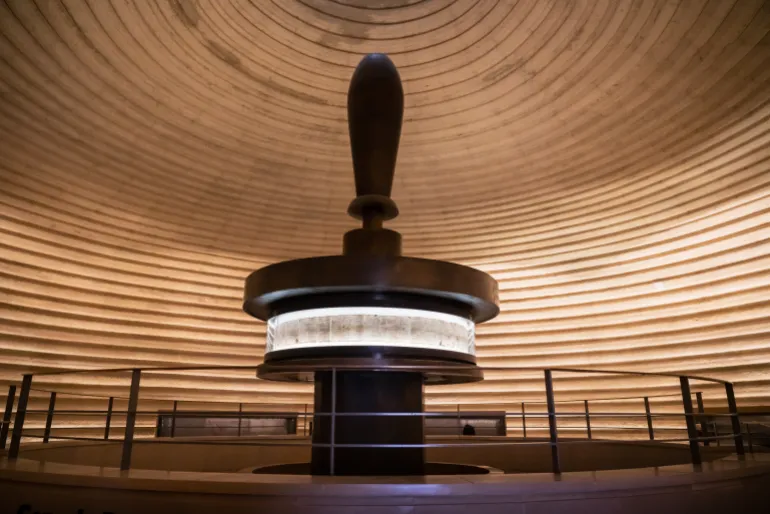
There is no dispute that many of these manuscripts are ancient Jewish religious texts. But the Israeli narrative leaves out two things: that they were discovered on Palestinian land by Palestinians, and that a large part of them reached Israel through military seizure, not purchase or agreement. A Palestinian discovery thus becomes "Israeli heritage," just as happened with West Bank antiquities in Israeli museums.
The museum itself was not spared. After 1967 it was placed under the joint administration of the Israeli Department of Antiquities and the Israel Museum, the antiquities authority moved its headquarters there, and in 2016 its library was moved to West Jerusalem after Israel's Supreme Court allowed it. Hamdan Taha describes it as "a Palestinian cultural institution under occupation."
Who owns the scrolls? Palestinian and Jordanian claims
Three parties dispute ownership of the scrolls: Israel, Jordan and Palestine.
| Party | Position |
|---|---|
| Palestine (Palestinian Authority) | The scrolls are part of Palestinian cultural heritage, were all found on Palestinian land, were acquired illegally by Israel, and must be returned |
| Jordan | In 2010 it demanded the return of a number of scrolls, saying they were taken illegally from a museum in East Jerusalem during the 1967 war |
| Israel | Rejected the demands; its foreign ministry said Jordanian control of the West Bank was never internationally recognised and that Jordan had relinquished its claims to the territory |
The Palestinian position rests on the 1929 Antiquities Law, issued under the Mandate, under which finders of antiquities have no property right in them. Dr Nazmi Ju'beh of the Riwaq Centre for Architectural Conservation in Ramallah argues that neither the Bethlehem shoemaker nor the archbishop had any right to pass title to anyone, according to The Globe and Mail.
Ju'beh adds that the scrolls are indeed Jewish, but are also part of Palestinian heritage, like Roman and Byzantine ruins that should stay where they were found: "No one would claim that Roman ruins found in Israel should be sent to Rome."
On the other side, some Western scholars, such as Robert Cargill of UCLA, call the Palestinian claim "baseless" because the Palestinian Authority did not exist when the scrolls were found, according to Bible and Interpretation. But this argument confuses a state with a people: the scrolls were found in Palestine, by Palestinians, and kept in a museum bearing Palestine's name, before Israel itself existed.
Exhibitions that stumble: Toronto and Frankfurt
Israel uses the scrolls as a diplomatic tool, sending them to exhibitions around the world. But these exhibitions often run into Palestinian and Jordanian claims:
- Toronto, 2009–2010: The Royal Ontario Museum displayed 17 scrolls in the exhibition "Words that Changed the World." The Palestinian Authority asked Canadian Prime Minister Stephen Harper to cancel it, saying the scrolls had been "stolen from Palestinian territory." Hamdan Taha, then director of the Palestinian Department of Antiquities and Cultural Heritage, said: "We call on Canada to meet its obligations under the 1954 Convention." Canada declined to intervene, saying the dispute should be settled between Israel, Jordan and the Palestinian Authority.
- Jordan's UNESCO complaint, 2010: After Canada declined to seize the scrolls, Jordan filed a complaint with UNESCO, announced on 11 January 2010. Rafea Harahsheh of Jordan's antiquities department said: "The government has legal documents that prove Jordan owns the scrolls," according to The Christian Century.
- Frankfurt, 2017: Israel cancelled an exhibition planned for 2019 at Frankfurt's Bible Museum because the German government refused to guarantee the scrolls' return to Israel if Palestinians or Jordan claimed them. Germany's Foreign Ministry regarded their ownership as "unclear."
Germany's position matters: a close ally of Israel refused to recognise the scrolls as purely "Israeli property," which shows that Israel's narrative of ownership is no matter of international consensus.
Qumran today: an Israeli park in the occupied West Bank
Khirbet Qumran lies in the occupied West Bank, in Area C, next to the settlement of Kalya. Since the 1967 occupation it has been run by the Israel Nature and Parks Authority as "Qumran National Park," selling tickets to tourists, with no role for the Palestinians who own the land.
Israeli excavations at the site and the surrounding caves have continued: from the Israel Antiquities Authority's "Operation Scroll" in 1993 to a 2017 excavation led by Oren Gutfeld of the Hebrew University and Randall Price of Liberty University in the US, who announced the discovery of a "twelfth cave." Hyperallergic later revealed that the US Museum of the Bible, owned by the Green family of Hobby Lobby, helped fund the work. Writer Michael Press argued it violated international law, as it took place in occupied territory without coordination with its owners, according to Hyperallergic.
A new law to control West Bank antiquities
In a more dangerous step, the Knesset has been pushing since 2023 a bill to transfer authority over antiquities in the occupied West Bank to an Israeli body under the Ministry of Heritage. The Israeli organisation Emek Shaveh describes the bill as an act of annexation, covering some 6,000 archaeological sites in the West Bank. The Knesset Education Committee voted to advance it on 3 February 2026. The committee chair, MK Zvi Sukkot, said openly: "There is no such thing as Palestinian heritage," according to Emek Shaveh.
That sentence sums up the whole story: from the Qumran scrolls to the last stone in the West Bank, heritage is meant to be registered in the name of the occupation, with every Palestinian trace erased.
What does international law say?
The 1954 Hague Convention for the Protection of Cultural Property in the Event of Armed Conflict, and its First Protocol, require an occupying power to prevent the removal of cultural property from territory it occupies, and limit excavation in occupied land to necessary salvage work in cooperation with the territory's authorities. Israel and Canada are both parties to the Convention, which is why Palestinians and Jordan have invoked it.
Israel argues that temporary exhibitions abroad are not "export" under the Convention, and that Jordan itself never held recognised sovereignty over East Jerusalem. But that last argument cuts both ways: if Jordan was not sovereign, neither is the Israeli occupation. The international community recognises neither the annexation of East Jerusalem nor Israeli sovereignty over the West Bank.
Conclusion: scrolls born with the Nakba
The story of the Dead Sea Scrolls is the occupation of Palestine in miniature: a discovery on Palestinian land by Palestinian hands, then a deal on Partition Day, then a military raid on the museum in 1967, then display in museums worldwide under the name "Israel," then a law declaring that "there is no Palestinian heritage." At every stage, Palestinians were present at the start and erased by the end.
Recovering the scrolls may be a distant prospect today, but recovering the narrative is possible now: letting the world know that the most famous archaeological find of the 20th century came out of the caves of Palestine, and that a Ta'amireh shepherd was the one who opened the door to it.
Frequently asked questions about the Dead Sea Scrolls
Where were the Dead Sea Scrolls discovered?
In 11 caves in the Qumran valley, northwest of the Dead Sea and about 20 km east of Jerusalem, in historic Palestine. The area today lies in the occupied West Bank.
Who discovered the Dead Sea Scrolls?
Palestinian shepherds of the Ta'amireh Bedouin near Bethlehem, most famously Muhammad edh-Dhib, in early 1947.
What languages are the Dead Sea Scrolls written in?
Hebrew, Aramaic and Greek, on leather and papyrus. They date from between the 3rd century BCE and the 2nd century CE.
How did the scrolls end up in Israel?
Israel bought the first seven scrolls in 1947 and 1954, then seized the rest from the Palestine Archaeological Museum in East Jerusalem when it occupied the city in 1967, and confiscated the Temple Scroll from a dealer in Bethlehem.
Do Palestinians claim the Dead Sea Scrolls?
Yes. The Palestinian Authority considers them part of Palestinian heritage found on Palestinian land, and in 2009 asked Canada to cancel its Toronto exhibition. Jordan also demanded them in 2010, as they were taken from a nationalised Jordanian museum in 1967.
Where are the Dead Sea Scrolls today?
Most are in the Shrine of the Book at the Israel Museum in West Jerusalem, while the Copper Scroll and other pieces are displayed at the Jordan Museum in Amman.
Why was the Dead Sea Scrolls exhibition in Germany cancelled?
Because in 2017 the German government refused to guarantee their return to Israel if Palestinians or Jordan claimed them, considering their ownership unclear.
Read more on Our Palestine
- West Bank antiquities in Israeli museums: looted pieces that never returned
- The Great Book Robbery: 30,000 Palestinian books looted in 1948
- The Judaization of Jerusalem: the "City of David" and Silwan
- Archaeological sites in Palestine
- All Palestinian heritage articles on Our Palestine
Sources
- The Dead Sea Scrolls: secrets of religious texts hidden in the caves of Qumran (Arabic), Al Jazeera Encyclopedia, 11 July 2026
- Jerusalem's Palestine Archaeological Museum, Hamdan Taha, Jerusalem Quarterly 91
- Discovery and Acquisition, Center for Online Judaic Studies
- Israel's National Rebirth and the Dead Sea Scrolls, ICEJ
- Unfurling the claims to the Dead Sea Scrolls, The Globe and Mail
- Jordan files complaint over Dead Sea Scrolls, The Christian Century, February 2010
- On the Curious Protests of the Dead Sea Scrolls Exhibition in Toronto, Robert Cargill, Bible and Interpretation, August 2009
- Israel cancels Dead Sea Scrolls exhibit in Frankfurt, Jewish News (JTA), 3 December 2017
- An Illegal Archeological Dig in the West Bank Raises Questions About the Museum of the Bible, Michael Press, Hyperallergic, 22 June 2018
- Bill on West Bank antiquities as an annexation move, Emek Shaveh, 2026
 Download Our Palestine App
The whole archive in the palm of your hand: depopulated villages, the Nakba, the massacres and Al-Aqsa — free, with no ads to erase the story.



Comments
No comments yet — be the first to write one.
Add your comment
Name and email are optional. Comments appear after review.