
The Wadi al-Haramiya Operation 2002: Thaer Hammad and His Old Rifle at the Silwad Checkpoint
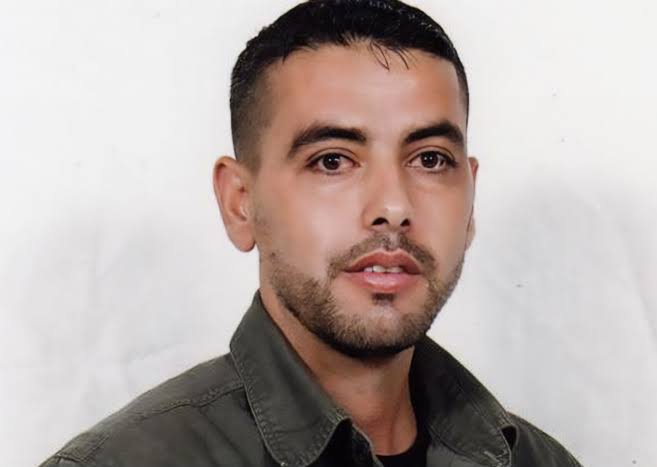
Before sunrise on Sunday 3 March 2002, at an occupation army checkpoint in Wadi al-Haramiya on the lands of Silwad, on the road between Ramallah and Nablus, a twenty-one-year-old named Thaer Kayed Hammad took up position on the overlooking hill with an old American M1 rifle made in 1936 and about seventy rounds. He fired on the checkpoint’s soldiers and those who came to their aid until his rifle broke apart, killing 11 soldiers and settlers and wounding others, then withdrew to his home in Silwad and went undetected for two and a half years. [1][2]
Contents
- At a glance
- The checkpoints of humiliation
- Thaer Hammad
- The operation
- After the operation
- Between the accounts
- Timeline
- Frequently asked questions about the Wadi al-Haramiya operation
At a glance
| Item | Details |
|---|---|
| Date | Dawn, 3 March 2002, about 6 a.m. |
| Place | A military checkpoint in Wadi al-Haramiya (Uyun al-Haramiya) on Silwad land, between Ramallah and Nablus |
| Carried out by | Thaer Kayed Qaddoura Hammad of Silwad, born 1980 |
| Weapon | An American M1 rifle made in 1936, and about 70 rounds |
| Rounds fired | 24, before the rifle jammed and broke apart |
| Casualties | 11 killed, soldiers and settlers, and 6–9 wounded |
| Arrest | 2 October 2004 |
| Sentence | Eleven life terms according to Arabi Post |
The checkpoints of humiliation
In the first months of the al-Aqsa Intifada the occupation carved up the West Bank with military checkpoints, turning the road between village and city into a daily journey of humiliation. Thaer Hammad says that humiliation at the checkpoints and the killing of civilians were among his motives, and that his uncle Nabil was killed in the First Intifada in 1991 after being detained, beaten and then shot. [1]
Days before the Wadi al-Haramiya operation, in February 2002, fedayeen attacked a military checkpoint near the village of Ein Arik west of Ramallah, killing six soldiers and withdrawing without losses – the checkpoints themselves had become targets of the resistance. [3]
Thaer Hammad
Thaer Kayed Qaddoura Hammad was born in Silwad, north-east of Ramallah, on 29 July 1980, one of five brothers. He belonged to no political faction, according to Arabi Post. He bought the rifle from an elderly man in the village, together with about seventy rounds. [1][2]
The operation
Thaer prayed the dawn prayer, then spent about two hours watching the checkpoint from some 120 metres away. At about six in the morning he opened fire on the checkpoint’s soldiers, and then on those who came to their aid. [2]
He says he fired 24 rounds before the rifle jammed and then broke apart, with 45 rounds still left. The accounts say he also shot at armed men he identified as settlers, and at two settlers in a civilian car passing through. [1][2]
He then climbed the hill and went home, arriving at about 8:30 a.m., hidden by the trees and the rough ground, while helicopters combed the area without finding him. [1][2]
After the operation
Occupation forces sealed off Silwad and searched for suspects; Thaer was detained for three days and then released. Arabi Post says the checkpoint was removed after the operation, and that Marwan Barghouti dubbed Thaer “the emir of the al-Aqsa Martyrs’ Brigades.” [2]
On 2 October 2004, some two and a half years later, Thaer was arrested “by chance,” as he puts it. He was tried at the Ofer military court in about thirty sessions and sentenced to eleven life terms. In prison he finished secondary school and earned a bachelor’s degree in social work. [1][2]
Between the accounts
Killed and wounded: 11 soldiers killed and 6 wounded, three seriously, according to the Journal of Palestine Studies; 11 soldiers and settlers killed and 9 wounded according to Arabi Post, whose introduction gives 11 soldiers and 6 wounded. [1][2]
Age of the rifle: made in 1936 according to the interview, while Arabi Post dates it to the First World War. [1][2]
Affiliation: Arabi Post says he belonged to no faction, yet reports that Marwan Barghouti dubbed him “the emir of the al-Aqsa Martyrs’ Brigades.” [2]
Timeline
| Date | Event |
|---|---|
| 29 July 1980 | Thaer Hammad born in Silwad [2] |
| 1991 | Nabil, Thaer’s uncle, killed in the First Intifada [1] |
| February 2002 | The Ein Arik checkpoint attack; six soldiers killed [3] |
| Dawn, 3 March 2002 | The Wadi al-Haramiya operation [1] |
| About 8:30 a.m. | Thaer returns home [1] |
| 2 October 2004 | Thaer Hammad arrested [1] |
Frequently asked questions about the Wadi al-Haramiya operation
Who carried out the Wadi al-Haramiya operation?
Thaer Kayed Hammad, a twenty-one-year-old from Silwad, alone. [1][2]
What weapon did he use?
An old American M1 rifle made in 1936, bought from an elderly man in his village. [1]
How many were killed?
Eleven killed, soldiers and settlers, as well as several wounded. [1][2]
When was Thaer Hammad arrested?
On 2 October 2004, some two and a half years after the operation. [1]
What was his sentence?
Eleven life terms according to Arabi Post, after about thirty sessions at the Ofer military court. [2]
Read also on Palestinuna
Sources and references
- “The Wadi al-Haramiya sniper Thaer Hammad: my old rifle humiliated the occupation and proved it can be defeated,” interview conducted in Nafha prison, Journal of Palestine Studies (Arabic), Institute for Palestine Studies.
- Arabi Post, “Belonging to no faction and using a world-war rifle: who is Thaer Hammad, who carried out the Uyun al-Haramiya operation?,” 22 December 2023 (in Arabic).
- Centre for Arab Unity Studies, “Diary 2002,” citing As-Safir (in Arabic).
More from the archive
 Download Our Palestine App
The whole archive in the palm of your hand: depopulated villages, the Nakba, the massacres and Al-Aqsa — free, with no ads to erase the story.



Comments
No comments yet — be the first to write one.
Add your comment
Name and email are optional. Comments appear after review.