
Collective Hunger Strikes in Israeli Occupation Prisons | Battles of Empty Stomachs Since 1968
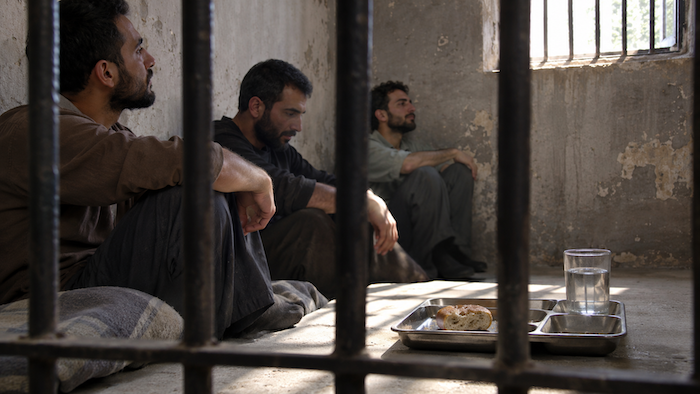
When a prisoner is stripped of everything, his body remains. From the first years of the 1967 occupation, Palestinian prisoners turned their empty stomachs into a weapon against the jailer, waging some 30 collective hunger strikes – some lasting dozens of days – as well as dozens of individual strikes. Through them they wrested rights the occupation never granted willingly: pen and paper, radios, visits, telephones, an end to isolation. And they paid for them with martyrs. [1][2]
Contents
- In numbers
- The beginnings: for a pen and for dignity
- Ashkelon and Nafha: the longest and the harshest
- From Junaid to the 1992 strike
- From Oslo to “Freedom and Dignity”
- Individual strikes: the body against administrative detention
- On the eve of the genocidal war
- Table of collective strikes
- Between the accounts
- Timeline
- Frequently asked questions about prisoners’ collective hunger strikes
In numbers
| Item | Details |
|---|---|
| Collective strikes | About 30 (23 according to the Ministry of Prisoners, up to 2019) |
| First strike | Nablus prison, 1968, 3 days |
| Longest collective strike | Ashkelon 1976: 45 days |
| Largest strike | September 1992: about 7,000 prisoners in all prisons |
| Longest individual strike | Samer Issawi: 265 days (2012–2013) |
| Individual strikes over 100 days | 13 documented since 2012 |
| Strike martyrs | Abu al-Fahm (1970); Halawa, al-Jaafari and Dawla (1980); Freitekh (1984); Obeidat (1992); Khader Adnan (2023, individual strike) |
| Main gains | Stationery, radios and TVs, beds, an end to strip-searches, a second family visit, public telephones |
The beginnings: for a pen and for dignity
The first strike was in Nablus prison in 1968; it lasted 3 days, against beatings and humiliation. In 1969 prisoners in Ramla struck for 11 days and those in Kfar Yona camp for 8, demanding better food, longer yard time, stationery, the replacement of plastic mattresses, and an end to being forced to answer the jailer with “Yes, sir.” They won some stationery and an end to addressing the jailer as “sir.” [4][3]
In 1970 women prisoners in Neve Tirza struck for 9 days; they were punished with isolation but won better ventilation and longer yard time. That same year prisoners in Ashkelon struck for 7 days for stationery, clothes from their families and longer yard time; the administration refused, and Abd al-Qader Abu al-Fahm became the prisoner movement’s first hunger-strike martyr. [3][4]
Ashkelon and Nafha: the longest and the harshest
In 1976 Ashkelon’s prisoners waged the longest collective strike in the prisoner movement’s history, 45 days, and won partial gains: some stationery, correspondence with their families, better food and the replacement of worn mattresses. They struck again for 20 days in 1977. [2][3]
In 1980 prisoners in the desert prison of Nafha struck, in coordination with those in Ashkelon and Beersheba, against rotten food, overcrowded rooms with small vents, the denial of stationery and a single hour of yard time. The administration responded with force-feeding, and Rasem Halawa, Ali al-Jaafari and Anis Dawla were martyred. After the strike an Israeli committee recommended beds, larger rooms and fewer prisoners per room. [3][2]
From Junaid to the 1992 strike
In 1984 prisoners in Junaid prison in Nablus began a 13-day strike that spread to other prisons and marked a turning point: they won radios, televisions, civilian clothes and better food, and Mahmoud Freitekh was martyred during it. In 1987 more than 3,000 prisoners struck for 20 days. [3][2]
On 27 September 1992 the first open-ended hunger strike joined by all prisons began, with about 7,000 prisoners – a watershed in the prisoner movement’s history. Prisoners won the closure of the isolation wing in Ramla, an end to strip-searches, and the restoration and extension of visits. Hussein Obeidat was martyred during it in Ashkelon prison. [1][3][4]
From Oslo to “Freedom and Dignity”
After Oslo prisoners struck for 18 days in 1995 demanding the release of male and female prisoners, and for another 18 days in 1996. In 1998 they protested the occupation’s release of 150 criminal prisoners under the Wye River deal. In 2000 they struck for about a month against isolation and visit restrictions; isolated prisoners were moved and strip-searches stopped. [4][3]
In 2012 more than 1,500 prisoners waged the 28-day “Battle of Dignity,” winning an end to solitary confinement, limits on administrative detention, visits for Gaza prisoners, and the repeal of the so-called “Shalit law.” In 2014 administrative detainees struck for 62 days against administrative detention. On 17 April 2017 about 1,500 prisoners began the “Freedom and Dignity” strike led by Marwan Barghouti; it lasted 41 days and won back the second family visit and public telephones in the children’s and women’s sections. [3][2]
Individual strikes: the body against administrative detention
From late 2011 the individual hunger strike became a weapon in its own right, aimed mainly at administrative detention, under which the occupation holds Palestinians without charge or trial on the basis of a “secret file,” renewing it every few months without end. When there is no charge to defend against in court, the detainee has nothing left but his body. [3][6]
Sheikh Khader Adnan of Arraba opened this phase with a 66-day strike that ended with his release in April 2012, clearing the way for dozens more. In 2012 alone Hana Shalabi struck for 44 days, Thaer Halahleh and Bilal Diab for 76 days together, and the national-team footballer Mahmoud Sarsak of Rafah camp for more than 96 days, after he was arrested at the Erez checkpoint on his way to sign with Balata club, until his release on 10 July 2012. The strikes of 2012–2013 cut the number of administrative detainees from about 400 to about 130. [6][7][3]
Samer Issawi of Jerusalem set the record for the longest individual strike, 265 days in 2012–2013, and Ayman Sharawna struck for 261 days, ending with his deportation to Gaza. Strikes of more than a hundred days followed: Ayman Hamdan (130), Adel Hreibat (129), Ayman Itbeish (104, then 123), Ahmad Ghannam (102), Maher al-Akhras (103), Kayed al-Fasfous (131), Miqdad al-Qawasmi (113), Hisham Abu Hawash (141), Raed Rayan (113) and Khalil Awawdeh (172 in two phases). [6][8][9][10][11]
Some prisoners struck more than once: Khader Adnan five times in this table alone, the last for 87 days ending with his martyrdom on 2 May 2023, and Muhammad Allan, Muhammad al-Qeeq and Ayman Itbeish twice each. These strikes usually ended with an agreement capping the administrative detention or fixing a release date, but the occupation re-arrested many after their release. [5][6]
The following table lists the individual strikes documented by name and duration in Arab sources, in chronological order. It is not every individual strike: dozens of prisoners waged shorter strikes that were not documented in detail. [6]
| # | Prisoner | Hometown | Year | Days | Outcome |
|---|---|---|---|---|---|
| 1 | Khader Adnan | Arraba, Jenin | 2011–2012 | 66 | Released in April 2012 [6][5] |
| 2 | Hana Shalabi | Jenin | 2012 | 44 | Agreed to deportation to Gaza [6] |
| 3 | Thaer Halahleh | Hebron | 2012 | 76 | A limit set on his detention [6][12] |
| 4 | Bilal Diab | Jenin | 2012 | 76 | A limit set on his detention [6][12] |
| 5 | Mahmoud Sarsak | Rafah camp | 2012 | 96+ | Released on 10 July 2012 [7][13] |
| 6 | Akram Rikhawi | – | 2012 | 69 by 20 June 2012 | Continued, refusing IV fluids [13] |
| 7 | Samer al-Barq | – | 2012 | 29 by 20 June 2012 | – [13] |
| 8 | Samer Issawi | Jerusalem | 2012–2013 | 265 | Released, then re-arrested and his old sentence reinstated [6][8] |
| 9 | Ayman Sharawna | Hebron | 2012–2013 | 261 | Deported to Gaza on 17 March 2013 [6][8] |
| 10 | Ayman Hamdan | Hebron | 2013 | 130 | A release date set [6][8] |
| 11 | Adel Hreibat | Hebron | 2013 | 129 | His administrative detention not renewed [6][8] |
| 12 | Ayman Itbeish | Hebron | 2013 | 104 | A limit set on his detention [6][8] |
| 13 | Ayman Itbeish | Hebron | 2014 | 123 | A time limit set on his detention [6][8] |
| 14 | Akram al-Fsaisi | Hebron | 2014 | 70 | The court set his release date [6][8] |
| 15 | Khader Adnan | Arraba, Jenin | 2015 | 52 | – [6][8] |
| 16 | Muhammad Allan | Nablus | 2015 | 65 | A limit set on his detention [6][8] |
| 17 | Muhammad al-Qeeq | Hebron | 2015–2016 | 94 | Released on 21 May 2016 [6][12] |
| 18 | Bilal Kayed | – | 2016 | 71 | A limit on the administrative detention imposed on him when his 15-year sentence ended [6][12] |
| 19 | Muhammad al-Qeeq | Hebron | 2017 | 32 | Release agreed for mid-April 2017 [6][8] |
| 20 | Muhammad Allan | Nablus | 2017 | 43 | – [6][8] |
| 21 | Khader Adnan | Arraba, Jenin | 2018 | 59 | – [6][8] |
| 22 | Ahmad Ghannam | Dura, Hebron | 2019 | 102 | His detention term fixed [6][8] |
| 23 | Maher al-Akhras | Jenin | 2020 | 103 | Released on 26 November 2020 [6][14] |
| 24 | Kayed al-Fasfous | Hebron | 2021 | 131 | Released on 5 December 2021 [6][8] |
| 25 | al-Ghadanfar Abu Atwan | – | 2021 | 65 | Released on 8 July 2021 [6][3] |
| 26 | Khader Adnan | Arraba, Jenin | 2021 | 25 | Released in June 2021 [6][8] |
| 27 | Miqdad al-Qawasmi | – | 2021 | 113 | Release at the end of his detention order [9] |
| 28 | Alaa al-Araj | – | 2021 | 95 by 11 November 2021 | – [9] |
| 29 | Ayyad al-Hraimi | – | 2021 | 54 by 11 November 2021 | – [9] |
| 30 | Louay al-Ashqar | – | 2021 | 31 by 11 November 2021 | – [9] |
| 31 | Hisham Abu Hawash | Hebron | 2021–2022 | 141 | Suspended on 4 January 2022 in return for release on 26 February [6][8] |
| 32 | Raed Rayan | – | 2022 | 113 | Suspended after mediation by the prisoner movement’s leaders [10] |
| 33 | Khalil Awawdeh | Idhna, Hebron | 2022 | 172 in two phases (111, then the rest) | Pledge to release him on 2 October 2022 [11][8] |
| 34 | Khader Adnan | Arraba, Jenin | 2023 | 87 | Martyred on 2 May 2023 [5] |
On the eve of the genocidal war
In 2019 about 150 prisoners in Ramon and Negev prisons waged the 8-day “Dignity 2” strike against food and water, winning public telephones. In February 2023 prisoners began protest steps against the measures of the occupation government’s National Security Minister Itamar Ben-Gvir, including control of water, closing bathrooms and cutting shower time, and announced an open-ended strike from the start of Ramadan. [4][3]
Table of collective strikes
| Year | Prison | Duration | Highlights |
|---|---|---|---|
| 1968 | Nablus prison | 3 days | Against beatings and humiliation [4][3] |
| 1969 | Ramla prison | 11 days | Better food, longer yard time, stationery [2][4] |
| 1969 | Kfar Yona camp | 8 days | Won some stationery and an end to calling the jailer “sir” [2][3] |
| 1970 | Neve Tirza (women) | 9 days | Better ventilation, longer yard time, items via the Red Cross [2][3] |
| 1970 | Ashkelon prison | 7 days | Abd al-Qader Abu al-Fahm martyred [2][4] |
| 1973 | Beersheba prison | 24 days | – [4] |
| 1976 | Ashkelon prison | 45 days | Partial gains: stationery, correspondence, better food [2][3] |
| 1977 | Ashkelon prison | 20 days | – [2][4] |
| 1980 | Nafha prison | 32–33 days | Force-feeding; Rasem Halawa, Ali al-Jaafari and Anis Dawla martyred [2][3] |
| 1984 | Junaid prison | 13 days | Radio, TV and civilian clothes allowed; Mahmoud Freitekh martyred [2][3] |
| 1987 | Junaid and other prisons | 20 days | More than 3,000 prisoners [2][3] |
| 1988 | All prisons | 1 day | In support of the First Intifada [2][4] |
| 1991 | Nafha prison | 17 days | – [2][4] |
| 1992 | Almost all prisons | 15–22 days | First open-ended strike across all prisons; about 7,000 prisoners; Hussein Obeidat martyred [1][2][3] |
| 1995 | All prisons | 18 days | Demanding the release of male and female prisoners [2][4] |
| 1996 | All prisons | 18 days | – [2][4] |
| 1998 | All prisons | – | Protesting the release of 150 criminal prisoners in the Wye River deal [4] |
| 2000 | All prisons | About a month | Against isolation and visit restrictions; isolated prisoners moved, strip-searches stopped [2][3] |
| 2001 | Neve Tirza (women) | 8 days | – [2][4] |
| 2004 | All prisons | 19 days | The comprehensive strike [2][4] |
| 2004 | Hadarim prison | Two months | – [2][4] |
| 2006 | Shata prison | 6–7 days | Against humiliating searches of families during visits [2][3] |
| 2011 | – | 22 days | To end solitary confinement [2][4] |
| 2012 | Several prisons | 28 days | “Battle of Dignity”: over 1,500 prisoners; end of isolation, visits for Gaza prisoners, repeal of the “Shalit law” [2][3] |
| 2014 | Administrative detainees | 62–63 days | Against administrative detention; supported by about 5,000 prisoners [2][3] |
| 2017 | Several prisons | 41–42 days | “Freedom and Dignity” led by Marwan Barghouti, about 1,500 prisoners; second family visit restored [2][3] |
| 2019 | Ramon and Negev | 8 days | “Dignity 2”: about 150 prisoners, food and water strike; public phones installed [4][3] |
Timeline
| Date | Event |
|---|---|
| 1968 | First strike, in Nablus prison [4] |
| 1970 | Abd al-Qader Abu al-Fahm martyred in the Ashkelon strike [2] |
| 1976 | Longest collective strike: Ashkelon, 45 days [2] |
| 1980 | Nafha strike, force-feeding and three martyrs [3] |
| 1984 | The Junaid strike wins radios and TVs [3] |
| 27 September 1992 | First open-ended strike across all prisons [1] |
| 2012 | The “Battle of Dignity” and the end of isolation [3] |
| 17 April 2017 | “Freedom and Dignity” strike begins, led by Marwan Barghouti [2] |
| 2 May 2023 | Khader Adnan martyred after 87 days on hunger strike [5] |
Frequently asked questions about prisoners’ collective hunger strikes
How many collective strikes have prisoners waged?
About 30 collective strikes according to the Al Jazeera Encyclopedia, plus dozens of individual strikes. [1]
What was the longest collective strike?
The Ashkelon prison strike of 1976, which lasted 45 days. [2][3]
What did prisoners win through their strikes?
Stationery, radios and TVs, beds, an end to strip-searches, an end to isolation, a second family visit and public telephones. [3]
What was the longest individual strike?
Samer Issawi of Jerusalem, 265 days in 2012–2013, followed by Ayman Sharawna with 261 days. [6]
Why do prisoners strike individually?
Mostly against administrative detention, which holds them without charge or trial and is renewed without end. [3][6]
Who were the strike martyrs?
Abd al-Qader Abu al-Fahm, Rasem Halawa, Ali al-Jaafari, Anis Dawla, Mahmoud Freitekh, Hussein Obeidat and Khader Adnan. [4][5]
Sources and references
- Al Jazeera Encyclopedia, “The Palestinian prisoner movement: structures uniting prisoners against the occupation’s jailer,” 25 January 2025 (in Arabic).
- Al Jazeera Encyclopedia, “The main strikes and demands of the Palestinian prisoner movement,” 17 April 2017 (in Arabic).
- Noon Post, Lamis al-Hams, “The road to freedom: empty stomachs against administrative detention,” 16 July 2021 (in Arabic).
- Noon Post, on hunger strikes and their martyrs in the occupation’s prisons, 2023 (in Arabic).
- Al Jazeera Encyclopedia, “Khader Adnan: the Palestinian prisoner martyred in the battle of empty stomachs” (in Arabic).
- Al Jazeera Net, “The main individual hunger strikes of Palestinian prisoners,” 15 August 2022 (in Arabic).
- Arabi Post, “Mahmoud Sarsak, symbol of Palestinian football,” 4 December 2023 (in Arabic).
- TRT Arabi, “The struggle of hunger strikes: documenting 24 strikes by Palestinians in Israeli prisons” (in Arabic).
- The New Arab, “Palestinian detainee ends 113-day hunger strike,” 11 November 2021.
- AFP via The Sun (Malaysia), “Palestinian in Israeli prison suspends hunger strike after 113 days,” 2022.
- Al Jazeera Encyclopedia, “Khalil Awawdeh: 12 years in Israel’s prisons,” 1 September 2022 (in Arabic).
- Al Jazeera Mubasher, “Record hunger strikes in Israeli prisons,” 15 August 2016 (in Arabic).
- Al Jazeera Net, “Palestinian prisoners continue their strike,” 20 June 2012 (in Arabic).
- The National, “Palestinian held by Israel ends hunger strike after 103 days,” 7 November 2020.
More from the archive
 Download Our Palestine App
The whole archive in the palm of your hand: depopulated villages, the Nakba, the massacres and Al-Aqsa — free, with no ads to erase the story.



Comments
No comments yet — be the first to write one.
Add your comment
Name and email are optional. Comments appear after review.