
The Lufthansa Operation 1972 | Black September Frees the Three Munich Fedayeen from German Prison
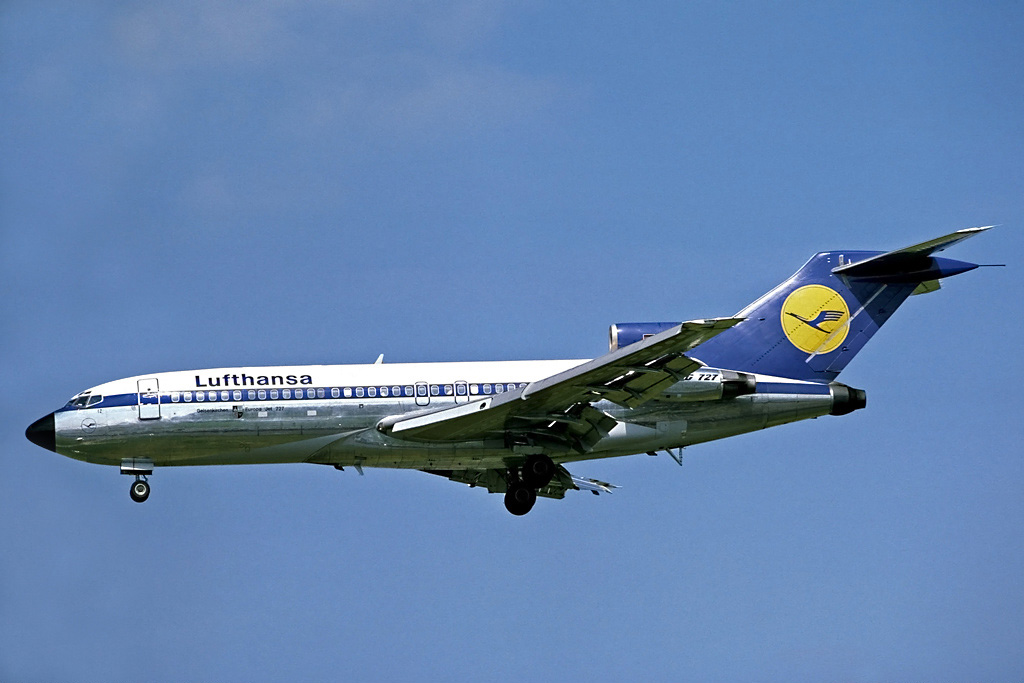
On 29 October 1972, less than two months after the Munich operation, the “Black September” organisation, linked to Fatah, hijacked a Lufthansa plane (Flight 615) after it took off from Beirut for West Germany, to force the German government to release the three fedayeen captured wounded in Munich. The operation succeeded without anyone being killed: Germany released the three, and they were flown to Libya. [1][2]
Contents
- At a glance
- Background: Munich and the Fürstenfeldbruck ambush
- The hijacking and the release of the prisoners
- The fate of the three
- Between the accounts
- Timeline
- Frequently asked questions about the Lufthansa operation
At a glance
| Item | Details |
|---|---|
| Date | 29 October 1972 |
| Plane | Lufthansa (West Germany), Flight 615 |
| Route | Beirut to West Germany |
| Group | The “Black September” organisation, linked to Fatah |
| Aim | The release of the three Munich fedayeen held in Germany |
| Prisoners freed | Jamal Khalil al-Jeshi, Muhammad al-Safadi and Adnan Abd al-Ghani al-Jeshi |
| Outcome | Germany released the three, and the plane headed for Libya |
| Casualties | None |
Background: Munich and the Fürstenfeldbruck ambush
Before dawn on 5 September 1972 a group of eight Black September fedayeen entered the Olympic Village in Munich and seized members of the Israeli sports delegation, in an operation they named “Iqrit and Kafr Bir’im,” after two Galilee villages whose people were expelled in 1948. They demanded the release of some 236 prisoners from the occupation’s jails, as well as the Germans Ulrike Meinhof and Andreas Baader and the Japanese Kozo Okamoto. [1][2][3]
After negotiations failed the fedayeen agreed to move with the hostages to an airport, on the understanding that they would be flown to Cairo, but the two helicopters landed at the NATO military base of Fürstenfeldbruck, where German police had laid an ambush with snipers. A battle of more than an hour followed in which all the Israeli athletes held hostage were killed, along with a German policeman and five fedayeen. The German authorities later officially admitted responsibility for laying the ambush and firing on the hostages and fedayeen, after first trying to blame the fedayeen. [1][2]
Three fedayeen were captured wounded: Jamal Khalil al-Jeshi and Muhammad al-Safadi, both 22 and from Shatila camp, and Adnan Abd al-Ghani al-Jeshi, aged 20. [1][2]
The hijacking and the release of the prisoners
On 29 October 1972 Black September fedayeen hijacked Lufthansa Flight 615 from Beirut to West Germany and demanded the release of their three comrades in exchange for the plane and its crew. The German government gave in and handed over the three fedayeen; the plane’s crew were freed, and the plane headed for Libya. [1][3][2]
So the three fedayeen left the German prison only weeks after their capture, in one of the most successful prisoner-release operations in the history of fedayeen action, without a single death. [3]
The fate of the three
The release was not the end. After Munich the occupation launched a campaign of assassinations in Europe and around the world that reached Palestinian leaders and intellectuals, among them Wael Zuaiter and Mahmoud Hamshari. After his release Adnan al-Jeshi settled in the UAE, working for an oil company in Sharjah, and died there on 4 April 1984; his family says he was poisoned by Mossad, that they received threats and that an autopsy was refused, and he was buried in Sharjah. [3][2]
Between the accounts
Munich death toll: Al-Awda gives 9 athletes killed at the airfield, while Arabi Post gives 11 Israelis killed in all, including those killed in the first phase inside the Olympic Village. [2][3]
Prisoners demanded at Munich: about 236 according to Abu Daoud, and 327 in a list attached to a later English-language statement. [1]
Details of the hijacking: the available Arab sources do not give the hijackers’ names or number, the number of passengers, or the plane’s stops before it reached Libya. Western accounts speak of German “collusion” in the operation to rid itself of the burden of the three prisoners, for which we found no Arab source.
Timeline
| Date | Event |
|---|---|
| 5 September 1972 | The “Iqrit and Kafr Bir’im” operation in the Munich Olympic Village [1] |
| 5–6 September 1972 | The Fürstenfeldbruck ambush; three fedayeen captured [1] |
| 29 October 1972 | Lufthansa plane hijacked and the three released [1] |
| 4 April 1984 | Adnan al-Jeshi dies in Sharjah [2] |
Frequently asked questions about the Lufthansa operation
What was the 1972 Lufthansa operation?
Black September’s hijacking of a Lufthansa plane on 29 October 1972 to force Germany to release the three Munich fedayeen. [1]
Who were the fedayeen freed?
Jamal Khalil al-Jeshi, Muhammad al-Safadi and Adnan Abd al-Ghani al-Jeshi. [1][2]
Was anyone killed in the operation?
No: Germany released the three and the plane’s crew were freed. [3]
Where were the freed men taken?
To Libya. [1]
Read also on Palestinuna
Sources and references
- Mona Awadallah, “The Munich operation (September 1972),” Arabica Encyclopedia, Arab Center for Research and Policy Studies, updated 29 January 2026 (in Arabic).
- Mahmoud Kallam, “The Munich operation 1972: the facts, the people and the details of the deception,” Al-Awda News Network (in Arabic).
- Arabi Post, “‘The Munich operation 1972’: when Palestinian fedayeen seized an Israeli sports delegation at the Olympics,” 10 November 2022 (in Arabic).
More from the archive
 Article
The Ma'alot–Tarshiha Operation 1974 | DFLP Fedayeen on the Nakba Anniversary on Tarshiha's Depopulated Land
 Article
Operation Dispelled Illusion 2006: The Kerem Shalom Tunnel and Shalit's Capture to the Wafa al-Ahrar Exchange
 Article
The Zuqaq al-Mawt Operation 2002: The al-Quds Brigades' Ambush in Wadi al-Nasara, Hebron
 Download Our Palestine App
The whole archive in the palm of your hand: depopulated villages, the Nakba, the massacres and Al-Aqsa — free, with no ads to erase the story.



Comments
No comments yet — be the first to write one.
Add your comment
Name and email are optional. Comments appear after review.