
Wafa al-Ahrar Deal 2011: 1,027 Prisoners Freed for Gilad Shalit
Part of the series Palestinian Prisoner Exchange Deals 1968–2025: Every Deal in Numbers Part 1 of 14“Wafa al-Ahrar” (2011) was an exchange deal in which 1,027 male and female prisoners were freed from Israeli prisons in two stages, on 18 October and 18 December 2011, in return for the soldier Gilad Shalit, whom the resistance had captured in Gaza in 2006. After more than five years in which the occupation could not reach him, the story ended in a deal through Egyptian mediation. [1][2][3]
Contents
- The deal at a glance
- The capture of Shalit
- Negotiations and terms
- First stage (18 October 2011)
- Second stage (18 December 2011)
- The most prominent prisoners freed
- After the deal
- Timeline
- Frequently asked questions about the Wafa al-Ahrar deal
The deal at a glance
| Item | Details |
|---|---|
| Name of the deal | Wafa al-Ahrar |
| Parties | Hamas and the Israeli occupation, through Egyptian mediation |
| Shalit’s capture | 25 June 2006, Kerem Shalom east of Rafah |
| Agreement announced | 11 October 2011 |
| First stage | 18 October 2011: 477 (450 men and 27 women) |
| Second stage | 18 December 2011: 550 prisoners |
| Total | 1,027 male and female prisoners |
| In return | The soldier Gilad Shalit |
The capture of Shalit
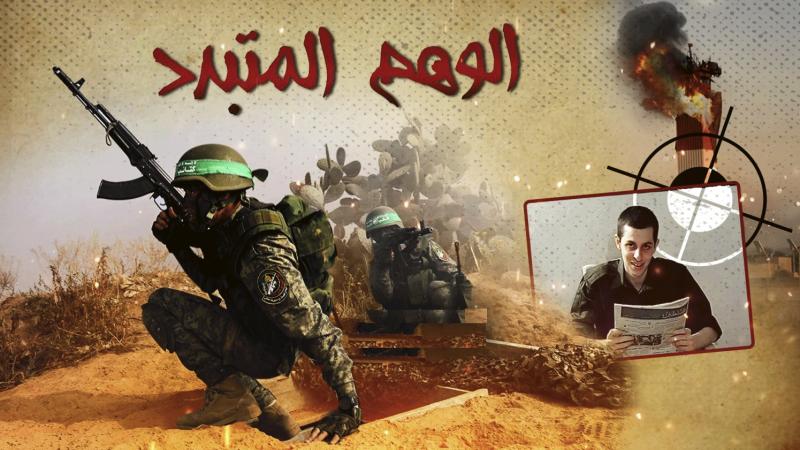
On 25 June 2006 fighters from three factions attacked an Israeli tank at night near the Kerem Shalom post east of Rafah, killing two soldiers, wounding five and capturing Gilad Shalit, in under 15 minutes. The occupation was afterwards unable to track his captors. [2][3]
The deal was preceded by a small one on 1 October 2009 in which 20 women prisoners were freed in return for a two-minute video showing Shalit alive. [3][4]
Negotiations and terms
The agreement was announced on 11 October 2011 after lengthy negotiations between Hamas and the Israeli government, with Egyptian mediation. According to Alwatan Voice Hamas’s criteria were about a thousand prisoners, a focus on those with high and life sentences, the inclusion of prisoners from all the Palestinian territories, the release of all women prisoners, and consideration of time served, illness and old age. [2][1]
Israel at first refused to release prisoners from Jerusalem and the 1948 territories on the grounds that they were its territory, but that criterion was broken. The agreement included meeting the demands of prisoners on hunger strike, among them an end to solitary confinement, and no later prosecution of those freed over their earlier activity. Alwatan Voice adds that the agreement covered 450 prisoners serving life sentences, all women prisoners, the elderly and the sick, 45 prisoners from Jerusalem and prisoners from the 1948 Palestinians, and that the agreed deportation of about 200 prisoners to Gaza or Arab countries came although Israel had demanded the deportation of 500. [2][5]
First stage (18 October 2011)
450 male and 27 female prisoners were freed, and Shalit was handed to the Egyptian side through the Rafah crossing. Those freed were distributed between the Gaza Strip, the West Bank and abroad. Al Jazeera Net says the occupation cut the number of deportees from 500 to 203 (163 and 40). [1][2][3]
Second stage (18 December 2011)
About two months later 550 prisoners were freed, and other documentation says 544 men and 6 women. Safa reports that 505 went to the West Bank and 41 to the Gaza Strip. [1][2]
The most prominent prisoners freed
On 16 October 2011 Al Jazeera Net published expected names, among them: [6]
| Name | Background | Sentence |
|---|---|---|
| Yahya Sinwar | Born in 1962 in Khan Yunis, founder of the “Majd” security apparatus, first arrested in 1982 | Four life sentences |
| Zaher Jabarin | Born in 1968 in Salfit, one of the founders of the first Qassam cells | Three life sentences and 35 years |
| Mohammed al-Sharatha | Born in 1957 in Jabalia, of the Qassam “101” group in 1989 | Three life sentences and 30 years |
| Musa Akkari | Of the Qassam, arrested in the mass arrests of 1992 | Three life sentences and 40 years |
| Nael Barghouti | The longest-serving Palestinian prisoner, arrested in 1978 | Not stated in the article |
| Sami Younis | The oldest prisoner, born in 1933, from Ar’ara | Life, then 40 years |
After the deal
After 2014 Israel re-arrested dozens of those freed in the West Bank and reinstated their earlier sentences, including life, according to Safa. The agency says six of the freed prisoners deported to Gaza were martyred in an Israeli strike on Khan Yunis during the genocidal war. [1]
Timeline
| Date | Event |
|---|---|
| 25 June 2006 | The capture of Gilad Shalit east of Rafah [2] |
| 1 October 2009 | 20 women freed for a Shalit video [3] |
| 11 October 2011 | The Wafa al-Ahrar deal is announced [2] |
| 18 October 2011 | First stage: 477 prisoners and Shalit handed over through Rafah [1] |
| 18 December 2011 | Second stage: 550 prisoners [1] |
| After 2014 | Dozens of those freed re-arrested in the West Bank [1] |
Frequently asked questions about the Wafa al-Ahrar deal
How many prisoners were freed in Wafa al-Ahrar?
1,027 male and female prisoners, 477 in the first stage and 550 in the second. [1][2][3]
When was Shalit captured?
On 25 June 2006 near Kerem Shalom east of Rafah. [2][3]
Who mediated the deal?
Did Israel re-arrest freed prisoners?
Yes, after 2014 it re-arrested dozens of those freed in the West Bank and reinstated their earlier sentences, according to Safa, although the agreement provided for no later prosecution. [1][2]
Sources and references
- Safa, “15 years since the implementation of the Wafa al-Ahrar deal” (in Arabic).
- Alwatan Voice, “10 years since the completion of the Wafa al-Ahrar deal”, 18 October 2021 (in Arabic).
- Al Jazeera Net encyclopedia, “The most prominent prisoner exchange deals with Israel” (in Arabic).
- Madar21, “The most prominent prisoner exchange deals between the Palestinian resistance and Israel” (in Arabic).
- Alwatan Voice, “Prisoner exchange operations with the occupation from 1948 to 2011” (in Arabic; the link is to the site’s home page).
- Al Jazeera Net, “The most prominent prisoners freed in the exchange deal”, 16 October 2011 (in Arabic).
Parts of the series
14 parts- 01 Wafa al-Ahrar Deal 2011: 1,027 Prisoners Freed for Gilad Shalit
- 02 The 1985 Galilee Deal: 1,155 Prisoners for Three Soldiers
- 03 The 2023 Truce Exchange: 240 Palestinian Prisoners in Seven Days
- 04 Tufan al-Ahrar Deal 2025: 1,777 Palestinian Prisoners Freed for 33 Israelis
- 05 October 13, 2025 Prisoner Exchange: 1,968 Palestinian Prisoners Freed
- 06 1968 Prisoner Exchange: The First Palestinian Deal After the El Al Hijacking to Algeria
- 07 1979 Prisoner Exchange: 76 Palestinian Detainees Freed After the Litani Operation
- 08 1983 Prisoner Exchange: Ansar Detainees and 65 Prisoners Freed for Six Soldiers
- 09 2009 Video Deal: 20 Palestinian Women Prisoners Freed for the Gilad Shalit Tape
- 10 1970 Exchange: Leila Khaled Freed After the El Al Hijacking and London Landing
- 11 1971 Exchange: First Prisoner Mahmoud Bakr Hijazi Freed for Soldier Shmuel Fayz
- 12 1980 Exchange: Mahdi Bseiso and William Nassar Freed in Return for Amina al-Mufti
- 13 1997 Deal: Sheikh Ahmad Yassin Freed After the Failed Attempt on Khaled Meshaal
- 14 1949 Exchanges: The Faluja, Lebanon and Syria Deals After the 1948 War
More from the archive
 Article
The Ma'alot–Tarshiha Operation 1974 | DFLP Fedayeen on the Nakba Anniversary on Tarshiha's Depopulated Land
 Article
Operation Dispelled Illusion 2006: The Kerem Shalom Tunnel and Shalit's Capture to the Wafa al-Ahrar Exchange
 Article
The Zuqaq al-Mawt Operation 2002: The al-Quds Brigades' Ambush in Wadi al-Nasara, Hebron
 Download Our Palestine App
The whole archive in the palm of your hand: depopulated villages, the Nakba, the massacres and Al-Aqsa — free, with no ads to erase the story.



Comments
No comments yet — be the first to write one.
Add your comment
Name and email are optional. Comments appear after review.