The Templars' Tunnel in Acre
The Templars' Tunnel in Acre: A Crusader Passage Beneath the Old Arab City
The Templars' Tunnel, known in Arabic as Nafaq al-Fursan ("the Knights' Tunnel") or Nafaq al-Dawiyya, after the name medieval Arab historians gave the Knights Templar, is an underground passage in the old city of Acre. It runs about 150 metres from the site of the Templar fortress in the south-west of the city to the port in the east, beneath what was once the Pisan quarter. The Templars dug it in the 13th century, when Acre was the capital of the Crusader kingdom; it was filled with rubble after the Mamluk sultan al-Ashraf Khalil took Acre in 1291, and it stayed buried for nearly seven centuries until it was rediscovered in 1994. Today the tunnel lies beneath the old city built by Zahir al-Umar and al-Jazzar, home to Acre's Palestinians, who face pressure to leave. This guide covers the tunnel's history, construction and present state.
Quick facts
| Arabic name | نفق الفرسان (نفق الداوية) – عكا |
|---|---|
| Other names | Nafaq al-Dawiyya, Tunnel of the Knights Templar |
| Location | Beneath the old city of Acre |
| Route | From the site of the Templar fortress in the west to the port in the east |
| Length | About 150 metres |
| Construction | Rock-cut lower part; hewn-stone semi-barrel vault above |
| Period | 13th century, Crusader era |
| Filled in | After the conquest of Acre in 1291 |
| Rediscovered | 1994 |
| Opened to visitors | Western section 1999; whole tunnel 2007 |
The name
The tunnel is named after the Knights Templar, a Crusader military order that medieval Arab historians called "al-Dawiyya"; hence its Arabic names, the Knights' Tunnel or the Dawiyya Tunnel.
Location and route
The tunnel lies beneath the old city of Acre. It runs from the site of the Templar fortress at the city's south-western tip, whose remains are now covered by the sea, to the port in the east, passing beneath what in the Crusader period was the Pisan quarter (the quarter of merchants from the Italian city of Pisa). It was a strategic passage linking the fortress to the harbour out of sight.
Construction
The lower part of the tunnel is cut into the natural rock, while the upper part is built of hewn stone and roofed with a semi-barrel vault. It is about 150 metres long, roughly a tenth of a mile. Today the tunnel lies below the level of the fresh groundwater, which is held steady by a pumping system, and visitors walk along a wooden walkway with water on both sides.
History
- 1104: the Crusaders seized Acre, already an important harbour in the region.
- 1187: Salah al-Din (Saladin) liberated Jerusalem; the Templars moved to Acre, which became the capital of the Crusader kingdom, and built their quarter in the south-west of the city, protected by walls nearly 10 metres thick and massive towers.
- 13th century: the Templars dug the tunnel to link their fortress with the port.
- 18 May 1291: the Mamluk sultan al-Ashraf Khalil took Acre, ending the Crusader presence there, and the tunnel was filled with rubble.
- 18th century: Zahir al-Umar and then Ahmad Pasha al-Jazzar rebuilt and fortified Acre, and the Ottoman city rose over the remains of the buried Crusader city.
- 1994: the tunnel was rediscovered.
- 1999 and 2007: the western section opened to visitors, followed by the whole tunnel.
The conquest of Acre in 1291
In the spring of 1291 the Mamluk sultan al-Ashraf Khalil ibn Qalawun besieged Acre for 44 days. Catapults battered its towers, and Muslim engineers undermined its walls until some of them collapsed. On 18 May 1291 the Muslims stormed the city; the Grand Master of the Templars was killed defending one of its gates, while the Templar fortress held out for about a week before its garrison surrendered. The conquest of Acre ended the Crusader presence in Bilad al-Sham, and the Crusader city, and the tunnel with it, was buried underground for centuries.
Rediscovery
The tunnel stayed filled with rubble for nearly seven centuries until it was rediscovered in 1994, then cleared and prepared for visitors in stages. It is part of the Crusader city that, according to UNESCO, is still mostly underground, its remains lying almost intact both above and below today's street level.
The tunnel beneath Arab Acre
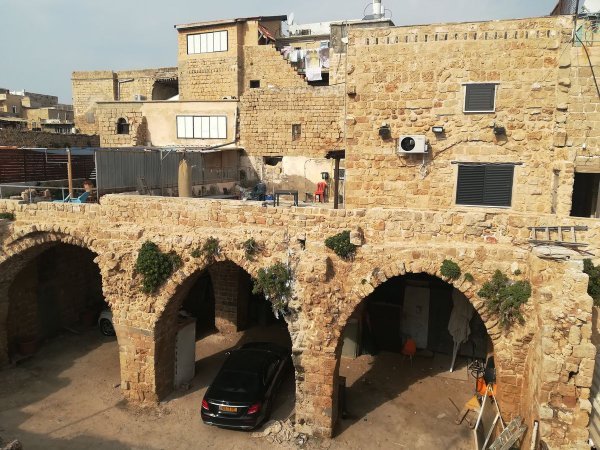
The tunnel runs beneath the houses of the old city built by Zahir al-Umar and al-Jazzar in the 18th and 19th centuries, which UNESCO inscribed on the World Heritage List in 2001. Acre fell to Zionist militias on 17 May 1948 and most of its people were expelled, while some remained in the old city. Many of its houses were placed under the "Custodian of Absentee Property", turning their residents into tenants who need permission even to repair their homes. Reports from 2014 said the authorities controlled about 900 homes and were seeking to evict 163 more through the courts, while the Acre development company was demanding the eviction of 35 families from the Khan al-Umdan area "for tourism development".
The tunnel today (2026)
Today the Templars' Tunnel is one of Acre's leading tourist attractions, run by the Old Acre Development Company, with visitors walking the wooden walkway from the fortress to the port. Yet the story told to visitors centres on the Crusader era, while the Arab and Islamic identity of Acre, liberated by al-Ashraf Khalil and rebuilt by Zahir al-Umar and al-Jazzar, is pushed to the margins, and the city's Palestinian residents above the tunnel face eviction pressure and the conversion of their homes into tourism projects. The tunnel remains a witness to the layers of Acre's history, and to a city whose walls withstood Napoleon and whose people still hold on to it.
Frequently asked questions
What is the Templars' Tunnel in Acre?
An underground passage dug by the Knights Templar (al-Dawiyya) in the 13th century, linking their fortress in south-western Acre to the port.
How long is the tunnel?
About 150 metres, from the site of the Templar fortress in the west to the port in the east.
Why was the tunnel filled in?
It was filled with rubble after the Mamluk sultan al-Ashraf Khalil took Acre on 18 May 1291 and ended the Crusader presence there.
When was the tunnel rediscovered?
In 1994; its western section opened to visitors in 1999, and the whole tunnel in 2007.
What lies above the tunnel today?
The houses of Acre's old city, built by Zahir al-Umar and al-Jazzar and home to Acre's Palestinians.
Conclusion
Beneath the alleys of old Acre runs a tunnel the Templars dug to link their fortress to the sea, buried for nearly seven centuries after al-Ashraf Khalil's conquest. Today, with the houses of Zahir al-Umar and al-Jazzar above it and Acre's steadfast people living in them, the tunnel remains one layer in the history of an Arab city that cannot be reduced to a single era.
More from the archive
 Download Our Palestine App
The whole archive in the palm of your hand: depopulated villages, the Nakba, the massacres and Al-Aqsa — free, with no ads to erase the story.

Comments
No comments yet — be the first to write one.
Add your comment
Name and email are optional. Comments appear after review.