
Khalil al-Wazir (Abu Jihad): Architect of the First Intifada
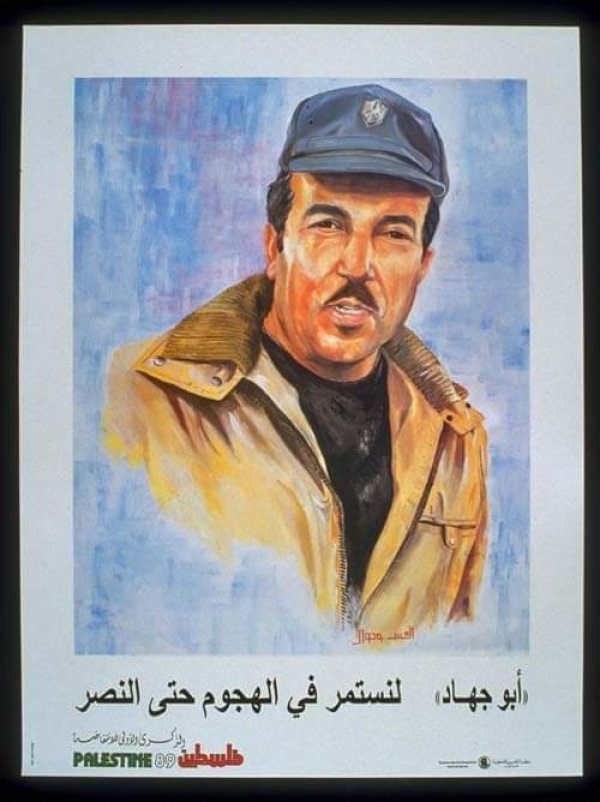
Khalil al-Wazir, “Abu Jihad” (1935–1988), was a son of Ramla expelled from it in the Nakba, a co-founder of Fatah, deputy commander of the Palestinian revolution’s forces, and the man his enemies called “the architect of the intifada.” On 16 April 1988 an Israeli commando unit stormed his home in Tunis and shot him dozens of times in front of his wife, a political assassination on the soil of a sovereign state that the UN Security Council condemned. [1] [2] [3] [4]
This is the second article in the series “Assassinated leaders of the Palestinian revolution,” after the article on his comrade Salah Khalaf (Abu Iyad).
Abu Jihad at a glance
| Item | Details |
|---|---|
| Name | Khalil Ibrahim Mahmud al-Wazir, “Abu Jihad” [1] |
| Born | 10 October 1935, Ramla [2] [1] [5] |
| Displaced | July 1948, from Ramla to Gaza [1] |
| Key roles | Fatah co-founder and Central Committee member, head of the Western Sector from 1973, deputy commander of the revolution’s forces [1] [5] |
| Assassinated | 16 April 1988, his home in Sidi Bou Said, Tunis [1] [2] |
| Perpetrator | Israel’s Sayeret Matkal unit with the Mossad [1] [2] [5] |
| Buried | Martyrs’ Cemetery, Yarmouk camp, Damascus [1] [2] |
Timeline of Abu Jihad’s life
| Year | Event |
|---|---|
| 1935 | Born in Ramla on 10 October [2] [1] |
| 1948 | Expelled from Ramla to Gaza [1] [5] |
| 1955 | Blows up the Zohar reservoir near Beit Hanoun and leads Gaza protests [1] [5] |
| 1957–1963 | Teaches in Saudi Arabia and Kuwait [2] [1] |
| 1959 | Co-founds Fatah [2] [1] |
| 1962 | Marries Intisar al-Wazir (Umm Jihad) [2] [1] |
| 1963 | Opens Fatah’s first office in Algeria [2] [1] |
| 1965 | First al-Asifa operation; military HQ set up in Damascus [2] [5] |
| 1968 | Fights at the Battle of Karameh [1] [5] |
| 1973 | Takes over the Western Sector after Kamal Adwan’s assassination [1] [2] |
| 1980 | Elected deputy commander-in-chief at Fatah’s fourth conference [2] [1] |
| 1982 | Leads the resistance in the siege of Beirut, then moves to Tunis [1] [5] |
| 1986 | Moves to Baghdad [1] [5] |
| 1987 | The First Intifada erupts; he helps guide it [1] [2] |
| 1988 | Assassinated in Sidi Bou Said on 16 April [1] [2] |
From Ramla to Gaza
Khalil Ibrahim Mahmud al-Wazir was born in Ramla on 10 October 1935 to a farming father and a homemaker mother, one of seven children [2] [1]. In July 1948, with the occupation of Ramla and the expulsion of its people by Zionist militias, his family was driven out at gunpoint, moving through Ramallah and Hebron before settling as refugees in the Gaza Strip [1] [5]. The Yasser Arafat Foundation records that a Haganah member fired at the thirteen-year-old that day and missed [5].
In Gaza he attended an UNRWA school and finished secondary school at Palestine School in 1954 [2] [1]. In 1952 he joined the Muslim Brotherhood and ran its student office, then left when its leadership rejected his proposal to adopt armed struggle [2] [1]. On 25 February 1955 his cells blew up the Zohar water reservoir near Beit Hanoun, and days later he helped lead a mass demonstration after the occupation’s attack on Gaza on 28 February 1955 [1] [5].
Founding Fatah: from Kuwait to Algeria
In 1955 he enrolled in the Faculty of Arts at Alexandria University to study journalism but did not finish, then taught in Saudi Arabia in summer 1957 and in Kuwait until 1963 [2] [1]. In Kuwait he agreed with Yasser Arafat to found a national liberation movement, becoming a co-founder of Fatah, announced in late 1959, and a member of its Central Committee until his death [2] [1]. He edited the magazine “Our Palestine: The Call of Life,” which carried the movement’s ideas until 1964 [1] [5]. On 19 July 1962 he married his cousin Intisar al-Wazir (Umm Jihad); they had three sons and two daughters [2] [1].
In November 1963 he moved to Algeria, opened Fatah’s first office there and organised the training of Palestinian volunteers at the Algerian military academy [2] [1]. He travelled with Arafat to China in 1964, where a Palestine office opened in Beijing, and took part in the first Palestine National Council in Jerusalem, which announced the founding of the PLO [1].
Military commander and the Western Sector
He helped plan the first operation of al-Asifa, Fatah’s armed wing, against the Eilabun tunnel on New Year’s night 1965, the operation that announced the launch of the modern Palestinian revolution [2] [5]. He then moved to Damascus in 1965 and set up the revolution’s military headquarters, led operations in Upper Galilee after the June 1967 war, and fought in the Battle of Karameh on 21 March 1968 [1] [5].
After the occupation assassinated commander Kamal Adwan in Beirut in April 1973, Abu Jihad took charge of the “Western Sector,” the armed struggle inside occupied Palestine, until his death [1] [2] [5]. From that post he oversaw prominent operations, including the Savoy Hotel operation in Tel Aviv in 1975 and the coastal road operation led by Dalal al-Mughrabi in 1978 [6] [5]. He was elected deputy commander-in-chief at Fatah’s fourth conference in Damascus in May 1980 [2] [1].
He led the resistance during the Israeli invasion of Lebanon and the siege of Beirut in 1982, then moved with Arafat to Tunis [1] [5]. From 1984 he worked to build civil society in the occupied territories, from youth committees and women’s groups to labour unions, the very network that would later carry the intifada [1].
Architect of the First Intifada
When the Stone Intifada erupted in December 1987, Abu Jihad was one of its principal architects, supporting and guiding it in coordination with the clandestine Unified National Leadership in the occupied territories [1] [5]. That is why the Israelis called him “the architect of the intifada” [2]. Analysts see his assassination as part of an Israeli plan to crush the intifada, and argue that his absence helped shift the Palestinian course from armed struggle towards negotiations [3] [6].
Dimona and the last weeks
In the intifada’s first months Abu Jihad continued to oversee armed action inside the occupied land; among the last operations attributed to him was the Dimona operation of 6 March 1988, when fedayeen seized a bus near the nuclear reactor in the Naqab and were all killed when occupation forces stormed it [7] [5]. A few weeks later the decision to kill him was taken [7] [8].
Abu Jihad preferred to stay in Baghdad for the protection it offered, but he received warnings of a plan to kill a senior Palestinian leader and left for Tunis, where his family lived [7] [5]. Al Majalla raises a question that remains open: were those warnings genuine, or planted by the occupation to push him to Tunis, where he was easier to reach? [7] In Tunis he lived in a villa in Sidi Bou Said, near the home of Mahmoud Abbas [7].
The assassination: Sidi Bou Said, 16 April 1988
Abu Jihad’s family lived in Tunis, home of the PLO headquarters, and he visited often from his base in Baghdad; on his last visit in spring 1988 he stayed about 15 days [5]. On the night of 15–16 April 1988 an Israeli commando force landed by sea on the Tunisian coast and made for his home in the suburb of Sidi Bou Said [3] [5].
The attackers killed a guard asleep in a car outside the house, then a second guard who woke and tried to resist, then the gardener asleep in the villa’s basement, before storming the house and shooting Abu Jihad, then firing again to make sure he was dead, while his wife Umm Jihad witnessed the crime [3]. The Yasser Arafat Foundation states that 70 bullets struck his body [5].
Umm Jihad’s testimony
Intisar al-Wazir (Umm Jihad) recounted that at about a quarter to one after midnight she heard the front door being broken, then screaming. Abu Jihad was sitting at a table in the bedroom, writing; he pushed the table aside and took his pistol from the top of the wardrobe [7]. Four masked attackers in uniforms resembling Tunisian special forces came in; he fired at them, they hit him in the chest and left arm, then took turns shooting him after he fell until they had emptied their magazines [7].
She says one attacker pinned her against the wall at gunpoint, then a fifth came in and fired again into Abu Jihad’s body after he was dead, and downstairs she heard a woman speaking French, hurrying the soldiers [7].
The operation was carried out by the elite Sayeret Matkal unit under Moshe Ya’alon, later the occupation army’s chief of staff and defence minister, with the Mossad and other intelligence services, backed by warships, helicopters and boats [1] [2] [8] [5]. Al-Quds Al-Arabi reports that some 3,000 Israelis took part in planning, execution and support, and that Prime Minister Yitzhak Shamir approved the operation [8]. Israel never officially admitted the crime, but in 2012 its military censor allowed the details to be published, which was seen as de facto acknowledgement [3].
Abu Jihad’s assassination came three years after the raid on Hammam al-Shatt in 1985 and less than three years before his comrade Abu Iyad was assassinated in Tunis, in a chain of attacks on the Palestinian revolution’s leaders in exile.
The funeral and international condemnation
On 25 April 1988 the UN Security Council adopted Resolution 611, which “condemns vigorously the aggression perpetrated on 16 April 1988 against the sovereignty and territorial integrity of Tunisia” and urged states to take measures to prevent such acts [4].
His body was flown to Damascus, where tens of thousands of Palestinians and Syrians joined his funeral, which the Yasser Arafat Foundation puts at more than half a million mourners, and he was buried in the Martyrs’ Cemetery in Yarmouk camp [1] [2] [5].
After Abu Jihad: legacy and memory
In the days of mourning Palestinians in the occupied territories held symbolic marches despite the curfew imposed by the occupation [9]. The intifada the occupation sought to crush by killing him went on for years, though analysts argue his absence helped steer the Palestinian course towards the negotiations that led to Oslo [6].
Umm Jihad continued her political career, serving as Minister of Social Affairs from 1995 to 2005 [7]. On each anniversary Fatah describes his killing as “a crime of state terrorism,” and official Palestinian bodies call for the killers to be prosecuted before international forums, above all the International Criminal Court, as a political crime that does not lapse [9]. In Palestinian memory he is known as “the Prince of Martyrs” [10].
Videos
“The Palestinians’ years in Tunisia”: the assassinations of Abu Jihad and Abu Iyad and the Hammam al-Shatt raid, Memoirs, Al Araby TV (in Arabic) [11]
“Prince of Martyrs: 37 years since the assassination of Khalil al-Wazir” (in Arabic) [10]
Conclusion
From a boy shot at in the streets of Ramla in 1948 to a leader killed by dozens of bullets in his home in Tunis in 1988, Khalil al-Wazir’s life was a full journey from the Nakba to the revolution. They killed him believing they were killing the intifada; his name remained its symbol, and the crime stands as a testament to the policy of assassinating the Palestinian people’s leaders wherever they are.
Frequently asked questions about Khalil al-Wazir (Abu Jihad)
Who was Khalil al-Wazir, Abu Jihad?
A Palestinian leader born in Ramla in 1935, a co-founder of Fatah, deputy commander of the Palestinian revolution’s forces and head of the Western Sector.
When was Abu Jihad assassinated?
On 16 April 1988, at his home in Sidi Bou Said near Tunis.
Who assassinated Abu Jihad?
Israel’s Sayeret Matkal unit, led by Moshe Ya’alon, with the Mossad.
Why was Abu Jihad called the architect of the intifada?
For his role in supporting and guiding the First Intifada (1987) in coordination with the Unified National Leadership in the occupied territories.
Who was Abu Jihad’s wife?
Intisar al-Wazir (Umm Jihad), his cousin, whom he married in 1962; she witnessed his killing and later served as Minister of Social Affairs.
What is Security Council Resolution 611?
A resolution of 25 April 1988 that vigorously condemned Israel’s aggression against Tunisia’s sovereignty in killing Abu Jihad.
Where is Abu Jihad buried?
In the Martyrs’ Cemetery in Yarmouk camp, Damascus.
Sources and references
Arabic-language sources are listed with translated titles.
- “Khalil al-Wazir (Abu Jihad),” Interactive Encyclopedia of the Palestine Question (Institute for Palestine Studies).
- “Khalil al-Wazir (Abu Jihad), Engineer of the Stone Intifada in Palestine,” Al Jazeera Encyclopedia, 10 June 2025.
- “Israel Publishes Details of Abu Jihad’s Assassination,” Al Jazeera Net, 1 November 2012.
- UN Security Council, Resolution 611 (1988), 25 April 1988.
- “Khalil Al-Wazir (Abu Jihad) (1935–1988),” Yasser Arafat Foundation.
- Awad al-Rajoub, “34 Years On: The Main Shifts in the Palestinian Cause After Abu Jihad’s Assassination,” Al Jazeera Net, 16 April 2022.
- Sami Moubayed, “How Israel ‘Drew’ Abu Jihad from Baghdad to Tunis to Kill Him,” Al Majalla, April 2024.
- Rashed Issa, “On the 35th Anniversary of Khalil al-Wazir’s Martyrdom: The Palestinian Whose Assassination Involved 3,000 Israelis,” Al-Quds Al-Arabi, 16 April 2023.
- “Abu Jihad and Rantisi Remind Palestinians from Their Graves of Israel’s Assassination Policy,” Al-Quds Al-Arabi, 16 April 2013.
- “Prince of Martyrs: 37 Years Since the Assassination of Khalil al-Wazir ‘Abu Jihad’,” YouTube.
- “The Assassinations of Abu Iyad and Abu Jihad and Israel’s Bombing of Hammam al-Shatt: The Palestinians’ Years in Tunisia,” Memoirs, Al Araby TV, 6 May 2025.
Video clips
Photo gallery


More from the archive
 Download Our Palestine App
The whole archive in the palm of your hand: depopulated villages, the Nakba, the massacres and Al-Aqsa — free, with no ads to erase the story.



Comments
No comments yet — be the first to write one.
Add your comment
Name and email are optional. Comments appear after review.