
Battle of Wadi Sabbas, 1938 | Rebels Ambush the British and Down a Plane
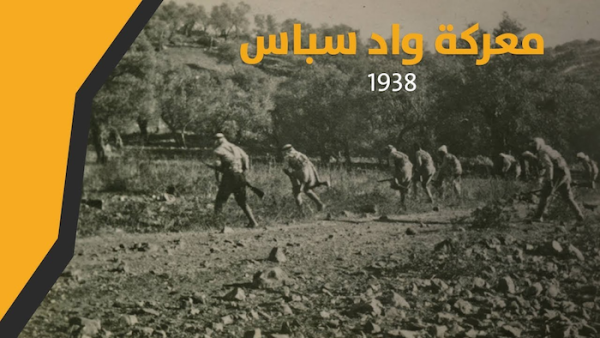
The Battle of Wadi Sabbas was fought by Palestine’s rebels against the British occupation forces in 1938, at the height of the Great Palestinian Revolt, in a valley between the villages of Qusra and Jalud, southwest of the town of Aqraba, south of Nablus. The rebels ambushed a column of British patrols and brought down a warplane sent to its aid, writing a page of glory still told in the villages of the area from one generation to the next. [1][2]
Eight rebels were martyred in the battle, from the villages of Qusra, Beita, Deir al-Hatab and al-Far’a and from the Jordanian town of al-Salt, while the losses of the British forces remain unknown. [1]
Contents
- At a glance
- The context
- The participants
- The plan
- The battle
- Bringing down the plane
- The withdrawal
- The martyrs
- The battle in popular memory
- Between the accounts
- Timeline
- Frequently asked questions about the Battle of Wadi Sabbas
At a glance
| Item | Details |
|---|---|
| Date | 1938 |
| Place | Wadi Sabbas between Qusra and Jalud, southwest of Aqraba, south of Nablus |
| Sides | Palestinian rebels and Arab volunteers against the British occupation forces |
| Rebel bands | Khamis al-Aqrabawi, Abdullah al-Beiruti, Turki al-Adeli, and the al-Salt band led by Ahmad and Hafez al-Najdawi |
| British force | A column of 11 patrols and two warplanes |
| Rebels martyred | 8 |
| Wounded | 5, according to Nizam Subaih |
| British losses | Unknown |
| Highlight | A British plane brought down |
The context
The year 1938 was the height of the Great Palestinian Revolt (1936–1939) against the British occupation and its project to establish a Jewish state in Palestine, and rebel bands spread through the Nablus mountains, ambushing British patrols on the mountain roads. [1]
The participants
Several bands took part in the battle. The largest and most experienced was the band of Khamis al-Aqrabawi, alongside the bands of Abdullah al-Beiruti and of Turki al-Adeli of Beita, and a band from the Jordanian town of al-Salt led by Ahmad and Hafez al-Najdawi. [1]
They were joined by volunteers from the villages of Qusra, Aqraba, Jurish, Beita, Deir al-Hatab and al-Far’a. From Qusra came Marzouq al-Asmar Odeh, Abd al-Rahim Qasim Hasan “Abu Nader,” who was wounded in the battle, Saleh al-Badawi, Abd al-Hamid al-Khuraysh and others; from Jurish came Ibrahim Abd al-Fattah “Abu Ghaleb” and Muhammad Odeh “Abu Izzat,” who was wounded. [1][2]
The plan
The rebels were meeting in the village of Aqraba to organise the affairs of the revolt in the area when word reached them that a column of British patrols would pass through Wadi Sabbas, so they moved to the valley and lay in wait for it. [1]
At this point Abu al-Abbas, Sheikh Shehadeh Abd al-Qader, the rebels’ standard-bearer and trainer, stepped in and asked the band leaders to leave the valley floor and spread out over the slopes and peaks of the surrounding mountains, so that the British would find it hard to reach and target them, and so that they would overlook the roads leading into the valley. Everyone took up positions according to his plan. [1]
The battle
In the afternoon the eleven British patrols advanced into the valley, and when they reached a point where they could neither advance nor retreat, the order was given to open fire. Surprise played a decisive role in scattering the British forces and trapping them under the rebels’ fire, and a fierce battle followed. [1]
The rebel Za’al Abu Saliqa, one of those who fought in it, described it: “A fierce battle… the soldiers’ screams were loud from all the bullets that rained down on them.” [1]
Bringing down the plane
As the fighting intensified, the British soldiers called in the air force, and two warplanes arrived to locate and bomb the rebels’ positions, but the rebels hit one of them and brought it down. [1]
Al Jazeera Net credits Marzouq al-Asmar Odeh of Qusra with bringing down the plane, and says he was martyred in the battle afterwards, while another account credits Saleh al-Badawi and a comrade. [2][1]
The withdrawal
The battle went on into the early evening. As darkness fell, dozens of volunteers from the neighbouring villages joined the rebels and helped secure their withdrawal from the site. Then the villagers came back in the dark to carry away the bodies of the martyrs and rescue the wounded. [1]
The martyrs
Eight rebels were martyred in the battle, and five were wounded according to Nizam Subaih. Among the martyrs named in the sources are: [1]
| Martyr | Town |
|---|---|
| Marzouq al-Asmar Odeh | Qusra |
| Hasan Mahmoud al-Abd al-Rahman al-Jabr al-Adeli | Beita |
| Sa’id al-Abd al-Rahman Hmayel | Beita |
| Dayf Allah al-Adeli | Beita |
| Awad al-Salim al-Salman al-Duwaikat | Beita |
| Martyrs from al-Salt (two or four, depending on the account) | al-Salt |
| Two martyrs each from Deir al-Hatab and al-Far’a, according to Nizam Subaih | Deir al-Hatab, al-Far’a |
The battle in popular memory
Folk poetry commemorated the battle in several poems, among them a poem by Nasser al-Bandi that runs: [1]
Eight of the rebels were killed, and five others wounded,
And of the enemy’s soldiers forty, and seven, each healing from his wound.
The poet Abu Isa composed a poem praising the rebels of Aqraba, and Faisal al-Bal’awi a zajal in honour of al-Hajj Hafez. [1]
Between the accounts
The year: the accounts agree on 1938, while Abd al-Rahim Da’is places the battle under the heading 1937, and no source gives its day or month. The place: Da’is puts the valley south of Abu al-Kasbar near Duma on the road to al-Mughayyir, unlike the other accounts. Duration: Hamza al-Aqrabawi’s account says the battle ended with the evening, while Da’is cites Saleh Mas’oud Bowaisir as saying it lasted 24 hours. British losses: the figure of forty dead and seven wounded comes from the folk poem, while Da’is considers them unknown because of the scant press coverage at the time. Martyrs from al-Salt: two according to Subaih and al-Aqrabawi, and four according to another account. [1]
Timeline
| Date | Event |
|---|---|
| 1938, afternoon | The British patrols enter the valley and the rebels open fire [1] |
| During the battle | A British plane brought down [1] |
| Evening | The rebels withdraw with village volunteers; the martyrs carried away [1] |
Frequently asked questions about the Battle of Wadi Sabbas
Where is Wadi Sabbas?
Between the villages of Qusra and Jalud, southwest of Aqraba, south of Nablus. [1][2]
When was the battle?
In 1938, at the height of the Great Palestinian Revolt. [1][2]
Who led the rebels?
The bands of Khamis al-Aqrabawi, Abdullah al-Beiruti, Turki al-Adeli and the al-Salt band led by Ahmad and Hafez al-Najdawi; the plan was laid by Sheikh Shehadeh Abd al-Qader, “Abu al-Abbas.” [1]
Did the rebels bring down a plane?
Yes; they brought down one of two warplanes sent to aid the British patrols. [1][2]
How many were martyred?
Eight rebels. [1]
Read also on Palestinuna
Sources and references
- Qusra website, “The Battle of Wadi Sabbas,” 23 January 2012, containing the accounts of Nizam Subaih (“Qusra between past and present”), Hamza Usama al-Aqrabawi (“From the memory of the revolt 1936–1939: the Battle of Wadi Sabbas”) and Abd al-Rahim Da’is (“Qusra: the land and the people”) (in Arabic).
- Al Jazeera Net, “Qusra: cradle of the popular guard committees and the besieged town near Nablus,” 21 August 2026 (in Arabic).
More from the archive
 Article
The Ma'alot–Tarshiha Operation 1974 | DFLP Fedayeen on the Nakba Anniversary on Tarshiha's Depopulated Land
 Article
Operation Dispelled Illusion 2006: The Kerem Shalom Tunnel and Shalit's Capture to the Wafa al-Ahrar Exchange
 Article
The Zuqaq al-Mawt Operation 2002: The al-Quds Brigades' Ambush in Wadi al-Nasara, Hebron
 Download Our Palestine App
The whole archive in the palm of your hand: depopulated villages, the Nakba, the massacres and Al-Aqsa — free, with no ads to erase the story.



Comments
No comments yet — be the first to write one.
Add your comment
Name and email are optional. Comments appear after review.