Battle of Wadi ‘valley’ Sabas 1938
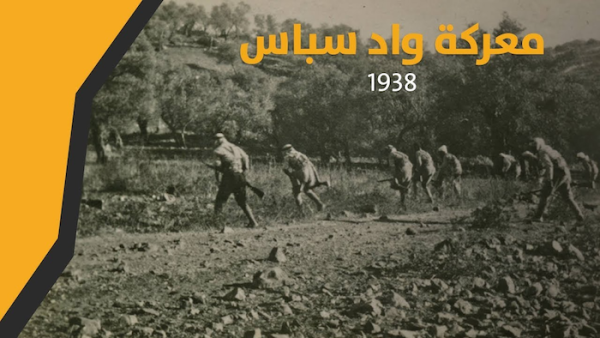
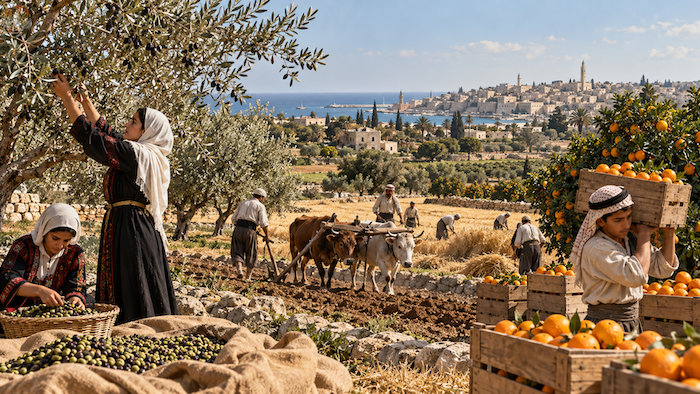
Wadi ‘valley’ Sabas is located between the villages of Qasr and Jalood to the southwest of the town of Aqraba. The valley gained prominence due to the battle that took place between the British and the rebels in 1938, a heroic struggle in which the rebels inscribed a glorious chapter on the forehead of the Arab nation.
Several factions participated in this battle, including the Khamis Al-Aqrabawi faction, which was the largest and most experienced in combat. There was also the Abdullah Al-Beiruti faction, the Jordanian Salt faction led by Ahmed and Hafez Al-Najdawi, and the Turki Adili faction. Volunteers from the villages of Qasr, Aqraba, Jorish, Beta, and neighboring villages also took part.
The rebels were in a meeting in the village of Aqraba to organize revolutionary affairs in the region when they were informed that a convoy of British patrols would pass through Wadi Sabas. They moved to the valley and took positions, awaiting the passage of the British forces.
At this point, Abu al-Abbas (Sheikh Shihada Abdul Qader, the flag bearer and trainer of the rebels) intervened and requested the faction leaders to reposition and change their locations. He asked them to leave the valley and distribute themselves on the slopes and mountain peaks in the vicinity, making it difficult for the enemy to reach and target them. This way, they could oversee the roads leading to the valley. Everyone was strategically positioned according to Abu al-Abbas's plan, awaiting the passage of the British patrols.
By the afternoon, the eleven patrols advanced through Wadi Sabas. When they reached a point where they couldn't proceed or retreat, at that moment, the order was given to open fire on them. The element of surprise played a crucial role in dispersing the British forces and subjecting them to the rebels' gunfire. A fierce battle unfolded, with Palestinian revolutionaries scripting a resounding page of glory. This battle became a prideful tale to be recounted for generations.
While the fighting intensified and gunfire was exchanged, communications were initiated by the British troops, and airstrikes were called in to pinpoint the rebels' locations. However, they managed to hit the pilot and down his aircraft. The battle continued into the early evening. As darkness fell, dozens of volunteers from neighboring villages joined the rebels in the battle, contributing to securing their withdrawal from the site. They left behind the cries and lamentations of the British soldiers.
Several revolutionaries were martyred in that battle, said to be eight heroes. In the darkness, people managed to return to transport their bodies and rescue the wounded. The battle was described by Za'al Abu Suleikha, one of the rebels who participated, as 'a fierce battle, and the soldiers' cries were loud due to the abundance of bullets raining down on them.
Several poems were composed about that battle, including one by the poet Abu Issa:
In the tapestry of rebellion's tale, eight martyrs unfurled,
Five, wounded in the struggle, in the tumult of the world.
From the adversary's ranks, forty met their destined end,
Seven, wounded, each a solace, wounds that time may mend.
More from the archive
 Download Our Palestine App
The whole archive in the palm of your hand: depopulated villages, the Nakba, the massacres and Al-Aqsa — free, with no ads to erase the story.
Download Our Palestine App
The whole archive in the palm of your hand: depopulated villages, the Nakba, the massacres and Al-Aqsa — free, with no ads to erase the story.
Comments
No comments yet — be the first to write one.
Add your comment
Name and email are optional. Comments appear after review.