
Nuseirat Refugee Camp in Gaza
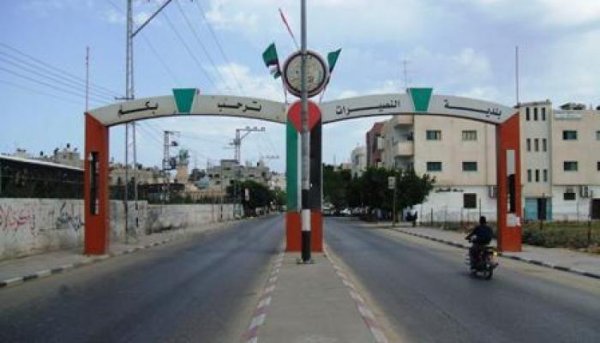
Nuseirat Refugee Camp in Gaza
Nuseirat Refugee Camp in Gaza: History, Population, the Genocide in Gaza and the Right of Return
Nuseirat Camp is one of the largest Palestine refugee camps in the Gaza Strip, on the coast of the Middle Area. It began in in the grounds of a former British military prison, sheltering about 16,000 refugees driven from Lydda, Beersheba, Kawkaba and the coastal plain of southern Palestine during the occupation of Palestine. Before October 2023, 85,409 refugees were registered in the camp. In the genocide in Gaza, Nuseirat became the scene of some of the deadliest massacres, including the attack of 8 June 2024 that killed 274 people in a single day, while also sheltering hundreds of thousands of displaced people. This guide covers its history, origins, population, living conditions and current situation.
Quick Facts About Nuseirat Camp
| Arabic name | مخيم النصيرات (Mukhayyam al-Nuseirat) |
|---|---|
| Country / Region | Palestine, central Gaza Strip |
| Governorate | Deir al-Balah (Middle Area), on the Mediterranean coast |
| Year established | |
| Original population | About 16,000 refugees |
| Registered refugees | 85,409 (UNRWA, ) |
| UNRWA facilities (before October 2023) | 25 schools in 15 buildings, 2 health centres, 2 relief and social services offices, and a food distribution centre shared with Bureij |
| Origin of residents | Lydda, Beersheba, Kawkaba and the coastal plain of southern Palestine |
| Main hospital | Al-Awda Hospital |
| Current status | Repeatedly struck since October 2023; sheltering large numbers of displaced people in tents as of 2026 |
Note: UNRWA counts refer to refugees registered in the camp, not necessarily the number of people living there at any given time.
The Nakba: Why Nuseirat Camp Exists
Nuseirat Camp was born from the Nakba (Arabic for "catastrophe"): the mass expulsion of Palestinians during the occupation of Palestine in . Roughly 750,000 Palestinians were driven from their homes, and more than 200,000 of them poured into the narrow Gaza Strip.
Many of those who reached the middle of the Strip came from the southern districts of Palestine: from Lydda and its surroundings, from the Beersheba region, from villages such as Kawkaba, and from the towns and villages of the coastal plain. About 16,000 of them found shelter in and around a former British military prison in the Nuseirat area, the site that became Nuseirat Camp.
The Right of Return
The right of return is the central demand of Nuseirat's refugees. It rests on several foundations in international law:
- UN General Assembly Resolution 194 (), paragraph 11, resolved that refugees wishing to return to their homes and live at peace with their neighbours should be permitted to do so at the earliest practicable date, and that compensation should be paid to those choosing not to return and for loss of or damage to property.
- The Universal Declaration of Human Rights (Article 13) affirms everyone's right to leave any country, including their own, and to return to it.
- UN General Assembly Resolution 3236 () reaffirmed the "inalienable right" of Palestinians to return to their homes and property.
Three generations after the Nakba, the people of Nuseirat still trace their roots to their towns and villages of origin, and still hold onto the right to return to them.
History of the Camp
From a British prison to a refugee camp (1948–1950s)
Before the camp was formally established, the first refugees lived in the grounds of a former British military prison in the area, known locally as al-Kalbush. During the Second World War, the same area had briefly hosted refugees from Greece. After the Nakba, UNRWA took responsibility for the refugees in 1950 and built simple shelters, which families later expanded and rebuilt.
Under Egyptian administration and occupation (1948–1993)
From 1948 to 1967 the Gaza Strip was under Egyptian administration. With the occupation of the West Bank and Gaza Strip in , the camp came under Israeli military rule, and its population took part in both the First Intifada (1987) and the Second Intifada (2000).
Siege and repeated wars (2007–2023)
After the blockade imposed on Gaza in 2007, unemployment and poverty soared, construction materials were banned, and fishing limits imposed by Israel led to the collapse of the camp's fishing sector. The camp was struck repeatedly in the wars of 2008–2009, 2012, 2014 and 2021.
Nuseirat and the Genocide in Gaza (2023 onward)
Since October 2023, Nuseirat has been one of the places hit hardest in the genocide in Gaza. In September 2025, the UN Independent International Commission of Inquiry concluded that Israel has committed genocide against Palestinians in Gaza, finding that four of the five acts defined in the 1948 Genocide Convention had been committed. A genocide case brought by South Africa against Israel is also before the International Court of Justice. Israel rejects these findings. By mid-2026, Gaza's health ministry reported more than 72,000 Palestinians killed since October 2023.
Because Nuseirat lies in the Middle Area, to which people from the north were ordered to flee, the camp's population swelled with hundreds of thousands of displaced people living in schools, tents and damaged buildings. Yet it was bombed again and again:
Major massacres (2023–2024)
- 18 October 2023: the Grand Nuseirat Mosque was bombed and destroyed, and strikes on the camp in the following weeks killed and injured hundreds.
- May 2024: an airstrike on a three-storey family home and a nearby school killed about 40 people, many of them trapped under the rubble for hours.
- 6 June 2024: a strike on an UNRWA school sheltering about 6,000 displaced people killed 37, according to a Gaza hospital.
- 8 June 2024: the deadliest single attack on the camp, described below.
- July 2024: Gaza's government media office reported 63 strikes on the camp in seven days, killing 91 people and wounding 251.
- December 2024: a strike on a post office sheltering displaced families and nearby homes killed more than 30 people.
Continued strikes (2025–2026)
- July 2025: a strike on a drinking-water distribution point west of the camp killed six people, including children, and another strike on a family home killed ten.
- September 2025: a drone strike on a tent sheltering displaced people west of the camp killed eight.
- After the ceasefire agreement of October 2025: strikes continued. In March 2026, children studied in tents beside a school destroyed by an airstrike; in May 2026, a family home was bombed; and in July 2026, strikes on homes killed 13 people, a drone strike on a funeral gathering outside a mosque killed up to eight, and another drone strike set a tent of displaced people on fire, killing one.
The Nuseirat Massacre of 8 June 2024
On 8 June 2024, Israeli forces carried out a daytime operation in the crowded camp to free four Israeli captives, backed by intense air and ground strikes on residential buildings and markets. According to Gaza's health ministry, as reported by the UN Office for the Coordination of Humanitarian Affairs (OCHA), 274 Palestinians were killed and 698 wounded in Nuseirat that day, including 64 children and 57 women. Hospitals were overwhelmed, and witnesses described homes destroyed with their occupants inside. The attack drew international condemnation, with the European Union's foreign policy chief calling it a massacre.
Origin of the Name
The camp takes its name from the Nuseirat, a local Bedouin clan belonging to the larger Hanajira tribal confederation, which historically lived in the area between Deir al-Balah and Gaza. The name is also spelled Nusseirat or al-Nuseirat.
Location and Geography
Nuseirat Camp lies in the Deir al-Balah Governorate (Middle Area) of the Gaza Strip, on the Mediterranean coast about 5 km northeast of Deir al-Balah and south-west of Gaza City. Bureij Camp lies to its east and Maghazi Camp to its southeast. The area sits about 25–30 metres above sea level. The camp is surrounded by the Nuseirat municipality, and the boundary between the two is hard to distinguish on the ground.
Villages of Origin
Most of Nuseirat's refugees came from the southern districts of Palestine, including:
- Lydda (al-Lid) and its surroundings
- Beersheba and the Naqab
- Kawkaba and other villages of the Gaza district
- Towns and villages of the southern coastal plain
Population and Demographics
| Year | Population | Source |
|---|---|---|
| 1948–1950 | About 16,000 refugees | UNRWA |
| 1967 | About 17,600 | WAFA |
| 2017 | 31,747 inside the camp; 54,851 in the surrounding Nuseirat municipality | Palestinian Central Bureau of Statistics (PCBS) |
| 2023 | 85,409 registered refugees | UNRWA |
| 2023–2026 | Population swollen by hundreds of thousands of displaced people from other areas | UN agencies |
The difference between UNRWA and PCBS figures reflects different methods: UNRWA counts refugees registered to the camp, many of whom live in the surrounding municipality, while the PCBS counts people resident inside the camp's boundaries.
Housing and Infrastructure
Before October 2023, overcrowding and a lack of living space defined the camp. Homes were built close together, families added floors without proper design, and many lived in substandard conditions. Electricity cuts were constant, the water supply was contaminated, and building materials were banned under the blockade.
Since 2023, large parts of the camp's homes, mosques, schools and markets have been destroyed or damaged. Its streets are crowded with tents of displaced families, and building materials are still barred from entering Gaza.
Health Situation
Before the war, two UNRWA health centres served the camp, and Al-Awda Hospital in Nuseirat was one of the main hospitals of central Gaza. Since 2023:
- Al-Awda Hospital and Al-Aqsa Martyrs Hospital in nearby Deir al-Balah have been overwhelmed by mass casualties.
- Famine and malnutrition have spread among residents and displaced families.
- Contaminated water, destroyed sewage systems and overcrowded tents have led to the spread of disease.
- Children and families suffer severe psychological trauma.
Economic Situation and Fishing
As a coastal camp, Nuseirat had a fishing community with dozens of boats. The fishing limits imposed by Israel led to the collapse of this sector. Under the blockade, unemployment and poverty became very high, and a large share of the population came to depend on UNRWA food and cash assistance.
Since 2023, the camp's markets and livelihoods have been largely destroyed, and nearly all families depend on humanitarian aid, which has itself been severely restricted. Even water distribution points have been struck.
Education
Before October 2023, UNRWA ran 25 schools in 15 buildings in the camp, most of them on a double-shift system because of overcrowding. Since 2023, schools have been turned into shelters for displaced families, and several have been bombed while full of people. Students have continued to study in tents set up beside destroyed schools, and children have lost years of education.
Frequently Asked Questions About Nuseirat Camp
Where is Nuseirat refugee camp located?
Nuseirat is in the Deir al-Balah Governorate in the central Gaza Strip, on the Mediterranean coast about 5 km northeast of Deir al-Balah, next to Bureij and Maghazi camps.
How many refugees live in Nuseirat camp?
UNRWA reported 85,409 registered refugees in 2023. Since 2023, the camp has also sheltered very large numbers of people displaced from other parts of Gaza.
When was Nuseirat camp established?
It was established in 1948 for about 16,000 refugees, who first lived in the grounds of a former British military prison in the area.
What happened in Nuseirat on 8 June 2024?
During an Israeli operation to free four captives, intense strikes on the camp killed 274 Palestinians and wounded 698, including 64 children and 57 women, according to Gaza's health ministry.
Where do Nuseirat's refugees come from?
Mainly from Lydda, Beersheba, Kawkaba and the coastal plain of southern Palestine.
What is the situation in Nuseirat camp in 2026?
The camp is heavily damaged and crowded with displaced families living in tents. Despite the ceasefire agreement of October 2025, strikes on homes, tents and gatherings in the camp have continued into 2026.
Conclusion
Nuseirat Camp began in the grounds of a British prison and grew into one of the largest communities of refugees in Gaza. In the genocide in Gaza, it became both a refuge for people fleeing the north and the scene of some of the deadliest massacres of the war. Its people continue to bury their dead, shelter the displaced and rebuild what they can, while holding onto the right to return to Lydda, Beersheba, Kawkaba and the towns and villages their families lost in 1948.
More from the archive
 Download Our Palestine App
The whole archive in the palm of your hand: depopulated villages, the Nakba, the massacres and Al-Aqsa — free, with no ads to erase the story.
Download Our Palestine App
The whole archive in the palm of your hand: depopulated villages, the Nakba, the massacres and Al-Aqsa — free, with no ads to erase the story.



Comments
No comments yet — be the first to write one.
Add your comment
Name and email are optional. Comments appear after review.
Social Situation
Nuseirat was a busy, crowded camp with strong family ties, many mosques, active markets and community organisations. Its proximity to the coast and its open neighbourhoods made it one of the liveliest communities in central Gaza.
The genocide has torn this social fabric apart: families have lost many members, homes and mosques have been destroyed, and the camp now holds displaced people from across the Gaza Strip, many of whom have been displaced again and again.