
Aida Refugee Camp

Aida Refugee Camp
Aida Refugee Camp in Bethlehem: History, Villages of Origin, the Wall, the Key of Return and the Current Situation
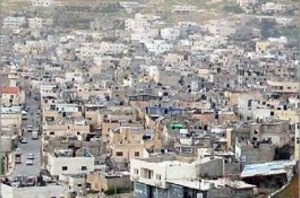
Aida Camp lies about 2 km north of Bethlehem's old city, between Bethlehem and Beit Jala, pressed against the Israeli separation wall that cuts it off from Jerusalem. It was established in for 1,125 refugees in 94 tents, expelled from villages west of Jerusalem and Hebron such as al-Walaja, al-Maliha, Allar, Dayr Aban, Bayt Nattif, Ajjur and Bayt Jibrin. Famous for the giant Key of Return over its entrance, it was described by a UC Berkeley study as one of the most tear-gassed places in the world. With about 7,000 people crowded into 0.071 km², Aida faces frequent raids and, in 2025–2026, demolition orders against its children's football pitch.
Quick Facts About Aida Camp
| Arabic name | مخيم عايدة |
|---|---|
| Country / Region | Palestine, southern West Bank |
| Governorate | Bethlehem, between Bethlehem and Beit Jala |
| Year established | |
| Area | 66 dunums at founding; about 0.071 km² today (UNRWA) |
| Founding population | 1,125 refugees in 94 tents |
| Population | About 7,244 (UNRWA, 2023), including about 2,479 children |
| Origin of residents | About 27–41 villages west of Jerusalem and Hebron |
| Known for | The Key of Return, the separation wall, and exceptionally high exposure to tear gas |
| Unemployment | About 43% |
The Nakba: Why Aida Camp Exists
Aida Camp was born from the Nakba (Arabic for "catastrophe"): the mass expulsion of Palestinians during the occupation of Palestine in . Roughly 750,000 Palestinians were driven from their homes. The villages in the hills west and south-west of Jerusalem, and those of the western Hebron district, were emptied between July and October 1948. Their people fled east to Bethlehem, only a few kilometres away, where many of them still live within sight of their lands.
The Right of Return and the Key
The right of return is the central demand of Aida's refugees. It rests on several foundations in international law:
- UN General Assembly Resolution 194 (), paragraph 11, resolved that refugees wishing to return to their homes and live at peace with their neighbours should be permitted to do so at the earliest practicable date, and that compensation should be paid to those choosing not to return and for loss of or damage to property.
- The Universal Declaration of Human Rights (Article 13) affirms everyone's right to leave any country, including their own, and to return to it.
- UN General Assembly Resolution 3236 () reaffirmed the "inalienable right" of Palestinians to return to their homes and property.
Over the camp's entrance stands the giant Key of Return, built by residents and the Aida Youth Centre for a Nakba Day commemoration. It is modelled on the old iron keys that many families still keep from the homes they were forced to leave in 1948, and has become one of the best-known symbols of the right of return. The area around it is known locally as "the Key" (منطقة المفتاح).
History of the Camp
Founding (1950)
The camp was set up in 1950 on 66 dunums of land leased by UNRWA from the Jordanian government. It began with 1,125 refugees living in 94 tents, later replaced by small concrete shelters. The camp has no agricultural land.
Under occupation (1967–1995)
The camp came under Israeli military rule with the occupation of the West Bank in , and its people took part in the First Intifada from 1987.
The Second Intifada
During the Second Intifada, the camp was placed under curfew, its UNRWA girls' school was badly damaged by shelling and 29 housing units were destroyed. A woman from the camp died after soldiers broke into her home and the military presence delayed the ambulance taking her to hospital.
A papal visit (2009)
In May 2009, Pope Benedict XVI visited Aida Camp and described the refugees' living conditions as precarious and difficult, drawing international attention to the camp and the wall beside it.
The Wall and Tear Gas
The Israeli separation wall runs along the camp's northern and eastern edges, separating it from Jerusalem and from the lands where many of its families once lived. Checkpoint 300, the main crossing between Bethlehem and Jerusalem, is nearby. When the wall was built, it cut one family's home off from the rest of the camp, forcing them to cross checkpoints to reach their own community. The wall's concrete slabs, with their military watchtower, are covered with murals and political graffiti.
Because the camp lies directly beside the wall and the watchtower, it is exposed to tear gas more than almost anywhere else. A 2018 study by the UC Berkeley School of Law Human Rights Center described Aida as one of the most tear-gassed places in the world: all 236 residents surveyed reported exposure in the previous year, many described gas being fired two to three times a week, and children were exposed nearly as often as adults. Residents reported breathing problems, miscarriages, sleep disorders and trauma.
The Current Situation (2024–2026)
Raids on Aida have intensified since October 2023, as they have across the West Bank:
- November 2024: Israeli forces raided homes after midnight, then deployed at the camp's eastern entrance near the Key and turned rooftops into military posts.
- December 2024: soldiers stormed the Aida Youth Centre at dawn, ransacked its offices, seized documents and hard drives, and left threatening notices.
- 18 June 2025: a force of more than 120 soldiers raided the camp, searching and damaging homes and threatening residents.
- Late 2025: Israeli authorities issued notices ordering the camp's children's football pitch, a garden and a local theatre to stop operating and face demolition, citing a lack of permits and proximity to the wall.
- 5 January 2026: Israeli forces detained about 20 residents and interrogated them in the field.
- 22 January 2026: after an international campaign and an intervention by UEFA, the demolition of the football pitch was temporarily suspended.
- 27 April and 19 June 2026: further raids, with soldiers deploying in the middle of the camp, patrolling its streets on foot and raiding a home.
Arrests, night raids and tear gas remain part of daily life, while UNRWA's financial crisis and the loss of work permits in Israel since October 2023 have deepened unemployment and poverty.
Origin of the Name
The camp takes its name from Aida, the woman who owned the land on which it was built and ran a coffee shop there, known as "Aida's café". She helped the first refugee families with food, blankets and drinks. Residents kept the name because it echoes the Arabic word 'a'ida (عائدة), "returning", expressing their hope of going back to their villages.
Location and Geography
Aida Camp lies in the Bethlehem Governorate, about 2 km north of Bethlehem's historic centre and 1 km north of Beit Jala, with parts of it inside each municipality. It is bordered by the Jacir Palace and Bilal bin Rabah Mosque (Rachel's Tomb) area to the east, the Armenian monastery to the north, the Franciscan monastery to the west and Beit Jala to the south. Azza (Beit Jibrin) Camp lies nearby, and Dheisheh Camp is to the south.
Area
The camp was founded on 66 dunums. UNRWA gives its current area as about 0.071 km² (about 71 dunums). Hemmed in by the wall on two sides and by the built-up areas of Bethlehem and Beit Jala, it cannot expand outward.
Villages of Origin
Aida's refugees come from about 27 to 41 towns and villages destroyed in 1948, most of them west of Hebron, west of Bethlehem and south-west of Jerusalem:
- Jerusalem district: Al-Walaja, Al-Maliha, Al-Qabu, Allar, Dayr Aban, Ras Abu Ammar, Bayt Itab, Bayt Mahsir, Khirbat al-Umur, Abu Ghosh and Jarash
- Hebron district: Bayt Nattif, Ajjur, Zakariyya and Bayt Jibrin
- Ramla district: Dayr Ayyub and Khulda
- Other areas: Iraq al-Manshiyya in the Gaza district, and Beersheba
Population and Demographics
Population of Aida Camp over time
- 19501,125 refugees in 94 tentsUNRWA
- 1987About 2,300UNRWA estimate
- 19953,406 registered refugeesUNRWA
- 2014About 5,498 registered refugeesUNRWA
- 20172,824 residentsPalestinian Central Bureau of Statistics
- 2023About 7,244, including 2,479 childrenUNRWA
Note: Registered refugees are not the same as residents. UNRWA counts refugees registered in the camp, some of whom live in Bethlehem and Beit Jala, while the census counts only those living inside the camp's boundaries.
Housing and Living Conditions
The camp's buildings are mostly concrete blocks of three to four storeys, some of them considered structurally unsafe, separated by narrow alleys. Water supply is often cut, and since residents are not allowed to dig wells or collect rainwater, they buy water and store it in rooftop tanks. The sewage network is inadequate, and there is no central landfill, largely because the suitable land lies in Area C under Israeli control. UNRWA handles street cleaning and rubbish collection, which is disrupted during strikes. Unemployment stands at about 43%, especially among graduates.
Health Situation
For decades, residents depended on clinics in Beit Jala, Dheisheh and Bethlehem. In 2020, UNRWA opened a health centre in the camp with funding from the Saudi Fund for Development. The camp also has a community-based rehabilitation centre. Repeated exposure to tear gas is a major health concern, especially for children, pregnant women and the elderly.
Education
UNRWA runs a boys' school (Aida Basic Boys' School, with 449 pupils in 2023) and a girls' school. Overcrowding has at times forced double shifts, and playgrounds and science facilities are limited. Many older boys and secondary students attend schools in Beit Jala and Bethlehem. The camp also has several kindergartens run by UNRWA and local associations.
Culture, Sport and Community
Despite its small size, Aida has some of the most active community organisations of any camp:
- Aida Youth Centre (1968): sport, culture and social activities, and the makers of the Key of Return.
- Lajee Center (1999): cultural resistance through photography, music, dabka, publishing (including the children's books Flying Home and The Aida Camp Alphabet), rooftop gardens, a football academy and a boxing gym.
- Al-Rowwad Cultural and Theatre Training Centre (1998): theatre, arts, a community kitchen and international events.
- Kindergartens, women's and children's centres, and the camp's popular services committee.
The camp's football pitch, built with UNRWA and Lajee in 2016 and home to the Aida Celtic academy, became the focus of an international campaign in 2026 when it was threatened with demolition.
Frequently Asked Questions About Aida Camp
Where is Aida refugee camp located?
About 2 km north of Bethlehem's old city, between Bethlehem and Beit Jala, directly beside the Israeli separation wall near Rachel's Tomb.
Why is it called Aida?
After Aida, the woman who owned the land and ran a café there. Residents kept the name because it echoes the Arabic word for "returning".
What is the key at the entrance of Aida Camp?
The giant Key of Return, built by residents and the Aida Youth Centre for a Nakba Day commemoration. It represents the keys families kept from their homes in 1948 and the right of return.
Is Aida the most tear-gassed place in the world?
A 2018 UC Berkeley study described it as one of the most tear-gassed places in the world: every resident surveyed had been exposed in the previous year.
Where do Aida's refugees come from?
From villages west of Jerusalem and Hebron, including al-Walaja, al-Maliha, al-Qabu, Allar, Dayr Aban, Ras Abu Ammar, Bayt Itab, Bayt Nattif, Ajjur, Zakariyya and Bayt Jibrin.
What is happening in Aida Camp now?
The camp faces frequent raids and arrests. In late 2025, its football pitch, a garden and a theatre were ordered demolished; the pitch's demolition was temporarily suspended in January 2026 after international pressure.
Conclusion
Aida began as 94 tents on the land of a woman whose name happened to mean "returning". Today, its 7,000 people live between the wall and the watchtower, under clouds of tear gas, a few kilometres from al-Walaja, al-Maliha and the villages they lost. Above their gate, the giant key states what they have never stopped demanding: the right to return.
More from the archive


 Download Our Palestine App
The whole archive in the palm of your hand: depopulated villages, the Nakba, the massacres and Al-Aqsa — free, with no ads to erase the story.
Download Our Palestine App
The whole archive in the palm of your hand: depopulated villages, the Nakba, the massacres and Al-Aqsa — free, with no ads to erase the story.



Comments
No comments yet — be the first to write one.
Add your comment
Name and email are optional. Comments appear after review.