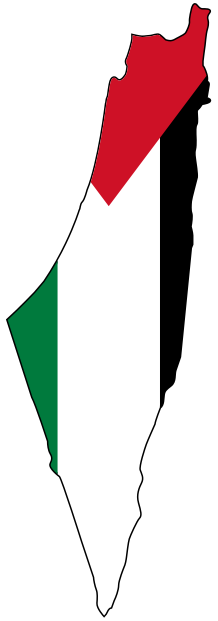
Deir Ammar Refugee Camp

Deir Ammar Refugee Camp
Deir Ammar Refugee Camp in Ramallah: History, Villages of Origin, Population and Life Behind the Gate
Deir Ammar Camp is a small Palestinian refugee camp in the hills north-west of Ramallah in the occupied West Bank. It was established in on land belonging to the village of Deir Ammar, for refugees expelled in 1948 from the villages of the Ramla, Lydda and Jaffa districts. More than half of its families come from Bayt Nabala, and others from Dayr Tarif and Abu al-Fadl. Home to about 2,100 residents, it is quieter and more spacious than most West Bank camps, but isolated: since February 2026 a locked military gate has cut its road to Ramallah. This guide covers the camp's history, origins, population, services and its situation today.
Quick Facts About Deir Ammar Camp
| Arabic name | مخيم دير عمار |
|---|---|
| Location | About 20–30 km north-west of Ramallah (depending on the source), occupied West Bank |
| Governorate | Ramallah and al-Bireh |
| Year established | |
| Area | About 160 dunums at founding (0.16 km²); about 145 dunums today |
| Registered refugees (UNRWA) | About 2,220 |
| Residents | About 2,120 (PCBS estimate, mid-2023) |
| Origin of residents | Villages of the Ramla, Lydda and Jaffa districts, mainly Bayt Nabala |
| Oslo classification | Area B (joint Palestinian civil and Israeli security control) |
The Nakba: Why Deir Ammar Camp Exists
Deir Ammar Camp was born from the Nakba (Arabic for "catastrophe"): the mass expulsion of Palestinians during the occupation of Palestine in , when roughly 750,000 Palestinians were driven from their homes. The villages around Jaffa were emptied in the spring of 1948. In July, during the offensive on Lydda and Ramla, tens of thousands of people from the two towns and the villages east of them were expelled towards the hills of Ramallah.
Many of them found refuge in the villages west of Ramallah. In , part of the land of Deir Ammar village was set aside to shelter them, and the camp was born. About 3,000 people lived there in its early years.
The Right of Return
For the families of Deir Ammar, whose villages lie only a few dozen kilometres to the west, the right of return remains the heart of their cause. It rests on several foundations in international law:
- UN General Assembly Resolution 194 (), paragraph 11, resolved that refugees wishing to return to their homes and live at peace with their neighbours should be permitted to do so at the earliest practicable date, and that compensation should be paid to those choosing not to return and for loss of or damage to property.
- The Universal Declaration of Human Rights (Article 13) affirms everyone's right to leave any country, including their own, and to return to it.
- UN General Assembly Resolution 3236 () reaffirmed the "inalienable right" of Palestinians to return to their homes and property.
History of the Camp (1949–2022)
The camp was set up in 1949 under UNRWA on land owned by non-refugee residents of Deir Ammar village; in return, UNRWA's facilities in the camp also serve the villagers.
The occupation of the West Bank in June brought a new wave of displacement, and the camp's population fell from about 3,000 to 1,696. After the Oslo Accords, the camp was classified as Area B, under Palestinian civil and Israeli security control.
Through the decades of occupation, the camp's young people were killed, wounded and imprisoned in raids and confrontations, and local sources say the camp has given dozens of martyrs, prisoners and wounded. In February 2022, the camp's popular committee complained that residents paid taxes without receiving adequate services, and in 2022–2023 improvement projects were approved for the camp.
Raids and Losses (2023–2024)
Israeli raids on the camp intensified from 2023. In late August 2023, a young man from the camp was killed by Israeli forces, who accused him of a ramming attack near Beit Sira, and raids and arrests in the camp followed. In November 2023, Israeli forces blew up his family's home in the camp as a punitive demolition.
On , during a raid on the camp, Israeli forces opened live fire on young men confronting them, killing a 16-year-old boy and critically wounding others. Further raids were reported in late December 2023.
The Current Situation (2025–2026)
While Israel waged its genocide war on Gaza, the West Bank faced a tightening web of gates, checkpoints and earth mounds; the UN has recorded at least 925 movement obstacles across the territory. For Deir Ammar, the most painful is a locked military gate on the road to Ramallah. Residents say it has been closed since late February 2026, cutting about 18,000 people in the camp and neighbouring villages off from the services of the city.
The cost of that closure became clear in July 2026. A three-month-old baby from the camp stopped breathing and was taken to the local medical centre, which called an ambulance to take him to hospital in Ramallah. Soldiers at the locked gate refused to open it and fired tear gas and stun grenades at the family. Forced to take a long dirt-road detour, the family reached the ambulance too late, and the baby died on the way to hospital.
Pressure is also growing around the camp. In nearby Deir Ammar village, residents say a new settlement outpost has become a launch point for settler attacks; in July 2026 settlers set fire to a house under construction less than 150 metres from inhabited homes, and the village's main entrance had been closed for more than five months. At the same time, UNRWA, which runs the camp's schools and health centre, faces Israeli laws restricting its work and a deep funding crisis.
Origin of the Name
The camp takes its name from the village of Deir Ammar, on whose land it was built. "Deir" means monastery, and according to local tradition the village is named after a righteous man who is said to have lived in the time of the Prophet Ayyub (Job) and served him.
Location and Geography
Deir Ammar Camp lies in the rural hills west and north-west of Ramallah, north-west of Deir Ammar village and south-east of the village of Jammala. Sources give its distance from Ramallah as between 20 and 30 km. Several Israeli settlements stand in the area, which are illegal under international law; they are reached by separate roads, which has kept direct friction lower than in other camps but has deepened the camp's isolation.
Area and Layout
The camp was founded on about 160 dunums (0.16 km²), and its area today is given as about 145 dunums. UNRWA describes it as more spacious than most West Bank camps, with public gardens and sports grounds, though its streets are in poor condition.
Villages of Origin
Most of the camp's families come from villages in the Ramla, Lydda and Jaffa districts. According to the Palestinian National Information Centre:
| Village | District | Share of residents |
|---|---|---|
| Bayt Nabala | Ramla | About 57.8% |
| Dayr Tarif | Ramla | About 17.1% |
| Abu al-Fadl | Ramla | About 13.6% |
| 14 other villages | Ramla, Lydda and Jaffa | About 11.5% |
Among the smaller groups are families from Jimzu, al-Tira, and the Jaffa villages of Saqiya and Yazur. Well-known camp families include Zaid, Safi, Nakhleh, Sharaka, al-Sheikh, Qandil and Khalil.
Population and Demographics
Figures for Deir Ammar vary by source. UNRWA counts registered refugees, some of whom live outside the camp, while the Palestinian Central Bureau of Statistics (PCBS) counts residents actually living there, so the two numbers should not be confused.
Population of Deir Ammar Camp over time
- 1949–1967About 3,000Residents (WAFA Info)
- After 19671,696Residents (WAFA Info)
- 2007 (May)2,387Registered refugees (UNRWA)
- 20122,094Residents (PCBS)
- 20152,740Registered refugees (UNRWA, via Zochrot)
- 20171,884Residents (PCBS census)
- 2023 (mid-year)About 2,120Residents (PCBS estimate)
- CurrentAbout 2,220Registered refugees (UNRWA)
Housing and Infrastructure
The camp is connected to the public water and electricity networks, but its water network is more than twenty years old and loses much of its water. There is no sewage network: homes rely on cesspits, which overflow between houses and are emptied for a fee into a valley about 3 km away, polluting the surrounding farmland. Street quality is poor, and the camp's isolation makes transport difficult for many residents.
Economic Life
Access to work inside the Green Line and in nearby governorates once gave the camp relative economic stability, and it has shops and fruit and vegetable sellers. Unemployment has been put at about 23%; since October 2023 the closure of work inside the Green Line to most West Bank labourers and the tightening of movement have hit the camp's families hard.
Health Situation
UNRWA runs a health centre in the camp offering primary care, including reproductive health, child care, vaccinations, check-ups and treatment, and the camp's youth centre has its own clinic. Hospitals are in Ramallah, which makes the gate closure a matter of life and death in emergencies, as the death of a baby in July 2026 showed.
Education
UNRWA runs two schools in the camp, one for boys and one for girls, teaching grades one to nine to more than 800 pupils. Secondary students go on to government schools in nearby villages. A kindergarten run by the camp's popular services committee cares for about 200 children, and the youth centre offers social, cultural, sports and arts activities to about 400 young people. Literacy is high, at about 91%, and about a quarter of residents hold a university degree.
Frequently Asked Questions About Deir Ammar Camp
Where is Deir Ammar refugee camp?
In the hills north-west of Ramallah in the occupied West Bank, about 20–30 km from the city depending on the source, near the village of Deir Ammar.
When was Deir Ammar camp established?
In 1949, on land belonging to Deir Ammar village, for refugees expelled in 1948 from the Ramla, Lydda and Jaffa districts.
Where do Deir Ammar's refugees come from?
Mainly from Bayt Nabala (about 58%), Dayr Tarif and Abu al-Fadl in the Ramla district, and from 14 other villages, including Jimzu, Saqiya and Yazur.
How many people live in Deir Ammar camp?
About 2,120 residents according to a mid-2023 PCBS estimate, while UNRWA counts about 2,220 registered refugees.
What is the situation in Deir Ammar camp in 2026?
A military gate on the road to Ramallah has been closed since late February 2026, isolating the camp and nearby villages. In July 2026 a three-month-old baby from the camp died after the gate blocked his way to hospital.
Conclusion
Deir Ammar Camp sits on a hillside within reach of the plains of Ramla and Lydda, where its families' villages once stood. For more than seventy-five years its people have built homes, schools and gardens on borrowed land, raised a highly educated generation and buried their martyrs. Today a locked gate stands between them and the city, but their eyes remain on Bayt Nabala, Dayr Tarif and Abu al-Fadl, and on the return they still demand.
More from the archive
 Download Our Palestine App
The whole archive in the palm of your hand: depopulated villages, the Nakba, the massacres and Al-Aqsa — free, with no ads to erase the story.
Comments
No comments yet — be the first to write one.
Add your comment
Name and email are optional. Comments appear after review.