
Am'ari Refugee Camp
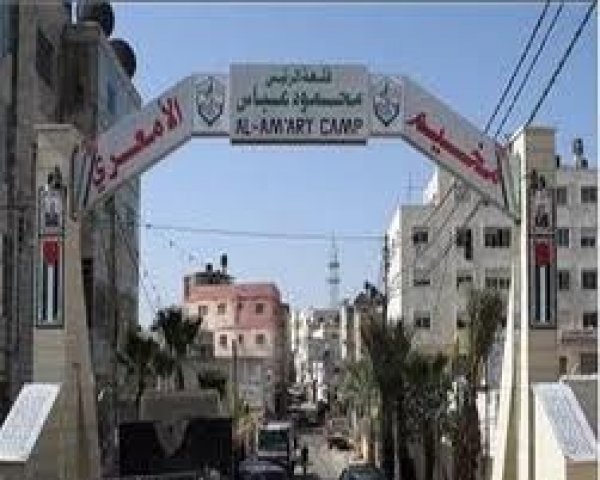
Am'ari Refugee Camp
Am'ari Refugee Camp in Ramallah and al-Bireh: History, Villages of Origin, Population and the Current Situation
Am'ari Camp lies within the municipal boundaries of al-Bireh, about 2 km south of the city centre, between Ramallah and Jerusalem. It was established in on just 90 dunums for refugees from the cities of Lydda, Ramla and Jaffa and villages such as Bayt Dajan, Dayr Tarif, Bayt Nabala and Jimzu. One of the smallest and most crowded camps in the West Bank, Am'ari is known for its football club and popular theatre, and faces frequent raids, including one in August 2026 in which a 15-year-old boy was shot.
Quick Facts About Am'ari Camp
| Arabic name | مخيم الأمعري |
|---|---|
| Country / Region | Palestine, central West Bank |
| Governorate | Ramallah and al-Bireh, within al-Bireh municipality |
| Year established | |
| Area | About 90–96 dunums (under 0.1 km²) |
| Registered refugees | About 12,155 (UNRWA) |
| Residents | 4,725 (Palestinian census, 2017) |
| Origin of residents | The cities of Lydda, Ramla and Jaffa and their villages |
| Oslo classification | Area A |
| Known for | One of the smallest and most crowded camps; its football club and popular theatre |
The Nakba: Why Am'ari Camp Exists
Am'ari Camp was born from the Nakba (Arabic for "catastrophe"): the mass expulsion of Palestinians during the occupation of Palestine in . Roughly 750,000 Palestinians were driven from their homes. In July 1948, tens of thousands of people were expelled from the cities of Lydda and Ramla and their surrounding villages, and walked east into the hills towards Ramallah. Some of them found shelter on a small plot of land south of al-Bireh, which became Am'ari Camp.
The Right of Return
The right of return is the central demand of Am'ari's refugees. It rests on several foundations in international law:
- UN General Assembly Resolution 194 (), paragraph 11, resolved that refugees wishing to return to their homes and live at peace with their neighbours should be permitted to do so at the earliest practicable date, and that compensation should be paid to those choosing not to return and for loss of or damage to property.
- The Universal Declaration of Human Rights (Article 13) affirms everyone's right to leave any country, including their own, and to return to it.
- UN General Assembly Resolution 3236 () reaffirmed the "inalienable right" of Palestinians to return to their homes and property.
History of the Camp
From tents to cement (1949–1957)
The International Committee of the Red Cross set up the camp in 1949, providing tents for refugees within the municipal boundaries of al-Bireh, on land that UNRWA later leased from the Jordanian government. By 1957, all the tents had been replaced with cement-block shelters.
Under occupation (1967–1995)
The camp came under Israeli military rule with the occupation of the West Bank in . Before the First Intifada, many families were able to move out to surrounding towns and villages, and the camp's people played an active part in the Intifada from 1987.
After Oslo
Under the Oslo Accords, Am'ari became part of Area A, under Palestinian Authority control. Despite this, Israeli forces continue to raid the camp and detain its residents frequently.
The Current Situation (2024–2026)
Raids on Am'ari have escalated since October 2023:
- March 2024: A 16-year-old boy was shot in the neck and chest during a dawn raid on the camp and died of his wounds.
- May 2024: Repeated dawn raids, with residents arrested.
- 26 October 2025: Israeli forces opened fire during a raid, wounding four people, one in the abdomen.
- 29 May and 22 August 2026: Further raids on the camp.
- 29 August 2026: During a dawn raid, a 15-year-old boy was shot in the back with live fire and a young man in the foot; two young men were arrested.
These raids come as the camps of Jenin, Tulkarm and Nur Shams have been emptied of their residents since January 2025.
Origin of the Name
The camp takes its name from al-Am'ari, the name of the area of al-Bireh's lands on which it was built.
Location and Geography
Am'ari Camp lies in the Ramallah and al-Bireh Governorate in the central West Bank, within the municipal boundaries of al-Bireh, about 2 km south of the city centre. It sits between the twin cities of Ramallah and al-Bireh and the Qalandia area to the south, close to the main road towards Jerusalem. The urban growth of the two cities has surrounded the camp on all sides.
Area
The camp covers only about 90–96 dunums (under 0.1 km²), making it one of the smallest camps in the West Bank. Its area has not changed since 1949, even as its registered population has grown several times over.
Villages of Origin
Am'ari's refugees come from the cities of Lydda, Ramla and Jaffa, and from villages including:
- Ramla district: Dayr Tarif, Bayt Nabala, Abu Shusha, Al-Na'ani, Saydun and Jimzu
- Jaffa district: Bayt Dajan
Population and Demographics
Population of Am'ari Camp
- 20065,719 residentsPalestinian Central Bureau of Statistics
- 2010sAbout 10,500 registered refugeesUNRWA
- 201512,155 registered refugeesUNRWA
- 20174,725 residentsPalestinian Central Bureau of Statistics
Note: Registered refugees are not the same as residents. Many refugees registered in Am'ari now live in Ramallah, al-Bireh and nearby towns, so the census, which counts only those living inside the camp, records fewer people.
Housing and Living Conditions
Like most West Bank camps, Am'ari suffers from overcrowding and poor sewage and water networks. Before the First Intifada, many families could move to nearby towns and villages, but the construction of the Wall, the expansion of Ramallah and rising property prices have made this unaffordable for most residents. The growing population places heavy pressure on services and infrastructure.
Economic Situation
Residents report rising unemployment, especially among young men, partly because of the sharp fall in Israeli work permits issued to camp residents, which were almost entirely halted after October 2023. Many residents work in Ramallah and al-Bireh, the centre of the Palestinian economy, in commerce, services and the public sector.
Education and Health
UNRWA runs two schools in the camp: a boys' school with about 1,250 pupils and a girls' school with about 970. Secondary students attend schools in Ramallah and al-Bireh. UNRWA also provides primary health care in the camp, while residents rely on the Palestine Medical Complex and other hospitals in Ramallah for advanced care.
Frequently Asked Questions About Am'ari Camp
Where is Am'ari refugee camp located?
It lies within the municipal boundaries of al-Bireh, about 2 km south of the city centre, in the Ramallah and al-Bireh Governorate.
When was Am'ari Camp established?
The Red Cross established it in 1949, providing tents for refugees. By 1957, all tents had been replaced with cement-block shelters.
How many people live in Am'ari Camp?
UNRWA counts about 12,155 registered refugees, while the 2017 Palestinian census counted 4,725 residents inside the camp.
Where do Am'ari's refugees come from?
From the cities of Lydda, Ramla and Jaffa, and villages such as Bayt Dajan, Dayr Tarif, Bayt Nabala, Abu Shusha, al-Na'ani, Saydun and Jimzu.
What is happening in Am'ari Camp now?
The camp faces frequent Israeli raids. In March 2024 a 16-year-old was killed during a raid, and in August 2026 a 15-year-old was shot in the back.
Conclusion
Am'ari began as a cluster of Red Cross tents for the expelled people of Lydda, Ramla and Jaffa, and grew into one of the smallest and most crowded camps in the West Bank, surrounded by the expanding cities of Ramallah and al-Bireh. Despite overcrowding, unemployment and repeated raids, it has remained a home of sport, theatre and steadfast commitment to the right of return.
More from the archive



 Download Our Palestine App
The whole archive in the palm of your hand: depopulated villages, the Nakba, the massacres and Al-Aqsa — free, with no ads to erase the story.
Download Our Palestine App
The whole archive in the palm of your hand: depopulated villages, the Nakba, the massacres and Al-Aqsa — free, with no ads to erase the story.



Comments
No comments yet — be the first to write one.
Add your comment
Name and email are optional. Comments appear after review.
Social Life, Sport and Culture
Am'ari is known for its football team, which has won the Palestinian championship several times and has represented Palestine in regional and international competitions. The camp also hosts a popular theatre, a rare cultural space in a camp short of services. Several well-known Palestinian musicians and cultural figures grew up in the camp.