
Qalandia Refugee Camp
Qalandia Refugee Camp: History, Population, Villages of Origin and the 2026 Military Operation
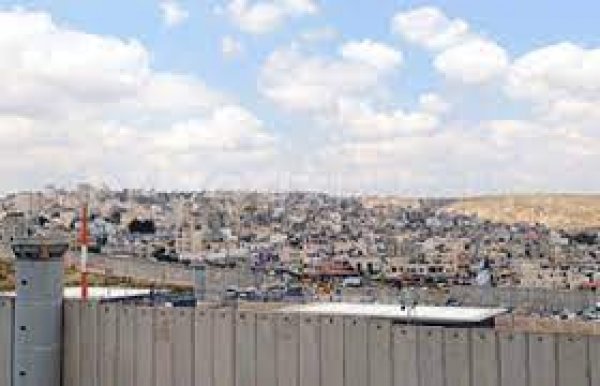
Qalandia Camp lies between Jerusalem and Ramallah, beside the Qalandia military checkpoint and the separation wall, on the main road linking the two cities. It was established in for about 3,000 refugees from some 52 villages and towns, among them Lydda, Ramla, Bir Ma'in, Saris and Barfiliya. In August 2026, Israeli forces carried out a 46-hour military operation in the camp, demolishing homes and arresting dozens. This guide covers its history, origins, population, living conditions and current situation.
Quick Facts About Qalandia Camp
| Arabic name | مخيم قلنديا |
|---|---|
| Country / Region | Palestine, between Jerusalem and Ramallah |
| Governorate | Jerusalem Governorate |
| Location | 11 km north of Jerusalem, 5 km south of Ramallah |
| Year established | |
| Area | From 230 dunums in 1949 to about 353 dunums today |
| Registered refugees | About 11,335 (UNRWA) |
| Residents | About 19,000–25,000 (estimates) |
| Origin of residents | About 52 villages and towns in the Ramla, Lydda, Hebron, Jerusalem and Haifa districts |
| Current status | 46-hour Israeli military operation in August 2026: 7 homes demolished, more than 70 arrested |
The Nakba: Why Qalandia Camp Exists
Qalandia Camp was born from the Nakba (Arabic for "catastrophe"): the mass expulsion of Palestinians during the occupation of Palestine in . Roughly 750,000 Palestinians were driven from their homes. Refugees from Lydda, Ramla, Jaffa, West Jerusalem and dozens of villages first gathered in makeshift shelters around Ramallah and al-Bireh. Among them were survivors of the Dayr Yasin massacre of April 1948, some of whose families settled in Qalandia.
The Right of Return
The right of return is the central demand of Qalandia's refugees. It rests on several foundations in international law:
- UN General Assembly Resolution 194 (), paragraph 11, resolved that refugees wishing to return to their homes and live at peace with their neighbours should be permitted to do so at the earliest practicable date, and that compensation should be paid to those choosing not to return and for loss of or damage to property.
- The Universal Declaration of Human Rights (Article 13) affirms everyone's right to leave any country, including their own, and to return to it.
- UN General Assembly Resolution 3236 () reaffirmed the "inalienable right" of Palestinians to return to their homes and property.
History of the Camp
Founding (1949)
In 1949, about 3,000 refugees living in unsuitable gatherings around Ramallah and al-Bireh were moved to a new camp on about 230 dunums of land leased by UNRWA from the Jordanian government, east of the Jerusalem airport. Like other camps, it began with tents, which were later replaced by UNRWA housing units.
The occupation of 1967
By 1967 the camp had about 4,800 residents. After the occupation of the West Bank, about 400 families, some 2,400 people, fled, leaving fewer than 3,000. Israel considers the camp's area part of its Jerusalem municipality, and under the Oslo II agreement of 1995 the camp's land was classified as Area C, under full Israeli control, while UNRWA continues to provide services.
The wall and the checkpoint (2000s)
After the Second Intifada, Israel built the Qalandia military checkpoint and the separation wall, cutting the camp off from Jerusalem. The camp was hemmed in by the checkpoint to the south and the wall to the west, leaving its only open exit to the north towards Ramallah. The checkpoint became a fortified crossing with cage-like lanes and turnstiles, where crossing can take hours, and it remains a constant point of friction. According to the camp's records, about 90 of its people, including 23 children, were killed between 1967 and 2022.
The Current Situation (2025–2026)
UNRWA's training centre
After Israel's ban on UNRWA in areas it claims as sovereign territory took effect in January 2025, Israeli police raided UNRWA facilities in Jerusalem in February 2025, affecting about 350 students at the Qalandia Training Centre, UNRWA's vocational college beside the camp.
The military operation of August 2026
Since early 2026, Israeli forces have demolished shops and facilities around the Qalandia checkpoint and in Kafr Aqab, and raided the camp repeatedly. At dawn on , the army launched a large-scale operation in Qalandia Camp and neighbouring Kafr Aqab, claiming to target armed men and weapons. The operation lasted about 46 hours, the longest raid in the camp's recent history. According to the Jerusalem Governorate and the Palestinian Prisoners' Society:
- Snipers were deployed on rooftops and a curfew was imposed, isolating the camp's roughly 19,000 residents.
- Forces stormed the Popular Committee's headquarters, forced a family out of its home and prevented the dawn prayer in the camp's mosques.
- Seven homes and several facilities were demolished, including shops near the checkpoint and a car wash on Airport Street, and dozens of homes were damaged.
- More than 70 Palestinians were arrested, and over 60, including women and children, were detained and interrogated in the field.
- Three apartments in a residential building were turned into a detention and interrogation centre.
- A young man was run over by a military vehicle and a journalist was beaten while covering the raid.
- Forces brought in reinforcements through openings cut in the separation wall near the airport area and the Qalandia Training Centre.
The army withdrew on 7 August 2026. Palestinian officials warned that the operation could be a prelude to the destruction and displacement seen in the camps of Jenin, Tulkarm and Nur Shams. A month later, in September 2026, a similar operation was launched in Shu'fat Camp and Anata.
Origin of the Name
The camp takes its name from the village of Qalandia (قلنديا) on whose land it was built. During the British Mandate, Qalandia's land was added to Jerusalem's boundaries to build the city's airport, which is why the camp is linked to Jerusalem despite lying some distance from it. The name is also spelled Kalandia or Qalandiya.
Location and Geography
Qalandia Camp lies about 11 km north of Jerusalem and 5 km south of Ramallah, at about 766 metres above sea level. It is bordered by al-Ram to the south, Kafr Aqab to the north, the lands of Mikhmas to the east and the village of Qalandia to the west. The main road between Jerusalem and Ramallah runs through the camp. To its west lies the former Jerusalem (Qalandia) Airport, built in 1920 and taken over by Israel after 1967.
Area
The camp was founded on about 230 dunums and has expanded to about 353 dunums. All of its land is built up, with no open or green spaces left.
Villages of Origin
Qalandia's refugees come from about 52 villages and towns. The largest groups come from the Ramla district (about 20%) and the Hebron district (about 13%), followed by Lydda, Jerusalem and Haifa. Their places of origin include:
- Cities: Lydda, Ramla, Jaffa and Jerusalem
- Ramla district: Bir Ma'in and Barfiliya
- Jerusalem district: Saris, Ishwa' and Dayr Yasin
Among the camp's residents is also a Lebanese family that came to visit relatives after the Nakba and was unable to return, sharing the refugees' fate ever since.
Population and Demographics
Population of Qalandia Camp over time
- 1949About 3,000UNRWA
- 1967 (before the occupation)About 4,800Encyclopedia of Palestinian Camps
- 1967 (after the occupation)About 2,683 (some 2,400 fled)Encyclopedia of Palestinian Camps
- 1987About 5,400UNRWA
- 20078,755Palestinian Central Bureau of Statistics
- Mid-2023About 9,419 in the camp properPalestinian Central Bureau of Statistics
- LatestAbout 11,335 registered refugeesUNRWA
- 2026About 19,000 residentsLocal estimates
Children under 15 make up about 41 per cent of the population. Estimates of the total number living in and around the camp vary widely, reaching 25,000 or more, because many families have spread into the neighbouring areas.
Housing and Infrastructure
The camp is densely built, and many homes lack adequate ventilation. All homes are connected to electricity and the water network, but water is often cut for long periods in summer, as the Jerusalem water authority must buy water from the Israeli company Mekorot, and the old network loses much of what it carries. Residents receive only about 55 litres per person per day, well below the World Health Organization's minimum of 100. The sewage system was designed only for wastewater and is inadequate; homes not connected rely on cesspits. There is no proper rubbish dump, because suitable land lies in Area C, where Israeli authorities block permits.
Health Situation
The camp has an UNRWA health centre, a maternal and child health centre, general and dental clinics, a private X-ray centre and a pharmacy. Patients needing more advanced care go to Ramallah Government Hospital. The camp lacks its own ambulance.
Economic Situation
The camp has a busy commercial life, with around 50 grocery stores, bakeries, butchers, workshops and stone crushers. In 2012, the workforce was divided mainly between commerce (33%), salaried jobs (31%) and work inside the territories occupied in 1948 (20%). Unemployment reached 40 per cent in 2012 according to the camp's Popular Committee, and Israeli restrictions on work permits keep it high.
Education
UNRWA runs four schools in the camp: elementary and preparatory schools for boys and for girls, with about 1,300 boys and 1,500 girls. A new girls' school was built in 1995 with Dutch funding, and a kindergarten is run by the Young Women's Christian Association. Next to the camp stands the Qalandia Training Centre, UNRWA's vocational college, which serves students from refugee camps across the West Bank with diplomas in fields such as electricity, mechanics, heating and construction.
Frequently Asked Questions About Qalandia Camp
Where is Qalandia refugee camp located?
It lies about 11 km north of Jerusalem and 5 km south of Ramallah, beside the Qalandia military checkpoint and the separation wall.
When was Qalandia Camp established?
In 1949, on land leased by UNRWA from the Jordanian government, for about 3,000 refugees.
Where do Qalandia's refugees come from?
From about 52 villages and towns, mainly in the Ramla district (about 20%) and the Hebron district (about 13%), as well as Lydda, Jerusalem and Haifa, including Bir Ma'in, Saris, Ishwa' and Barfiliya.
What happened in Qalandia Camp in August 2026?
From 5 to 7 August 2026, Israeli forces carried out a 46-hour military operation in the camp, demolishing seven homes and several facilities and arresting more than 70 Palestinians.
How many people live in Qalandia Camp?
UNRWA counts about 11,335 registered refugees, while local estimates put the number of residents at about 19,000 or more.
Conclusion
Qalandia Camp stands at one of the most sensitive points in the West Bank, between Jerusalem and Ramallah, squeezed between a checkpoint, a wall and a settlement. Founded by refugees from Lydda, Ramla and the villages of the Jerusalem hills, it has endured decades of raids, culminating in the operation of August 2026. Its people continue to hold onto the right to return.
More from the archive



 Download Our Palestine App
The whole archive in the palm of your hand: depopulated villages, the Nakba, the massacres and Al-Aqsa — free, with no ads to erase the story.
Download Our Palestine App
The whole archive in the palm of your hand: depopulated villages, the Nakba, the massacres and Al-Aqsa — free, with no ads to erase the story.



Comments
No comments yet — be the first to write one.
Add your comment
Name and email are optional. Comments appear after review.
Social Life and Institutions
Qalandia has two mosques and an active network of community institutions, including: