
Shu'fat Refugee Camp
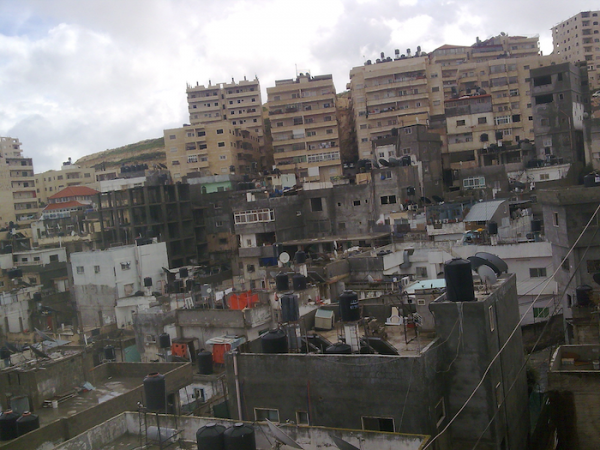
Shu'fat Refugee Camp
Shu'fat Refugee Camp in Jerusalem: History, Population, Villages of Origin and the Current Situation
Shu'fat Camp is the only Palestinian refugee camp in Jerusalem, lying about 5 km north of the Old City between the towns of Shu'fat and Anata. It was set up in for refugees of 1948 who had been living in the Old City, and its residents hold Jerusalem identity cards. Yet the camp has been cut off from the city by the separation wall and a military checkpoint. Since 2025, Israel has banned UNRWA in Jerusalem, closed the camp's UNRWA schools, and in September 2026 launched a large-scale military operation in the camp and neighbouring Anata. This guide covers its history, origins, population and current situation.
Quick Facts About Shu'fat Camp
| Arabic name | مخيم شعفاط (also مخيم عناتا) |
|---|---|
| Country / Region | Palestine, occupied Jerusalem |
| Governorate | Jerusalem Governorate, about 5 km north of the Old City |
| Year established | |
| Area | About 0.2 km² (203 dunums) |
| Registered refugees | About 18,000 (UNRWA records) |
| Residents | More than 70,000 in the camp and its adjoining neighbourhoods (estimates) |
| Origin of residents | 72 depopulated villages and towns, mainly in the Jerusalem, Ramla, Jaffa and Hebron districts |
| Known for | The only refugee camp in Jerusalem; its residents hold Jerusalem ID cards |
| Current status | Encircled by the wall; UNRWA schools closed in 2025; large-scale Israeli military operation from 8 September 2026 |
The Nakba: Why Shu'fat Camp Exists
Shu'fat Camp was born from the Nakba (Arabic for "catastrophe"): the mass expulsion of Palestinians during the occupation of Palestine in . Roughly 750,000 Palestinians were driven from their homes, including the people of West Jerusalem's Arab neighbourhoods and of dozens of villages in the Jerusalem hills, such as Bayt Thul, al-Maliha, Lifta, Qalunya and Dayr Yasin.
About 3,000 of these refugees, from dozens of villages, gathered in the Old City of Jerusalem from 1952, in the quarter known as Harat al-Sharaf, where some rented and others bought homes. UNRWA referred to their shelters there as the "Mu'askar camp".
The Right of Return
The right of return is the central demand of Shu'fat's refugees. It rests on several foundations in international law:
- UN General Assembly Resolution 194 (), paragraph 11, resolved that refugees wishing to return to their homes and live at peace with their neighbours should be permitted to do so at the earliest practicable date, and that compensation should be paid to those choosing not to return and for loss of or damage to property.
- The Universal Declaration of Human Rights (Article 13) affirms everyone's right to leave any country, including their own, and to return to it.
- UN General Assembly Resolution 3236 () reaffirmed the "inalienable right" of Palestinians to return to their homes and property.
For Shu'fat's families, many of whose villages lie within sight of the camp in the hills west of Jerusalem, the right of return is not abstract: their homes are only a few kilometres away, but they cannot reach them.
History of the Camp
Moved out of the Old City (1964–1966)
In 1964, the Jordanian government and UNRWA agreed to move the refugees living in the Old City to a new camp prepared about 5 km to the north, without consulting them. The move took place in 1965–1966, eighteen years after the Nakba, and many residents experienced it as a second forced displacement. UNRWA built 500 one-room housing units for about 3,000 people (500 families). Shu'fat was the last official camp established in the West Bank, more than a decade after the others.
Under occupation (1967–2000)
With the occupation of the West Bank, including East Jerusalem, in , about 60 families (some 360 people) fled to Jordan. Israel included the camp within its expanded Jerusalem municipal boundaries, and its residents received Jerusalem residency cards (the "blue ID") without citizenship. Between 1966 and 1983, residents added about 1,600 housing units at their own expense. Before the First Intifada, the camp suffered from a widespread drug problem; during the Intifada it became one of the most active centres of confrontation in Jerusalem, and the drug trade sharply declined.
The wall and the checkpoint (2000s)
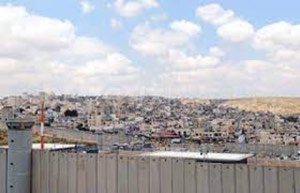
In the 2000s, Israel built the separation wall around the camp, cutting it off from Jerusalem even though it lies within the city's municipal boundaries. In 2009, Israel announced that the checkpoint at the camp's entrance would become a permanent "crossing", with pedestrian lanes, electronic gates and watchtowers. Since then, residents, students and workers have had to pass through the checkpoint daily to reach the city. Paradoxically, thousands of refugees moved into the camp in the same period to avoid losing their Jerusalem residency, adding to the overcrowding.
Siege and civil disobedience (2022)
In October 2022, after a shooting attack at the camp's checkpoint, Israeli forces placed the camp and its surroundings under a full siege for about five days, closing all exits without exception for humanitarian cases. Residents responded by declaring civil disobedience until the siege was lifted, and a general strike and confrontations spread across the West Bank in solidarity.
The Current Situation (2025–2026)
The ban on UNRWA and the closure of its schools
On 30 January 2025, Israeli laws banning UNRWA's operations in areas Israel claims as its sovereign territory, including occupied East Jerusalem, came into effect. In April 2025, Israeli authorities issued closure orders against six UNRWA schools in East Jerusalem, three of them in Shu'fat Camp. On , Israeli forces raided the three schools in the camp and forced more than 550 pupils, aged 6 to 15, out of their classrooms. In all, about 800 children lost their UNRWA schools in Jerusalem. In August 2026, Israeli authorities turned a former UNRWA school building in the camp into a school run by the Israeli Ministry of Education and the Jerusalem municipality.
The military operation of September 2026
On , the Israeli army announced a large-scale military operation in Shu'fat Camp and the neighbouring town of Anata. According to the Jerusalem Governorate, it involved:
- A curfew and the closure of all entrances, preventing residents from entering or leaving.
- Raids on dozens of homes and shops, with doors forced open and contents damaged; one house was taken over and used for field interrogations.
- The arrest of at least 100 Palestinians.
- The bulldozing of main water lines in Anata, threatening water supplies.
- The closure of schools, kindergartens and markets, and obstruction of ambulances.
The operation paralysed daily life for at least 80,000 people. The Jerusalem Governorate described it as a systematic military assault, similar to the operation in Qalandia camp in early August 2026, and as part of an effort to change Jerusalem's administrative reality ahead of municipal elections in October 2026. Palestinian officials warned that the operation follows the same pattern used in the camps of the northern West Bank, where Jenin, Tulkarm and Nur Shams camps have been emptied of their residents since January 2025.
Origin of the Name
The camp takes its name from the neighbouring town of Shu'fat (شعفاط), north of Jerusalem. Because it lies between Shu'fat and Anata, it is also sometimes called "Anata Camp". The name is also spelled Shuafat or Shu'afat.
Location and Geography
Shu'fat Camp lies about 5 km north of the Old City of Jerusalem, between the towns of Shu'fat and Anata. Although it lies inside the municipal boundaries Israel set for the city, the wall separates it from Jerusalem, and it is surrounded by settlements on three sides. The camp is linked to the West Bank through Anata, and to Jerusalem only through the military checkpoint. Around it have grown the neighbourhoods of Ras Khamis, Ras Shehadeh and Dahiyat al-Salam, whose residents also hold Jerusalem IDs.
Area
The camp covers about 0.2 km² (203 dunums). With tens of thousands of people living on this land and in the surrounding neighbourhoods, it is one of the most densely populated places in Palestine.
Villages of Origin
According to UNRWA records from May 2008, the camp's 11,009 registered refugees came from 72 depopulated villages and towns. The largest groups were:
| Place of origin | District | Share of refugees |
|---|---|---|
| Jerusalem (New and Old City) | Jerusalem | 32.8% |
| Bayt Thul | Jerusalem | 13.1% |
| Lydda | Ramla | 10.7% |
| Bir Ma'in | Ramla | 3.8% |
| Al-Maliha | Jerusalem | 2.9% |
| Al-Walaja | Jerusalem | 2.5% |
| Barqusya | Hebron | 1.9% |
| Jaffa | Jaffa | 1.8% |
| 62 other villages | Various | 30.6% |
Other villages of origin include:
- Jerusalem district: Lifta, Qalunya, Nitaf, Saris, Bayt Mahsir and Dayr Yasin
- Ramla district: Dayr Ayyub, Al-Qubab, Jimzu, Abu Shusha, Al-Latrun and Ramla
- Hebron district: Bayt Nattif, Al-Dawayima, Tall al-Safi and Bayt Jibrin
- Jaffa district: Al-'Abbasiyya
Population and Demographics
Population of Shu'fat Camp over time
- 1966About 3,000 (500 families)Encyclopedia of Palestinian Camps
- 19835,019 (910 households)Census
- 200811,009 registered refugees; 11,066 residents in 2,438 householdsUNRWA; census
- 2021About 20,000 in the camp properPalestinian Central Bureau of Statistics
- 2024About 18,000 registered refugeesUNRWA records
- 2025–2026More than 70,000 in the camp and adjoining neighbourhoodsLocal estimates
Note: Registered refugees are not the same as residents. Many non-refugee Jerusalemites have moved to the camp and its surroundings because of lower housing costs and to keep their Jerusalem residency, so the real population is several times the number of registered refugees.
Housing and Infrastructure
Most homes are built of concrete and block, packed tightly together along lanes often no more than three metres wide. With no room to expand and no building permits granted, residents have added third and fourth floors on foundations designed for one or two, ignoring safety standards. The camp suffers from inadequate sewage, weak water supply, a shortage of paved roads, and a near-total absence of parks and playgrounds. In 1976, residents raised money themselves to build a water network; a new drinking water network was installed in 2002 and the sewage network upgraded in 2003, but problems persist.
Health Situation
The camp has had one UNRWA health centre, along with a clinic of an Israeli health fund and private clinics. Since the UNRWA ban took effect in 2025, the agency's ability to operate in Jerusalem has been severely restricted. During the September 2026 operation, ambulances were obstructed and patients with chronic illnesses struggled to reach hospitals.
Economic Situation
Most working residents are employed in construction and services, many in the Israeli labour market, which their Jerusalem IDs allow them to enter. The camp has a busy commercial life, with shops at nearly every doorway and along the Anata road. However, unemployment is high, and repeated closures, home demolitions and checkpoint delays disrupt work and trade.
Education
For decades, UNRWA ran the camp's schools, where hundreds of girls and boys studied the Palestinian curriculum. Their forced closure in May 2025 and the conversion of a former UNRWA school into an Israeli municipal school in 2026 left families facing pressure to enrol their children in schools teaching the Israeli curriculum. Jerusalem's Governorate described this as an attempt to erase Palestinian identity among the city's students.
Frequently Asked Questions About Shu'fat Camp
Where is Shu'fat refugee camp located?
It lies about 5 km north of Jerusalem's Old City, between the towns of Shu'fat and Anata. It is inside the municipal boundaries Israel set for Jerusalem, but the separation wall cuts it off from the city.
Is Shu'fat the only refugee camp in Jerusalem?
Yes. It is the only refugee camp in Jerusalem, and its residents hold Jerusalem residency cards rather than West Bank IDs.
Why was Shu'fat Camp established?
It was established in 1965–1966 to move refugees of 1948 who had been living in the Old City of Jerusalem. Many experienced the move as a second displacement.
What happened to UNRWA's schools in Shu'fat?
After Israel's ban on UNRWA in Jerusalem took effect in January 2025, Israeli forces closed the camp's three UNRWA schools on 8 May 2025, forcing more than 550 pupils out. In August 2026, a former UNRWA school building was turned into an Israeli municipal school.
What is happening in Shu'fat Camp in 2026?
On 8 September 2026, the Israeli army launched a large-scale military operation in Shu'fat Camp and Anata, imposing a curfew, closing all entrances, raiding homes and arresting at least 100 Palestinians.
Conclusion
Shu'fat Camp is a refugee community displaced twice, from the villages of 1948 and then from the Old City of Jerusalem, now living behind a wall within sight of the city it belongs to. With its UNRWA schools closed and a military operation imposed on it in 2026, its people face growing pressure, yet they continue to hold onto Jerusalem and to the right to return to the villages their families lost.
More from the archive


 Download Our Palestine App
The whole archive in the palm of your hand: depopulated villages, the Nakba, the massacres and Al-Aqsa — free, with no ads to erase the story.
Download Our Palestine App
The whole archive in the palm of your hand: depopulated villages, the Nakba, the massacres and Al-Aqsa — free, with no ads to erase the story.



Comments
No comments yet — be the first to write one.
Add your comment
Name and email are optional. Comments appear after review.
Social Life
Shu'fat has a young population, an active popular committee and a youth club. Its unique position, with Jerusalem IDs but cut off from Jerusalem, shapes daily life: residents depend on the checkpoint for school, university, work and hospital visits. Neglect by the authorities has also left the camp with weak policing and problems of crime. According to the camp's popular committee, about 70 of its people have been killed since 1967, and hundreds have been imprisoned, including about 120 minors in 2022.