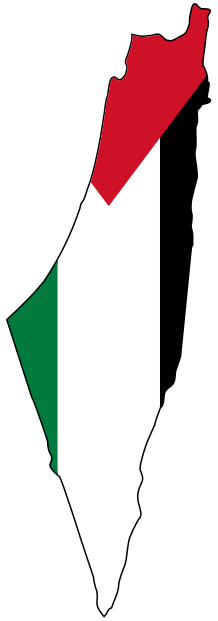
Yahya Sinwar: Founder, Prisoner, Leader, Martyr (1962–2024)
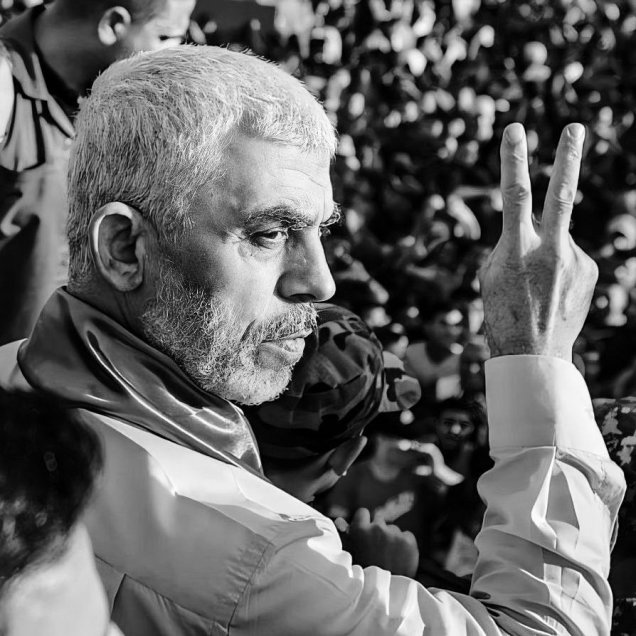
Yahya Sinwar (1962–2024) was a Palestinian leader from Khan Younis refugee camp, from a family driven out of al-Majdal (Asqalan) in the Nakba. He co-founded Hamas’s “Majd” security apparatus, spent some 23 years in Israeli prisons under four life sentences (426 years), was freed in the 2011 “Loyalty of the Free” exchange, led Hamas in Gaza and then headed its political bureau after Ismail Haniyeh’s assassination, until he was killed fighting occupation forces in Tal al-Sultan, Rafah, in October 2024. [1] [2] [3]
From founder to prisoner, to leader, to a martyr killed in combat: this is the life of Yahya Sinwar.
Who was Yahya Sinwar?
Yahya Sinwar was one of the foremost Palestinian resistance leaders of recent decades; Israel called him the “architect” of Al-Aqsa Flood and put him, alongside Mohammed Deif, at the top of its target list [1] [2]. In prison he mastered Hebrew, studied Israeli society, led the prisoners’ movement and wrote a novel, studies and translations [1] [2].
Yahya Sinwar at a glance
| Item | Details |
|---|---|
| Name | Yahya Ibrahim Hassan al-Sinwar [2] |
| Born | 1962, Khan Younis camp, southern Gaza; family displaced from al-Majdal (Asqalan) [1] [2] |
| Education | Khan Younis Boys’ Secondary School; BA in Arabic, Islamic University of Gaza [1] [2] |
| Founder | Co-founded the “Majd” security apparatus in 1986 [1] [2] |
| Imprisonment | About 23 years (1988–2011); four life sentences (426 years) [1] [2] |
| Released | 2011, “Loyalty of the Free” exchange [1] [2] |
| Leadership | Hamas leader in Gaza (2017, re-elected 2021), then head of its political bureau (August 2024) [1] [2] [4] |
| Killed | October 2024, fighting occupation forces in Tal al-Sultan, Rafah [3] [2] |
Timeline
| Date | Event |
|---|---|
| 1962 | Born in Khan Younis camp [1] [2] |
| 1982 | First arrest over student activism (four months), then six months without trial [2] |
| 1986 | Founds the “Majd” apparatus under Sheikh Ahmed Yassin’s direction [1] [2] |
| 20 January 1988 | Arrested and sentenced to four life terms [1] [2] |
| 2004 | His novel The Thorn and the Carnation is published [1] |
| 2011 | Freed in the “Loyalty of the Free” exchange [1] [2] |
| 2012 | Elected to Hamas’s political bureau [1] [2] |
| 2015 | Takes charge of the prisoners’ file and negotiations [2] |
| 13 February 2017 | Elected Hamas leader in Gaza [1] |
| March 2021 | Re-elected for a new term [2] |
| 7 October 2023 | The “Al-Aqsa Flood” battle [1] [2] |
| August 2024 | Chosen as head of Hamas’s political bureau after Ismail Haniyeh’s assassination [1] [4] |
| 16 October 2024 | Killed fighting in Tal al-Sultan, Rafah [3] |
Son of the camp: birth and upbringing
Yahya Ibrahim Hassan al-Sinwar was born in 1962 in Khan Younis refugee camp in southern Gaza, to a modest family that Zionist militias had driven out of al-Majdal (Asqalan) after the 1948 Nakba [1] [2]. He attended Khan Younis Boys’ Secondary School [1] [2].
University and the Islamic Bloc
Sinwar earned a BA in Arabic from the Islamic University of Gaza, where he was active in the Islamic Bloc, the movement’s student wing, rising through the student council to become its president [1] [2]. In 1982 he was arrested for the first time over his student activism and held four months, then re-arrested a week after his release and held six months without trial [2].
The founder: the “Majd” apparatus
In 1986, under the direction of the movement’s founder Sheikh Ahmed Yassin, Sinwar founded with Khaled al-Hindi and Rawhi Mushtaha a security body called the “Organisation of Jihad and Da’wa,” known as “Majd,” to expose and pursue the occupation’s collaborators [1] [2].
The prisoner: 23 years in Israeli jails
On 20 January 1988 the occupation arrested him again; a military court convicted him of involvement in the capture and killing of two Israeli soldiers and the killing of four Palestinians suspected of collaborating, and sentenced him to four life terms – 426 years [1] [2]. He was twenty-six.
Sinwar was moved between the Majdal, Hadarim, Beersheba and Nafha prisons, spent four years in solitary confinement and was denied family visits for long years; his brother says their father visited him only twice in 13 years [2]. He attempted to escape more than once [2].
He headed the supreme leadership body of Hamas prisoners for two terms and led the confrontations with the prison administration in the hunger strikes of 1992, 1996, 2000 and 2004 [2]. A blood clot was found in his brain, requiring a seven-hour operation [2]. In prison he learned Hebrew and studied Israeli society [1] [2].
His writings in prison
In prison Sinwar wrote and translated books in political, security and literary fields [1]. His best-known work is the novel The Thorn and the Carnation, published in 2004, which traces the Palestinian struggle from 1967 to the Al-Aqsa Intifada [1].
Freedom in the “Loyalty of the Free” deal
In 2011 Sinwar walked free among more than a thousand Palestinian prisoners released in the “Loyalty of the Free” exchange for the Israeli soldier Gilad Shalit, captured by the resistance in 2006 [1] [2]. He had spent some 23 consecutive years in Israeli prisons [1].
The leader
In 2012 Sinwar was elected to Hamas’s political bureau and took on the role of liaison between the political bureau and the Qassam Brigades; in 2015 he was given the prisoners’ file and negotiations, and the same year the US listed him as an “international terrorist” [2]. His home was destroyed in 2012 and bombed in 2014 and 2021 [1] [2].
On 13 February 2017 he was elected Hamas leader in the Gaza Strip, succeeding Ismail Haniyeh; he tried unsuccessfully to end the split with Fatah, and was re-elected in March 2021 for four years [1] [2]. In May 2021 the resistance in Gaza, under his leadership, fought the “Sword of Jerusalem” battle.
Al-Aqsa Flood
On 7 October 2023 the Qassam Brigades launched the “Al-Aqsa Flood” battle; their fighters stormed military positions and settlements around Gaza and captured a large number of soldiers and settlers in order to exchange them for Palestinian prisoners [1] [2]. Israel deemed Sinwar the operation’s architect and made him its top target alongside Mohammed Deif, and Britain and France imposed sanctions on him [1] [2].
After Ismail Haniyeh was assassinated in Tehran on 31 July 2024, Hamas unanimously chose Sinwar to head its political bureau [1] [4].
Killed in combat: Tal al-Sultan, October 2024
On Wednesday 16 October 2024 occupation forces spotted three fighters in the Tal al-Sultan neighbourhood of western Rafah and engaged them; Sinwar entered a building alone, which a tank shelled, wounding him; when soldiers entered he threw two grenades at them, forcing them back to call in a drone, at which he, wounded, hurled a piece of wood, before the tank shelled the building again – according to the occupation army and its media [3]. The occupation announced his killing the next day [3].
Hamas political bureau member Khalil al-Hayya said Sinwar “rose a heroic martyr, his weapon in hand” and “was martyred fighting and confronting the occupation army until the last moment of his life,” adding that the Israeli captives would not return “except with an end to the aggression on the Gaza Strip” [3]. The commander of the Tal al-Sultan battalion, Mahmoud Hamdan (Abu Yousef), was killed with him [3].
His last moments thus belied the occupation’s repeated claim that he was hiding in tunnels surrounded by captives: he fell in direct combat in the field [2] [3].
Video
Frequently asked questions about Yahya Sinwar
Who was Yahya Sinwar?
A Palestinian leader from Khan Younis camp, founder of the “Majd” apparatus, a former prisoner, Hamas leader in Gaza and then head of its political bureau.
How long did Yahya Sinwar spend in prison?
About 23 years, from 1988 to 2011, under four life sentences (426 years).
What was the Majd apparatus?
A security body Sinwar founded in 1986 with Khaled al-Hindi and Rawhi Mushtaha under Sheikh Ahmed Yassin’s direction, to expose the occupation’s collaborators.
What is Yahya Sinwar’s best-known book?
The novel The Thorn and the Carnation, published in 2004.
How was Yahya Sinwar released from prison?
In the 2011 “Loyalty of the Free” exchange for the Israeli soldier Gilad Shalit.
When was Yahya Sinwar killed?
On Wednesday 16 October 2024; the occupation announced it the following day.
Where was Yahya Sinwar killed?
In the Tal al-Sultan neighbourhood of western Rafah, fighting occupation forces.
Sources and references
Arabic-language sources are listed with translated titles.
- “Sinwar in Pictures: Milestones in the Life of the ‘Engineer’ of Al-Aqsa Flood,” Al Jazeera Net, 7 August 2024 (updated 17 October 2024).
- Mohammad Khalil, “Yahya Sinwar: The ‘Son of the Camp’ Who Faced the Occupation in Combat,” Arabi21, 18 October 2024.
- “An Epic End for Sinwar: Hamas Says He Fell Weapon in Hand,” Al-Quds Al-Arabi, 18 October 2024.
- “Hamas Chooses Sinwar to Succeed Ismail Haniyeh,” Enab Baladi, August 2024.
Video clips
Photo gallery


More from the archive
 Download Our Palestine App
The whole archive in the palm of your hand: depopulated villages, the Nakba, the massacres and Al-Aqsa — free, with no ads to erase the story.
Comments
No comments yet — be the first to write one.
Add your comment
Name and email are optional. Comments appear after review.