
Mohammed Deif: Qassam Chief of Staff and the Man in the Shadows
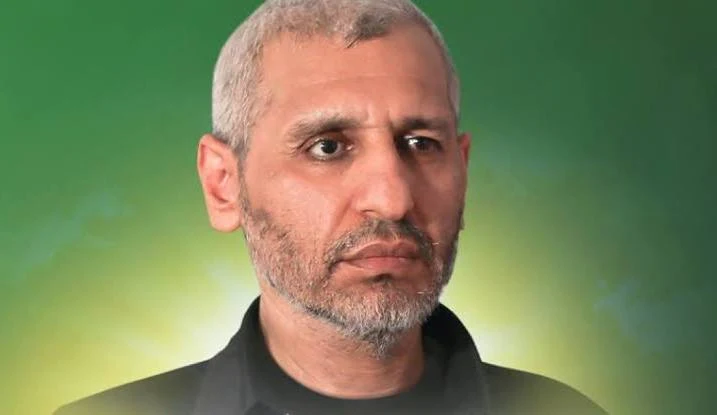
“We announce the start of Operation Al-Aqsa Flood.”
(Mohammed Deif, dawn of 7 October 2023) [1]
Mohammed Deif (1965–2024), born Mohammed Diab Ibrahim al-Masri, was commander-in-chief and chief of staff of the Izz al-Din al-Qassam Brigades, a son of Khan Younis camp from a refugee family from al-Qubeiba. He led the Brigades for decades and survived repeated assassination attempts that cost him his own blood and his family’s, until Israeli media dubbed him “the man in the shadows.” He announced Operation “Al-Aqsa Flood” at dawn on 7 October 2023 and was killed in Israeli strikes on al-Mawasi in Khan Younis on 13 July 2024, in a massacre that killed 90 Palestinians; the Qassam Brigades announced his death on 30 January 2025. [1] [2] [3]
This article is part of the series “Leaders of the Palestinian Revolution Who Were Assassinated,” alongside the articles on Yahya Sinwar, Ahmed al-Jabari, Salah Shehadeh and Ismail Haniyeh.
Who was Mohammed Deif?
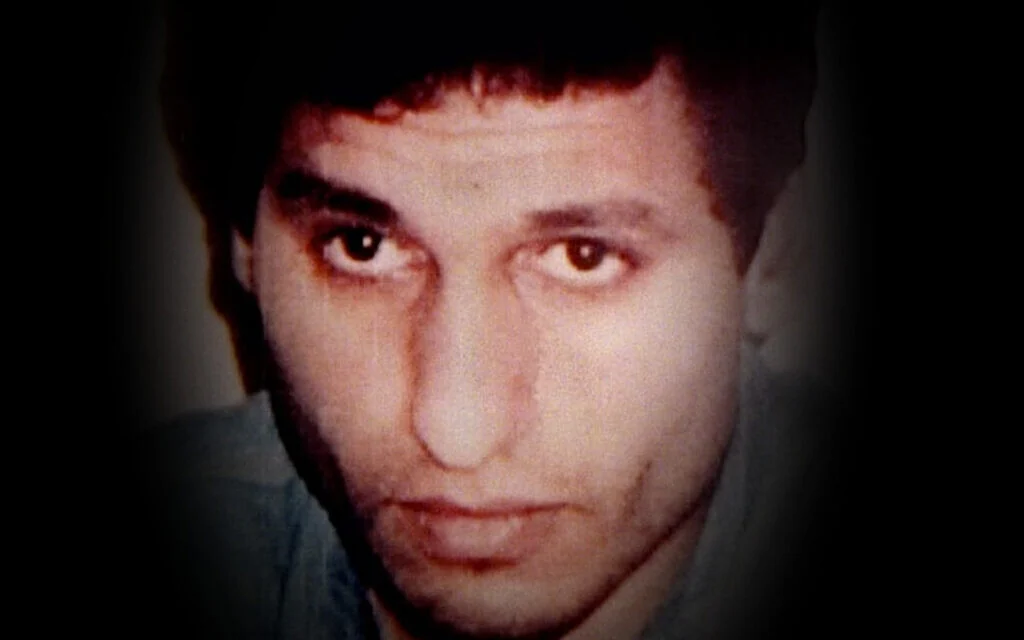
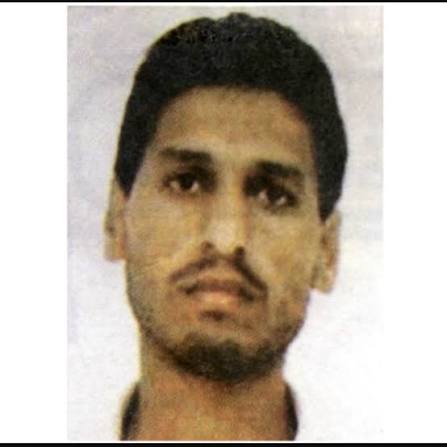
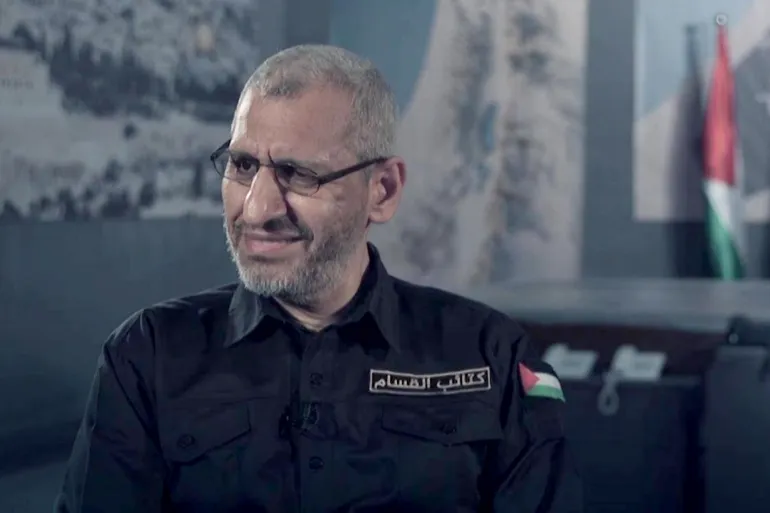
Mohammed Deif, “Abu Khaled,” was one of the most prominent leaders in the modern history of the Palestinian resistance, and wore down the occupation for three decades [1]. The occupation army announced his killing more than once, only to find each time that he was alive, and until his death there was no clear image of his face; in his last documented appearance he was fully masked [1] [2].
Mohammed Deif at a glance
| Item | Details |
|---|---|
| Name | Mohammed Diab Ibrahim al-Masri, “Mohammed Deif,” “Abu Khaled” [1] |
| Born | 1965, Khan Younis camp [1] [4] |
| Origin | Refugee family from al-Qubeiba, expelled in 1948 [1] [4] |
| Education | Sciences, Islamic University of Gaza [1] |
| Prison | 16 months without trial (1989) [1] [2] |
| Post | Commander-in-chief and chief of staff of the Qassam Brigades [1] [2] |
| Assassination attempts | Survived several; his wife and infant son killed in 2014 [1] [2] |
| Killed | Strike on al-Mawasi, Khan Younis, 13 July 2024; announced by Qassam on 30 January 2025 [1] [2] |
Timeline
| Date | Event |
|---|---|
| 1965 | Born [1] |
| 1989 | Detained 16 months without trial [1] [2] |
| 1993 | Rises in the Qassam leadership after Imad Aqel’s assassination [1] |
| January 1996 | A series of operations in response to Yahya Ayyash’s assassination [1] [4] |
| July 2001 | Marries Ghadeer Siyam [1] |
| September 2002 | Survives a strike on cars in Sheikh Radwan [1] [4] |
| 2007 | Marries Widad Asfour [1] |
| Summer 2014 | His wife and infant son killed in a strike on a house in Sheikh Radwan [1] [4] |
| May 2021 | Warns the occupation over Sheikh Jarrah [4] |
| 7 October 2023 | Announces Operation “Al-Aqsa Flood” [1] |
| 20 May 2024 | ICC prosecutor requests arrest warrants [1] |
| 13 July 2024 | The al-Mawasi massacre in Khan Younis [3] [1] |
| 30 January 2025 | Qassam announces his death [2] [1] |
Son of Khan Younis camp
Mohammed Diab Ibrahim al-Masri was born in 1965 to a Palestinian refugee family that Zionist militias had driven out of the town of al-Qubeiba in 1948; they settled in a refugee camp and then in Khan Younis camp in the southern Gaza Strip [1] [4]. His family’s poverty pushed him to work young: he helped his father in a yarn shop, later set up a small poultry farm, and got a driving licence to add to his income [1] [4].
University and theatre
He studied sciences at the Islamic University of Gaza, where he was active in religious, student and relief work and excelled in theatre, co-founding Palestine’s first Islamic art troupe, “Al-Aidoun” (The Returnees) [1] [4]. At university he joined the Muslim Brotherhood and was a leading member of the Islamic Bloc, later joining Hamas [1].
Leading the Qassam Brigades
In 1989 the occupation detained him for 16 months without trial on charges of working in Hamas’s military wing [1] [2]. After the assassination of Imad Aqel in 1993 he became one of the Qassam Brigades’ leading commanders and moved to the West Bank, where he helped set up a branch of the Brigades and oversaw operations including the capture of soldier Nachshon Wachsman [1]. After the assassination of Yahya Ayyash on 5 January 1996, he planned a series of operations in response [1] [4].
He later became commander-in-chief of the Qassam Brigades, working on tunnel construction and rocket strategy [1] [2]. Ahmed al-Jabari was his deputy and took de facto command of the Brigades after Deif survived an assassination attempt in 2003, until the occupation killed him in 2012.
The man in the shadows and the assassination attempts
Deif survived several Israeli assassination attempts; Al Jazeera lists attempts in 2001, 2002, 2003, 2006 and 2014, while other sources speak of seven attempts since 2002 [1] [2]. The most notable came in late September 2002, when occupation helicopters struck cars in Gaza’s Sheikh Radwan district; Israel announced his death, then admitted he had survived [1] [4]. Media reports said one strike left him paralysed and in a wheelchair [4].
In the summer of 2014, during the assault on Gaza, the occupation bombed a house in Sheikh Radwan, killing his wife Widad Asfour and their infant son [1] [4]. He had married Ghadeer Siyam in 2001, then in 2007 Widad Asfour, with whom he had seven children, two of whom were killed with their mother [1].
Deif and Jerusalem
In May 2021 Deif issued a rare written warning to the occupation and its settlers, saying the Qassam Brigades would not stand idle if the aggression against the residents of Sheikh Jarrah did not stop, and that the occupation would pay a heavy price [4]. His name became a chant at protests in Jerusalem and inside al-Aqsa Mosque, to the point that occupation forces asked protesters not to chant it [4].
Announcing Al-Aqsa Flood
At dawn on Saturday 7 October 2023 Mohammed Deif announced, in an audio message, the start of Operation “Al-Aqsa Flood,” saying some 5,000 rockets and shells had been fired in the first 20 minutes [1]. On 20 May 2024 the International Criminal Court prosecutor, Karim Khan, requested arrest warrants for Netanyahu and Gallant, and for Sinwar, Haniyeh and Deif [1].
The al-Mawasi massacre
On 13 July 2024 occupation aircraft carried out heavy strikes on al-Mawasi in Khan Younis – an area the occupation had itself designated a “humanitarian zone” and urged Palestinians to flee to – killing 90 Palestinians and wounding 300, among them dozens of children and women, according to the Gaza Health Ministry [3]. The occupation claimed the strikes targeted Mohammed Deif and Khan Younis brigade commander Rafa Salameh; Hamas at the time denied he had been killed [3] [2].
On 1 August 2024 the occupation army announced that Deif had been killed in that strike [2]. The massacre stands as testimony to the occupation’s readiness to kill dozens of displaced civilians in order to assassinate a single commander.
The announcement of his death
On the evening of Thursday 30 January 2025, less than two weeks after a ceasefire took effect in Gaza, Qassam Brigades military spokesman Abu Obeida announced the death of chief of staff Mohammed Deif, “Abu Khaled” [2] [1]. He also announced the deaths of Deif’s deputy Marwan Issa, Ghazi Abu Tamaa, Raed Thabet, Rafa Salameh, Ahmed al-Ghandour and Ayman Nofal, saying they were killed on the battlefield, in operations rooms and on the front lines, and that the front had suffered no leadership vacuum [2].
Legacy
Mohammed Deif remains in Palestinian memory as the commander who built the resistance’s strength in Gaza over three decades, survived assassination again and again, and, before 7 October, urged his children to memorise the Quran and seek useful knowledge [1]. On the first anniversary of his death Abu Obeida said his spectre would remain a nightmare haunting the occupation [1].
Images and video
Frequently asked questions about Mohammed Deif
Who was Mohammed Deif?
Mohammed Diab Ibrahim al-Masri, commander-in-chief and chief of staff of the Qassam Brigades, from Khan Younis camp.
Where was Mohammed Deif’s family from?
From the town of al-Qubeiba, from which his family was expelled in 1948.
Why was Mohammed Deif called “the man in the shadows”?
Because he survived several assassination attempts, the occupation announced his death more than once, and no clear image of his face existed.
When did Deif announce Al-Aqsa Flood?
At dawn on Saturday 7 October 2023, in an audio message.
When was Mohammed Deif killed?
In occupation strikes on al-Mawasi in Khan Younis on 13 July 2024.
When did Qassam announce his death?
On the evening of Thursday 30 January 2025, through its military spokesman Abu Obeida.
How many people were killed in the al-Mawasi massacre?
Ninety killed and 300 wounded, among them dozens of children and women, according to the Gaza Health Ministry.
Sources and references
Arabic-language sources are listed with translated titles.
- “Mohammed Deif Led the Qassam Brigades and Wore Down the Occupation for Three Decades,” Al Jazeera Encyclopedia (updated 22 January 2026).
- “Hamas Mourns Its Military Commander Mohammed Deif,” Enab Baladi, 31 January 2025.
- “Al-Mawasi Massacre Toll Rises; Hamas: No Withdrawal from Talks,” Enab Baladi, 14 July 2024.
- “Mohammed Deif: The Qassam Chief of Staff Whose Name the Occupation Asked Jerusalem Protesters Not to Chant,” Al Jazeera Net, 12 May 2021.
Photo gallery
More from the archive
 Download Our Palestine App
The whole archive in the palm of your hand: depopulated villages, the Nakba, the massacres and Al-Aqsa — free, with no ads to erase the story.



Comments
No comments yet — be the first to write one.
Add your comment
Name and email are optional. Comments appear after review.