
Battle of Sanur 1939: The Martyrdom of Revolt Commander Abd al-Rahim al-Hajj Muhammad
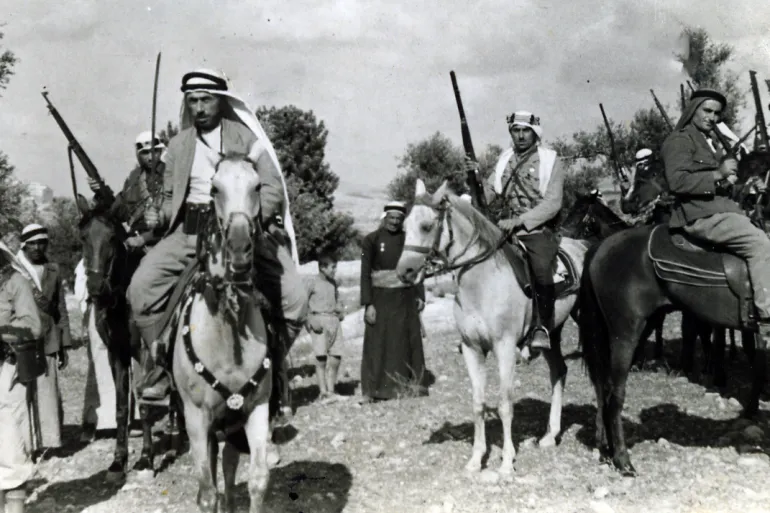
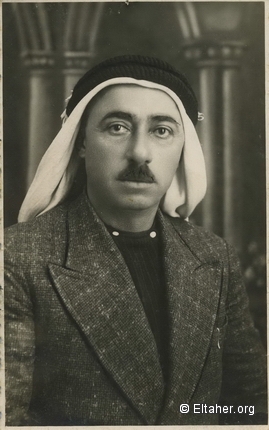
At dawn on 27 March 1939 a British occupation force, backed by aircraft, surrounded the village of Sanur in the Jenin district, where the general commander of the Great Palestinian Revolt, Abd al-Rahim al-Hajj Muhammad, “Abu Kamal,” was spending the night with several comrades after returning from Damascus. He fought an unequal battle with them that ended with his martyrdom and that of his comrade Sulayman Abu Khalifa. [1][2][3]
His martyrdom was one of the revolt’s heaviest blows: Palestine’s towns shut in mourning, black flags went up, prayers for the absent dead were held in mosques, and work stopped at the port of Jaffa. [3][1]
Contents
- At a glance
- The commander: Abd al-Rahim al-Hajj Muhammad
- The road to Sanur
- The Battle of Sanur
- Palestine in mourning
- Differences between the accounts
- Timeline
- Frequently asked questions about the Battle of Sanur and Abd al-Rahim al-Hajj Muhammad
At a glance
| Item | Details |
|---|---|
| Date | Dawn, 27 March 1939 |
| Place | The village of Sanur, Jenin district |
| Palestinian commander | Abd al-Rahim al-Hajj Muhammad, “Abu Kamal,” general commander of the revolt |
| Enemy force | A British occupation army force backed by aircraft |
| Martyrs | Abd al-Rahim al-Hajj Muhammad and Sulayman Abu Khalifa |
| Survivors | His comrades Fawzi Jarrar and Sa’id al-Bitawi escaped |
| Context | The second phase of the Great Palestinian Revolt, 1936–1939 |
The commander: Abd al-Rahim al-Hajj Muhammad
Abd al-Rahim al-Hajj Muhammad was born in the village of Dhinnaba near Tulkarm, most likely in 1892, though other sources give 1898. He studied at the military school in Beirut, served in the Ottoman gendarmerie in Tripoli during the First World War, and took part in the Syrian revolt of 1920. [3][2][4]
He came from a well-off family and ran a large business. When the revolt broke out in 1936 he secretly collected donations and organised and trained fighters using his military experience, leading the bands of the Tulkarm and Sha’rawiyya areas. He appeared openly at the Battle of Nur Shams in June 1936, the first major organised battle between the rebels and British forces. [1][4][3]
He was later chosen as the revolt’s general commander and held that post until his death. He was known for his integrity and uprightness, oversaw the revolt’s courts, and worked to organise its bands into a modern revolutionary structure. [4][1]
The road to Sanur
In early January 1939 Abu Kamal left Palestine for Damascus, where he met the Mufti, Hajj Muhammad Amin al-Husseini, to discuss the revolt’s need for weapons, equipment and money, after funding had dried up and some imported arms had proved faulty. [1][3]
On 26 March 1939 he returned to Palestine with several comrades, and they stopped for the night in the village of Sanur, near Silat al-Dhahr in the Jenin district. [1][3]
The Battle of Sanur
The British occupation authorities learned of their presence and sent a large military force that surrounded the village, backed by aircraft, and attacked at dawn on 27 March. Abu Kamal and his comrades fought an unequal battle; he tried to break through the cordon, was wounded, and fell on the field. [1][3][2]
His comrade Sulayman Abu Khalifa was wounded and captured and later died of his wounds, according to the official British bulletin, which said the troops seized five pistols and 700 rounds. His comrades Fawzi Jarrar and Sa’id al-Bitawi, who hid in the crops, escaped. [3][2]
The occupation authorities buried his body secretly in Sanur, but the rebels recovered it and carried it to his birthplace, Dhinnaba, where they buried him. [1]
Palestine in mourning
Grief swept Palestine as the news spread. Homes became houses of mourning, black flags were raised, prayers for the absent dead were held in mosques and condolences received in Tulkarm. Haifa, Jaffa, Tulkarm, Ramla, Lydda, Gaza and Nablus closed in mourning, work stopped at the port of Jaffa and traffic came to a halt, so that many thought a new general strike had begun. [1][3]
Abu Kamal’s name remains alive in national memory, and Palestinian institutions mark the anniversary of his martyrdom every year as a symbol of an upright leadership that gave its life defending Palestine against the British occupation and the Zionist project. [4]
Differences between the accounts
Sources differ on his year of birth, 1892 or 1898, and on the date of his death, the night of 26 March or the dawn of 27 March 1939: he reached Sanur on the evening of 26 March and the battle was fought at dawn the next day. We have used 27 March, the date in WAFA’s register of the revolt’s martyrs. [3][4][5][2]
Timeline
| Date | Event |
|---|---|
| 1892 | Born in Dhinnaba near Tulkarm [3] |
| June 1936 | Appears openly at the Battle of Nur Shams [1] |
| January 1939 | Travels to Damascus to discuss the revolt’s needs [3] |
| 26 March 1939 | Returns to Palestine and stops for the night in Sanur [1] |
| 27 March 1939 | The Battle of Sanur; he and Sulayman Abu Khalifa are martyred [2] |
Frequently asked questions about the Battle of Sanur and Abd al-Rahim al-Hajj Muhammad
When was Abd al-Rahim al-Hajj Muhammad killed?
At dawn on 27 March 1939, in the Battle of Sanur. [2][4]
Where is Sanur?
A Palestinian village in the Jenin district, near Silat al-Dhahr. [3]
Who was Abd al-Rahim al-Hajj Muhammad?
The general commander of the Great Palestinian Revolt, born in Dhinnaba near Tulkarm and known as “Abu Kamal.” [4][3]
Who was martyred with him at Sanur?
His comrade Sulayman Abu Khalifa, who was wounded and captured and later died of his wounds. [2][3]
Where was he buried?
The British buried him secretly in Sanur; the rebels then moved him and buried him in his birthplace, Dhinnaba. [1]
How did Palestine react to his death?
With general mourning: towns closed, black flags went up, prayers for the absent dead were held and work stopped at the port of Jaffa. [1][3]
Read also on Palestinuna
- The 1936 Revolt
- The Battle of Nur Shams
- The Battle of Beit Imrin, 1936
- The Battle of Jurat Bahlas, 1938
- Battles archive
Sources and references
- Wafaa Hilal, “Forgotten Heroics of the Palestinian Nakba and Before,” Noon Post, 16 May 2018 (in Arabic).
- WAFA – Palestinian National Information Centre, “Martyrs of the 1936–1939 Revolt” (in Arabic).
- Muhammad Aql, “Abd al-Rahim al-Hajj Muhammad: Supreme Commander of the Revolt in Palestine,” Hawliyat al-Quds, no. 18, Autumn–Winter 2014, Institute for Palestine Studies (in Arabic).
- Palestine Technical University – Kadoorie, “Seminar Marking the Anniversary of the Martyrdom of the General Commander of the Great Palestinian Revolt,” 13 April 2016 (in Arabic).
- Palestinian Museum Digital Archive, “Abdel-Rahim al-Hajj Mohammad, 26 March 1939,” Sameeh Hammoudeh Collection.
More from the archive
 Download Our Palestine App
The whole archive in the palm of your hand: depopulated villages, the Nakba, the massacres and Al-Aqsa — free, with no ads to erase the story.



Comments
No comments yet — be the first to write one.
Add your comment
Name and email are optional. Comments appear after review.