Count Folke Bernadotte: The UN Mediator Assassinated by the Zionist Lehi Organization
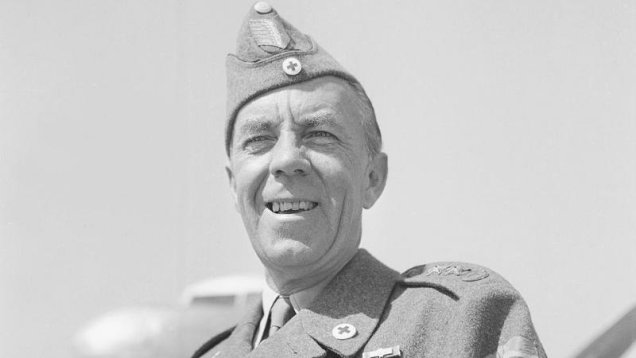
On September 17, 1948, Count Folke Bernadotte, the United Nations Mediator for Palestine, was assassinated in Jerusalem by members of the Zionist underground organization Lehi, also known as the Stern Gang.
Bernadotte had been appointed only four months earlier as the first United Nations mediator in Palestine, with a mandate to promote a peaceful settlement amid the war, supervise truces, protect the Holy Places, and address the rapidly expanding Palestinian refugee crisis.
The day before his assassination, on September 16, 1948, he signed his final progress report to the United Nations. Among its most consequential recommendations was an explicit demand that the right of Palestinian Arab refugees to return to their homes in Jewish-controlled territory be affirmed, together with compensation for those choosing not to return.
He also recommended territorial revisions unfavorable to some of Israel's wartime gains, including placing Lydda and Ramla in Arab territory, assigning the Negev to the Arab side, and placing Jerusalem under effective United Nations control.
Less than twenty-four hours after completing the report, Bernadotte was dead.
Who Was Folke Bernadotte?
Folke Bernadotte af Wisborg was born in Stockholm in 1895 into the Swedish royal family. He was a grandson of King Oscar II of Sweden.
Before his involvement in Palestine, Bernadotte had established an international reputation through humanitarian work during the Second World War.
As vice-chairman of the Swedish Red Cross, he participated in negotiations concerning prisoners of war and concentration-camp prisoners held by Nazi Germany.
In the final months of the war, he became closely associated with the humanitarian rescue operation later known as the White Buses, through which thousands of prisoners were transported from Nazi camps to safety in Scandinavia.
United Nations accounts have credited his wartime humanitarian work with helping secure the release of approximately 15,000 to 20,000 people, although contemporary estimates vary depending on which phases and categories of the rescue effort are counted.
Appointment as United Nations Mediator
Bernadotte was not appointed in 1947.
On May 14, 1948, the United Nations General Assembly adopted Resolution 186 (S-2), creating the office of a mediator for Palestine.
The mediator was instructed to use his good offices to:
- Promote a peaceful adjustment of the future situation of Palestine.
- Help arrange essential public services.
- Assist in protecting the Holy Places and religious sites.
- Work with the parties to obtain and supervise truces.
On May 20, 1948, a committee representing China, France, the Soviet Union, the United Kingdom, and the United States selected Bernadotte for the position.
He thus became the first United Nations Mediator for Palestine at a moment when the war was intensifying and the Palestinian refugee crisis was rapidly expanding.
Bernadotte and the First Truce
One of Bernadotte's first major achievements was helping secure the first general truce of the 1948 war.
After intense negotiations with Israel and the Arab governments, a four-week ceasefire entered into force on June 11, 1948.
The United Nations later credited Bernadotte's diplomacy with playing a central role in obtaining the agreement of all sides to the truce.
He also helped develop the system of international military observers that evolved into the United Nations Truce Supervision Organization (UNTSO).
The Palestinian Refugee Crisis
As Bernadotte traveled through Palestine and neighboring countries, the scale of the Palestinian displacement became impossible to ignore.
Hundreds of thousands of Palestinians had already fled or been expelled from territory captured by Zionist and Israeli forces.
Cities including Haifa, Jaffa, Acre, Lydda, and Ramla had lost most of their Palestinian Arab inhabitants, while hundreds of villages were being depopulated.
Bernadotte's September report stated that almost the entire Arab population had “fled or was expelled” from areas under Jewish control.
The refugee issue consequently became one of the central concerns of his mediation.
Bernadotte on the Right of Return
Bernadotte took an unusually clear position on the Palestinian refugees.
In his final report, he argued that people uprooted by the war possessed a right to return to their homes.
He recommended that the United Nations affirm the right of Arab refugees to return to their homes in Jewish-controlled territory at the earliest possible date.
He further proposed that refugees who chose not to return should receive adequate compensation for their property.
Bernadotte regarded the question not simply as a humanitarian crisis but as a matter of justice and an essential condition for a political settlement.
He argued that permanently excluding Palestinians from homes from which they had been uprooted while allowing new Jewish immigrants to enter would violate fundamental principles of justice.
Bernadotte's Final Territorial Proposals
The final Bernadotte plan did not simply reproduce the boundaries of the 1947 United Nations Partition Plan.
Instead, he proposed significant revisions based on the military and political situation that existed by September 1948.
Among his principal recommendations were:
- The Negev, south of a line running near Majdal and al-Faluja, would form part of Arab territory.
- Lydda and Ramla, which Israeli forces had captured in July and from which tens of thousands of Palestinians had been displaced, would be placed in Arab territory.
- Galilee would be placed within Jewish territory.
- Jerusalem would receive special and separate treatment under effective United Nations control, with extensive local autonomy for its Arab and Jewish communities.
- The port of Haifa would become a free port accessible to neighboring Arab countries.
- Lydda Airport would become a free airport.
- The right of Palestinian Arab refugees to return would be internationally affirmed.
Bernadotte also suggested that the Arab territory of Palestine might eventually be joined with Transjordan, subject to consultation with the Arab inhabitants and governments concerned.
Why His Proposals Alarmed Lehi
Bernadotte's proposals were controversial among both Arab and Israeli political actors and were not accepted in their entirety by either side.
Within the Zionist underground organization Lehi, however, Bernadotte was viewed as a particularly dangerous obstacle.
Lehi opposed international control of Jerusalem and rejected proposals that would require Israel to relinquish territory already captured during the war.
The organization had previously used political assassination as part of its campaign, including the 1944 assassination of British Minister of State Lord Moyne in Cairo.
By September 1948, Lehi activists were openly demonstrating against Bernadotte and denouncing his mediation efforts.
The Role of Yitzhak Shamir
Yitzhak Shamir, who decades later became Prime Minister of Israel, was one of the senior leaders of Lehi.
Historical accounts differ over the precise chain of command for the Bernadotte assassination.
Shamir denied having personally directed the killing. In his later memoirs, however, he acknowledged that the idea of removing Bernadotte was raised by Lehi members in Jerusalem and that the organization's senior leadership did not object.
The operational planning in Jerusalem was directed principally by Yehoshua Zettler, the local Lehi commander.
Zettler later publicly acknowledged his role in organizing the assassination and stated that he had ordered the operation.
The Assassination — September 17, 1948
On the afternoon of September 17, 1948, Bernadotte traveled through Jerusalem in a three-car United Nations convoy.
Two of the vehicles were displaying United Nations flags, while another carried a Red Cross flag.
The convoy entered the Katamon neighborhood of Jerusalem, then inside Israeli-controlled territory.
A military-style jeep blocked the road.
Armed men wearing uniforms resembling those of Israeli forces approached the convoy.
One of the gunmen fired at close range into the vehicle carrying Bernadotte.
The Swedish mediator was struck repeatedly and killed.
Sitting beside him was Colonel André Serot, a French United Nations military observer, who was also shot and killed.
Ralph Bunche, Bernadotte's senior UN colleague and eventual successor as Acting Mediator, immediately reported the attack to the United Nations as a planned, cold-blooded assassination by Jewish assailants.
Who Fired the Fatal Shots?
The identity of the gunman was not officially established at the time.
Later testimony from former Lehi members identified Yehoshua Cohen as the man who fired into Bernadotte's car.
Cohen never publicly confirmed or denied this during his lifetime.
Former conspirators later stated publicly that Cohen had been the shooter.
In a striking historical development, Cohen later became close to David Ben-Gurion after helping establish the Negev kibbutz of Sde Boker. He served there as a security figure and became one of Ben-Gurion's close companions.
Lehi's Attempt to Conceal Its Responsibility
Immediately after the assassination, responsibility was claimed publicly by an organization calling itself the Fatherland Front.
Israeli authorities soon reported to the United Nations that this organization was probably composed of individuals belonging to or connected with Lehi.
Later testimony by former Lehi members removed much of the uncertainty surrounding the organization's responsibility.
The assassination had been organized by members of Lehi's Jerusalem network.
International Reaction
Bernadotte's murder shocked the United Nations and governments around the world.
On September 18, 1948, the United Nations Security Council condemned the killing as a cowardly act committed while its representative was carrying out his peace mission.
The Israeli provisional government publicly condemned the assassination, outlawed Lehi, and arrested a number of its members.
Yet despite the international outrage, no one was ever convicted of murdering Bernadotte and Serot.
Some Lehi members were prosecuted for membership in an illegal or terrorist organization, but those responsible for planning and carrying out the assassination were not tried for the killings themselves.
Bernadotte's Report Survives Him
Assassinating Bernadotte did not erase his final report.
The document had already been completed and signed in Rhodes on September 16, 1948.
After his death, the United Nations continued to consider its recommendations.
Ralph Bunche assumed the role of Acting Mediator and later supervised the negotiations that produced the 1949 Arab-Israeli Armistice Agreements.
Most importantly for Palestinians, Bernadotte's insistence on refugee return helped shape the subsequent international debate over the refugee question.
From Bernadotte to Resolution 194
On December 11, 1948, less than three months after Bernadotte's assassination, the United Nations General Assembly adopted Resolution 194 (III).
The resolution expressed appreciation for Bernadotte's work and stated that he had sacrificed his life in the effort to achieve a peaceful settlement.
It also established the United Nations Conciliation Commission for Palestine and addressed the Palestinian refugee issue.
Paragraph 11 declared that refugees wishing to return to their homes and live at peace with their neighbors should be permitted to do so at the earliest practicable date, while compensation should be paid to those choosing not to return and for lost or damaged property.
This provision became one of the central international references for the Palestinian right of return.
Bernadotte Through a Palestinian Historical Lens
Bernadotte was not a Palestinian political leader, nor did all of his proposals correspond with Palestinian national demands.
His proposals accepted the existence of the newly established State of Israel and contemplated attaching the remaining Arab areas of Palestine to Transjordan rather than necessarily creating an independent Palestinian state.
His importance in Palestinian history lies primarily elsewhere.
At a moment when hundreds of thousands of Palestinians were being displaced and Israel opposed their mass return, the United Nations mediator explicitly recognized that the refugees had been driven from or had fled their homes during the conflict and insisted that their right to return should be affirmed.
He also rejected the idea that the results of military conquest alone should determine the postwar map.
His recommendations concerning Lydda, Ramla, Jerusalem, the Negev, and the refugees directly challenged territorial and demographic realities created through the war.
The Historical Significance of His Assassination
The assassination of Folke Bernadotte remains one of the most extraordinary episodes in the early history of the United Nations.
A mediator appointed by the international community was killed in broad daylight, inside territory controlled by the newly established Israeli state, by members of an armed Zionist organization that opposed his proposals.
One of the senior leaders of that organization, Yitzhak Shamir, would later become Prime Minister of Israel.
The alleged gunman, Yehoshua Cohen, would later live near and become close to Israel's founding prime minister, David Ben-Gurion.
Yet no individual was ever convicted for the assassination.
For Palestinians, Bernadotte's death is inseparable from the refugee question at the heart of the Nakba. He was killed one day after completing a report that insisted that Palestinians uprooted from their homes possessed a right to return and that their displacement could not simply be converted into a permanent political fact.
His assassination did not eliminate that principle. Months later, the United Nations incorporated the question of refugee return and compensation into Resolution 194, ensuring that the issue Bernadotte had placed at the center of his mediation would remain a central part of the unresolved Palestinian question.
More from the archive
 Download Our Palestine App
The whole archive in the palm of your hand: depopulated villages, the Nakba, the massacres and Al-Aqsa — free, with no ads to erase the story.
Download Our Palestine App
The whole archive in the palm of your hand: depopulated villages, the Nakba, the massacres and Al-Aqsa — free, with no ads to erase the story.
Comments
No comments yet — be the first to write one.
Add your comment
Name and email are optional. Comments appear after review.