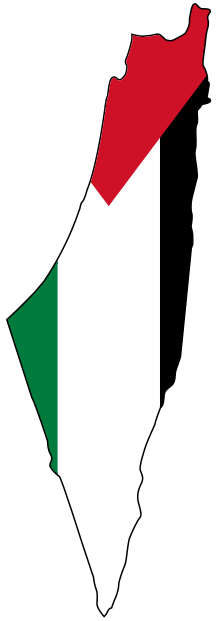
The October 1973 War: The Day Arab Armies Surprised Israel
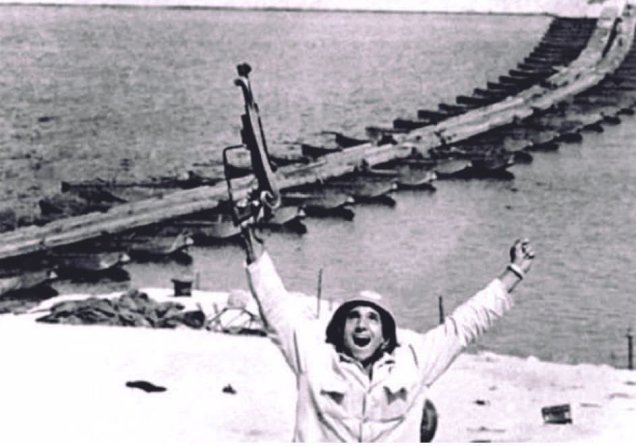
On October 6, 1973—corresponding to the tenth day of Ramadan 1393 AH—Egypt and Syria launched a coordinated military offensive against the Israeli occupation forces positioned in the Sinai Peninsula and the occupied Syrian Golan Heights.
The attack came more than six years after Israel's occupation of the remaining Palestinian territories—the West Bank, including East Jerusalem, and the Gaza Strip—in 1967, as well as Egypt's Sinai Peninsula and Syria's Golan Heights.
Egypt and Syria sought to break the military and political situation created by the 1967 occupation and recover Arab territory that remained under Israeli control.
The opening attack achieved one of the most dramatic strategic surprises in the history of the Arab-Israeli conflict.
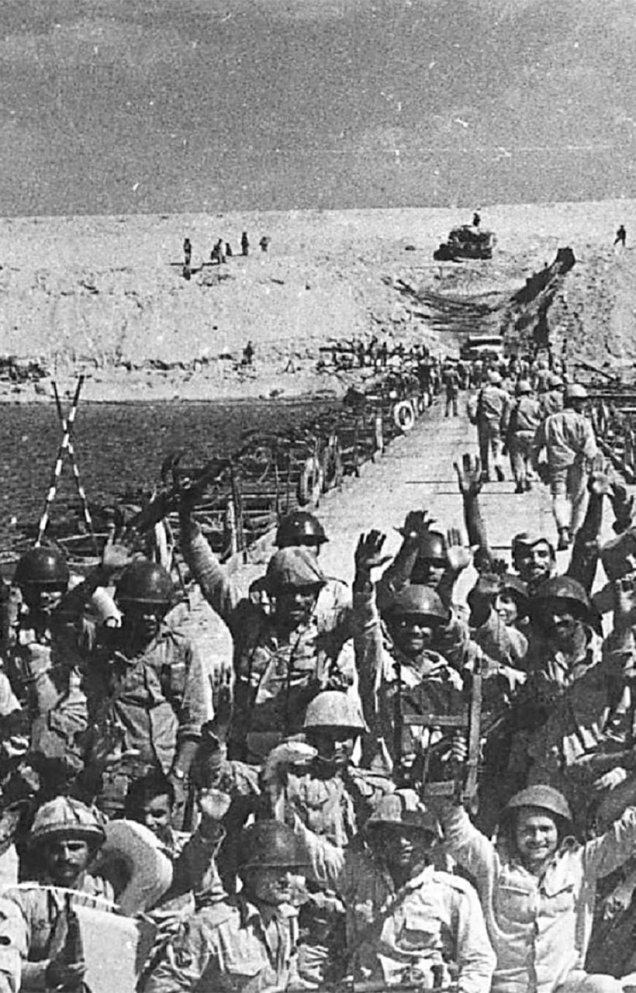
Egyptian troops crossed the Suez Canal, breached the Israeli Bar Lev defensive system, and established bridgeheads on the eastern bank, while Syrian forces launched a simultaneous assault into the occupied Golan Heights.
The conflict became known in the Arab world as the October War, the October Liberation War, or the Ramadan War.
In Israel it became known as the Yom Kippur War because the offensive began on Yom Kippur, one of the most important days in the Jewish religious calendar.
The Background: The Occupation of 1967
The roots of the October 1973 confrontation lay directly in the territorial situation created in June 1967.
Israel had occupied the Sinai Peninsula from Egypt and the Golan Heights from Syria.
It had also occupied the West Bank, including East Jerusalem, and the Gaza Strip, bringing the remaining Palestinian territories under Israeli military control.
The Gaza Strip had previously been administered by Egypt but was not sovereign Egyptian territory.
The scale and speed of the 1967 defeat deeply affected Arab political life and military thinking.
Egypt began rebuilding its armed forces and subsequently fought the Israeli occupation forces along the Suez front during the War of Attrition.
Syria likewise continued to regard the recovery of the occupied Golan Heights as a central national objective.
Anwar Sadat and the Search for a Way Out of the Deadlock
After the death of President Gamal Abdel Nasser in September 1970, Anwar al-Sadat became president of Egypt.
Sadat inherited a country whose largest strategic challenge was the continued Israeli occupation of Sinai.
Diplomatic efforts had failed to produce an Israeli withdrawal, while the military balance appeared to favor Israel.
Sadat increasingly concluded that a limited military operation could break the political stalemate, alter the balance created in 1967, and force the international powers to reopen the question of the occupied Arab territories.
Egypt therefore began preparing for a military crossing of the Suez Canal while coordinating with Syria under President Hafez al-Assad.
The Egyptian Military Problem
The Egyptian military faced a difficult strategic problem.
Israel possessed a powerful air force and armored formations and had constructed a chain of fortified positions along the eastern bank of the Suez Canal known collectively as the Bar Lev Line.
Egypt also lacked sufficient mobile air-defense systems to protect armored formations operating deep inside Sinai.
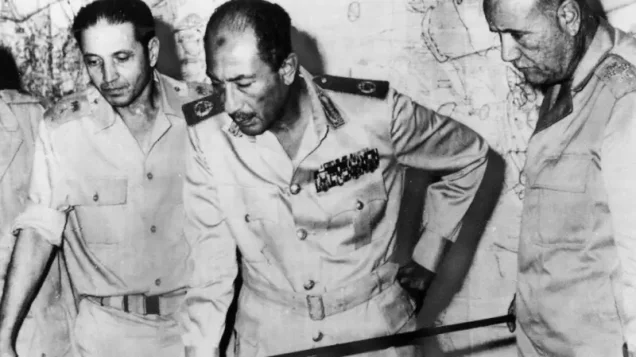
This limitation played a central role in the operational thinking of Egyptian Chief of Staff Lieutenant General Saad el-Din el-Shazly.
Saad el-Din el-Shazly and the Limited-War Concept
Saad el-Din el-Shazly became Chief of Staff of the Egyptian Armed Forces in May 1971.
He was one of the principal architects of the operational concept that eventually shaped Egypt's crossing of the Suez Canal.
El-Shazly argued that Egypt should not attempt immediately to liberate the entire Sinai Peninsula in a single offensive.
Such an operation exceeded the capabilities of the Egyptian armed forces at the time and would expose Egyptian troops to the superior mobility and air power of the Israeli occupation forces.
Instead, he advocated a limited offensive.
Egyptian forces would cross the canal, destroy or bypass the Bar Lev positions, establish bridgeheads approximately 10 to 12 kilometers east of the canal, and then adopt defensive positions beneath the protective umbrella of Egyptian surface-to-air missiles.
This concept formed the foundation of the earlier High Minarets Plan and contributed directly to what became Operation Badr.
Preparing the Crossing
Egyptian preparations involved years of planning, training, engineering work, and deception.
The military repeatedly conducted exercises near the canal in an effort to make large troop concentrations appear routine.
Equipment was moved in ways intended to disguise Egypt's actual intentions.
Soldiers were trained intensively in water crossings, bridge construction, anti-tank warfare, and attacks on fortified positions.
Egyptian engineers also developed an innovative method for breaching the massive sand embankments constructed along the eastern bank of the canal.
Rather than relying solely on conventional explosives or bulldozers, they used powerful water pumps to cut passages through the sand.
October 6, 1973: The Offensive Begins
At approximately 2:00 p.m. on October 6, Egypt and Syria launched their coordinated assault.
Egyptian aircraft struck military positions and command centers of the Israeli occupation forces in Sinai.
Egyptian artillery opened a massive bombardment along the canal.
Almost simultaneously, assault troops began crossing the Suez Canal in small boats.
Egyptian engineers opened passages through the sand barrier and began constructing bridges and operating ferries to bring tanks and heavy equipment across.
Within hours, Egyptian flags were flying on the eastern bank of the canal.
Breaching the Bar Lev Line
The Israeli occupation's Bar Lev Line had been designed to make a major Egyptian canal crossing extremely difficult.
Egyptian forces nevertheless penetrated the defensive system far more rapidly than Israeli commanders had expected.
Infantry equipped with portable anti-tank weapons established positions on the eastern bank and confronted Israeli occupation armored counterattacks.
Egyptian forces captured or surrounded many of the fortified positions along the canal.
The Bar Lev system was therefore breached as an effective continuous defensive barrier during the opening phase of the confrontation.
The Egyptian Bridgeheads
During the first days, Egyptian forces consolidated several bridgeheads on the eastern side of the canal.
Their primary positions remained close enough to the canal to benefit from the dense Egyptian air-defense network on the western side and from systems that had been moved forward.
The original operational concept envisaged a defensive depth of approximately 10 to 12 kilometers.
Egyptian military communiqués reported that some formations had advanced to approximately 15 kilometers inside Sinai by October 9.
This limited depth was not evidence of operational failure.
It was central to the original Egyptian strategy: cross the canal, establish defensible positions, inflict heavy losses on counterattacking Israeli occupation formations, and avoid exposing Egyptian forces to air attack beyond the protection of the missile umbrella.
The Israeli Occupation Counterattack of October 8
The Israeli occupation forces attempted to reverse the Egyptian crossing quickly.
On October 8, armored formations launched major counterattacks against the Egyptian bridgeheads.
Egyptian infantry equipped with anti-tank missiles and rocket-propelled weapons inflicted significant losses on the attacking armor.
The failure of these early counterattacks reinforced Egyptian morale and demonstrated the effectiveness of the defensive system created east of the canal.
The Syrian Offensive in the Occupied Golan Heights
Syria launched its attack at the same time as Egypt.
Syrian tanks and infantry penetrated Israeli occupation positions across the occupied Golan Heights and initially recovered substantial areas.
The Israeli occupation forces faced severe pressure on the northern front during the opening phase.
Over the following days, however, Israeli reserve formations reached the battlefield and mounted a major counteroffensive.
Syrian forces were gradually pushed back from many of the areas they had recovered.
The Israeli occupation forces subsequently crossed beyond the 1967 ceasefire line into additional Syrian territory and advanced toward Damascus.
Arab Reinforcements on the Syrian Front
The fighting was not limited to Egyptian and Syrian troops.
Iraq dispatched major armored forces to the Syrian front, where Iraqi units participated directly in fighting against the Israeli occupation forces.
Jordan also sent an armored formation into Syria.
Other Arab states contributed forces, aircraft, equipment, financial support, or other assistance to Egypt and Syria.
This wider Arab involvement strengthened the war's place in Arab collective memory as a coordinated effort to confront the territorial consequences of 1967.
The Soviet and American Resupply Efforts
As the confrontation intensified, it became increasingly intertwined with the Cold War.
The Soviet Union began resupplying Egypt and Syria with military equipment.
After early setbacks and significant expenditure of ammunition and equipment, Israel requested urgent American military resupply.
The United States responded with a large-scale airlift.
American military transport aircraft carrying weapons and supplies began arriving in Israel in substantial numbers from October 14.
The American and Soviet resupply operations demonstrated how quickly the regional confrontation had become connected to the global strategic rivalry between Washington and Moscow.
Pressure on the Syrian Front
By the second week of fighting, Syria was under growing pressure.
Israeli occupation formations had halted the initial Syrian advance and moved into Syrian territory beyond the occupied Golan Heights.
Syrian leaders appealed for greater pressure on the Egyptian front in order to force Israel to redistribute its forces.
This created a serious disagreement within the Egyptian high command over whether Egypt should abandon the limited strategy that had worked effectively during the first phase.
The October 14 Offensive
On October 14, Egyptian armored and mechanized formations launched a major offensive farther east into Sinai.
One of the political and strategic reasons for the advance was to reduce pressure on Syria by forcing the Israeli occupation forces to devote greater resources to the Egyptian front.
Saad el-Din el-Shazly strongly opposed the operation.
His principal objection was that Egyptian forces would have to move beyond the most effective coverage of their surface-to-air missile network.
Once outside that protective umbrella, Egyptian armored formations would become significantly more vulnerable to Israeli occupation aircraft and mobile armored reserves.
The October 14 offensive failed to achieve its intended objectives and Egyptian armored units suffered severe losses.
From the Failed Offensive to the Deversoir Crossing
The failed Egyptian offensive created a new opportunity for the Israeli occupation forces.
Israeli commanders had identified a gap between Egypt's Second and Third Armies near the northern end of the Great Bitter Lake, around Deversoir.
During the night of October 15–16, Israeli occupation units began crossing the Suez Canal from east to west through this area.
The crossing produced what became known in Arabic military history as the Deversoir Gap or the Gap.
The operation should therefore be distinguished from the October 14 Egyptian offensive itself: the failed eastward advance preceded and helped create conditions for the Israeli occupation crossing, but the two were separate military events.
The Battle Around the Crossing
Fierce fighting developed around the Israeli occupation corridor leading to the canal crossing.
The battles around the agricultural research area commonly known as the Chinese Farm became among the most intense armored and infantry encounters of the entire confrontation.
Israeli occupation forces gradually expanded their bridgehead on the western side of the canal.
Additional tanks and troops crossed into mainland Egypt.
They then moved north and south against Egyptian air-defense and logistical positions.
The Encirclement of the Egyptian Third Army
Israeli occupation units moving south on the western side of the canal eventually threatened the rear of Egypt's Third Army, which remained deployed east of the canal.
By the final phase of the confrontation, the Third Army was effectively encircled and faced increasing logistical pressure.
Israeli occupation forces also approached the city of Suez.
This changed the military situation dramatically from the opening days, when the Egyptian crossing had dominated the battlefield.
The final military picture was therefore far more complex than either a simple Egyptian victory or a simple Israeli victory.
Egypt had successfully crossed the canal, breached the Israeli occupation defenses, and established itself permanently on the eastern bank.
Israel, however, had recovered from the opening surprise and created its own bridgehead west of the canal while surrounding the Third Army.
Security Council Resolution 338
As the fighting intensified, the United States and Soviet Union negotiated an international ceasefire proposal.
On October 22, 1973, the United Nations Security Council adopted Resolution 338.
The resolution called upon the parties to cease all firing and military activity within twelve hours.
It also called for the implementation of Security Council Resolution 242 in all its parts and for negotiations aimed at establishing a just and durable peace.
Resolution 338 thereby connected the military confrontation of October directly to the unresolved territorial consequences of Israel's 1967 occupation.
The Ceasefire Does Not Hold Immediately
The adoption of Resolution 338 did not immediately end the fighting.
Military operations continued and each side accused the other of violating the ceasefire.
On October 23, the Security Council adopted Resolution 339, reaffirming the ceasefire and calling for the return of forces to the positions they occupied when the first ceasefire was supposed to take effect.
Fighting nevertheless continued.
Security Council Resolution 340 and UNEF II
The crisis became increasingly dangerous as the United States and Soviet Union confronted the possibility of direct intervention.
On October 25, the Security Council adopted Resolution 340.
It demanded an immediate and complete ceasefire and created a new United Nations Emergency Force—UNEF II to supervise it.
The deployment of the international force helped stabilize the Egyptian front and effectively brought the major military confrontation to an end.
The Superpowers Approach a Dangerous Confrontation
The final days of the October confrontation also produced one of the most dangerous Cold War crises in the Middle East.
Egypt appealed for international intervention to enforce the ceasefire while the Third Army remained encircled.
The Soviet Union indicated willingness to participate in enforcement measures.
The United States strongly opposed unilateral Soviet military intervention and increased the readiness level of American forces.
The creation of UNEF II offered an international mechanism that allowed the immediate superpower confrontation to recede.
Negotiations at Kilometer 101
After the main fighting ended, Egyptian and Israeli military representatives began direct negotiations near Kilometer 101 on the Cairo–Suez road.
These talks addressed the ceasefire, supply of the encircled Third Army, exchange of prisoners, and the separation of opposing forces.
They represented one of the first practical steps from battlefield confrontation toward a negotiated disengagement.
The Egyptian–Israeli Disengagement Agreement
On January 18, 1974, Egypt and Israel signed the first formal agreement for the disengagement of their forces.
Under the agreement, Israeli occupation forces withdrew from the territory they had occupied west of the Suez Canal during the October fighting and pulled back farther east in Sinai.
Egyptian forces remained on the eastern side of the canal.
A United Nations buffer zone was established between the two sides.
This arrangement consolidated one of Egypt's fundamental achievements of October: an Egyptian military and administrative return to both sides of the Suez Canal area and the beginning of a gradual process of recovering Sinai.
The Syrian–Israeli Disengagement Agreement
Negotiations on the Syrian front continued for several more months.
On May 31, 1974, Syria and Israel signed a separate disengagement agreement.
Israeli occupation forces withdrew from part of the territory seized during the October confrontation and from the Quneitra area.
Syrian civilian administration returned to the area east of the agreed separation line, including Quneitra.
The agreement also established the United Nations Disengagement Observer Force—UNDOF.
Most of the Golan Heights occupied in 1967, however, remained under Israeli occupation.
Egypt Reopens the Suez Canal
One of the important consequences of the new military and diplomatic situation was the return of normal life to the Suez Canal zone.
The canal had remained closed to international navigation since June 1967.
After extensive clearance of mines, wrecks, and military debris, President Sadat formally reopened the Suez Canal to international navigation on June 5, 1975.
The reopening symbolized Egypt's restored control over one of its most strategically important national assets.
From October to Camp David
The October confrontation did not immediately recover the whole of Sinai.
It did, however, fundamentally change the diplomatic situation.
The military results convinced Egypt and the United States that negotiations could proceed from a new political balance.
A second Egyptian–Israeli interim agreement was signed in September 1975.
In November 1977, President Sadat traveled to Jerusalem, opening a direct diplomatic process that ultimately led to negotiations at Camp David.
Camp David Did Not End the State of War
The Camp David Accords were signed in September 1978.
They established frameworks for an Egyptian–Israeli peace treaty and for discussions concerning Palestinian autonomy.
The accords themselves, however, did not formally end the state of war between Egypt and Israel.
That occurred with the signing of the Egyptian–Israeli Peace Treaty on March 26, 1979.
The treaty required the phased withdrawal of Israeli armed forces and civilians from Sinai.
The Recovery of Sinai
Israel subsequently withdrew from Sinai in stages.
The principal final withdrawal was completed in April 1982, returning almost all of the peninsula to Egyptian sovereignty.
The dispute over the small area of Taba was resolved separately through international arbitration, and Taba returned to Egyptian sovereignty in 1989.
The recovery of Sinai was therefore a long political and diplomatic process whose decisive military turning point was the Egyptian crossing of October 1973.
The War and the Palestinian Question
For Palestinians, the October 1973 confrontation had a different outcome.
It did not end the Israeli occupation of the West Bank, including East Jerusalem, or the Gaza Strip.
Palestinian territory occupied in 1967 remained under Israeli control.
Nevertheless, the war altered the diplomatic environment surrounding the Palestine question.
Resolution 338 restored Resolution 242 to the center of international diplomacy and initiated a new stage of negotiations concerning the territories occupied in 1967.
During the following year, Palestinian political representation also gained increased regional and international recognition, culminating in the Arab League's recognition of the PLO as the sole legitimate representative of the Palestinian people at the Rabat summit of 1974.
The October confrontation therefore changed the broader diplomatic environment without ending the occupation of Palestine.
Arab Oil and International Pressure
The confrontation also transformed the international economic dimension of the Arab-Israeli conflict.
Arab oil-producing states used oil production and supply decisions as political instruments during the crisis.
Restrictions directed particularly against states supporting Israel contributed to the global oil crisis of 1973.
The result demonstrated that the Arab-Israeli confrontation could influence not only regional military affairs but the global economy and relations between the Arab world, Europe, and the United States.
The Strategic Surprise
One of the most important results of October 1973 was psychological.
After the events of 1967, the Israeli military establishment had acquired a reputation across the region for overwhelming superiority and rapid victory.
The coordinated Egyptian-Syrian assault shattered the assumption that Arab armies were incapable of mounting an effective surprise offensive.
Egyptian forces crossed one of the world's most formidable military obstacles and defeated the first major Israeli occupation counterattacks.
Syrian forces simultaneously achieved a significant initial breakthrough in the occupied Golan.
Although the Israeli occupation forces later recovered militarily and launched successful counteroffensives on both fronts, the opening phase permanently changed perceptions of the regional military balance.
The Role of Saad el-Din el-Shazly
Among the Egyptian commanders most closely associated with the success of the crossing was Lieutenant General Saad el-Din el-Shazly.
As Chief of Staff, el-Shazly played a central role in developing the operational doctrine, training system, force organization, and detailed planning required for the crossing.
His approach was based on matching military objectives to Egypt's actual capabilities rather than attempting an offensive that exceeded them.
The limited-depth concept was at the heart of that approach.
Egyptian infantry would cross the canal and establish fortified defensive positions beneath the missile umbrella.
Israeli occupation armored units would then be forced to attack prepared infantry supported by artillery, anti-tank weapons, and air defenses.
The opening days of October demonstrated the effectiveness of this strategy.
El-Shazly Opposes the October 14 Offensive
El-Shazly's most significant disagreement with the political and military leadership occurred when the decision was made to develop the offensive farther east.
He warned that Egyptian tanks would leave the protection of the air-defense network.
He believed that the original strategy should be preserved rather than sacrificing the advantage Egypt had created during the crossing.
The government nevertheless ordered the October 14 offensive, partly in response to the increasingly difficult Syrian situation.
The Egyptian attack suffered severe losses.
The subsequent Israeli occupation crossing at Deversoir deepened the disagreement between el-Shazly and the senior political and military leadership over how the crisis should be handled.
The Dispute Over the Deversoir Gap
El-Shazly advocated measures intended to concentrate sufficient Egyptian armored strength against the Israeli occupation bridgehead west of the canal.
His recommendations brought him into conflict with President Sadat and Minister of War Ahmed Ismail Ali.
The controversy later became one of the most debated aspects of Egyptian military history.
Different participants subsequently offered sharply differing accounts of responsibility for the breach, the decisions made during the final days, and whether the Israeli occupation forces could have been contained more effectively.
El-Shazly remained one of the most prominent critics of the official Egyptian narrative of the final phase of the confrontation.
El-Shazly After October
El-Shazly was removed from his position as Chief of Staff in December 1973.
He later served in diplomatic posts before his political relationship with Sadat deteriorated further.
In his memoirs and later interviews, he defended the original limited-war strategy and strongly criticized decisions made during the later stages of the fighting.
His reputation remained closely associated with the meticulous preparation, operational realism, and tactical innovation of the October crossing.
What Did October 1973 Achieve?
The outcome cannot be reduced to a single battlefield verdict.
Egypt did not militarily liberate all of Sinai during the October fighting.
Syria did not recover most of the occupied Golan Heights.
Israeli occupation forces ended the confrontation with a bridgehead west of the Suez Canal and the Egyptian Third Army under encirclement.
On the Syrian front, Israeli occupation troops ended the fighting beyond the 1967 ceasefire line in additional Syrian territory.
Yet neither can the confrontation be understood solely through those final military positions.
Egypt had succeeded in crossing the Suez Canal, breaching the Bar Lev defensive system, maintaining forces on the eastern bank, and destroying the strategic status quo created in 1967.
Syria had demonstrated its ability to launch a major coordinated offensive and initially recover territory in the occupied Golan.
The war forced the occupied-territory question back to the center of international diplomacy.
The Restoration of Arab Confidence
The psychological effect across the Arab world was enormous.
The occupation of 1967 had generated a deep sense of military and political defeat.
October 1973 demonstrated that the battlefield balance could be changed through preparation, coordination, deception, and military planning.
For Egypt in particular, the canal crossing became a symbol of national recovery.
It restored confidence in the Egyptian military and helped overturn the image of the Israeli military as a force that could not be surprised or successfully confronted.
October 1973 and the End of the 1967 Status Quo
The greatest strategic achievement of October was not the immediate liberation of every occupied territory.
It was the destruction of the political assumption that the territorial situation created in 1967 could continue indefinitely without serious cost.
The Egyptian crossing forced diplomatic movement.
It produced the first disengagement agreements.
It led to the reopening of the Suez Canal.
It began a process that eventually returned Sinai to Egyptian sovereignty.
It also brought Security Council Resolutions 242 and 338 to the center of subsequent Middle East diplomacy.
The Palestinian Perspective
From a Palestinian historical perspective, however, October 1973 carried an important contradiction.
Egypt would eventually recover Sinai.
Syria recovered Quneitra and limited surrounding territory while most of the occupied Golan remained under Israeli occupation.
Palestinians, by contrast, remained under Israeli occupation in the West Bank, East Jerusalem, and Gaza Strip.
The Arab military achievement changed the balance of diplomacy but did not end the occupation of the remaining Palestinian homeland.
The Palestinian national movement would consequently continue its own struggle for independent political representation, self-determination, and an end to Israeli occupation.
The Historical Legacy of October 1973
October 6, 1973 remains one of the defining dates in modern Arab history.
Egypt and Syria succeeded in achieving strategic surprise against the Israeli occupation forces.
Egyptian troops crossed the Suez Canal and shattered the defensive assumptions built around the Bar Lev Line.
Syrian troops launched a major offensive into the occupied Golan Heights.
Arab forces demonstrated that the military balance created after the occupation of 1967 was not permanent.
The subsequent Israeli occupation counteroffensives showed that the conflict had not ended in an uncomplicated Arab battlefield victory.
But the political and strategic consequences were irreversible.
The 1967 status quo had been broken.
Egypt had regained a military foothold in Sinai.
International diplomacy moved from managing ceasefires toward negotiations over occupied territory.
The Suez Canal eventually reopened.
Sinai ultimately returned to Egyptian sovereignty.
And the belief that the Israeli occupation military establishment was incapable of suffering strategic surprise had been permanently shattered.
For the Arab world, October 1973 therefore became more than a military confrontation.
It became the moment when the despair produced by the occupation of 1967 was confronted by a coordinated Arab military initiative—and when the struggle over the territories occupied in 1967 returned decisively to the center of regional and international politics.
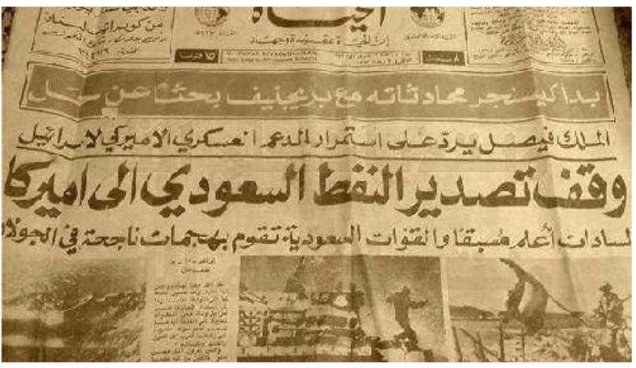
Photo gallery
More from the archive


 Download Our Palestine App
The whole archive in the palm of your hand: depopulated villages, the Nakba, the massacres and Al-Aqsa — free, with no ads to erase the story.
Download Our Palestine App
The whole archive in the palm of your hand: depopulated villages, the Nakba, the massacres and Al-Aqsa — free, with no ads to erase the story.


Comments
No comments yet — be the first to write one.
Add your comment
Name and email are optional. Comments appear after review.