
Hind Rajab: When Rescuing a Child Requires Permission from Her Killer

Hind Rajab: Three Hours Waiting for Permission

Her name was Hind Rajab. She was born on May 3, 2018, and lived with her family in the Tel al-Hawa neighborhood of Gaza City.
Her mother says Hind dreamed of becoming a doctor, because she did not want anyone to be hurt. Her mother hoped to see her one day in a white coat, treating children, just as she had dreamed.
On January 29, 2024, she was five years old. That day, she was trapped in a car among the bodies of her relatives, speaking on the phone for hours with volunteers from the Palestine Red Crescent Society, begging them to come and get her.
No one reached her.
In a previous article about the film NAZA, we wrote about an intelligence analyst who had about 20 seconds to approve a strike that could kill an entire family. Hind's story places us on the exact opposite side of that equation:
Decision to kill:     ~20 seconds
Decision to rescue:   ~3 hours
The Morning of January 29, 2024
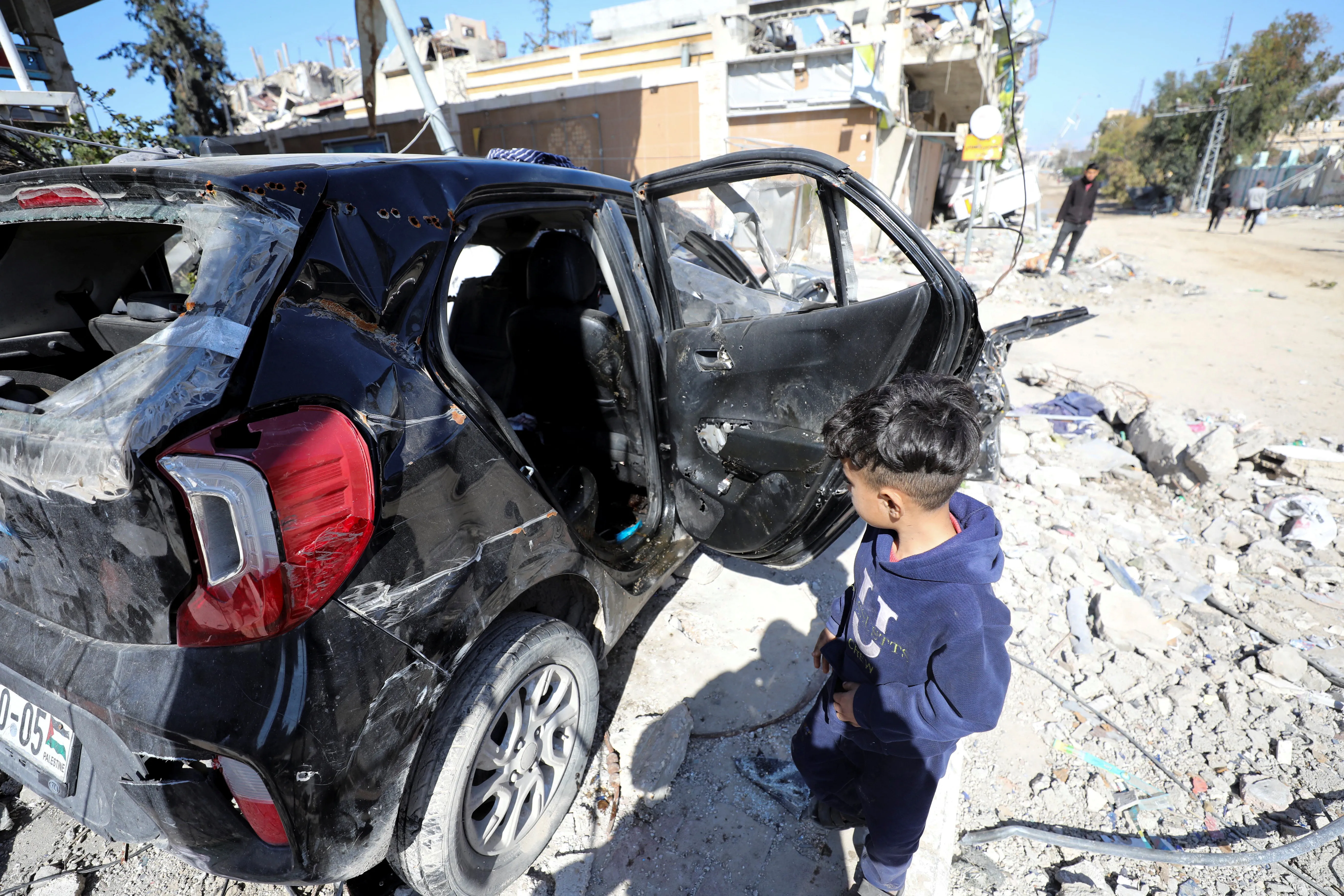
The Israeli occupation army issued evacuation orders for western Gaza City. According to a Washington Post investigation, Hind's uncle, Bashar Hamada, set off in his black Kia at 9:32 a.m., with his wife, their four children, Hind, and her younger brother Iyad.
Her mother, Wesam Hamada, left on foot with other members of the family.
At the last moment, Iyad jumped out of the car to stay with his mother. That small decision saved his life. Wesam never saw her daughter alive again.
Only about 400 meters after they set off, Israeli occupation forces opened fire on the car. Her uncle, her aunt and three of her cousins were killed. Two girls survived: Hind, and her 15-year-old cousin, Layan Hamada.
The Voice
Layan called relatives, who called the Red Crescent. At around 2:30 p.m., Omar al-Qam, a dispatcher in the Red Crescent's central operations room, reached her.
The operations room was not in Gaza. It was in Ramallah, about 90 kilometers away.
Layan said they were being shot at, and that the tank was right next to her. Then she screamed, a burst of gunfire was heard, and her voice went silent.
The Red Crescent called back immediately. This time, Hind answered.
She was wounded, and the only one left alive in the car.
Rana and Hind
Rana Faqih, a response coordinator in the operations room, took over the call. She stayed on the line with Hind for hours, trying to keep her calm and awake.
They recited the Quran together. They played counting games to distract Hind from what was around her. As night fell, Hind said she was afraid of the dark.
When Hind spoke with her mother, she said she was tired, thirsty and wounded, and begged her not to leave her alone.
The Day, Minute by Minute
Based on investigations by the Washington Post and Forensic Architecture, and testimony from the Red Crescent:
— The car sets off
Bashar Hamada drives with his wife, their four children and Hind. Iyad jumps out at the last moment and stays with his mother.
About 400 meters later — The shooting
Israeli occupation tanks open fire on the car. Five passengers are killed. Hind and Layan are still alive.
— Layan on the line
Omar al-Qam reaches Layan. She says the tank is next to her. Gunfire, and her voice cuts out.
The following hours — Hind alone
Hind is on the line with Rana Faqih. The Red Crescent requests coordination to send an ambulance from al-Ahli Arab Hospital, just 3 kilometers away.
— Permission arrives
Shortly after sunset, approval comes through. Paramedics Yusuf Zeino and Ahmed al-Madhoun set off from al-Ahli Hospital.
Before — The ambulance is struck
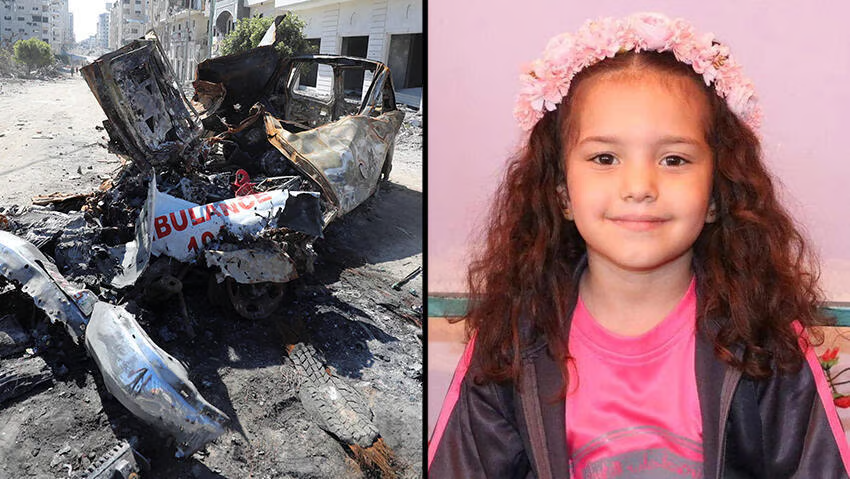
The ambulance reaches the scene and is hit by a 120mm tank shell. Both paramedics are killed. Contact with them is lost.
Between and — Silence
Hind is bleeding and losing consciousness. Her voice goes silent.
— Twelve days later
After the occupation forces withdraw, journalists and civil defense crews find the bodies of Hind and her relatives in the car, and the burned-out ambulance about 50 meters away.
From the first call with Layan to the arrival of permission: more than three hours. The distance the ambulance had to travel: 3 kilometers.
The Protocol: A Production Line in Reverse
Why didn't the ambulance leave right away?
In the NAZA article, we mapped the “production line” of targets: data, then classification, then tracking, then approval, then the strike. Every stage is designed to be faster.
Hind's story reveals another line, running in the opposite direction: the production line of permission to rescue.
Distress call
      ↓
Red Crescent operations room
      ↓
Coordination request through intermediaries
      ↓
COGAT (the occupation's Coordinator of Government Activities)
      ↓
Waiting...
      ↓
Approval + map + designated route
      ↓
Ambulance departs
In Gaza, an ambulance cannot move in a military operations zone without “coordination.” That means a wounded person's life depends not only on how close the ambulance is, but on how quickly the occupation army responds — the same army that is committing genocide in Gaza.
And this army did not target Hind's ambulance alone. Israeli occupation forces have targeted ambulances and medical crews in Gaza again and again throughout the genocide:
- According to the World Health Organization, more than 1,700 health workers have been killed in Gaza since October 2023, including doctors, nurses and paramedics.
- According to Gaza's Government Media Office, 211 ambulances have been damaged by occupation attacks, and 22 hospitals have been put out of service.
- On March 23, 2025, occupation forces killed 15 rescue workers in Tel al-Sultan, Rafah, including Palestine Red Crescent paramedics, civil defense members and a UN staff member. Their vehicles were then crushed and their bodies buried in the sand.
Latency: When Delay Kills
In systems engineering, the time between a request and its response is called latency.
In an ordinary app, high latency means a slow page. In an emergency system, it means the patient dies.
The irony is that the same system can move very fast. A system like Where's Daddy? sends an alert the moment a person enters their home. Human review before a strike can take 20 seconds.
Strike request          →  response within seconds
Request to save a child  →  response within hours
The delay here is not a technical glitch. It is a priority. The system is fast where it is meant to be fast.
Yusuf Zeino and Ahmed al-Madhoun
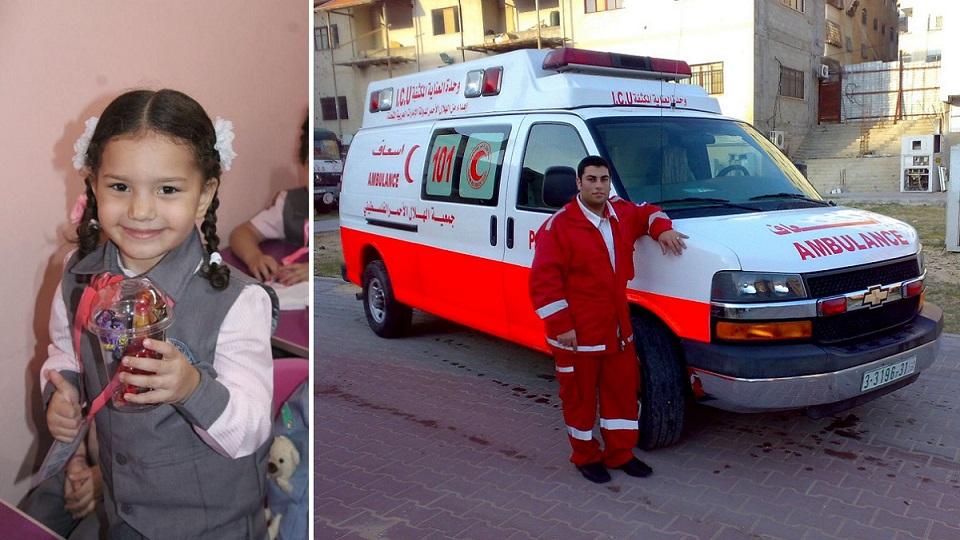
They were paramedics with the Palestine Red Crescent Society's ambulance crew in Gaza. When permission came, they set out in a clearly marked ambulance, on a route set by the occupation army itself.
They reached the scene. Then a 120mm tank shell struck the ambulance, killing them instantly.
For days, no one knew what had happened to them. Every day, the Red Crescent posted how many days had passed with no news of Hind and the two paramedics.
Omar al-Qam, who had spoken with Layan and then with Hind, said he would never meet heroes like them again: the kind who know they might die, and go anyway.

This is the point that overturns the whole logic of “coordination.”
The paramedics followed the protocol
      ↓
They received approval
      ↓
They took the designated route
      ↓
They were killed
If the protocol is supposed to protect medical crews, and following it got them killed, what is left of the protocol?
Double Tap
In March 2026, the campaign group Avaaz published an analysis saying there was substantial evidence of a so-called double tap: a first attack, followed by a second attack on those who come to help.
The analysis noted that about three hours passed between the shooting of the family and the strike on the ambulance — enough time, according to Avaaz, to form a clear picture of the situation and make a command-level decision. No warning was given before the medical crew was targeted. This was not a misjudgment in a moment of chaos. Three hours is enough time for whoever is in the tank to know what is in front of them.
The Voice as Evidence: How a Phone Call Measured the Distance to the Tank
Hind's and Layan's voices were not only a cry for help. They also became forensic evidence.
In April 2024, the Washington Post published an investigation based on satellite imagery and field testimony. It found four occupation army vehicles less than 300 meters from the car, with no sign of any exchange of fire in the area.
In June 2024, Forensic Architecture, a research group based at Goldsmiths, University of London, together with the audio investigation group Earshot and Al Jazeera's Fault Lines, published an investigation reconstructing what happened.

The Simple Physics Behind the Analysis
When a bullet travels faster than sound, a microphone picks up two separate sounds:
- The bullet itself cutting through the air near the microphone (the crack).
- The blast from the muzzle, which arrives later, at the speed of sound (the muzzle blast).
The gap between the two depends on the distance between the shooter and the microphone. The closer the shooter, the shorter the gap.
7.62mm round (FN MAG machine gun on a Merkava tank)
Bullet speed:  ~840 m/s
Speed of sound: ~343 m/s

Gap recorded on the call: 24 – 40 milliseconds
                 ↓
Distance: only 13 – 23 meters
According to the analysis, the tank was 13 to 23 meters from the car when the shots that killed Layan were fired. The investigation concluded it was not plausible that the shooter could not have seen that the car held civilians, including children.
Layan's last words were that the tank was right next to them. The audio analysis confirmed it, literally.
Wesam Hamada: The Mother
Everyone who heard Hind's recording heard it as a listener. Only Wesam heard her daughter dying.
More than two years later, Wesam says the pain does not go away with time, but it changes, and she is learning to live with the loss day by day. She has since left Gaza, and travels the world speaking about the impact of the genocide on Gaza's children.
When Kaouther Ben Hania decided to make a film about Hind, the first thing she did was call Wesam to ask for her permission and her blessing. Wesam agreed, because she believes cinema can show the truth with a human depth that numbers and news reports cannot reach.
Toward the end of the call, Hind's voice was growing weaker. She told her mother she couldn't speak because her mouth was bleeding, but she didn't want to wipe it, so her mother wouldn't have to clean up. Wesam told her to wipe it, and that she would wash it for her. Hind wiped her mouth with her sleeve, and then her voice disappeared. Wesam says it was exactly 7 p.m.
A five-year-old, trapped among the bodies of her family, still thinking about not making extra work for her mother.
Wesam says the hardest feeling in the world is hearing your daughter ask you to come and get her when you cannot reach her. She still asks Hind to forgive her.
That is why Wesam cannot watch the film. Hearing her daughter's voice is still too painful to bear.
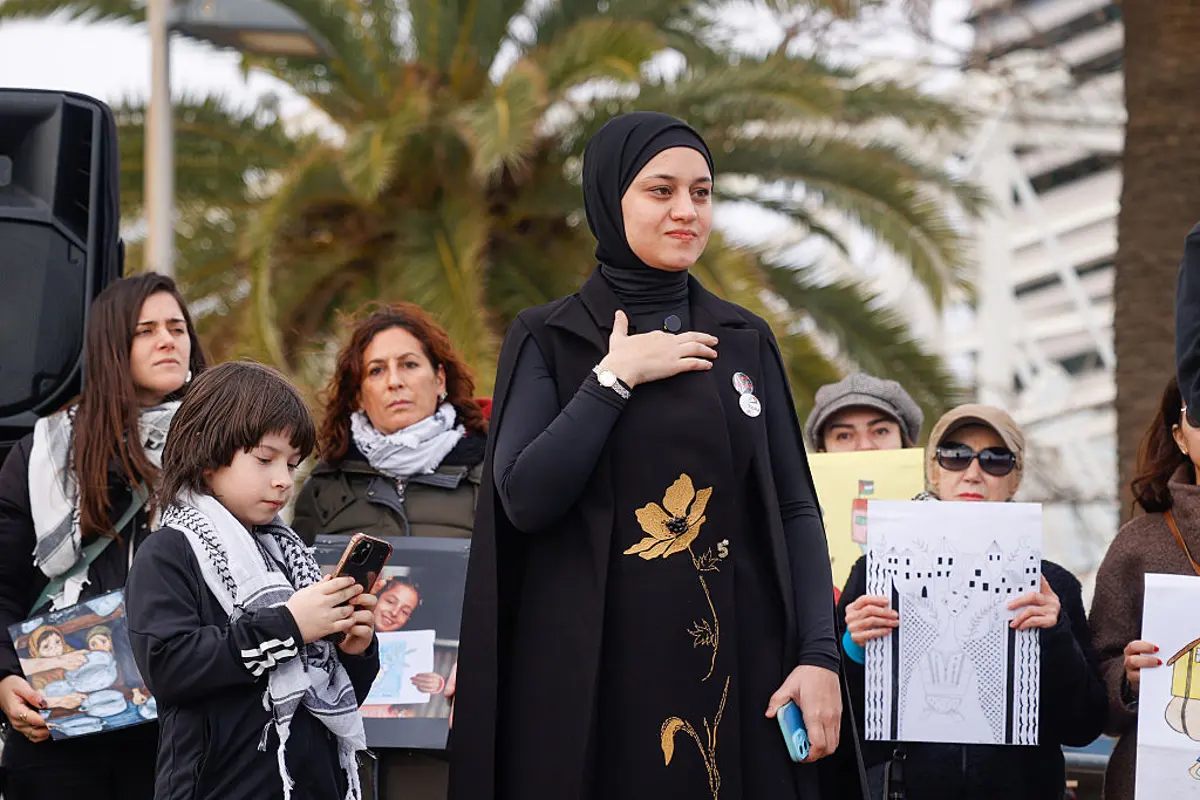
As for justice, Wesam says she seeks it by keeping Hind's story alive, and by refusing to let her life be reduced to “a number or a news alert.”
Hind at the Heart of the Genocide
Hind was killed on January 29, 2024. Just three days earlier, on January 26, the International Court of Justice issued provisional measures in the case South Africa brought against Israel under the Genocide Convention. The court ordered Israel to prevent acts falling under the Convention and to enable humanitarian assistance.
Three days later, an ambulance needed hours to get permission to travel 3 kilometers to save a child — and was then shelled.
What International Bodies Say
- The UN Independent International Commission of Inquiry concluded on September 16, 2025, that Israel has committed genocide in Gaza, and that senior officials, including Benjamin Netanyahu, incited it.
- The commission found that Israel committed four of the five acts defined in the 1948 Convention: killing; causing serious bodily or mental harm; deliberately inflicting conditions of life calculated to bring about destruction; and imposing measures intended to prevent births.
- Amnesty International reached the same conclusion in December 2024, followed by the Israeli organizations B'Tselem and Physicians for Human Rights Israel in July 2025, and the International Association of Genocide Scholars in September 2025.
- South Africa's case is still before the International Court of Justice. The Israeli government rejects these findings and calls the UN commission's report politically motivated.
What Does Hind Have to Do With It?
Genocide is not measured by a single incident, but by a pattern. Hind's story carries every element of that pattern in a single day: an evacuation order that pushes a family onto the road; fire on a civilian car from a distance close enough to see the children; a “coordination” system that delays rescue; the shelling of a medical crew that had received permission; and then two and a half years of denial.
That is why Hind became a symbol. Not because her story is an exception, but because it is the pattern.
Hind Is One of Thousands
Hind is the name the world came to know among thousands of names it never learned.
- According to the UN Office for the Coordination of Humanitarian Affairs (OCHA), more than 20,000 children were killed in Gaza during two years of genocide, not counting thousands missing under the rubble.
- According to UNICEF, more than 64,000 children in Gaza have been killed or injured since October 2023.
- Even after a ceasefire was announced in October 2025, UNICEF said in August 2026 that at least 300 children had been killed in 300 days: roughly one child every day.
Every one of them had a name, a mother, and some kind of dream. The difference is that Hind left her voice behind.
Hind's Voice Crosses the World
The Palestine Red Crescent published the recording of the call while Hind and the two paramedics were still missing, along with an appeal to the international community to press for crews to be allowed to reach them. The world heard Hind's voice before anyone knew her fate.
When she was found 12 days later, that voice became a global shock.
In April 2024, students at Columbia University in New York occupied Hamilton Hall and hung a banner renaming it “Hind's Hall.” The renaming inspired a song of the same name by American rapper Macklemore.
The Hind Rajab Foundation was founded in her name in Brussels. It pursues legal action against soldiers and officers of the occupation army for war crimes, and has filed cases in around 30 countries.
The Film

Then came cinema. The Voice of Hind Rajab was written and directed by Tunisian filmmaker Kaouther Ben Hania, director of Four Daughters and The Man Who Sold His Skin.
The film never shows Hind. Everything takes place inside the operations room in Ramallah, from the volunteers' point of view. Motaz Malhees plays Omar al-Qam, Saja Kilani plays Rana Faqih, and Clara Khoury plays Nisreen Qawas, the Red Crescent's director of mental health and psychosocial support. But Hind's voice in the film is her real voice, taken from the original recordings.
To keep the actors' reactions genuine, the director made sure they did not hear Hind's recordings before filming began.
The film premiered at the Venice Film Festival in September 2025 and won the Grand Jury Prize (Silver Lion), after a standing ovation of about 23 minutes, described as the longest in the festival's history. It was nominated for the Golden Globe and the Oscar for Best International Feature, making Ben Hania the first Arab woman to receive three Academy Award nominations.
The film did not win the Oscar. But Hind's voice reached cinemas around the world, which is what the director wanted.
From Denial to Admission: Two and a Half Years
The occupation army's official account did not stay the same. It can be tracked as a series of versions:
v1  →  (Feb 2024) Troops were not near the car or within firing range
v2  →  The 335 bullets were the result of crossfire with Palestinian fighters
v3  →  (Aug 2026) Admits firing on the car, opens a criminal investigation
Even version one contradicted the army itself: according to Sky News, 12 days after Hind was killed, the occupation army published a press release and videos showing its units in the area, and the release was later deleted from its website.
Between the first version and the last, evidence piled up from outside the military:
- The Washington Post investigation in April 2024.
- The Forensic Architecture, Earshot and Al Jazeera investigation in June 2024.
- UN experts described the killing of Hind and her family as a war crime in July 2024.
- The Hind Rajab Foundation's complaint to the International Criminal Court on May 3, 2025 — the day Hind would have turned seven — naming Beni Aharon, commander of the 401st Armored Brigade.
- Al Jazeera's documentary Tip of the Iceberg in October 2025, which identified the company and battalion responsible, followed by a 120-page filing to the ICC naming 24 soldiers and officers.
In August 2026, the Israeli occupation army acknowledged for the first time that its forces had fired on the family car, and opened a criminal investigation. But it said the soldiers had fired at an “approaching” vehicle, and pointed to failures in coordinating the ambulance's movement.
Note that last sentence. Responsibility shifts once again to the protocol: a coordination failure, not a decision to open fire.
What Does International Humanitarian Law Say?
As in the NAZA article, the principles here are part of customary international law, binding on all states whether or not they are party to Additional Protocol I.
1. A Civilian Car 13 Meters Away
The principle of distinction requires distinguishing between civilians and combatants. In case of doubt, a person is to be considered a civilian.
In the NAZA case, the doubt came from a statistical model that is wrong 10% of the time. Here there is no model and no algorithm. There is a tank crew close enough to see who is in the car with the naked eye.
2. Medical Crews Are Protected
International law requires that medical personnel and medical transports be respected and protected in all circumstances, and prohibits attacking them as long as they take no part in hostilities.
The Rome Statute of the International Criminal Court lists as a war crime intentionally directing attacks against medical transports and personnel using the distinctive emblems of the Geneva Conventions, such as the Red Crescent.
An ambulance bearing the emblem, on a route approved by the military itself. It is hard to imagine a case where legal protection is clearer.
3. Children
Customary international humanitarian law grants children affected by armed conflict special respect and protection. Hind, Layan and their cousins were not just civilians. They were children trying to follow an evacuation order.
Conclusion: The Voice That Could Not Be Erased
In NAZA, a human being was turned into a score, and a family into a number in the “expected civilian casualties” field.
In Hind's story, the system wants to turn what happened into a procedural matter: coordination, approval, route, “approaching vehicle.”
But there is one thing the system could not turn into data: the voice of a five-year-old girl asking for someone to come and get her.
The system recorded:      The recording kept:
Vehicle                   Hind
Operations zone           Layan
Coordination request      “The tank is next to us”
Approved route            Yusuf and Ahmed
Incident under review     Three hours of waiting
That voice did what data could not: it crossed borders, entered universities and cinemas, measured the distance to the tank in milliseconds, reached the International Criminal Court, and, after two and a half years, forced an official admission.
The two paramedics followed the protocol and never came back. The volunteers in Ramallah did everything the protocol allowed, and the line stayed open until Hind fell silent.
The question her story leaves us with is not only: why didn't the ambulance arrive in time?
It is: what does it mean when rescuing a child requires permission from the side that is shooting at her?
Her name was Hind Rajab. She was five years old. She wanted to be a doctor. And all she wanted was for someone to come and get her.
What You Can Do
- Share her story by name. Don't say “a girl from Gaza.” Say: Hind Rajab. Her mother asked that her daughter not be turned into a number.
- Follow the path to justice. The Hind Rajab Foundation publishes updates on the cases it brings: hindrajabfoundation.org.
- Watch the film and invite others to watch it. Every new screening means Hind's voice reaches people who have not heard it yet.
More from the archive
 Download Our Palestine App
The whole archive in the palm of your hand: depopulated villages, the Nakba, the massacres and Al-Aqsa — free, with no ads to erase the story.
Download Our Palestine App
The whole archive in the palm of your hand: depopulated villages, the Nakba, the massacres and Al-Aqsa — free, with no ads to erase the story.
Comments
No comments yet — be the first to write one.
Add your comment
Name and email are optional. Comments appear after review.