Scholasticide in Gaza: How Schools and Universities Were Destroyed and Teachers and Scholars Were Killed
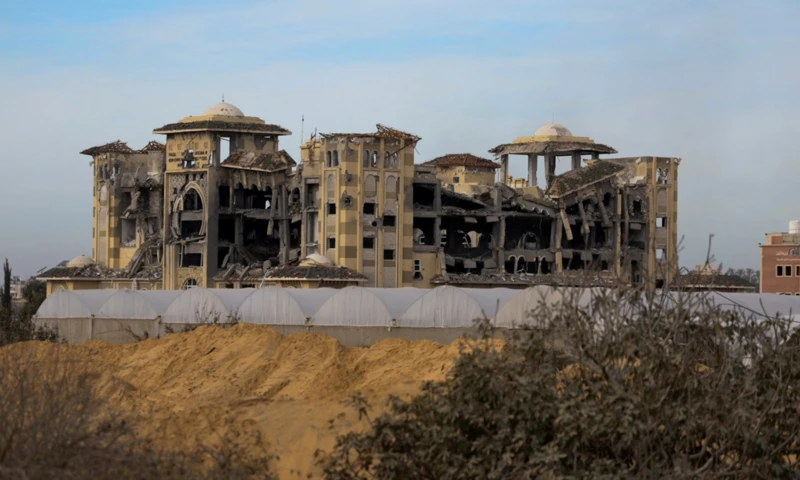
More than 20,000 students killed, more than a thousand teachers and academics dead, and around 98% of school buildings damaged. Gaza's loss is not limited to classrooms turned to rubble; it extends to universities, books and archives, and to an entire generation's right to learn and build its future.
Since 7 October 2023, education in Gaza has not been collateral damage of the war. Destruction has reached schools, kindergartens, universities, libraries and archives. Thousands of students and hundreds of teachers and university professors have been killed, among them university presidents, scientists, doctors and writers. Some 700,000 children have been deprived of formal in-person schooling for nearly three consecutive school years.
A school is not just walls and desks, and a university is not just lecture halls; they are the institutions through which a society passes its language, history and knowledge on to its generations. This is why UN experts have used a specific term to describe what is happening: scholasticide.
What Is Scholasticide?
On 18 April 2024, a group of UN special rapporteurs and independent human rights experts expressed grave concern over the pattern of attacks on schools, universities, teachers and students in the Gaza Strip. They said that with more than 80% of schools in Gaza damaged or destroyed, it may be reasonable to ask whether there is an intentional effort to comprehensively destroy the Palestinian education system.
Scholasticide refers to the systematic obliteration of education through the killing, arrest or detention of teachers, students and staff, and the destruction of schools, universities and the infrastructure education needs to continue. The experts stressed that these attacks are not isolated incidents, and wrote:
"When schools are destroyed, so too are hopes and dreams"
That same year, more than 1,600 academics around the world signed a petition condemning scholasticide in Gaza, and Gaza's academics sent an open letter to their colleagues worldwide calling on them to work with them to rebuild their destroyed universities.
Education in Gaza in Numbers
On 7 October 2026, marking three years of the genocide being committed by the Zionist occupation in Gaza, the Palestinian Ministry of Education and Higher Education released its statistical report under the slogan "Three Years After the Genocide: Education Is a Will That Will Not Break". These are its key figures for the Gaza Strip:
| Category | Killed | Injured |
|---|---|---|
| School students | 19,189 | 28,586 |
| University students | 1,386 | 3,082 |
| School staff | 805 | 3,298 |
| University lecturers and staff | 246 | 1,493 |
Source: Palestinian Ministry of Education and Higher Education, 7 October 2026, as published by Gaza: The Living Memory and An-Najah News (in Arabic).
According to the same report, more than 179 government schools were completely destroyed, more than 105 UNRWA schools were bombed and destroyed, and more than 63 university buildings were completely destroyed. The Institute for Palestine Studies' platform documenting attacks on education adds that another 118 government schools were bombed and vandalized without being fully destroyed.
These numbers alone do not measure the scale of the loss. They do not count the school years lost, the psychological toll of being deprived of education and repeatedly displaced, or what the absence of hundreds of teachers and experts will mean for generations to come.
The Destruction of Schools and Kindergartens
Before the war, Gaza's school system served some 625,000 students and 22,564 teachers in 813 schools operating in 563 buildings. Sixty-three percent of schools shared buildings and ran double shifts, a result of the blockade, population growth and a shortage of buildings.
After October 2023, this chronic crisis turned into total devastation. UN assessments based on satellite imagery show how the damage escalated year after year:
| Date | Buildings damaged | Require full reconstruction or major rehabilitation |
|---|---|---|
| May 2024 | 85.8% | At least 72.5% |
| April 2025 | 95.5% | 88.5% |
| April 2026 | About 98% | More than 93% |
Sources: Education Cluster and UNOSAT, May 2024; European Training Foundation, July 2025; UNICEF, update of 30 April 2026. "Damaged" does not mean "completely destroyed", and categories may overlap, so their percentages should not be added together.
According to UNICEF, around 81% of school buildings sustained a direct hit. Kindergartens were not spared either: a rapid assessment by Save the Children in August 2026 found that 86% of 649 kindergartens had been destroyed, damaged, or were located in inaccessible areas behind the "yellow line" controlled by the Israeli army.
International assessments estimated the damage to education infrastructure alone at around US$870 million, compared with about US$20 million after the 2014 war. Before large-scale reconstruction can begin, some 60 million tons of rubble must be removed; this debris blocks the streets and hides unexploded ordnance, making the journey to any learning space dangerous in itself.
Schools as Shelters for the Displaced
As homes were destroyed and waves of displacement followed one another, schools became shelters for hundreds of thousands of families. In the first months of the war, about 90% of school buildings were being used as shelters.
But these shelters were not safe. In May 2024, an Education Cluster assessment found that 65.3% of school buildings used as shelters had been directly hit or damaged. A later assessment noted that more than 96% of the schools directly hit were in areas covered by Israeli evacuation orders. In July 2024, UNRWA Commissioner-General Philippe Lazzarini said two-thirds of the agency's schools in Gaza had been hit.
One example is the strike on the Rufaida school in Deir al-Balah on 10 October 2024, which was sheltering around a thousand displaced people. The strike killed at least 28 people and injured more than 54, and no warning was given beforehand.
This reality did not end when classes resumed. When the school year began in September 2026, displaced families were still living in many schools, and some of the reopened classrooms were still sheltering families. In many cases, the same building became both a classroom and a shelter.
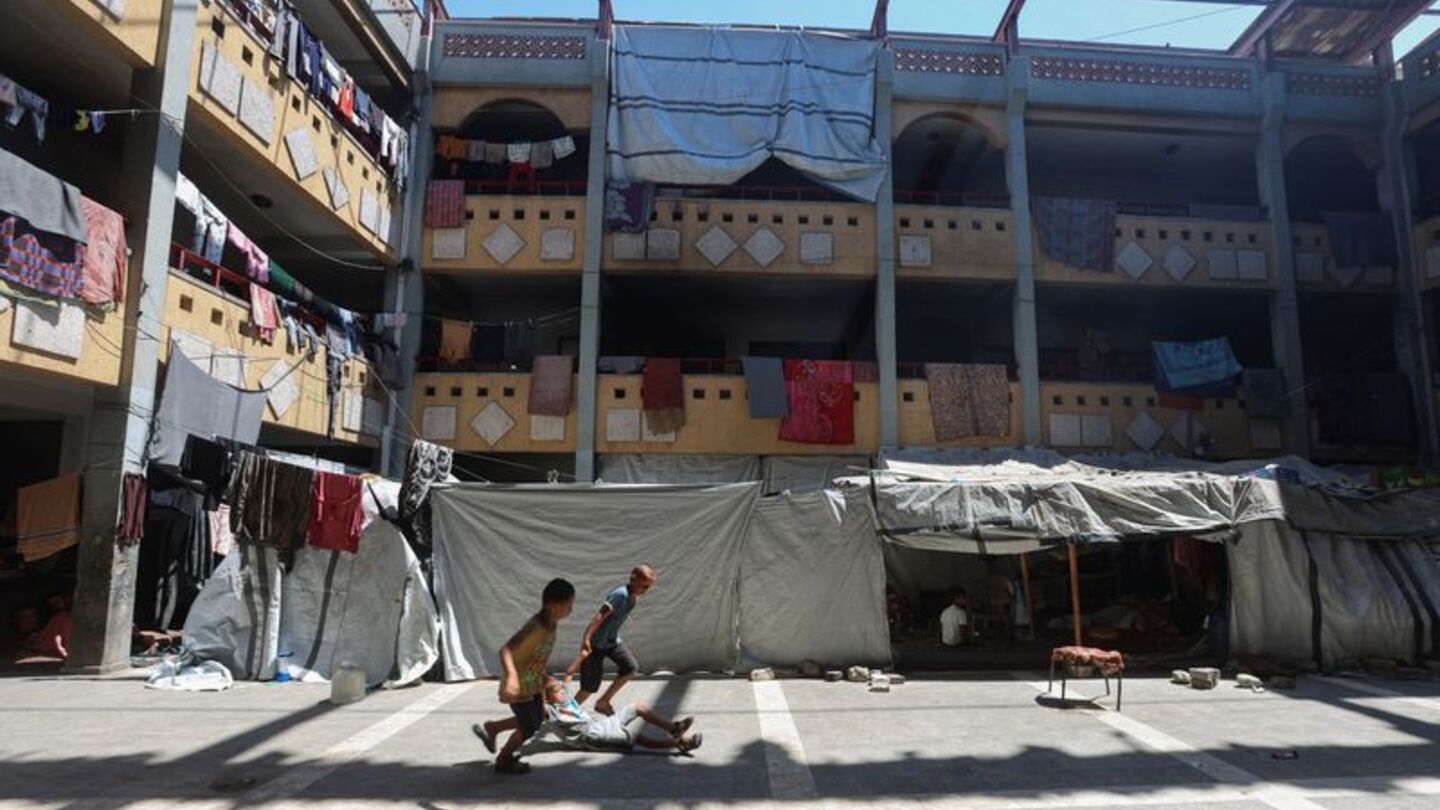
Gaza's children did not only lose their classrooms; they lost the place they had fled to after losing their homes.
Universities: Not One Left Intact
Official Palestinian data indicate that all twelve higher education institutions in the Gaza Strip have been destroyed or damaged. Minister of Education and Higher Education Amjad Barham said more than 85% of the universities and higher education institutions in the Strip have been destroyed. Even where some buildings remain standing, these institutions have lost the ability to operate from their campuses.
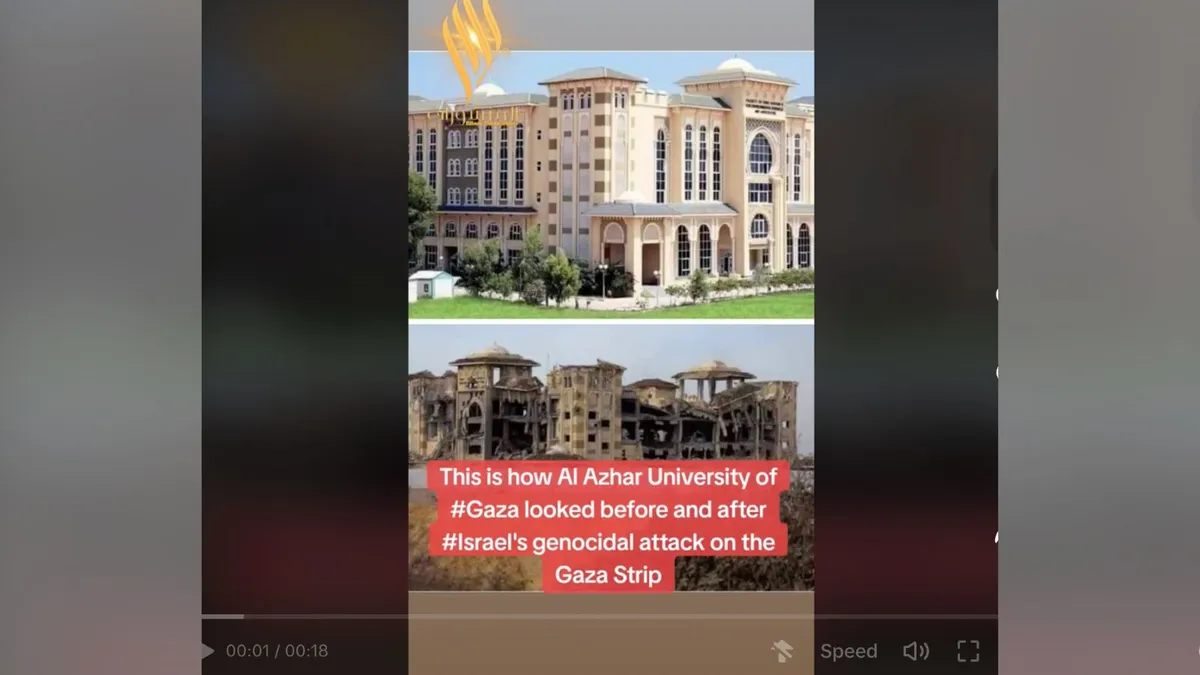
The targeting began in the very first days. On 9 and 10 October 2023, the main campus of the Islamic University, the oldest university in the Strip and its first higher education institution, was destroyed. The destruction of university buildings followed: the Al-Quds Open University branch building in November 2023, Al-Azhar University buildings that same month, Gaza University in December 2023, and two Al-Aqsa University buildings in February 2024.
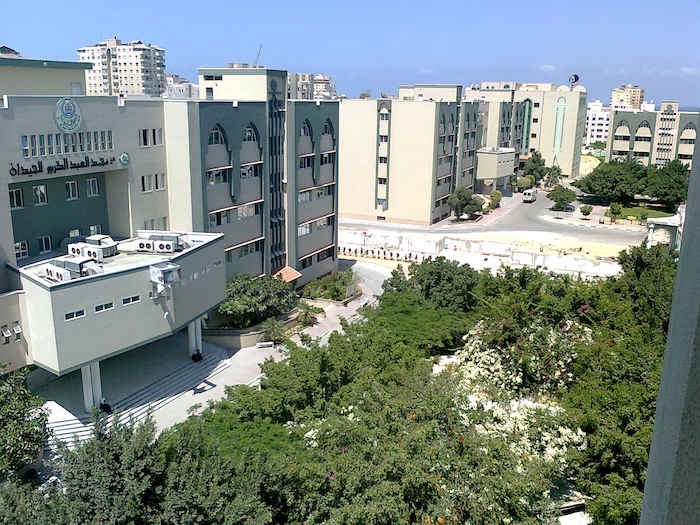
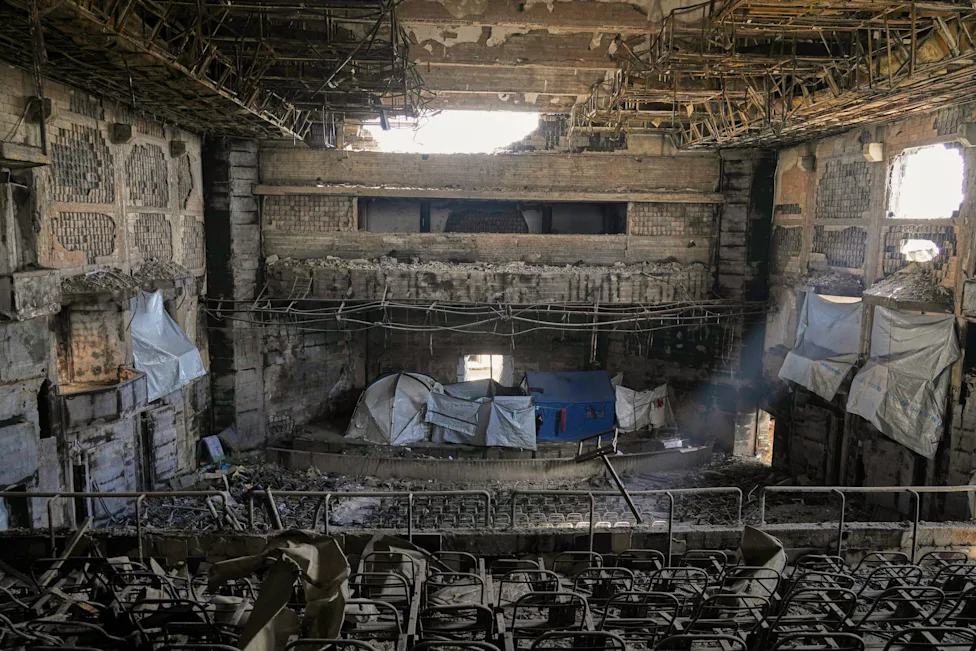
Before the war, the Islamic University had some 17,000 students studying medicine, chemistry, literature, commerce and more. What remained of its buildings later became a shelter for the displaced: tents were pitched in the ruins of lecture halls, the library and the laboratories, while its main auditorium was left a burned-out shell with huge holes blasted through its walls.
Israa University: The Last University Standing
Israa University was founded in 2014 south of Gaza City. Its female students outnumbered its male students, and it housed a national museum, the first of its kind in the Palestinian territories.
According to the university's statement, the Israeli army occupied its main building for about 70 days and used it as a military base and a temporary detention and interrogation center. The building was then blown up with hundreds of mines on 17 January 2024, destroying the main building, the museum and the university hospital. The university said around 3,000 rare artifacts were looted from its museum before the demolition.
With the destruction of Israa, not a single university was left standing in the Gaza Strip.
The Killing of Teachers, Scientists and Academics
The targeting was not limited to buildings. According to the Ministry of Education and Higher Education, by October 2026, 805 school staff and 246 university lecturers and staff had been killed in the Gaza Strip. The Islamic University alone lost 56 of its academic and administrative staff in 2023 and 2024. In May 2024, the Government Media Office in Gaza published a list of more than one hundred scientists, academics, university professors and researchers killed in the war.
Among the academics killed were three university presidents. Among the most prominent names:
- Dr. Sufian Tayeh: physicist and president of the Islamic University of Gaza, killed along with members of his family in a strike on Jabalia refugee camp on 2 December 2023.
- Dr. Refaat Alareer: poet and professor of comparative literature and creative writing at the Islamic University since 2007, and founder of We Are Not Numbers, which publishes the stories of young Palestinian writers in English. He was killed in an Israeli airstrike on 6 December 2023 along with his brother, his sister and four of their children. His poem "If I Must Die" spread around the world after his death.
- Dr. Medhat Saidam: professor of burn medicine and one of Gaza's most prominent surgeons.
- Dr. Rafat Lubbad: professor of internal medicine at universities in the Strip.
- Dr. Said Talal al-Dahshan: professor and expert in international law at Gaza's universities.
- Dr. Rula Fadl Abdel Jawad: professor of multimedia at several universities.
- Dr. Nasser al-Yafawi: historian, researcher and university professor.
Refaat Alareer's relatives said they believe he was targeted because of his writing in English and his work bringing Gaza's stories to the world; he had received death threats in the preceding weeks. Sufian Tayeh's colleagues said he expected to be targeted after several faculty members and administrators at the Islamic University had been killed before him.
Every university professor killed is not the loss of one person, but of decades of expertise, generations of students he would have taught, and research that will never be completed.
Libraries, Archives and Memory
The war also reached Gaza's written memory. On 29 November 2023, local authorities announced the destruction of Gaza City's Central Archives, which held thousands of historical documents spanning more than 150 years. By April 2024, 13 public libraries had been damaged or destroyed.
The Great Omari Mosque was also destroyed in December 2023. One of Gaza's oldest mosques and a historic center of learning, it housed a library of ancient manuscripts.
Losing an archive is not merely losing old papers. Documents preserve the records of institutions, neighborhoods and families, and when they are lost, details of a city's history disappear that cannot be recovered from any other source.
This recalls what happened in 1948, when tens of thousands of books and manuscripts were looted from Palestinian homes and libraries in Jerusalem, Jaffa and Haifa, many of them ending up in the Hebrew University library. Targeting books and archives is nothing new, but in Gaza it has come this time alongside the near-total destruction of both the school and the university.
The Legal Framework: From Scholasticide to Genocide
"Scholasticide" is a term describing a pattern of destruction of education, its institutions and those who work in them; it is not a standalone crime under international law. Genocide, by contrast, is a specific crime defined in the 1948 Convention on the Prevention and Punishment of the Crime of Genocide, with defined elements, the most important being the specific intent to destroy a group in whole or in part.
On 16 September 2025, the UN Independent International Commission of Inquiry, chaired by Judge Navi Pillay, concluded that Israel has committed genocide against Palestinians in the Gaza Strip. The Commission found that four of the five acts defined by the Convention had been committed: killing; causing serious bodily or mental harm; deliberately inflicting conditions of life calculated to bring about the destruction of the group in whole or in part; and imposing measures intended to prevent births.
Most relevant to this article, the Commission explicitly cited "systematically destroying the healthcare and education systems in Gaza" among the operations it examined in establishing the genocidal acts. It also concluded that genocidal intent was present, based on statements by Israeli officials and the pattern of military conduct, applying the "only reasonable inference" standard set by the International Court of Justice.
"The Commission finds that Israel is responsible for the commission of genocide in Gaza"
This is the finding of an independent commission of inquiry mandated by the Human Rights Council, not a court ruling. In a separate judicial track, the International Court of Justice is hearing the case brought by South Africa against Israel under the Genocide Convention; it has issued provisional measures in the case, but has not yet delivered a final judgment on the merits.
Targeting Education in the West Bank
The targeting was not limited to Gaza. In the West Bank, over the same three years, the Ministry of Education and Higher Education documented the killing of 134 school students, 39 university students and 7 school staff members, and the arrest of 416 school students, 481 university students, and more than 176 teachers and school staff.
According to the ministry, the occupation issued a final demolition order against the Jinba school in Masafer Yatta, south of Hebron; closed four schools in Hebron's Old City for several days; denied permits to teachers at private schools in Jerusalem; and continued raiding universities, most recently Birzeit University.
The Education That Never Stopped
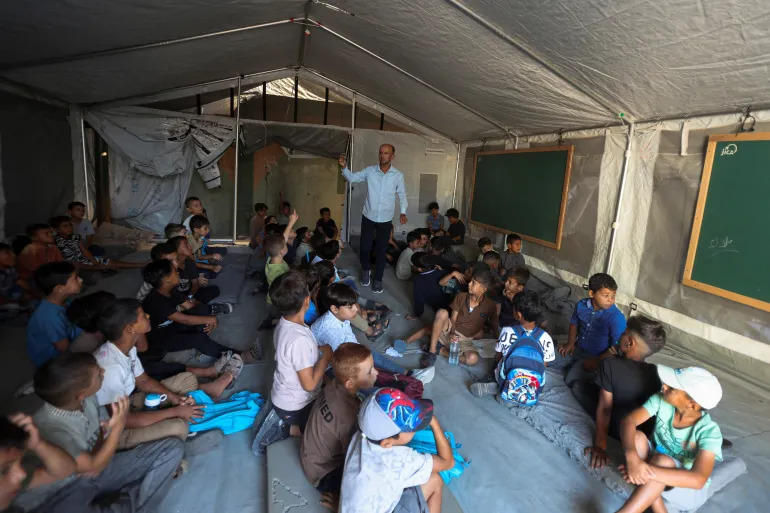
Despite all this, education did not stop. During the war, teachers set up classes in tents and displacement centers, and the Ministry of Education created virtual schools for Gaza's students inside and outside the Strip. But the path was hard: until mid-January 2026, even pencils and notebooks were unavailable, and as of April 2026, some 420,000 children had no in-person learning at all. In January 2026, the ministry said 317,332 students were attending in-person learning spaces and initiatives, alongside 120,000 enrolled in virtual schools taught by teachers from the West Bank.
On 19 September 2026, the in-person school year began in the Gaza Strip after a three-year interruption. Some 541,000 students, including about 100,000 in UNRWA schools, are learning at around 700 learning points across the Strip, as well as 25 temporary schools. Many of them are taught in tents and caravans.
On the first day of classes, Moayed Abu Mustafa, a student in Khan Younis who had no proper shoes, notebook or pen and sat on the floor of a sweltering tent, said:
"Despite all of this, we will learn, we will learn even in a tent"
Samar Abu Salmi, 15, who lives with her family in a tent, said she had studied on a phone without seeing her teachers, and had now moved from the tent she lives in to the tent she studies in. Her family can no longer afford school supplies that were cheap before the war; according to one stationery trader, prices have risen fivefold because of Israeli import restrictions. With support from aid agencies, the Ministry of Education has set up dozens of temporary schools from tarpaulins, sheet metal and wood, some with nothing but a few mattresses and a blackboard.
All of this is happening while Israeli occupation forces still control more than 60% of the Strip, despite the ceasefire that began in October 2025 and halted large-scale fighting without ending the conflict.
In parallel, virtual schools serve some 70,000 students inside the Strip who cannot reach the learning points, and around 20,000 Gaza students abroad, particularly in Egypt.
A return to learning is not a return to a normal school system. A tent classroom gives a child some learning and human contact, but it cannot replace an equipped school, a laboratory and a library, or a safe and stable environment. Rebuilding education in Gaza still requires rehabilitating schools and universities, providing psychological support to teachers and students, and involving Palestinian educational institutions in setting priorities.
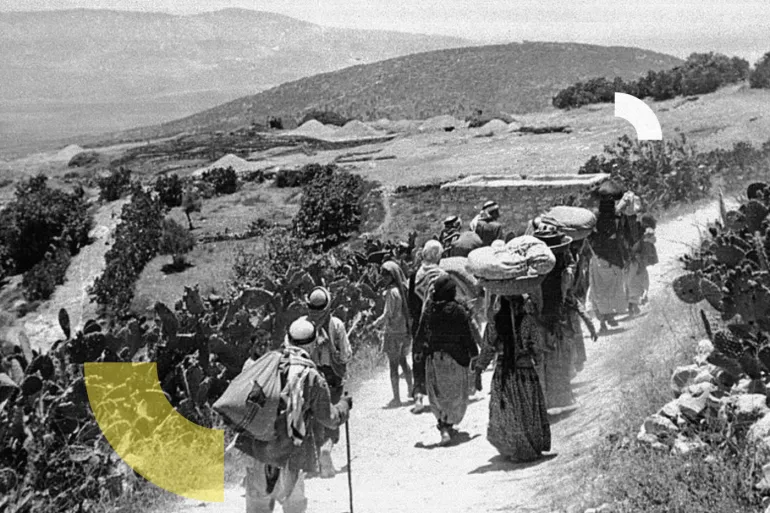
This scene is not new in Palestinian history. After the Nakba in 1948, refugees began setting up makeshift classes in tents within months, and teachers who had lost their schools resumed teaching in new circumstances. Just as Palestinians then carried their schools into exile, Gaza's children and teachers are carrying them into the tent today.
In Palestinian memory, the school has never been just a building, but an act of continuity. Whoever destroys the building cannot necessarily erase the will that built it.
A note on the figures: numbers differ between sources depending on the date of update, the categories covered and how damage is defined. Each figure in this article is therefore linked to its source and date, and different indicators have not been combined into a single number.
Frequently Asked Questions About Scholasticide in Gaza
What does scholasticide mean?
It is the systematic obliteration of education through the killing or arrest of teachers, students and staff, and the destruction of schools, universities and libraries. UN experts used the term in their statement on Gaza on 18 April 2024.
How many students have been killed in Gaza?
According to the Palestinian Ministry of Education and Higher Education, as of 7 October 2026, 19,189 school students and 1,386 university students had been killed in the Gaza Strip.
How many teachers and university professors have been killed in Gaza?
According to the ministry, 805 school staff and 246 university lecturers and staff had been killed as of October 2026, including three university presidents.
Have all of Gaza's schools been destroyed?
Not all have been completely destroyed, but the damage is near-total. According to UNICEF in April 2026, about 98% of school buildings were damaged, more than 93% require major rehabilitation or full reconstruction, and around 81% sustained a direct hit.
Are there any universities left in Gaza?
All twelve higher education institutions in the Strip have been destroyed or damaged. Israa University was the last university standing until it was blown up on 17 January 2024.
Is scholasticide legally the same as genocide?
No. Scholasticide is a term describing the destruction of an education system, while genocide is a specific crime under international law with its own elements. However, when the UN Independent International Commission of Inquiry concluded in September 2025 that Israel has committed genocide in Gaza, it cited the systematic destruction of the education system among the grounds for its finding.
Have students returned to school in Gaza?
The in-person school year began on 19 September 2026 after a three-year interruption, at around 700 learning points and 25 temporary schools, many of them tents and caravans, alongside virtual schools. But it is not a return to a normal school system.
Sources and References
- Gaza: The Living Memory – Education Ministry: More than 20,000 Students and Education Workers Killed in Three Years, 7 October 2026
- An-Najah News – Statistical report of the Ministry of Education and Higher Education, 7 October 2026 (in Arabic)
- An-Najah News – In-person school year begins in the Gaza Strip after a three-year interruption, 19 September 2026 (in Arabic)
- OHCHR – UN experts deeply concerned over 'scholasticide' in Gaza, 18 April 2024
- United Nations – Israel has committed genocide in the Gaza Strip, UN Commission of Inquiry finds, 16 September 2025
- International Court of Justice – South Africa v. Israel
- UNICEF – Humanitarian Situation Update: Education, 30 April 2026
- Save the Children – Assessment of kindergartens and schools, 2026
- UNITAR – Education Cluster and UNOSAT satellite assessment, May 2024
- European Training Foundation – Education and Training in West Bank and Gaza: Facts and Figures, 2025
- Institute for Palestine Studies – Platform documenting the targeting and destruction of education in the Gaza Strip (in Arabic)
- Institute for Palestine Studies – Israa University
- Institute for Palestine Studies – Islamic University
- Arabic Post – More than 100 scientists and academics killed in Gaza, 17 May 2024 (in Arabic)
- Academy of American Poets – Refaat Alareer biography
- Al Jazeera (with Reuters and AP) – Photos: Gaza's children return to class in tents and ruins, 21 September 2026
- Reuters via Al-Monitor – Gaza students return to in-person schooling for first time in three years, 21 September 2026
- Associated Press – Israeli strikes leave all Gaza universities in ruins, 2025
- CBC – This professor once taught at Al-Azhar University in Gaza City. He returned to a campus in ruins
- Wikipedia – October 2024 Rufaida school attack
- CBC/Reuters – UN inquiry finds that Israel has committed genocide in Gaza, 16 September 2025
More from the archive

 Download Our Palestine App
The whole archive in the palm of your hand: depopulated villages, the Nakba, the massacres and Al-Aqsa — free, with no ads to erase the story.
Download Our Palestine App
The whole archive in the palm of your hand: depopulated villages, the Nakba, the massacres and Al-Aqsa — free, with no ads to erase the story.

Comments
No comments yet — be the first to write one.
Add your comment
Name and email are optional. Comments appear after review.