
Haifa Before the Nakba: City of the Port, Workers and Press
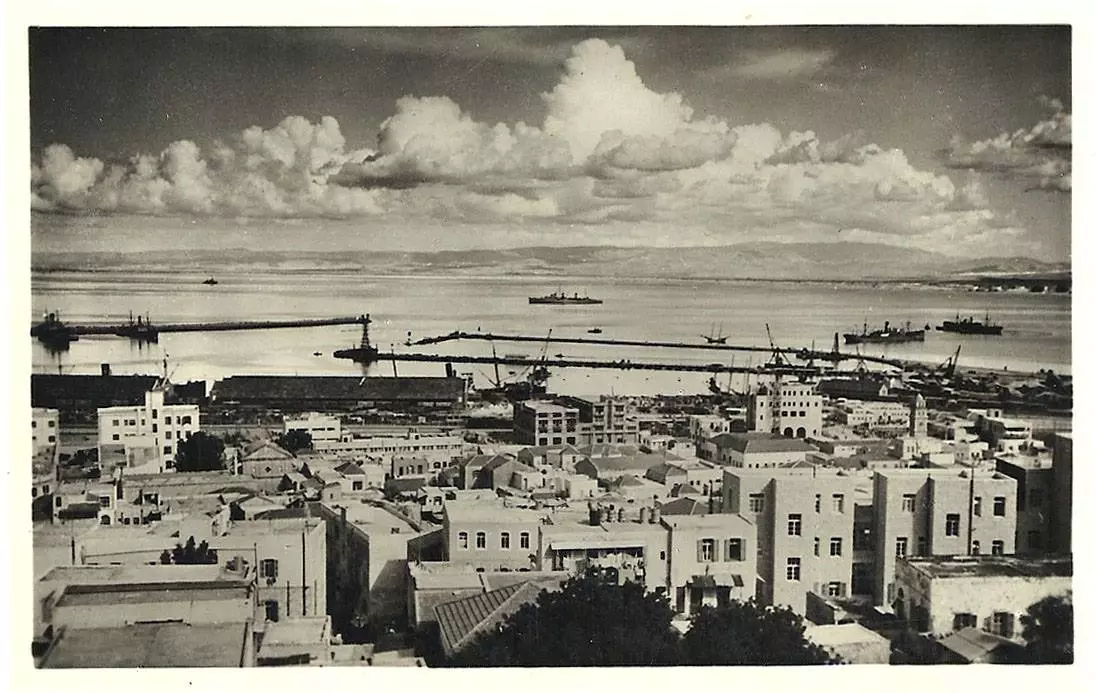
Before the 1948 Nakba, Haifa was Palestine's largest working-class city and its most important port. About 75,000 Palestinians lived there, and it was where trains from Damascus and Egypt met ships and oil from Iraq. In a single night in April 1948 the city fell, and only about 4,000 of its Palestinian residents remained. [2] [8]
This article tells the story of the Haifa that was: its quarters and markets, its port, railway and workers, its newspapers and pulpits, Sheikh al-Qassam whose call rang out from its mosque, and the night it fell. For the city's geography, general history and depopulated villages, see our Haifa city page.
Haifa Before the Nakba at a Glance
| Item | Details |
|---|---|
| Founding of new Haifa | 1761, by Zahir al-Umar al-Zaydani [1] |
| Population | About 15,000 in 1905, and about 75,000 Palestinians on the eve of the Nakba [3] [8] |
| Railway | The Hejaz Haifa–Daraa line from 1905 [3] |
| Port | Deep-water basins for large ships from 1933 [7] |
| Press | About 35 newspapers and magazines, the best known being al-Karmil (1908) [2] [4] |
| Fall of the city | April 22, 1948 [7] |
| Who remained | About 4,000 out of 75,000 [8] |
From Zahir al-Umar's Haifa to the Mandate City
The story of modern Haifa begins in 1761, when Sheikh Zahir al-Umar al-Zaydani moved the town from its old site at Tell al-Samak, about 3 kilometers to the east, to its new location and surrounded it with a wall. Its port began exporting the produce of the Galilee, especially cotton, to Europe. As Zahir al-Umar clashed with the Ottoman authorities and then with Ahmad Pasha al-Jazzar, European consulates moved from Acre to Haifa, and the city began a rise that saw it overtake Acre in the nineteenth century. [1]
Then came the Hejaz Railway in 1905, and the city's population multiplied: from about 6,000 in 1880 to about 15,000 in 1905 and about 23,000 in 1914. [3] Under the Mandate, Haifa became a center of cultural and educational life, drawing writers from Syria, Lebanon and Egypt. [1]
Quarters and Markets
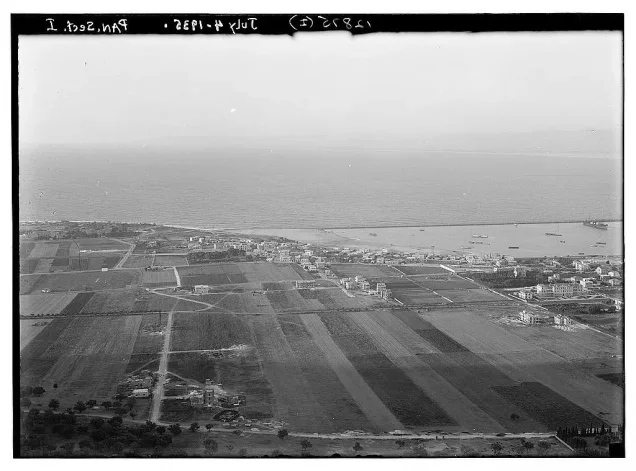
Arab Haifa stretched from the old town by the sea up the slopes of the Carmel. Its quarters included Wadi Salib, Wadi Nisnas, al-Halisa, Abbas, Carmel Station and al-Kababir. [12] Ghassan Kanafani placed the home of Said and Safiyya, the protagonists of his novel Returning to Haifa, in al-Halisa. [9]
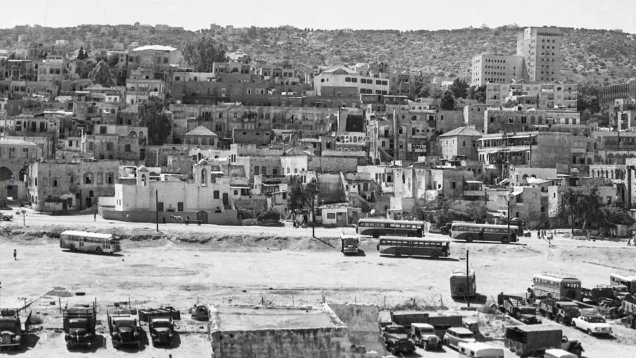
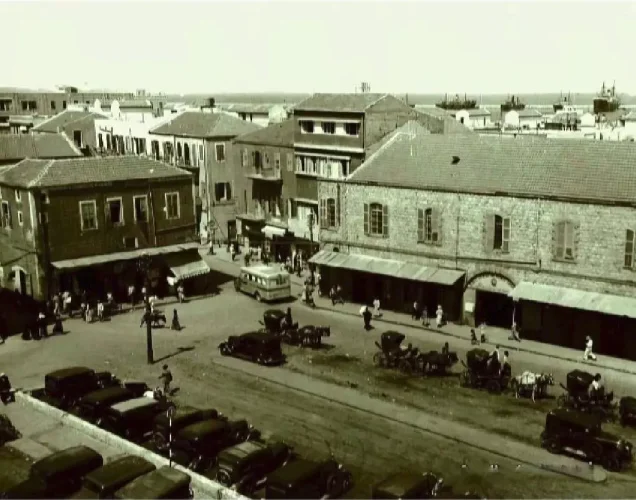
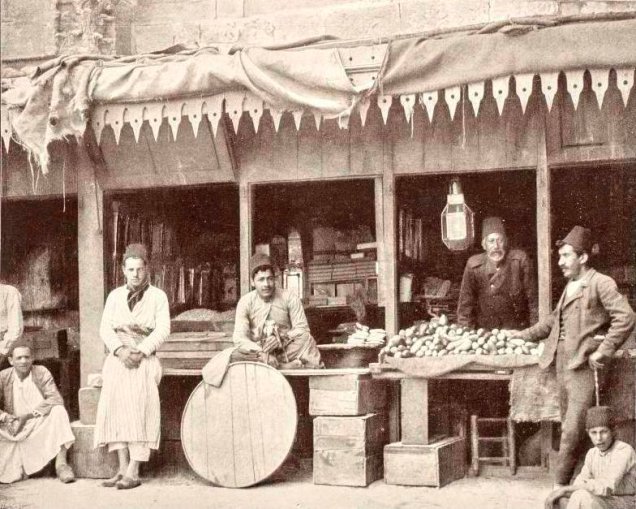
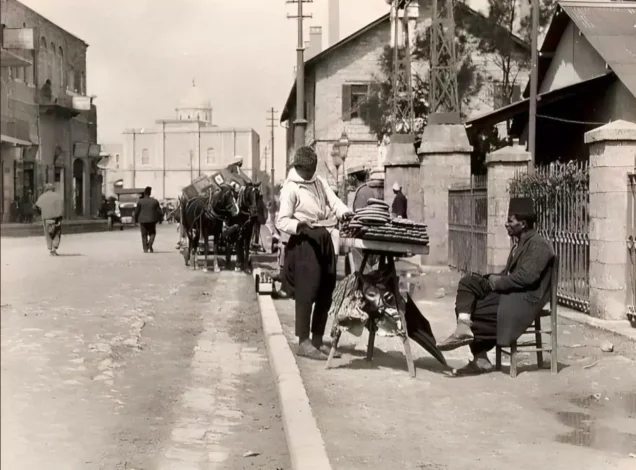
The heart of the city was Hanatir (Carriages) Square near the railway station, where carriages and travelers gathered. Around it spread the markets: the vegetable market in al-Jarina, and Suq al-Shawam, the market of traders from Damascus, Aleppo and Homs.
Mother of Work: The Port, the Railway and the Refinery
Haifa's economy rested on three pillars: the railway, the port, and the industrial zone east of the city with its refineries and factories. [2]
- The railway: Haifa became the headquarters of the Hejaz Railway administration, and the railway was the city's largest employer between 1903 and 1908, earning Haifa the nickname "Umm al-Amal" (Mother of Work). [3] Read: Trains and Ports in Palestine Before the Nakba.
- The port: its deep basins for large ships were completed in 1933, making it Palestine's most important port and a gateway to Iraq, Jordan and southern Syria. [7] [12]
- Oil: the oil pipeline from Kirkuk reached Haifa in 1934, and the Haifa refinery began operating. [3] [7]
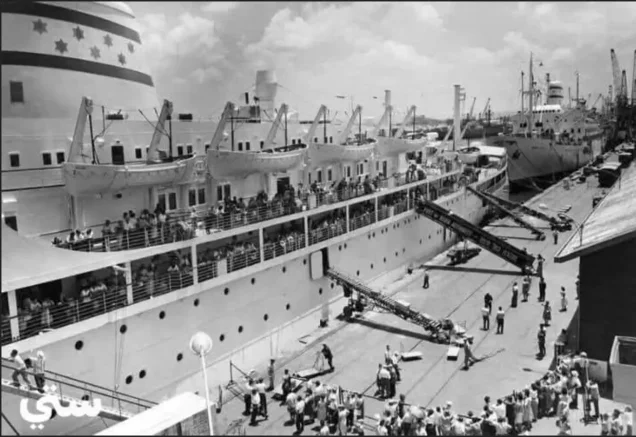
The historian Johnny Mansour estimates that the port employed about 7,000 workers, the refineries about 10,000 and the railway about 4,000, and that workers came from Lebanon, Syria, Iraq, Jordan, Yemen and North Africa. [2] From 1923, Haifa was also a hub for bus lines to Beirut, Damascus and Baghdad. [11]
Haifa's Workers
The Arab labor movement in Palestine grew out of Haifa's railway station and workshops. In 1923, railway workers in Haifa formed the Fraternal Committee of Palestine Railway Workers, and on March 21, 1925, the Palestine Arab Workers' Society was announced in Haifa. [6]
Sami Taha, the society's leader in Haifa, was one of the labor movement's most prominent figures until he was assassinated in the city on September 11, 1947; large crowds followed his funeral to Balad al-Sheikh. [6] On December 28, 1947, the Haifa refinery saw one of the most violent labor confrontations before the Nakba, after a Zionist threw a bomb from a bus at Arab workers. [7]
The Press and Culture
Johnny Mansour says Haifa had about 35 weekly, monthly and quarterly newspapers and magazines, more than Beirut at the time. He quotes the writer Samir Kassir as saying that Beirut could only become the capital of Arab culture after the fall of Haifa. [2]
- Al-Karmil newspaper: founded in Haifa in 1908 by Najib Nassar, who devoted it to warning against the Zionist threat; his wife, Sadhij Nassar, helped him edit it. The Ottomans closed it for two months in 1909, and the Mandate authorities closed it for good in 1944. [4]
- Al-Zuhur magazine and the Literary League theatre: Jamil al-Bahri launched his magazine in Haifa in 1921 and helped found the Literary League theatre. [10]
- The arts: Youssef Wahbi and the Ramses troupe performed in Haifa, Farid al-Atrash gave six concerts there, and Umm Kulthum two. Johnny Mansour says her title "Kawkab al-Sharq" (Star of the East) came from a Haifa café of that name. [2] Read: Cinema and Theatre in Palestine Before the Nakba.
- Poetry: poets such as Hassan al-Buhairi, Abdul Karim al-Karmi (Abu Salma) and Wadi' al-Bustani are associated with Haifa. [1]
Al-Qassam and the Istiqlal Mosque
Sheikh Izz al-Din al-Qassam made Haifa his base after arriving in Palestine in 1921. He taught at the city's Islamic school, headed the Young Men's Muslim Association, and from the pulpit of the Istiqlal Mosque delivered one of his most famous sermons, calling on people to take up arms. [5] On November 20, 1935, he was killed in the woods of Ya'bad near Jenin, and after his death the Great Revolt broke out. [1] [5]
The Nakba: The Fall of Haifa
The 1947 partition plan placed Haifa inside the proposed Jewish state. [12] On April 21, 1948, the British military governor informed the Arabs that his forces were withdrawing, four days after informing the Zionist side. [12] The battle for Haifa began, and Zionist militias shelled the Arab quarters from their positions on the Carmel. [2] [9]
About 580 young men defended the city; about 60 of them were killed in the final battle, along with 10 medics and more than 100 civilians. On April 22, 1948, Haifa fell. [7] Boats carried Haifa's people by force to Acre [9], and the rest were scattered to Lebanon and Syria.
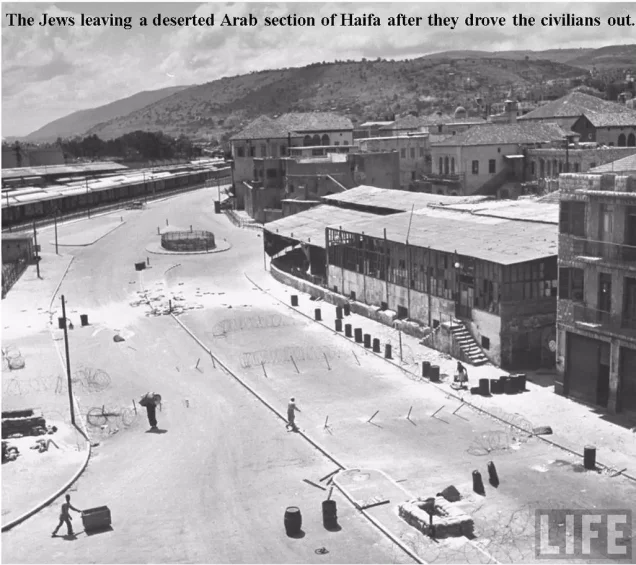
- Expulsion: of about 75,000 Palestinians, more than 95% were driven out, and only about 4,000 remained. [8]
- The ghetto: those who remained were confined to the Wadi Nisnas quarter under military rule. [8]
- Property: the state seized Palestinian homes under the "Absentees' Property" law. Most of Wadi Salib was demolished in 1949, as was Haifa's Ottoman Serai the same year. [8]
- Today: only about 20% of Haifa's original Palestinian homes still stand, and the remaining houses in Wadi Salib are being sold as luxury real estate. [8]
Days before the city fell, Rashid al-Hajj Ibrahim, one of its leaders, lost his son Sumaih in Beirut. He later wrote in his memoirs of how Haifa lost its spirit when workers from the villages left it in the final weeks. [7]
Read more on our site: Haifa and its depopulated villages, Jaffa Before the Nakba, Sports in Palestine Before the Nakba and Palestinian Industries Before the Nakba.
Conclusion
Before the Nakba, Haifa was Palestine's city of the present and the future: a port receiving ships, a railway running to Damascus, workers from across the Arab world, newspapers, theatres and markets. In a single night in April 1948, Palestine lost the "Bride of the Carmel," and only a few thousand of its people remained in Wadi Nisnas, guarding the memory of a city that was no longer theirs.
Frequently Asked Questions About Haifa Before the Nakba
How many Palestinians lived in Haifa before the Nakba?
About 75,000 Palestinians lived in Haifa just before it fell. More than 95% of them were driven out, and only about 4,000 remained.
When did Haifa fall in 1948?
The battle for Haifa began on April 21, 1948, after the British announced their withdrawal, and the city fell on April 22, 1948, about three weeks before the declaration of the State of Israel.
Why was Haifa called "Mother of Work"?
Because it was Palestine's largest working-class city: it had the Hejaz Railway, the port and the refineries, and employed thousands of workers from Palestine and the Arab world.
What was the newspaper al-Karmil?
A newspaper founded in Haifa in 1908 by Najib Nassar. It was one of the first papers to warn against the Zionist threat, and the Mandate authorities closed it for good in 1944.
What was Izz al-Din al-Qassam's connection to Haifa?
Al-Qassam made Haifa his base: he taught there, headed the Young Men's Muslim Association, and preached at the Istiqlal Mosque calling for armed resistance, until he was killed in the woods of Ya'bad in 1935.
What remains of Arab Haifa today?
About 20% of its original Palestinian homes still stand. Its Palestinians live in quarters such as Wadi Nisnas, Abbas and al-Halisa, while what remains of Wadi Salib is being demolished or sold as luxury real estate.
Sources and References
Arabic-language sources are listed with translated titles.
- Johnny Mansour, "New Haifa Celebrates Its 250th Anniversary," Diwan al-Arab, February 8, 2011 (Arabic).
- Bisan al-Omari, "Johnny Mansour: Haifa Before the Nakba, the Pearl of Bilad al-Sham," Al Jazeera Net, May 10, 2016 (Arabic).
- Mansour Jween, "The Role of the Hejaz Railway in the Development of Haifa," Journal of Palestine Studies (Arabic edition), vol. 17, no. 65, 2006.
- "Najib Nassar," Interactive Encyclopedia of the Palestine Question, Institute for Palestine Studies.
- Amin Hobballa, "The Martyr Izz al-Din al-Qassam: The Quran Teacher Who Terrified the Occupiers in Life and Death," Al Jazeera Net, May 20, 2021 (Arabic).
- "Palestinian Trade Unionism, 1920–1948," Interactive Encyclopedia of the Palestine Question, Institute for Palestine Studies.
- Ali Habib Allah, "Haifa and the Road to Its Nakba in the Memoirs of Rashid al-Hajj Ibrahim," Noon Post, May 10, 2024 (Arabic).
- "Ruins of the Nakba in Haifa: Historic Palestinian Homes Sold as Luxury Real Estate to Wealthy Israelis," Al Jazeera Net, May 19, 2023 (Arabic).
- Dima Ghassan, "Haifa: The City as a Story Through Literary Eyes," Noon Post, October 20, 2018 (Arabic).
- Ahmad Marwat, "Jamil al-Bahri," Diwan al-Arab, December 2, 2007 (Arabic).
- "Haifa-Beirut Bus 'Revived' to Mark 73rd Anniversary of City's Fall," The New Arab, April 23, 2021.
- Abdelkader Ben Massoud, "The History of the Palestinian City of Haifa," Arabi Post, January 20, 2024 (Arabic).
More from the archive
 Download Our Palestine App
The whole archive in the palm of your hand: depopulated villages, the Nakba, the massacres and Al-Aqsa — free, with no ads to erase the story.



Comments
No comments yet — be the first to write one.
Add your comment
Name and email are optional. Comments appear after review.