
Acre Before the Nakba: The City Whose Walls Held
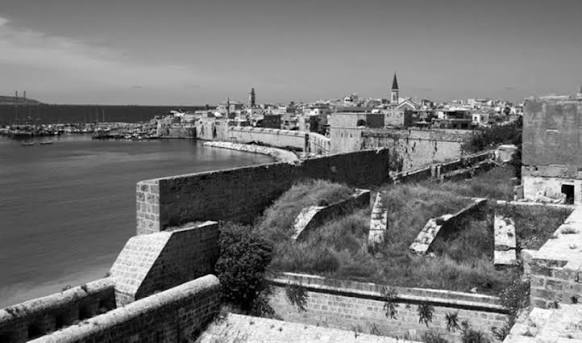
Acre is a city whose walls held against Napoleon in 1799, and until 1948 it remained almost entirely Arab: in 1946 it had about 13,560 residents, only 50 of them Jewish. In the spring of 1948 its water was poisoned with typhoid, and on May 17, 1948, three days after the declaration of the State of Israel, the city fell and most of its people were driven out. [1] [10]
This article tells the story of Acre before the Nakba: the walls built by Zahir al-Umar and al-Jazzar, its mosques, khans, port and markets, its clubs and schools, the prison that became a national symbol, the final weeks before its fall, and what became of the city and the villages of its district after 1948. For the city's geography and general history, see our Acre city page.
Acre Before the Nakba at a Glance
| Item | Details |
|---|---|
| Population (1946) | 13,560: 10,930 Muslims, 2,490 Christians and 50 Jews [1] |
| Builders of the walls | Zahir al-Umar, then Ahmad Pasha al-Jazzar [2] [3] |
| Napoleon's siege | March–May 1799, ending in his withdrawal [4] |
| Red Tuesday | June 17, 1930: execution of Jamjoum, al-Zir and Hijazi in Acre prison [5] |
| Last Arab mayor | Husni Khalifa [1] |
| Water poisoning | Spring 1948, part of a biological operation that began in April [10] |
| Fall of the city | May 17, 1948 [1] |
| Depopulated villages of the district | 27 villages [9] |
The Walls: From Zahir al-Umar to al-Jazzar
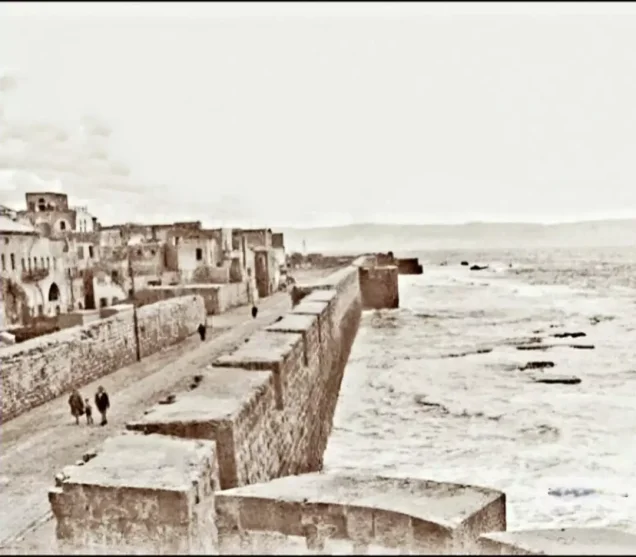
In the eighteenth century Sheikh Zahir al-Umar and his sons ruled Acre, and Zahir built its famous walls. [2] After 1750 the walls rose about 500 meters long on the north side and 300 meters on the east, up to 8 meters high. [3]
Then came Ahmad Pasha al-Jazzar, born in Bosnia in 1734, who was appointed governor of Sidon in 1773 and made Acre the seat of his rule until his death on May 7, 1804. [4] He fortified the city with a second wall about 15 meters outside the inner one, with nine watchtowers, among them the Karim, Sultan and Commandant towers. [2] [3] He also built towers, bridges, a market, a bathhouse, a barracks and a large khan, and brought water into the city. [4]
1799: Napoleon at the Walls of Acre
After occupying Egypt and the coast of Jaffa, Napoleon Bonaparte's army arrived at Acre on March 20, 1799. He ordered the assault on March 28, followed by further attacks on April 1, May 7 and May 9. On May 7 the French breached the first wall and reached the second, but failed to take it. [4] Plague spread through Napoleon's army, and about 3,000 of his soldiers died in battle or of disease. He withdrew after a siege of about two months, bombarding the city for four days to cover his retreat. [3] [4]
Napoleon is said to have declared: "My dreams were shattered on your walls, Acre; farewell, with no meeting after." [2]
Acre's Mosques and the Ahmadiyya School
The Jazzar Mosque, built by Ahmad Pasha al-Jazzar in the eighteenth century, was Acre's most prominent and largest mosque, with its great green dome and Ottoman style. Its stones and marble columns were brought from the ruins of Caesarea and Atlit, and al-Jazzar's tomb lies in its courtyard. The rooms around it housed the students of the Ahmadiyya school until 1948. It also holds hairs from the Prophet's beard in a glass case, a gift from Sultan Abdul Hamid II to Sheikh As'ad al-Shuqairi. [11]
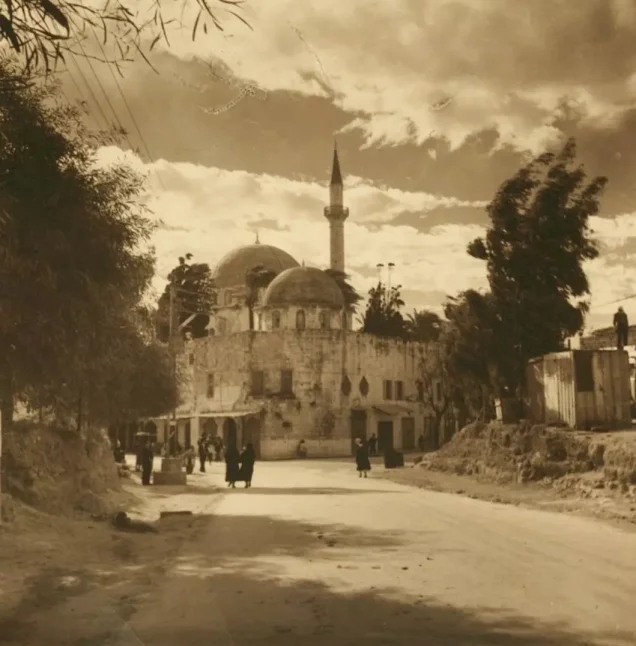
Acre's other mosques include: [11]
- The Zeitouna Mosque (1745): built on the ruins of an Umayyad mosque; in the nineteenth century it was the base of Sheikh Ali Nur al-Din al-Yashruti, founder of the Shadhili Yashruti order.
- The Ramal Mosque (1704): built on the foundations of a Crusader church; Zahir al-Umar is said to be buried there.
- The Sea Mosque (Sinan Pasha): near the port; the Crusaders turned it into a church before it was restored.
- The Majadla Mosque: built in the nineteenth century by governor Suleiman Pasha al-Adil for newcomers from Majdal Asqalan.
- The Burj Mosque: built on the walls for the city's Ottoman garrison.
In the south of the city, in the Muslim cemetery, stands the shrine of the Prophet Salih. [2]
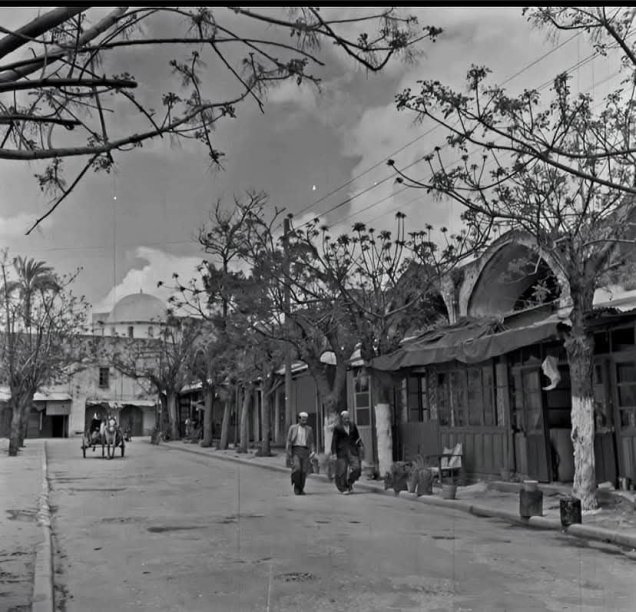
Khans, Markets and Baths
- Khan al-Umdan: the large khan built by al-Jazzar, once known as Khan al-Jazzar, where merchants lodged and goods were stored. [4]
- The White Market: one of the markets of the old city. [3]
- Hammam al-Basha: the bathhouse built by al-Jazzar. [3] [4]
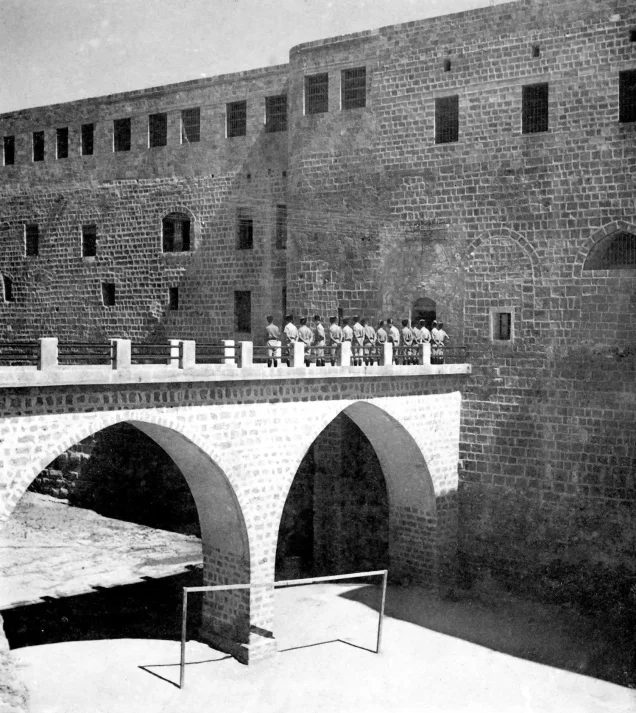
- The citadel: which became a prison under the Mandate. [3] [5]
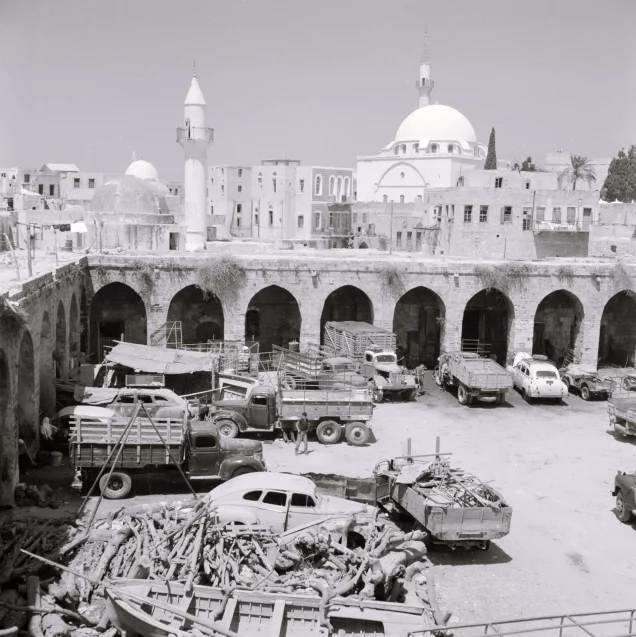
From al-Jazzar's Capital to Haifa's Shadow
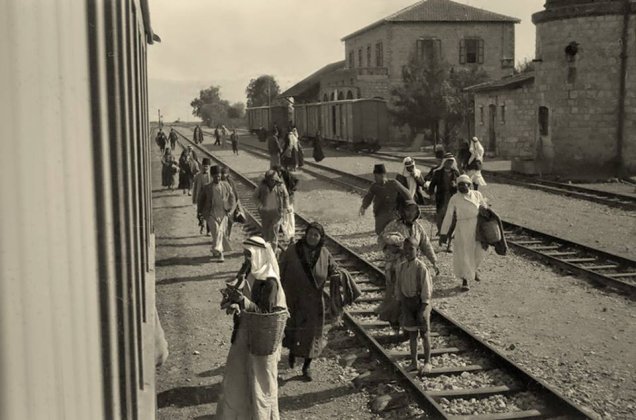
Under Zahir al-Umar and al-Jazzar, Acre was the most important city of the northern coast and its seat of government. That changed in the late Ottoman period: with the opening of the Hejaz Railway to Haifa in 1905 and the growth of Haifa's port, trade moved to Haifa, and Acre's trade declined while Haifa's customs revenues soared. [12]
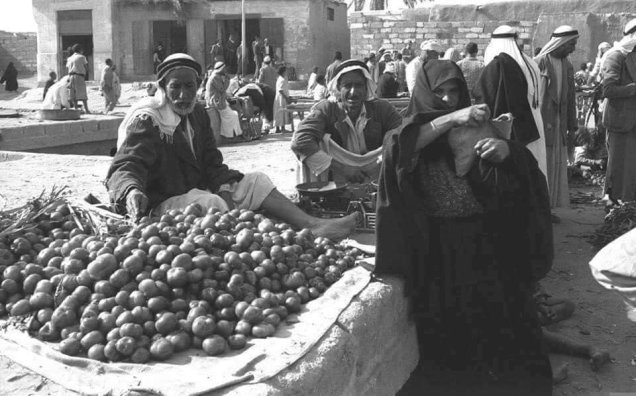
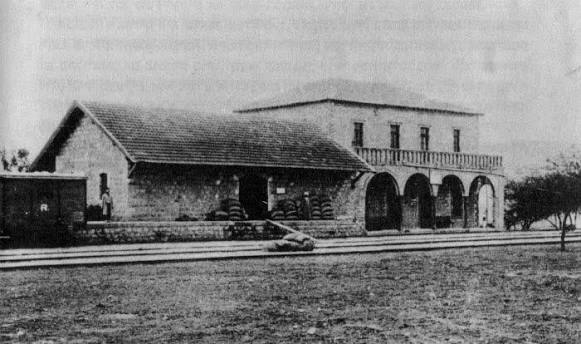
Even so, Acre remained a living city: its people worked in trade, fishing, services and small industries [2] [9], and it had a customs office, a match factory in the 1930s, and a railway station from which trips left for Beirut.
The Port and the Sea
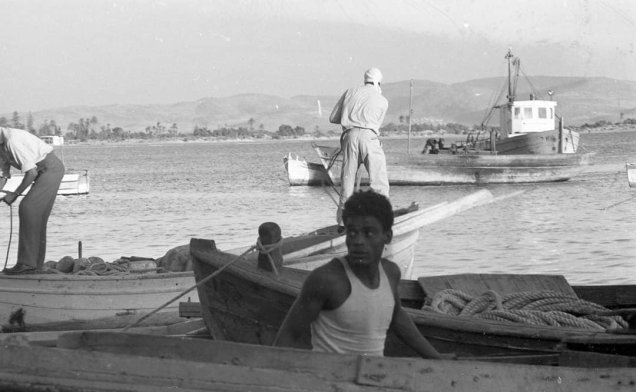
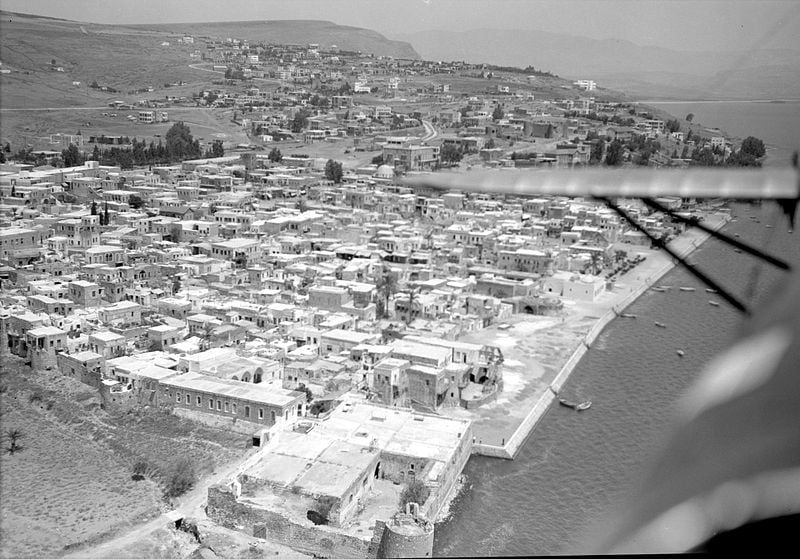
Acre's port was one of the most important historic fishing ports in Palestine [2], and one of the major Mediterranean ports for trade and Holy Land pilgrims. [3] Fishing was the livelihood of many people in the old city. Read about fishing before the Nakba.
Families, Clubs and Modern Life
Acre was run by established families, among them the Abu al-Huda, Sa'di, Shuqairi and Khalifa families; Husni Khalifa was its last Arab mayor. [1] Among its sons was Ahmad al-Shuqairi, son of Sheikh As'ad al-Shuqairi, who became the first chairman of the Palestine Liberation Organization and appears in a 1928 photo of the Acre Sports Club team. [6] The writer Ghassan Kanafani was born in Acre on April 9, 1936. [7]
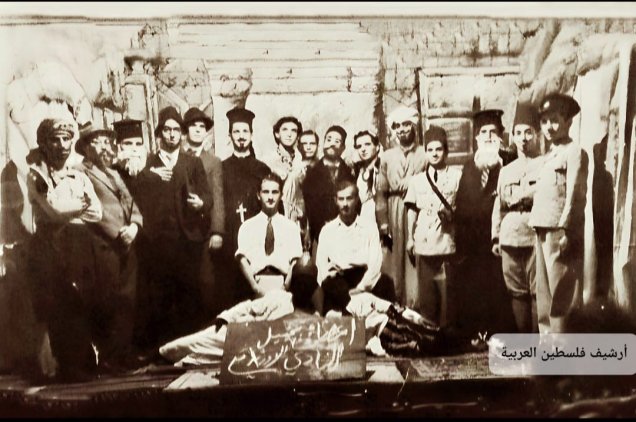
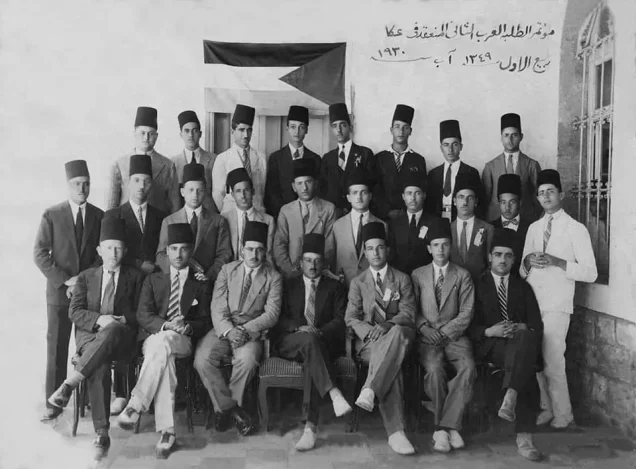
The city knew modern life too: in 1939 the Al-Ahli cinema opened, leased by Michel Saiqali from Hajj Mohammed al-Lababidi [8]; the Orthodox Club had a theatre troupe; and in 1930 the city hosted the General Arab Students' Conference. Read: Cinema and Theatre in Palestine Before the Nakba and Sports in Palestine Before the Nakba.
Acre Prison and Red Tuesday
After the Buraq uprising of 1929, the British authorities arrested a number of Palestinians and sentenced 26 of them to death, later commuting 23 of the sentences to life imprisonment. On Tuesday, June 17, 1930, they executed the remaining three in the citadel prison of Acre: Fuad Hijazi at eight o'clock, Atta al-Zir at nine and Muhammad Jamjoum at ten. The British refused to hand over their bodies, which were buried inside the prison for 40 days before being moved to the Muslim cemetery in Acre. [5]
The day became known as "Red Tuesday," and the three men became enduring national symbols. [5] [9]
The Final Weeks: From the Fall of Haifa to the Siege of Acre
After the partition resolution of November 1947, the Arab Higher Committee ordered on November 27 the formation of national committees in towns and villages, but in Acre this was delayed by about a month because of a dispute between the mayor's camp and forces loyal to Hajj Amin al-Husseini. [1]
Under the partition plan, Acre lay outside the proposed Jewish state. [1] But the fall of Haifa on April 22, 1948, left it exposed. Attacks on the city multiplied and many families left, among them Ghassan Kanafani's, which moved to Lebanon in late April. [7] On May 14 the coastal villages north of the city, such as al-Bassa, al-Zib, al-Sumayriyya and al-Manshiyya, fell, and Acre was besieged. [9]
The Typhoid Poisoning of Acre's Water
In the spring of 1948 Acre was the target of a crime whose documents only came to light more than seventy years later. In October 2022 the Israeli newspaper Haaretz published military documents revealing a secret biological operation, code-named "Cast Thy Bread," to poison the water sources of Palestinian towns and villages with disease germs. [10]
- The start: the operation began in April 1948 in the area between Jerusalem and Tel Aviv, then extended north to Acre and south to Gaza. [10]
- Acre: according to various reports, dozens of Arabs fell ill, especially in Acre. [10]
- Gaza: on May 22, 1948, two men were sent to carry out a similar operation in Gaza. [10]
- Responsibility: the documents indicate that the operation took place with the knowledge of David Ben-Gurion, was overseen by Yigael Yadin, and involved Moshe Dayan and scientists from a military science unit. [10]
- International law: the operation violated the 1925 Geneva Protocol banning biological weapons and drew criticism even within the Zionist leadership. [10]
The Israeli historians who uncovered the documents claim the operation did not change the course of the war, but it remains evidence that the expulsion of Acre's people was not achieved by fighting alone. [10] Read about Zionist massacres on our site.
May 17, 1948: The Fall of Acre
On May 17, 1948, three days after the declaration of the State of Israel, Acre fell to the Haganah after limited resistance, becoming the first major town outside the borders of the Jewish state under the partition plan to fall, after Jaffa. [1] Its fall came as part of the spring offensive on the northern coast known as Operation Ben-Ami, and most of its Arab residents were driven out. [9]
The Depopulated Villages of Acre District
Acre did not fall alone: 27 villages in its district were depopulated during 1948, in stages: [9]
| Date of depopulation | Villages |
|---|---|
| May 14, 1948 | al-Bassa, al-Zib, al-Sumayriyya, al-Manshiyya |
| May 20–21, 1948 | al-Ghabisiyya, al-Kabri, al-Nahr, al-Tall, Umm al-Faraj |
| June–July 1948 | al-Birwa, Amqa, Kuwaykat, Mi'ar |
| Late October–November 1948 | Suhmata, Tarshiha, Deir al-Qasi, Kafr Inan, Iqrit and others |
The full list, with a page for each village, is on the Acre district page in our depopulated villages section. Read also: The Palestinian Village Before the Nakba.
Acre After the Nakba and Today
After 1948 a new Jewish city was built in modern style next to the old city for Jewish immigrants, and the old city was marginalized. [11] [13] The Israeli authorities confiscated many mosque endowments, and some mosques were closed for years, such as the Lababidi Mosque, which reopened for prayer only after a long campaign by residents. [11]
Today Arabs make up about 30% of Acre's population, most of them living in the old city within the walls. [14] The old city was added to UNESCO's World Heritage List in 2001, but its residents face municipal restrictions on restoring their homes. [3]
Read more on our site: Acre and its depopulated villages, Jaffa Before the Nakba and Fishing Before the Nakba.
Conclusion
Acre's walls held against Napoleon's army, and its people held within them for centuries. In the spring of 1948 the city was besieged, its water poisoned, and it fell; most of its people, and the people of 27 villages around it, were driven out. But its walls still stand by the sea, and within them an Arab old city guards the Jazzar Mosque, Khan al-Umdan and the memory of a city that never bowed.
Frequently Asked Questions About Acre Before the Nakba
What was the population of Acre before the Nakba?
In 1946 Acre had about 13,560 residents: 10,930 Muslims, 2,490 Christians and only 50 Jews, making it an almost entirely Arab city.
When did Acre fall in 1948?
Acre fell to the Haganah on May 17, 1948, three days after the declaration of the State of Israel, even though it lay outside the borders of the Jewish state under the partition plan.
Was Acre's water poisoned in 1948?
Yes. Israeli military documents published by Haaretz in 2022 revealed that Zionist forces carried out a secret biological operation to poison water sources, beginning in April 1948, and that dozens of Arabs fell ill, especially in Acre.
Who built the walls of Acre?
Sheikh Zahir al-Umar built Acre's walls in the eighteenth century, and Ahmad Pasha al-Jazzar later fortified them with a second wall with nine towers.
Why did Napoleon fail to take Acre?
Acre's walls and its garrison under al-Jazzar withstood his repeated assaults in 1799, and plague spread through his army, so he withdrew after a siege of about two months.
What was Red Tuesday?
June 17, 1930, the day the British authorities executed Fuad Hijazi, Atta al-Zir and Muhammad Jamjoum in Acre prison after the Buraq uprising.
What is the Jazzar Mosque?
Acre's largest mosque, built by Ahmad Pasha al-Jazzar in the eighteenth century with a green dome and marble columns from Caesarea and Atlit. His tomb is there, and the Ahmadiyya school surrounded it until 1948.
Was Ghassan Kanafani born in Acre?
Yes. Ghassan Kanafani was born in Acre on April 9, 1936, and his family moved to Lebanon in late April 1948 because of the attacks on the city.
Sources and References
Arabic-language sources are listed with translated titles.
- Mustafa Abbasi, "The Fall of Acre in the 1948 Palestine War," Institute for Palestine Studies.
- "Acre," Encyclopedia, Al Jazeera Net, 2014 (Arabic).
- Ali Saada, "Acre: The City That Defeated Napoleon and Broke His Armies at Its Walls," Arabi21, March 1, 2021 (Arabic).
- Balkis Dargouth, "Ahmad Pasha al-Jazzar: The Old Ottoman Who Defeated Napoleon Bonaparte in Palestine," Arabi Post, April 1, 2020 (Arabic).
- Ghandi Antar, "What Is the Story of 'Red Tuesday'?," Arabi Post, March 14, 2023 (Arabic).
- Issam Khalidi, "Body and Ideology: Early Athletics in Palestine (1900–1948)," Jerusalem Quarterly, no. 27.
- "Half a Century Since the Assassination of Ghassan Kanafani: Bodies Fall, Not Ideas," Arabi21, July 10, 2022 (Arabic).
- "The Beginnings of Film Screenings in Palestine," Al Jazeera Documentary, Al Jazeera Net, February 24, 2011 (Arabic).
- "Acre," Depopulated Palestinian Villages section, Palestinina (Arabic).
- "Documents Reveal the Israeli Army's Biological Warfare in 1948," Noon Post, October 16, 2022, translated from Haaretz, October 14, 2022 (Arabic).
- Wadie Awawdeh, "Acre's Mosques, Witnesses to Its History," Al Jazeera Net, July 10, 2013 (Arabic).
- Mansour Jween, "The Role of the Hejaz Railway in the Development of Haifa," Journal of Palestine Studies (Arabic edition), vol. 17, no. 65, 2006.
- "Acre," Al Jazeera Net, May 22, 2011 (Arabic).
- "'Mixed Cities' in Israel: The Product of Plunder, Looting and the Expulsion of Palestine's Coastal Cities," Al-Quds Al-Arabi, June 6, 2021 (Arabic).
More from the archive
 Download Our Palestine App
The whole archive in the palm of your hand: depopulated villages, the Nakba, the massacres and Al-Aqsa — free, with no ads to erase the story.



Comments
No comments yet — be the first to write one.
Add your comment
Name and email are optional. Comments appear after review.