
Nazareth Before the Nakba: The City That Remained and Sheltered Galilee
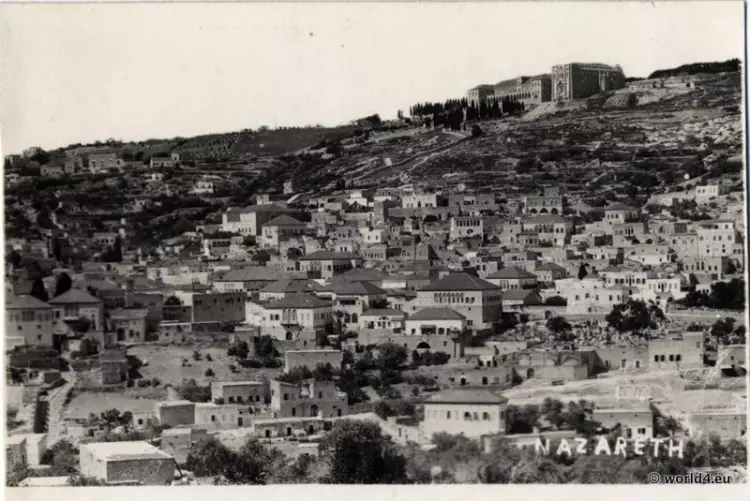
Nazareth, capital of Galilee, is a Palestinian city in the heart of Lower Galilee. Before the Nakba it was a district center and the market for the villages of the plain and Galilee, a city of schools, hospitals and workshops with about 14,000 inhabitants in 1945. On July 16, 1948 it was occupied after a few hours of fighting and a surrender document was signed, but its people stayed, making it the only Palestinian city to come through the Nakba intact, and a refuge for thousands displaced from the villages around it. [2] [5] [10]
This article tells the story of Nazareth before the Nakba: its history, markets and crafts, its schools, hospitals and daily life, its part in the revolts, then the day it was occupied in July 1948, the arrival of the people of Saffuriya and al-Mujaydil, and the years of military rule. Find more on our Nazareth page.
Nazareth Before the Nakba at a Glance
| Item | Details |
|---|---|
| Location | Lower Galilee, overlooking Marj Ibn Amer [1] [3] |
| Population | 7,424 in 1922, 8,756 in 1931, about 14,200 in 1945, and about 17,000 at the end of the Mandate [10] |
| Municipality | First municipal council founded in 1875 [10] [11] |
| British occupation | September 21, 1918 [2] |
| Zionist occupation | July 16, 1948, in Operation "Dekel" [1] [2] [3] |
| Fate of its people | They stayed in their city, making it the only Palestinian city to come through intact [5] |
| Depopulated villages in the district | 4 villages on our site: Saffuriya, Ma'lul, al-Mujaydil and Indur [1] |
From the Conquest to the Mandate
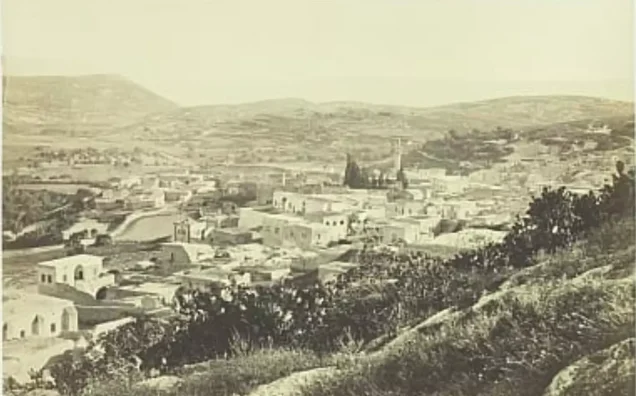
Nazareth is an ancient city; excavations have revealed layers from the Bronze and Iron Ages. [2] Muslims entered it in 634 under Shurahbil ibn Hasana; it was contested between the Franks and Muslims during the Crusades, then came under the Mamluks and, from 1517, the Ottomans, when it had only about 34 families. [1] [2] [11] The city was known for the diversity of its people, Muslims and Christians of many denominations, who lived there together. [2]
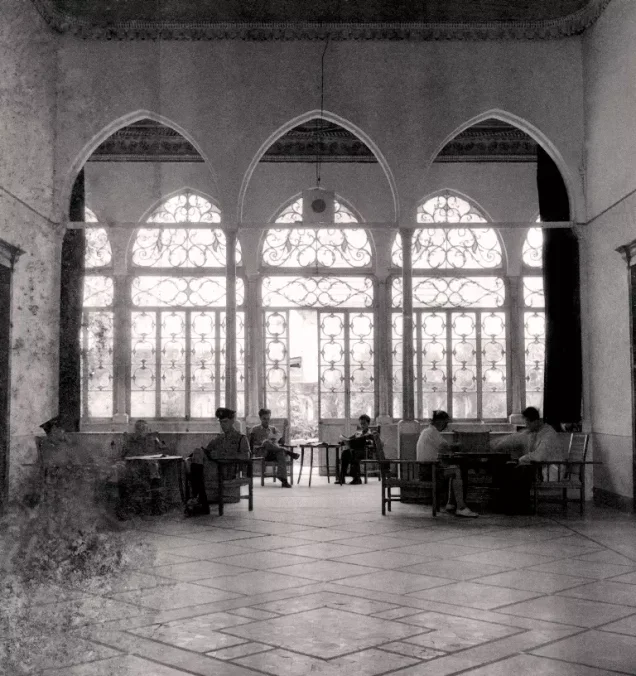
In the 17th century families came from Lebanon and the Hauran. The city flourished under Zahir al-Umar in the 18th century, becoming a regional center with markets and trades in carpentry, smithing and copperwork, and trading cotton with France; Zahir al-Umar built a Saraya there with arches like the architecture of Damascus, Beirut and Sidon, new families arrived from Lebanon and Damascus, and the first Muslim families settled in the Eastern Quarter. [11] In 1860 the city was not drawn into the events in Damascus and Mount Lebanon, as its notables from both communities pledged to reject outside interference. [11] In 1875 its first municipal council was founded. [10] [11]
The British occupied it on September 21, 1918, and under the Mandate it became the center of Nazareth district and one of the most important cities of Galilee. [1] [2] Its population had fallen during the First World War through war, disease, famine and emigration, standing at only 7,424 in 1922, then growing to 8,756 in 1931 in 1,834 houses, and to about 14,200 in 1945. [10] The municipality's revenue rose from about 4,308 pounds in 1922 to about 18,000 in 1944, and it issued about 150 building permits in 1935 alone. [10] Its Ottoman landmarks include the palace of the mufti Sheikh Yusuf al-Fahum (1838–1892) [1], and its mayor in 1948 was Yusuf al-Fahum. [4]
The Markets of Nazareth
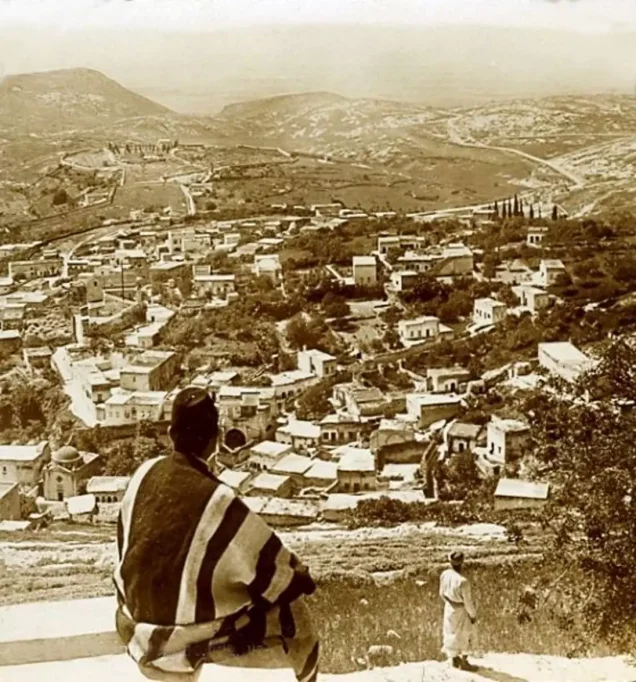
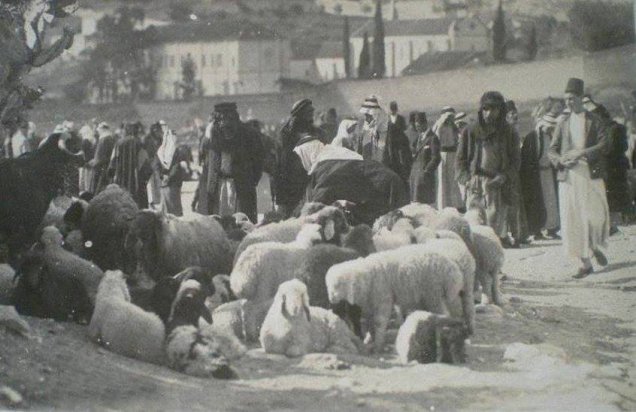
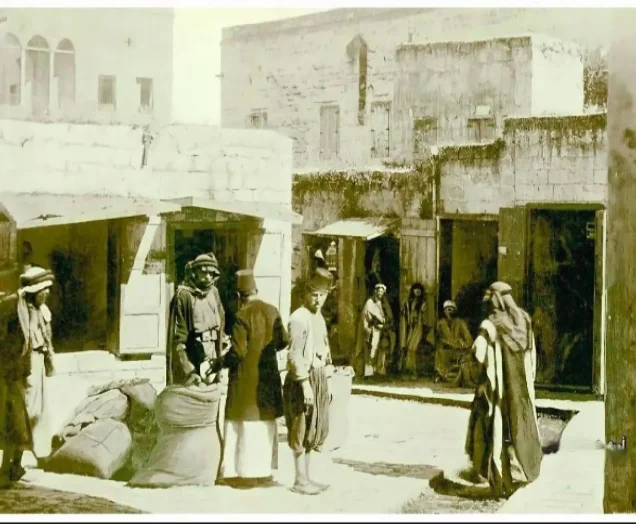
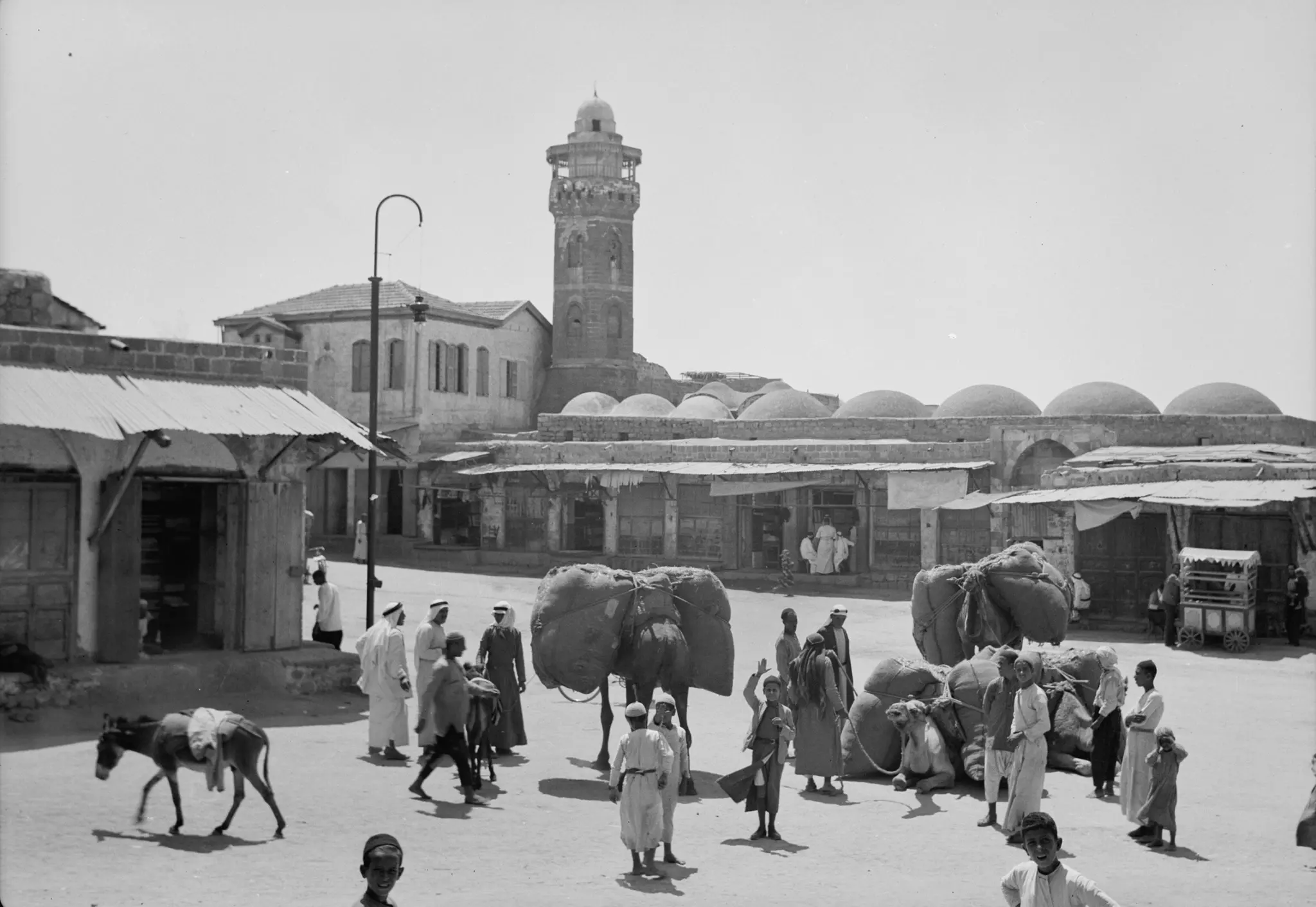
Nazareth was the market for the villages around it in Galilee and Marj Ibn Amer, and its economy rested on farming and local trade. [2] [3] The "al-Nara" market was where villagers sold their produce and bought what their households needed, and the old market has Ottoman buildings more than three centuries old. [10] [12] The city had several markets, as photographs in its gallery show [1]:
- The Monday market: a busy weekly market for the people of the villages, seen in a photograph from 1920.
- The grain market: where farmers sold their wheat and barley, its trade captured in a photograph from 1894.
- The blacksmiths' market: the market of the craftsmen who made farm tools.
- The horse market: a market for horses and pack animals.
Its markets sold country produce such as akkoub and bread, as a photograph from the Nazareth market in 1945 shows. [1]
Tobacco, Mills and Crafts
- Farming: the people of Nazareth grew grain, olives, fruit and vegetables on its lands. [2]
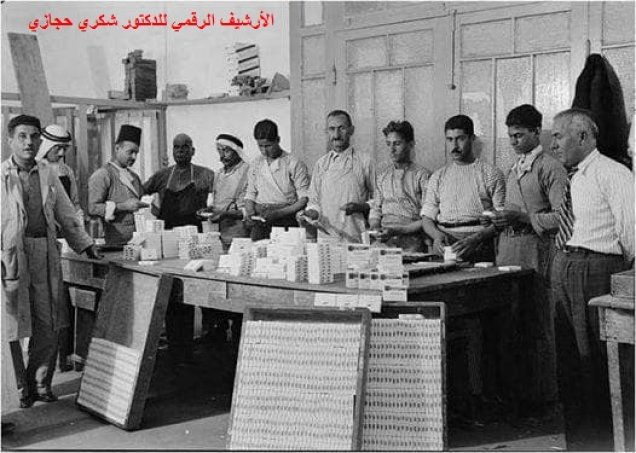
- The tobacco factory: the city had a cigarette factory, seen in photographs from 1940. [1]
- Mills: it had Arab water mills for grinding grain. [1]
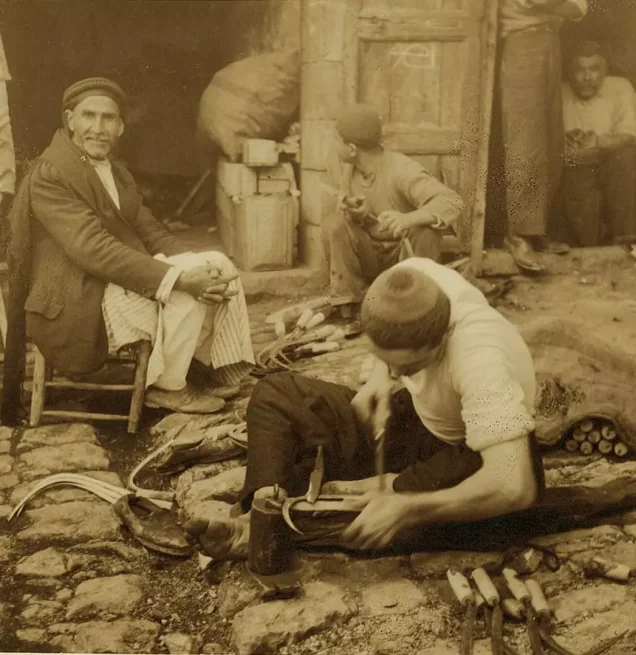
- Crafts: carpentry, one of the city's oldest crafts; smithing, metalwork and sickle sharpening; leather tanning and fur tailoring; and pottery and souvenirs of carpets, copper and carved wood. [1] [2] [10]
- Textiles and embroidery: weaving of mats and socks, and the silk embroidery for which the women of Nazareth were known. [10]
- Presses and workshops: olive and sesame oil presses, and factories for soap, carpets and sweets. [10]
- Transport: the "Nazareth Bus Company" linked the city with the towns of Galilee; its buses carried the people of Tiberias when they were expelled in April 1948. [7]
Read also: Palestinian Industries Before the Nakba.
A City of Schools
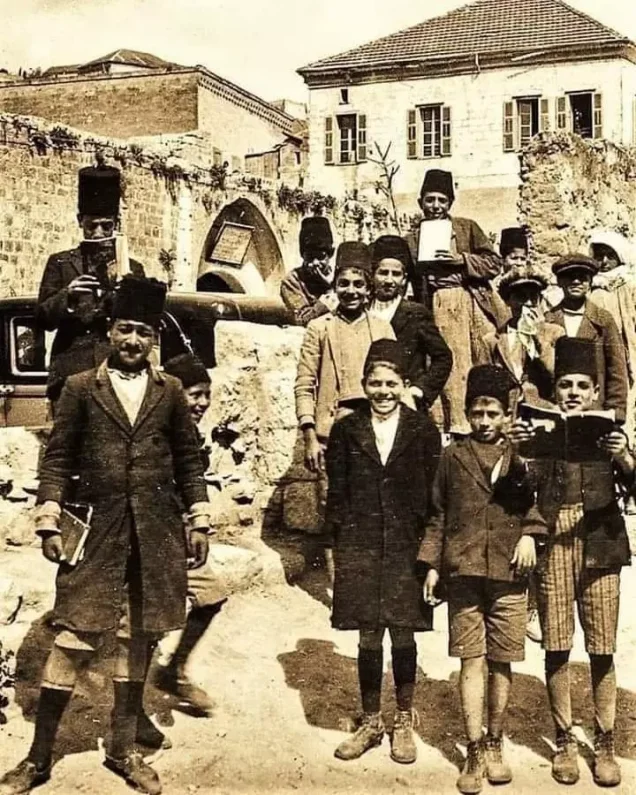
Before the Nakba Nazareth was known for its educational life, its many private and government schools and its high literacy. [3] In the 1942/1943 school year it had three government schools, two for boys and one for girls; in 1943 it had 11 non-government schools, with about 1,735 boys and 1,224 girls enrolled. [10] One of the government boys' schools became a full secondary school in 1948. [10]
- The Russian teachers' seminary ("al-Maskubiyya"): Nazareth's best-known school in the late Ottoman era; the Nazareth writer Khalil Baydas graduated from it, and the writer Mikhail Naimy studied there, graduating in 1906. [6]
- The Rushdiyya school: a government school also known as the "Garage school," its students seen in a 1929 photograph. [1]
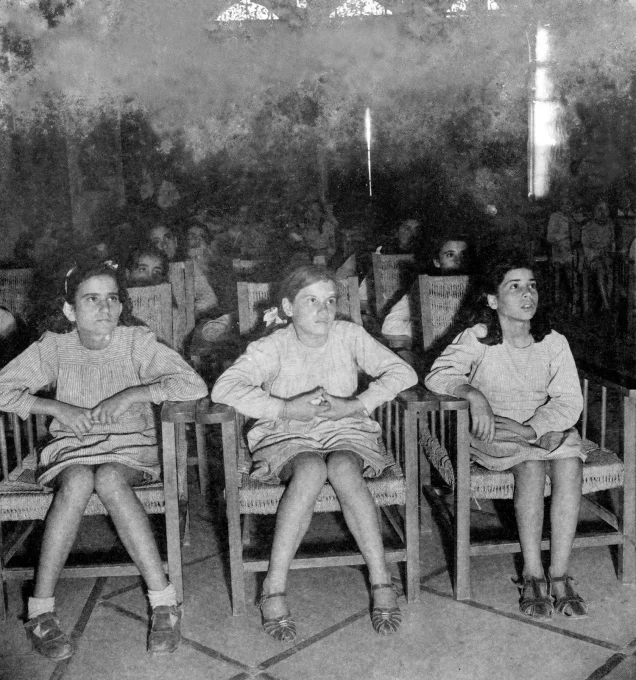
- Girls' schools: including the government girls' school, the "Beit Barhoum" school, whose students are seen watching an educational film in 1940, and the Franciscan sisters' school. [1]
- The Frères school: a well-known private school, where plays were staged in French. [12]
- The cultural center: the city had an English cultural center in 1940. [1]
Read: Education in Palestine Before the Nakba.
Hospitals and Services
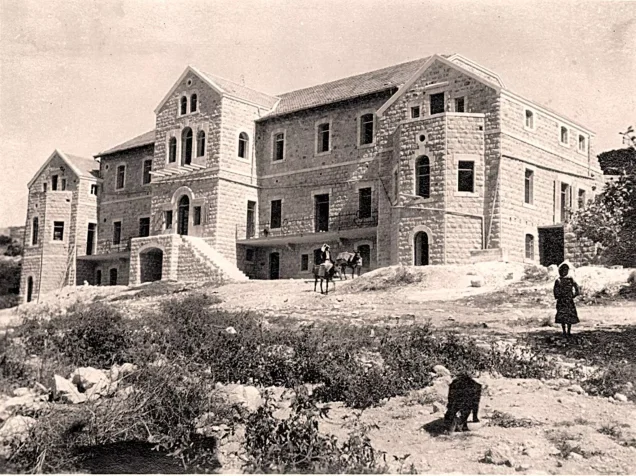
Nazareth was a medical center for Galilee: the English hospital's building opened in 1924, and in 1944 it had about 72 beds and treated 1,731 patients, while the French hospital had 88 beds and treated 1,278, alongside the government hospital. [1] [10] Water was drawn from the spring, and the spring square and its road were among the best-known places in the city. [1] [3]
Daily Life
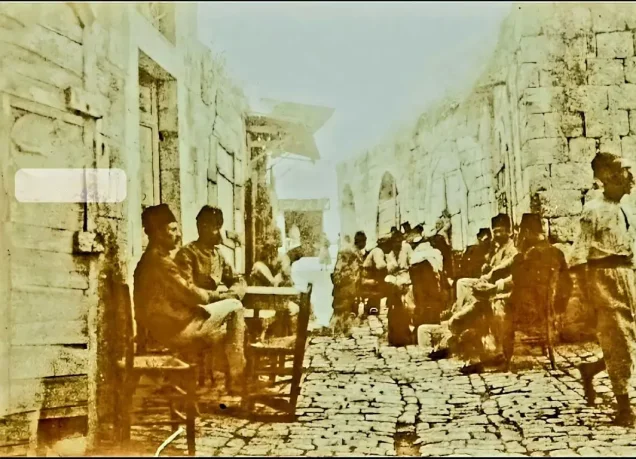
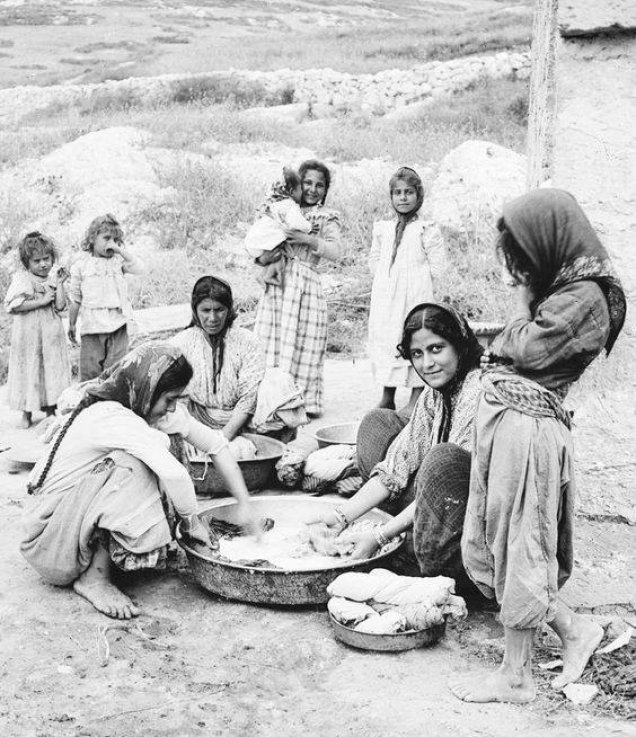
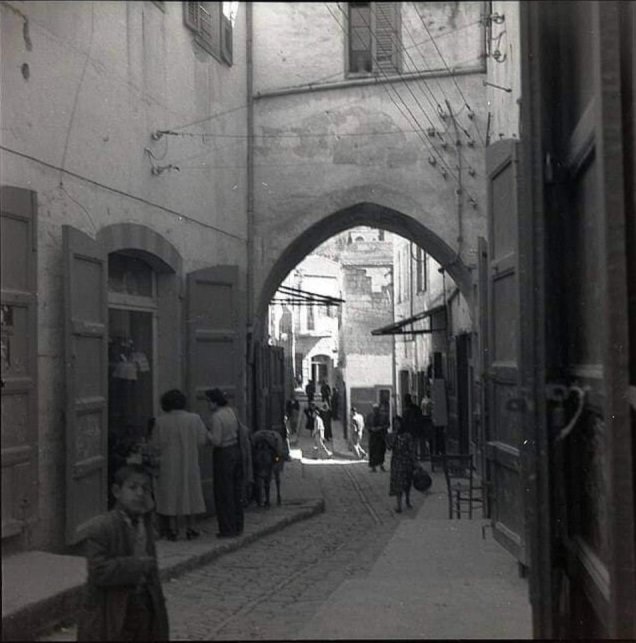
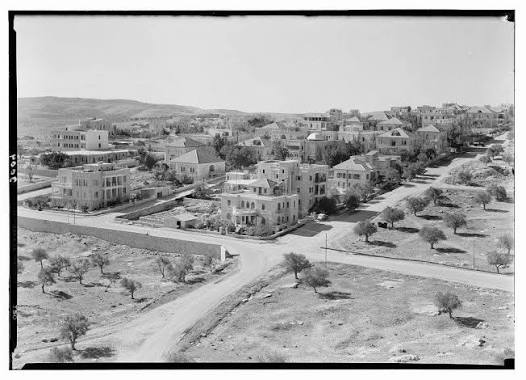
Nazareth's cafés were where its people met, among them a popular café seen in a photograph from 1903, and the Jarjoura café, built in July 1935. [1] Women baked in the taboun oven and washed clothes together, and drew water from the spring. [1] The city's families lived in the old town with its alleys and arcaded houses, and new houses were built around it under the Mandate. [1] [3] [11] The roads were quiet: a Nazareth barber recalled walking in the 1930s from the Virgin's Spring to the hill and passing only one or two cars, and an amateur photographer, a civil servant, opened the city's first photography business. [12]
Nazareth in the National Movement
From the 1920s Nazareth took part in protests, strikes and conferences against British colonial rule and the Zionist project. [2] Among the companions of Sheikh Izz al-Din al-Qassam were men from Saffuriya, including Sheikh Salih Taha, Sheikh Ahmad al-Tuta and Sheikh Nayif al-Muslih. [13]
In the 1936–1939 revolt Nazareth district gave many martyrs, especially from the village of Indur [13]:
- August 29, 1936: Sa'id Husayn Arif Abdullah of Indur was killed in a clash with British forces in the al-Sharrar area. [13]
- October 9, 1937: Mahmud Ahmad As'ad al-Hayek and Hamad Awwad Sirawji of Indur were killed in a clash at Kafr Misr. [13]
- December 30, 1937: Abdullah Salih Ziyadna and Sa'd al-Khalidi of Indur were killed in the battle of Jabal al-Jarmaq, and on the same day Yusuf Abu Hurayra of al-Mujaydil was killed. [13]
- July 8, 1938: Salim Abd al-Khaliq al-Hayek and Salih As'ad al-Hayek of Indur were killed in a clash at Dabburiya. [13]
- December 31, 1938: Rafi' Bek al-Fahum was killed in Nazareth. [13]
Although tensions were rising across Palestine, the city saw no direct fighting before July 1948, and many of its people believed it would be spared. [3]
July 16, 1948: The Day of Occupation
Nazareth was a base of the Arab Liberation Army under Fawzi al-Qawuqji. [3] As part of Operation "Dekel," the villages around the city were occupied: Ma'lul and al-Mujaydil on July 14–15, and Saffuriya at dawn on July 16, after aircraft bombed it during the night. [1]
On July 16, 1948 Zionist forces attacked Nazareth from three directions: from Saffuriya in the north, from Afula in the south, and from the west. Heavy fire lasted about an hour from four in the afternoon, and tanks and heavy weapons entered the city within hours, with little organized resistance. [3] The witness Nuha Zuabi Qa'war, then twelve, recalls that residents took the tanks for British and the soldiers for Iraqis because of the red keffiyehs they wore, and that 18 of the city's people were killed that day. [3]
The Surrender Document
Mayor Yusuf al-Fahum and the city's notables raised a white flag and signed a surrender document. [3] [4] According to the published text, it was signed for Nazareth by Mayor Yusuf al-Fahum, Ibrahim al-Fahum, head of the National Committee, and others. [4]
The document provided for the unconditional surrender of the city and the handover of Arab soldiers and weapons, in return for the mayor remaining in office, a pledge to protect the holy sites, and "equal civil rights" for its people. [4] These promises were not kept: houses were looted, and military rule was imposed on the city. [3]
A Refuge for the Displaced
The people of Nazareth stayed in their city, and it became a refuge for those displaced from the villages around it [2], so that the number of people in it jumped from about 15,000 to tens of thousands; the film "Nazarene Stories" puts it at about 120,000. [12] Muslims became a majority in the city, where Christians had made up about 60% of the population before the Nakba. [11]
Among those who took refuge there:
- The people of Saffuriya: their village was bombed on the night of July 16 as they prepared to break their fast; they scattered into the orchards and olive groves, and many settled in Nazareth, in a quarter named after them, "al-Safafra." [1] [12]
- The people of al-Mujaydil: about 1,200 of them had taken refuge in Nazareth by the end of July 1948. [1]
- The people of Indur: they fled toward the Nazareth area after the fall of Beisan in May 1948. [1]
- The people of Tiberias and Beisan: about 500 people of Tiberias were taken to Nazareth when they were expelled in April 1948, and some people of Beisan were taken there in May. [8] [9]
They became "refugees in their own homeland," living a few kilometers from villages they were barred from returning to.
The Depopulated Villages of Nazareth District
Four villages of Nazareth district are listed as depopulated on our site [1]; here are brief profiles:
- Saffuriya: about 6 km northwest of Nazareth, one of the largest villages in Galilee, with 4,330 inhabitants. Aircraft bombed it on the night of July 15–16, 1948, forces entered at dawn on July 16, those who remained were expelled in September 1948, and those who returned were expelled again in January 1949; most of its site was planted with pine trees.
- al-Mujaydil: about 6 km southwest of Nazareth, with 1,900 inhabitants. It was occupied on July 14–15, 1948; all its people were expelled and the village was razed, and about 1,200 of them took refuge in Nazareth.
- Ma'lul: about 6 km west of Nazareth, with 690 inhabitants. It was occupied on July 14–15, 1948, emptied of its people and its houses demolished, and a military base was built on its land.
- Indur: about 10.5 km southeast of Nazareth, on the northeastern slopes of Jabal al-Dahi overlooking Marj Ibn Amer, with 620 inhabitants. It was occupied on May 24, 1948 after the fall of Beisan, and its people fled toward Nazareth.
Full details are on our Nazareth district page. Read also: Beisan and its depopulated villages and Tiberias and its depopulated villages.
Nazareth After the Nakba
- Military rule: Nazareth lived under military rule; travel required permits, staying overnight outside the town was banned, and unemployment was widespread. [3]
- Rationing: bread was distributed by coupon in fixed amounts and meat at about a kilogram per family a week; bread queues stretched for hundreds of meters, and rationing lasted about ten years. [3]
- Poverty and struggle: its people faced poverty, hunger, displacement and unemployment; local politicians stood up for them, and the authorities responded by raising the specter of a "communist threat." [5]
- Urban encirclement: in 1957 the authorities built "Upper Nazareth" on the eastern and northern hills overlooking the city to encircle it, confiscating land and restricting planning. [1] [2]
- Capital of those who stayed: Nazareth became the social, economic, political and cultural center of the Palestinians who remained in their homeland. [2] [5]
Conclusion
Nazareth was the capital of Galilee: markets for the people of the villages, a tobacco factory and mills, schools that trained writers of the Arab East, hospitals and cafés. In July 1948 it was occupied within hours, but its people stayed and opened their doors to the people of Saffuriya, al-Mujaydil, Tiberias and Beisan. The city that remained still carries the memory of the villages that did not, in the al-Safafra quarter and in the hearts of those who live there.
Frequently Asked Questions About Nazareth Before the Nakba
When was Nazareth occupied in 1948?
It was occupied on July 16, 1948 during Operation "Dekel," after an attack from three directions that lasted a few hours, and Mayor Yusuf al-Fahum and the city's notables signed a surrender document.
Why were the people of Nazareth not expelled?
The city surrendered under a document that provided for its people to stay, making it the only Palestinian city to come through the war intact, though it was placed under military rule.
What was Nazareth's population before the Nakba?
It had 7,424 inhabitants in 1922, 8,756 in 1931, about 14,200 in 1945 and about 17,000 at the end of the Mandate, Muslims and Christians.
What was the Russian teachers' seminary in Nazareth?
A teacher-training school in the late Ottoman era, known as "al-Maskubiyya," from which the Nazareth writer Khalil Baydas graduated and where Mikhail Naimy studied until 1906.
What was Nazareth district's role in the 1936 revolt?
The district gave many martyrs, especially from the village of Indur, in battles at al-Sharrar, Kafr Misr, Jabal al-Jarmaq and Dabburiya, and men from Saffuriya were among the companions of Sheikh Izz al-Din al-Qassam.
What is the al-Safafra quarter in Nazareth?
A quarter of Nazareth settled by the displaced people of Saffuriya after 1948, and named after them.
Which villages were depopulated in Nazareth district?
Our site lists 4 depopulated villages in Nazareth district: Saffuriya, al-Mujaydil, Ma'lul and Indur, and many of their people took refuge in Nazareth.
Sources and References
Arabic-language sources are listed with translated titles.
- "Nazareth," Depopulated Palestinian Villages section, Palestinina (Arabic).
- "Nazareth," Encyclopedia, Al Jazeera Net, November 26, 2015 (Arabic).
- Mustafa Walid Zoabi, "Red Keffiyehs and Zionist Gangs: Dr. Nuha Zuabi Qa'war Tells the Story of the Occupation of Nazareth," Arab48, May 22, 2025 (Arabic).
- Samah Bsoul, "1948: Nazareth Handed Over by a Surrender Agreement," Kul al-Arab, April 23, 2009 (Arabic).
- Leena Dallasheh, "Persevering Through Colonial Transition: Nazareth's Palestinian Residents After 1948," Institute for Palestine Studies.
- Ahmad Mrouat, "The Writer Mikhail Naimy," Diwan al-Arab, February 6, 2007 (Arabic).
- "Tiberias" (photo gallery: Nazareth Bus Company buses, 1948), Palestinina (Arabic).
- Yousef al-Shayeb, "Arab Tiberias: When the Haganah Gangs Assassinated the 'City of Coexistence'," Diffah Thalitha – Al-Araby Al-Jadeed, February 18, 2024 (Arabic).
- Nahed Darbas, "Return to Beisan: A Story of Palestine's History," Al-Araby Al-Jadeed, November 9, 2016 (Arabic).
- "The City of Nazareth," Cities and Villages series, Nedaa al-Watan, April 24, 2022 (Arabic).
- "Nazareth," Ajras al-Mashriq program, Al Mayadeen (Arabic).
- Hassan al-Adam, "The Documentary 'Nazarene Stories': The City That Sheltered the Displaced," Al Jazeera Net, December 3, 2024 (Arabic).
- "Martyrs of the 1936–1939 Revolt," Palestinian National Information Center – WAFA (Arabic).
More from the archive
 Download Our Palestine App
The whole archive in the palm of your hand: depopulated villages, the Nakba, the massacres and Al-Aqsa — free, with no ads to erase the story.



Comments
No comments yet — be the first to write one.
Add your comment
Name and email are optional. Comments appear after review.