
Abu Iyad (Salah Khalaf): Life and Assassination of a Fatah Founder
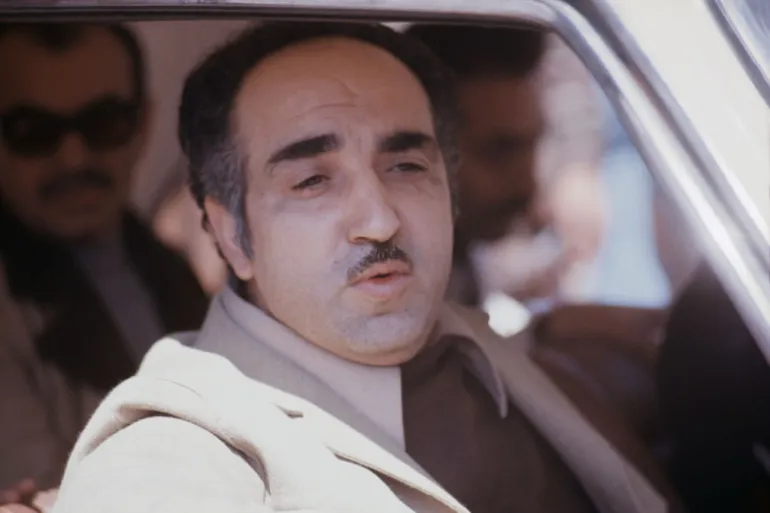
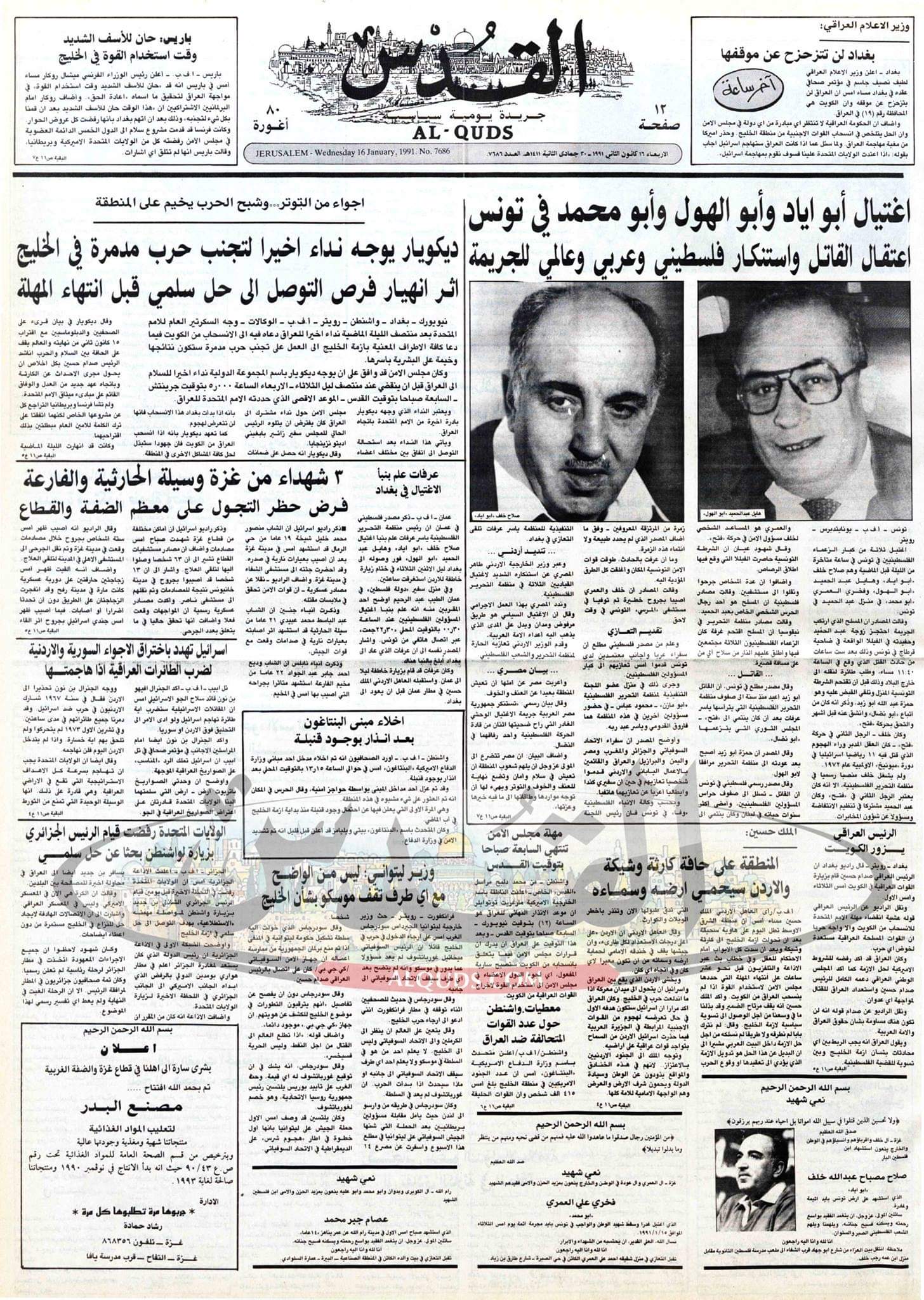
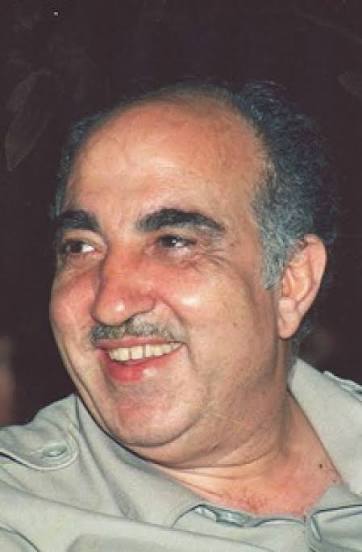
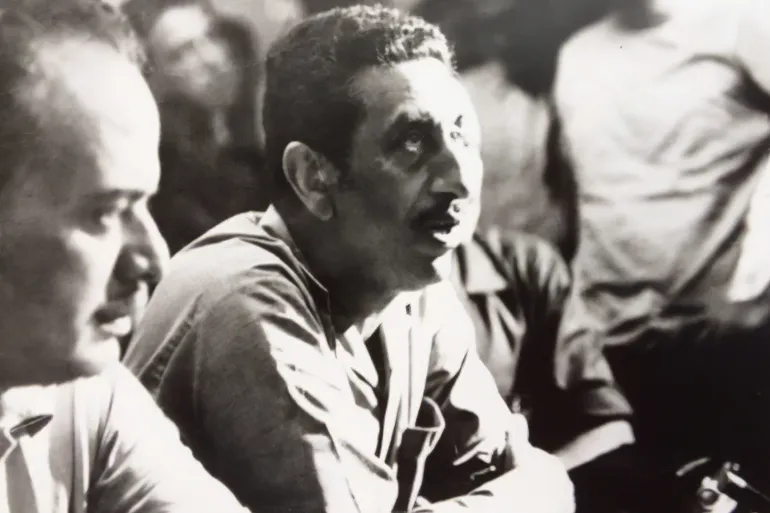
Abu Iyad, Salah Khalaf (1933–1991), was a son of Jaffa expelled from it as a boy in the Nakba, a co-founder of Fatah, the founder of the Palestinian revolution’s first security apparatus and for many years the movement’s second man. He was assassinated in the Tunis suburb of Carthage on the night of 14 January 1991 with his comrades Abu al-Hol and Fakhri al-Omari, two days before the Gulf War broke out, in a crime whose questions remain open today. [1] [2] [3] [4]
This is the first article in the series “Assassinated leaders of the Palestinian revolution,” in which Palestinina tells the stories of men and women who paid with their lives for the struggle to liberate Palestine.
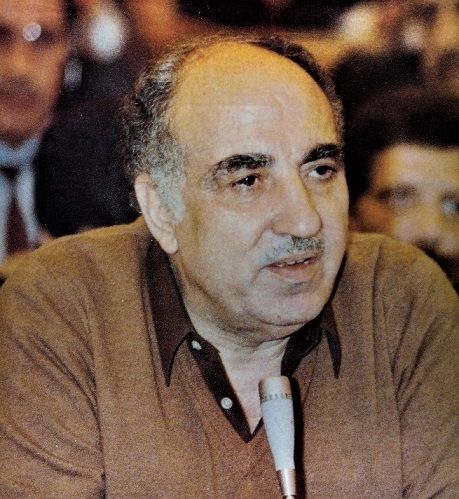
Who was Abu Iyad?
Abu Iyad was the nom de guerre of Salah Musbah Khalaf, one of the leading founders of the Palestinian National Liberation Movement, Fatah, alongside Yasser Arafat, Khalil al-Wazir (Abu Jihad), Khaled al-Hassan and Farouk al-Qaddumi [1] [2]. He founded the “Revolutionary Monitoring Agency,” the revolution’s first security service, later led the PLO’s Unified Security Apparatus, and was regarded as Fatah’s second man, a constant target of Israel’s Mossad who survived several assassination attempts [1] [2] [3]. After his death, Middle East Report described him as the “prime political strategist” of Fatah and the PLO in his final years [6].
Abu Iyad at a glance
| Item | Details |
|---|---|
| Full name | Salah Musbah Khalaf [5] |
| Nom de guerre | Abu Iyad [2] |
| Born | 31 August 1933, Hammam al-Mahrouq quarter, Jaffa [1] [5] |
| Origin | A Gaza family settled in Jaffa [2] [5] |
| Displaced | 13 May 1948, by sea from Jaffa to Gaza [1] [5] |
| Education | Arabic in Cairo (1956); diploma in education and psychology, Ain Shams University (1958) [1] [5] [2] |
| Roles | Fatah co-founder, Central Committee member from 1969, founder of the Revolutionary Monitoring Agency, head of the Unified Security Apparatus [1] [5] [2] |
| Book | “My Home, My Land” / “Palestinien sans patrie” (with Eric Rouleau, 1978) [7] |
| Assassinated | 14 January 1991, Carthage, Tunis [2] [3] |
| Killed with him | Hayel Abdel Hamid (Abu al-Hol) and Fakhri al-Omari (Abu Muhammad) [3] |
| Buried | Tunis [1] |
Timeline of Abu Iyad’s life
| Year | Event |
|---|---|
| 1933 | Born in Jaffa [1] |
| 1945 | First arrest by British Mandate police, aged twelve [5] [2] |
| 1948 | Expelled by sea from Jaffa to Gaza on 13 May [1] |
| 1954 | Meets Yasser Arafat in Cairo through the Palestinian Students’ League [1] [2] |
| 1959 | Moves to Kuwait and helps found Fatah [1] [2] |
| 1967 | Devotes himself to the revolution and founds the Revolutionary Monitoring Agency [1] [5] |
| 1968 | Fights at the Battle of Karameh on 21 March [1] [5] |
| 1969 | Joins Fatah’s Central Committee as security commissioner [5] |
| 1970 | Arrested in Jordan during the September events, then expelled to Lebanon [1] [5] |
| 1978 | Publishes “My Home, My Land” [7] |
| 1982 | Stays through the siege of Beirut, then leaves for Tunis [1] [2] |
| 1983 | Leaves Tripoli by sea on 19 December [5] |
| 1988 | Helps persuade the PNC in Algiers to adopt a diplomatic strategy [6] |
| 1991 | Assassinated in Carthage on 14 January [2] [3] |
A childhood in Jaffa: al-Najjada and the first arrest
Salah Khalaf was born on 31 August 1933 in the Hammam al-Mahrouq quarter of Jaffa, to a family originally from Gaza that had settled in the city; his father worked in the land registry [1] [5] [2]. He attended al-Marwaniyya School and grew up in a city that lived through the 1936 revolt and the demolition of the Old City by the British Mandate.
As a boy he joined the “Ashbal al-Najjada,” a Palestinian youth organisation that confronted British colonialism and Zionist ambitions, where he trained with wooden rifles [2]. The book “Difficult Paths” devotes a chapter to al-Najjada as “the first training camp” of his life [7]. In November 1945, aged just twelve, he was detained by British Mandate police for the first time [5] [2].
13 May 1948: leaving by sea
On 13 May 1948, two days before the occupation state was declared and weeks after the Zionist militias’ assault on Jaffa, the Khalaf family fled the city by sea under fire, on a small boat that nearly sank, and reached Gaza as refugees [1] [5]. There Salah finished secondary school in 1951 and worked to support his family [1]. The flight from Jaffa stayed with him; a chapter of “Difficult Paths” is titled “The Exodus from Jaffa” [7].
Cairo: the Students’ League and meeting Arafat
In the early 1950s he moved to Cairo to study Arabic, earning a higher diploma in teaching it in 1956 and a diploma in education and psychology from Ain Shams University in 1958 [1] [5] [2]. In Cairo he met Yasser Arafat in 1954, when Arafat headed the Palestinian Students’ League; the two worked together in the Students’ League and then the Graduates’ League, and Abu Iyad later succeeded Arafat as the League’s head [1] [2]. He presented the Palestinian students’ demands to President Gamal Abdel Nasser [2].
At that stage he belonged to the Muslim Brotherhood, leaving it in 1955 to found the “Revolutionary Front of the Armed Struggle” with his comrades [5]. He returned to Gaza in 1957 as an Arabic teacher, secretly recruiting and organising young men [3] [1].
Kuwait and the founding of Fatah
In 1959 he went to Kuwait to teach, staying until 1967 [1]. There he met Arafat again and got to know Khaled al-Hassan, Salim al-Za’noun, Farouk al-Qaddumi and Khalil al-Wazir (Abu Jihad), and reached out to Muhammad Yusuf al-Najjar, Kamal Adwan and Mahmoud Abbas: the nucleus that founded Fatah [2] [1]. In 1959 he married his cousin, with whom he had six children [1] [5].
In 1967 he devoted himself entirely to the revolution, carrying out difficult missions in Cairo, Damascus, Amman and Beirut [1] [2].
Abu Iyad, in his own voice, on why he chose Fatah, Palestine TV (in Arabic) [8]
The revolution’s security mind
Abu Iyad founded the Palestinian revolution’s first security service, the “Revolutionary Monitoring Agency.” In 1969 he became a member of Fatah’s Central Committee and its security commissioner, later leading the PLO’s Unified Security Apparatus and sharing responsibility for security and intelligence with his comrade Abu al-Hol [1] [5] [2] [3].
The Battle of Karameh, 1968
He fought in the Battle of Karameh on 21 March 1968, when fedayeen and the Jordanian army repelled the occupation army’s incursion into the Jordan Valley, a battle that turned the Palestinian revolution into a mass movement [1] [5] [2].
September 1970 and expulsion to Lebanon
During the events of September 1970 between the revolution’s forces and the Jordanian army he took part in the clashes; the Jordanian authorities arrested him and later expelled him with other leaders to Lebanon [1] [5].
Lebanon and the siege of Beirut
From 1971 to 1982 he lived in Lebanon, built a strong security apparatus for the revolution, forged ties with Arab intelligence services, helped lead the revolution through the Lebanese civil war and survived several assassination attempts [1] [5] [2]. After the occupation assassinated leaders Kamal Adwan, Kamal Nasser and Muhammad Yusuf al-Najjar in the assassination of the three leaders in Verdun in 1973, security vigilance became part of his daily life. He stood with Arafat and the revolution’s leaders through the siege of Beirut in 1982, then left for Tunis in August [1] [2].
Tripoli and Tunis
He was besieged with his comrades in Tripoli by dissidents and left by sea on 19 December 1983, settling in Tunis as head of the Palestinian security services [5]. There he led the most serious intelligence effort against the breakaway Abu Nidal group, which the PLO regarded as a mortal enemy, until the group split in 1990 [6]. In Tunis he lived through the Israeli raid on Hammam al-Shatt in 1985 and the assassination of his comrade Abu Jihad in Sidi Bou Said in 1988.
His political thought and positions
Abu Iyad was among the first Palestinian leaders to propose a democratic, secular state in Palestine in which Muslims, Christians and Jews would live with equal rights and duties, and among the first to accept the two-state solution later on [1]. In Fatah circles he was nicknamed “the Gunnar Jarring of Palestine,” after the Swedish diplomat, for his skill in analysis, planning, negotiation and alliance-building [1].
After Abu Jihad’s assassination he was the only leader with the stature and relationship with Arafat to challenge him on major decisions, and through his speeches and political work he helped persuade the Palestine National Council in Algiers in 1988 to adopt a diplomatic strategy [6]. During the crisis over Iraq’s invasion of Kuwait in 1990, he called for the Palestinian cause not to be dragged into that conflict [1].
A saying widely attributed to him became part of Arab political memory: “What I fear most is that the day will come when treason becomes a point of view” [9].
“My Home, My Land”: the memoir he never wrote
In a 1978 interview Abu Iyad said that “no one working in politics is mad enough to write his memoirs” [7]. Yet French journalist Eric Rouleau held long conversations with him over three years in several places, published in 1978 in French as Palestinien sans patrie, in English as My Home, My Land, and in Arabic as Filastini bila hawiyya (A Palestinian Without Identity) [7]. The first Arabic edition appeared in Kuwait with a preface by Rouleau discussing Arab regimes; the 1996 Amman edition dropped that preface and material on the September 1970 events [7].
Abu Iyad also left recordings and documents, some lost after his assassination. The Arab Center for Research and Policy Studies holds part of them in its “Palestine Memory” collection, on which researchers Mueen al-Taher and Mona Awadallah drew for their book “Difficult Paths: The Palestinian National Movement in the Journey of Salah Khalaf (Abu Iyad), 1933–1971” (2025) [10] [7].
The assassination of Abu Iyad: Carthage, 14 January 1991
On the night of 14 January 1991, with the region on the brink of the Gulf War, Abu Iyad met Central Committee member Hayel Abdel Hamid (Abu al-Hol) and his own office director and deputy Fakhri al-Omari (Abu Muhammad) at Abu al-Hol’s villa in the Tunis suburb of Carthage [3] [11]. There Hamza Abu Zaid, a member of Abu al-Hol’s security detail, opened fire on them with two Kalashnikov rifles, killing all three [11] [2] [1].
The Yasser Arafat Foundation records that Fakhri al-Omari was hit by some thirty bullets as he tried to seize the gunman and protect Abu Iyad [3]. After the shooting the gunman held Abu al-Hol’s wife and daughter hostage inside the house until Tunisian police stormed it, arrested him and freed them [11].
Abu Iyad was the fifth of the fifteen members of Fatah’s Central Committee elected in 1980 to be assassinated [6]. The three martyrs were buried in Tunis because of the Gulf War, which broke out only two days later [1] [5].
Comrades in martyrdom: Abu al-Hol and Fakhri al-Omari
Hayel Abdel Hamid (Abu al-Hol)
Born in Safad in 1937 and expelled to Syria in 1948, he founded the “Arab Palestine Organisation” in Syria, which joined Fatah in 1960. He helped establish the movement in Germany, Austria and Cairo, represented it in Egypt, shared security and intelligence responsibility with Abu Iyad, took charge of the occupied territories portfolio after Abu Jihad’s assassination, and was a Central Committee member [3].
Fakhri al-Omari (Abu Muhammad)
Born in Jaffa in 1936 to a family of fighters, his father having taken part in the 1936 revolt, he studied in Gaza and worked in Saudi Arabia, organised Palestinian youth for Fatah in Saudi Arabia and Kuwait, and was Abu Iyad’s closest aide and his deputy in the Unified Security Apparatus [3].
Who was behind the assassination?
The gunman was arrested at the scene, confessed to Tunisian investigators that he acted at the urging of Sabri al-Banna (Abu Nidal), who had split from Fatah in 1974, and was sentenced to death [1] [4]. The PLO blamed the Abu Nidal group and Israel [6]. Accounts differ on who really stood behind the gunman:
- Israel’s Mossad: citing the suspicious ties between the Abu Nidal group and Israel, and the Mossad’s earlier attempts on his life [1] [2].
- Saddam Hussein’s regime: over Abu Iyad’s dispute with him about Kuwait [1].
- Penetration from within: Al Jazeera’s 2019 investigation “The Difficult Assassination” exposed security lapses and ignored warnings, the gunman’s kinship with a known spy, and his recruitment from inside the movement [4].
The investigation concluded that the question of who was behind the killing still has no definitive answer, and that even the account of the gunman’s execution is undocumented [4].
Videos about Abu Iyad
“Salah Khalaf (Abu Iyad),” a film by the Yasser Arafat Foundation (in Arabic) [12]
“The Palestinians’ years in Tunisia”: the assassinations of Abu Iyad and Abu Jihad, Memoirs, Al Araby TV (in Arabic) [13]
Al Jazeera’s investigation “The Difficult Assassination: Abu Iyad” can be watched in full on the Al Jazeera website (in Arabic) [4].
Conclusion
From a small boat fleeing Jaffa under fire in 1948, to the head of the Palestinian revolution’s security, to bullets in Carthage in 1991, Abu Iyad’s life sums up the journey of a whole generation of refugees who turned the Nakba into a revolution. His assassination, like that of many of the revolution’s leaders at the hands of the occupation and its instruments, remains an open wound and an unanswered question.
Also in this series: Khalil al-Wazir (Abu Jihad).
Frequently asked questions about Abu Iyad
Who was Abu Iyad?
Abu Iyad was Salah Khalaf, a Palestinian leader born in Jaffa in 1933, a co-founder of Fatah and the founder of the Palestinian revolution’s first security apparatus.
What was Abu Iyad’s real name?
Salah Musbah Khalaf.
When and where was Abu Iyad assassinated?
On 14 January 1991, at Abu al-Hol’s villa in the Tunis suburb of Carthage.
Who killed Abu Iyad?
Hamza Abu Zaid, a member of the security detail, who confessed to belonging to the Abu Nidal group. The PLO blamed the Abu Nidal group and Israel; who really stood behind him remains disputed.
Who was killed with Abu Iyad?
Hayel Abdel Hamid (Abu al-Hol) and Fakhri al-Omari (Abu Muhammad).
What book did Abu Iyad publish?
“My Home, My Land” (Arabic: “A Palestinian Without Identity”), long interviews with French journalist Eric Rouleau, published in 1978.
Where is Abu Iyad buried?
In Tunis, because of the circumstances of the 1991 Gulf War.
Sources and references
Arabic-language sources are listed with translated titles.
- “Abu Iyad: Founder and First Head of the Palestinian Revolution’s Security Apparatus,” Al Jazeera Encyclopedia, 3 July 2025.
- “Salah Khalaf (Abu Iyad),” Pioneers, Palestinian National Information Center (WAFA).
- “The 35th Anniversary of the Assassination of Leaders Abu Iyad, Abu al-Houl, and Al-Omari,” Yasser Arafat Foundation, 14 January 2026.
- “The Difficult Assassination: Abu Iyad,” Private Investigation, Al Jazeera, 20 May 2019.
- “Salah Khalaf (Abu Iyad) (1933–1991),” Yasser Arafat Foundation.
- “Abu Iyad,” Middle East Report (MERIP), no. 169, March 1991.
- Mueen al-Taher and Mona Awadallah, “Difficult Paths,” book excerpt (PDF), Arab Center for Research and Policy Studies, Beirut, September 2025.
- “Martyr Salah Khalaf ‘Abu Iyad’ on Why He Chose Fatah,” Palestine TV, 14 January 2023.
- Ola Ali Fahmy, “What It Means to Be a Traitor,” Al Jazeera Blogs, 8 May 2017.
- Mueen al-Taher and Mona Awadallah, “Difficult Paths: The Palestinian National Movement in the Journey of Salah Khalaf (Abu Iyad), 1933–1971,” Arab Center for Research and Policy Studies, 2025.
- “January 14, 1991: Palestinian Leader Abu Eyad Gunned Down,” Gulf News.
- “Salah Khalaf (Abu Iyad),” film produced by the Yasser Arafat Foundation.
- “The Assassinations of Abu Iyad and Abu Jihad and Israel’s Bombing of Hammam al-Shatt: The Palestinians’ Years in Tunisia,” Memoirs, Al Araby TV, 6 May 2025.
Photo gallery
More from the archive
 Download Our Palestine App
The whole archive in the palm of your hand: depopulated villages, the Nakba, the massacres and Al-Aqsa — free, with no ads to erase the story.



Comments
No comments yet — be the first to write one.
Add your comment
Name and email are optional. Comments appear after review.