
Kamal Nasser: Poet and PLO Spokesman Killed in Beirut, 1973
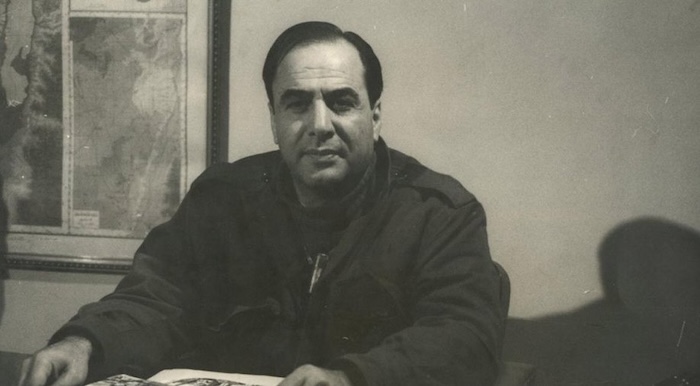
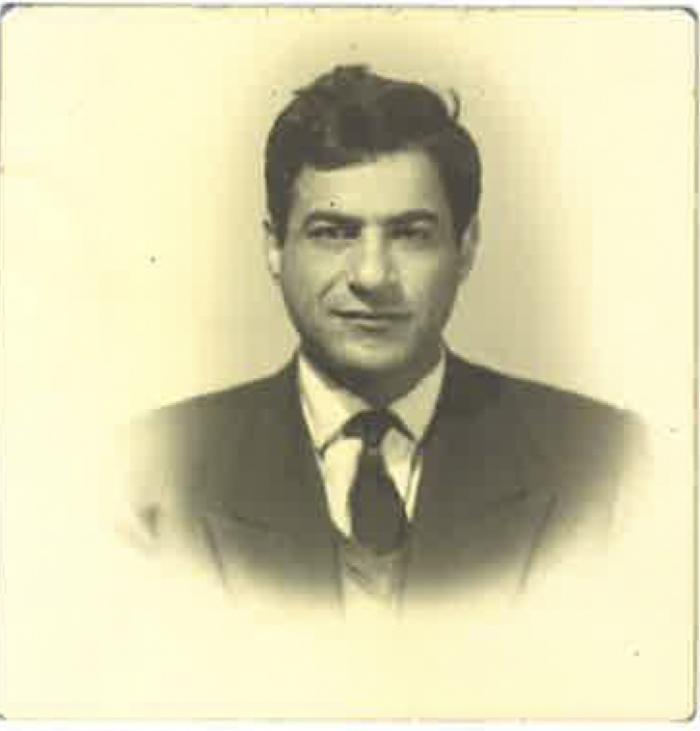
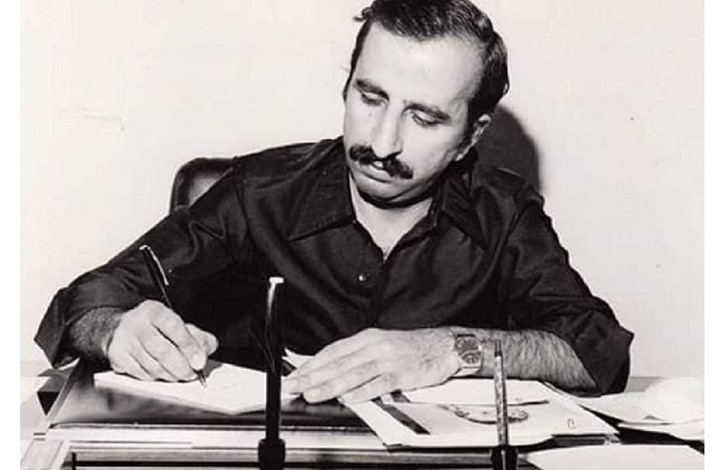
Kamal Nasser (1924–1973) was a Palestinian poet, journalist and fighter from a well-known Birzeit family, and a former MP for Ramallah in the Jordanian parliament. He resisted the occupation after 1967 and was deported to Jordan, going on to become a member of the PLO Executive Committee, its official spokesman and editor of the magazine “Filastin al-Thawra.” An Israeli commando unit assassinated him in the Verdun district of Beirut at dawn on 10 April 1973, together with his comrades Kamal Adwan and Abu Youssef al-Najjar, and he was buried, as he had wished, beside Ghassan Kanafani. [1] [2]
This article is part of the series “Leaders of the Palestinian Revolution Who Were Assassinated,” alongside the articles on Kamal Adwan, Abu Youssef al-Najjar and Ghassan Kanafani, and the article on the Verdun operation.
Who was Kamal Nasser?
Kamal Nasser was one of the leading figures of the fighting Palestinian word: a poet, teacher, journalist, MP and spokesman of the revolution who moved between Jerusalem, Ramallah, Damascus, Cairo and Beirut and remained a voice for his people’s cause until his death [1]. His assassination, months after that of his friend Ghassan Kanafani, was part of the occupation’s war on Palestinian intellectuals and media figures [1].
Kamal Nasser at a glance
| Item | Details |
|---|---|
| Name | Kamal Butrus Nasser |
| Born | 1924 or 1925, Gaza City; from a well-known Birzeit family [1] |
| Education | Birzeit College, then BA in political science, American University of Beirut (1945) [1] |
| Parliament | MP for Ramallah in the Jordanian parliament (1956) [1] |
| Deportation | Deported by the occupation to Jordan on 23 December 1967 [1] |
| Posts | PLO Executive Committee member and official spokesman (1969); editor of “Filastin al-Thawra” (1972) [1] |
| Assassinated | 10 April 1973, Verdun, Beirut [1] [2] |
| Grave | Martyrs’ Cemetery, Beirut, beside Ghassan Kanafani [1] |
Timeline
| Date | Event |
|---|---|
| 1924 or 1925 | Born in Gaza [1] |
| 1945 | Graduates from the American University of Beirut [1] |
| 1947 | Teaches Arabic literature at al-Ahliyya College, Ramallah [1] |
| 1949 | Helps launch “al-Baath”; edits “al-Jil al-Jadid” [1] |
| 1952 | Joins the Baath Party [1] |
| October 1956 | Elected MP for Ramallah [1] |
| April 1957 | Pursued after the fall of the Nabulsi government; exile follows [1] |
| March 1960 | First collection, “Singing Wounds” [1] |
| 1965 | Returns to Birzeit [1] |
| 23 December 1967 | Deported from the West Bank [1] |
| February 1969 | PLO Executive Committee member and spokesman [1] |
| June 1972 | Editor of “Filastin al-Thawra” [1] |
| 10 April 1973 | Assassinated in Beirut [1] [2] |
Between Gaza, Birzeit and Beirut
Kamal Butrus Nasser was born in Gaza City, where his father was working, in 1924 or 1925 (sources differ), to a well-known Protestant Christian family from Birzeit; his mother was Wadia Nasser [1]. He studied at Birzeit College and then at the American University of Beirut, earning a BA in political science in 1945 [1].
Journalist and teacher
He taught at the Patriarchal School of Zion in Jerusalem, then studied law in Jerusalem, and in 1947 became professor of Arabic literature at al-Ahliyya College in Ramallah, publishing poems and stories in the newspapers “al-Qafila” and “Filastin” [1]. In March 1949 he helped launch the daily “al-Baath” in Jerusalem, and late that year became editor-in-chief of the illustrated weekly “al-Jil al-Jadid” [1].
MP and exile
Kamal Nasser joined the Baath Party in Jordan in 1952, and in October 1956 he was elected MP for the Ramallah district in the Jordanian parliament, where he proposed a bill guaranteeing women’s rights, particularly political rights; it was defeated [1].
After the fall of Suleiman al-Nabulsi’s government in April 1957 he spent about a year and a half in hiding, moving between villages, then fled to Syria, where he taught English and wrote for newspapers; in March 1960 he published his first collection, “Singing Wounds” [1]. When Syria broke from Egypt in 1961 he moved to Cairo, and in 1963 he toured the Soviet Union, France, Italy and Britain, meeting European writers including Jean-Paul Sartre [1]. In 1965 he returned to the West Bank under a Jordanian amnesty and settled in Birzeit [1].
Resisting the occupation, and deportation
After the occupation of Jerusalem and the West Bank in June 1967, Kamal Nasser took part in resisting the occupation; its military authorities arrested him in Ramallah and on 23 December 1967 deported him to Jordan along with Ibrahim Bakr [1].
The voice of the PLO
In February 1969 he was elected to the PLO Executive Committee and became its official spokesman, and he also chaired the Arab League’s Permanent Committee for Arab Information [1]. In 1972 the Palestinian National Council put him in charge of the Unified Information Office, and in June that year he became editor-in-chief of the Beirut weekly “Filastin al-Thawra,” a post he held until his death [1].
The assassination of Kamal Nasser in Verdun
At dawn on 10 April 1973, Israeli commando teams – landed by the navy on rubber boats on the Beirut shore, some disguised in women’s clothing – attacked the homes of the revolution’s leaders in the heart of the Lebanese capital under the command of Ehud Barak [2] [3]. They assassinated Kamal Nasser in the Verdun district, together with his comrades Kamal Adwan and Abu Youssef al-Najjar [1] [2]. Some 30 Palestinians were killed in the operation, and Lebanese Prime Minister Saeb Salam resigned in its wake [2].
Beside Ghassan Kanafani
As he had wished, Kamal Nasser was buried in Beirut’s Martyrs’ Cemetery, beside his friend the writer Ghassan Kanafani, whom the Mossad had assassinated in 1972 [1]. The same cemetery thus holds two symbols of the Palestinian word that the occupation pursued with assassination.
Literary legacy
In 1974 Ihsan Abbas edited his complete poetry and Naji Alloush his prose works, which include his memoir “A Palestinian Captive in the Greater Prison” [1]. “Memoirs of a Political Refugee” appeared in the journal “Shu’un Filastiniyya” in 1975, and his play “Right and Wrong” in 1981 [1]. Birzeit University named its largest auditorium after him [1].
Images and video
Frequently asked questions about Kamal Nasser
Who was Kamal Nasser?
A Palestinian poet, journalist and fighter from Birzeit, a member of the PLO Executive Committee and its official spokesman.
Where was Kamal Nasser born?
In Gaza City in 1924 or 1925, to a Birzeit family.
When did the occupation deport Kamal Nasser?
On 23 December 1967, to Jordan.
What was Kamal Nasser’s first poetry collection?
“Singing Wounds,” published in Beirut in 1960.
When was Kamal Nasser assassinated?
At dawn on 10 April 1973 in the Verdun district of Beirut.
Who was killed with Kamal Nasser?
Kamal Adwan and Abu Youssef al-Najjar.
Where is Kamal Nasser buried?
In the Martyrs’ Cemetery in Beirut, beside Ghassan Kanafani, as he had wished.
Sources and references
Arabic-language sources are listed with translated titles; the Interactive Encyclopedia entry is in English.
- “Kamal Nasser,” Interactive Encyclopedia of the Palestine Question, Institute for Palestine Studies.
- “The Martyr Kamal Adwan: The Fedayee Who Brought Explosives into Palestinian Resistance,” Al Jazeera Encyclopedia, 8 March 2024.
- “A Founder of Fatah: Who Was Kamal Adwan, Killed by Ehud Barak in Beirut with 58 Bullets?” Arabi Post, 6 December 2023.
Photo gallery
More from the archive
 Download Our Palestine App
The whole archive in the palm of your hand: depopulated villages, the Nakba, the massacres and Al-Aqsa — free, with no ads to erase the story.



Comments
No comments yet — be the first to write one.
Add your comment
Name and email are optional. Comments appear after review.