
Palestinian Heritage Theft: 10 Documented Examples, from the Thobe to the Book
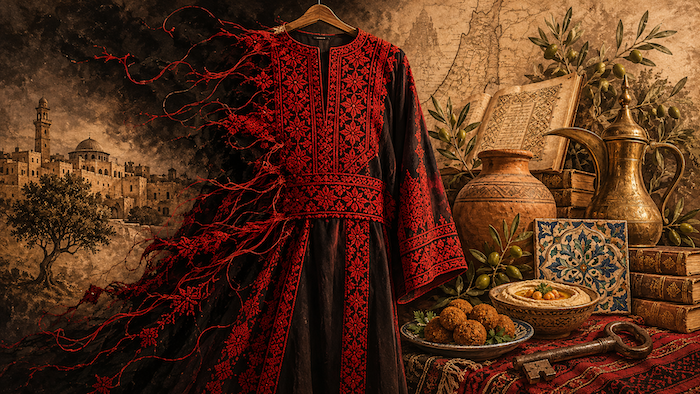
When people talk about the theft of Palestinian heritage, some assume it is exaggeration or a political slogan. But the facts are documented with dates and figures, many of them by Israeli researchers and institutions themselves. Since the Nakba of 1948, the Zionist occupation has not stopped at seizing the land; it has reached for everything that proves someone lived on it first: the thobe, the food, the dance, the book, the photograph, the village name, the mosque, the ancient stone.
This article brings together ten documented examples, each with a source you can check and a detailed article in the Our Palestine encyclopedia.
The ten examples at a glance
| # | What was taken | When | Key figure |
|---|---|---|---|
| 1 | The thobe and embroidery | 2017, 2021 | An "Israeli" gown embroidered by Naqab women for New York Fashion Week |
| 2 | Hummus | Since the 1950s | The Sabra brand, with about $400 million in US sales |
| 3 | Falafel and Palestinian cuisine | Ongoing | Falafel as Israel's "national snack" |
| 4 | Dabke | Since 1944 | "Debka Gilboa" (1947), drawn from Arab village weddings |
| 5 | Books | 1948 | About 70,000 books looted |
| 6 | Archives and films | 1982 | A 25,000-volume library on 3 trucks |
| 7 | Place names | Since 1949 | About 3,000 new Hebrew names by 1958 |
| 8 | Depopulated villages | 1948–1949 | Saffuriya turned into 5 settlements and "Tzippori" park |
| 9 | Holy sites | Since 1967 | 63% of the Ibrahimi Mosque given to settlers |
| 10 | Antiquities | Since 1967 | 2,068 dunams seized at Sebastia |

1. The Palestinian thobe: grandmothers' embroidery on "Israeli" runways
In September 2017, an Israeli designer showed a Palestinian-style embroidered gown at an event during New York Fashion Week. It was embroidered by Bedouin women from an association in Lakia in the Naqab, whose head said they were not told the sponsor was a settlement movement building Jewish towns in place of Bedouin villages, according to Al Jazeera.
In December 2021, Miss Universe contestants wore the Palestinian thobe on a promotional tour in Rahat, and one posted her photos with a hashtag promoting tourism to Israel, with no mention of Palestine, according to Al-Monitor.
The Palestinian response: on 15 December 2021, UNESCO inscribed "the art of embroidery in Palestine" on the Representative List of the Intangible Cultural Heritage of Humanity.
Read the full article: Palestinian embroidery at UNESCO →
2. Hummus: from Friday breakfast to a brand worth hundreds of millions
The oldest written recipes for hummus with tahini are in Arabic, from Aleppo and Egypt in the 13th and 14th centuries, some seven centuries before Israel existed. Yet hummus is now an "Israeli national symbol." Israeli sociologist Dafna Hirsch says early Zionist settlers ignored or rejected hummus before it became a national emblem, and titled her book on it with the words "colonial appropriation," according to the Open University of Israel.
On the shelves, America's best-known hummus brand is called "Sabra," the nickname for an Israeli-born Jew, with sales of about $400 million, according to Food Dive.
Read the full article: Stolen Hummus →
3. Falafel and Palestinian cuisine: a "national dish" for someone else
It is not only hummus. According to writer Steven Salaita, the Israeli government calls falafel its "national snack," and "Brand Israel" campaigns present dishes such as shawarma, fattoush, mujaddara and knafeh as authentically Israeli, according to The New Arab.
Salaita argues the problem is not anyone eating Palestinian food, but who owns the brand, the narrative and the profits. Even Jews who came from Iraq, Morocco and Yemen knew these dishes as part of their Arab culture, and calling them "Israeli" distorts their history too.
4. Dabke: from village weddings to "Israeli folk dance"
"Israeli folk dance" was deliberately designed in the 1940s, on the eve of the Nakba. Choreographer Rivka Sturman recounted watching the dancing at Arab village weddings, which gave her early dances "an Arabic color," including "Debka Gilboa" in 1947, according to her published biography. The "mother of Israeli folk dance," Gurit Kadman, named "the Arab debkas" as an explicit source.
The Palestinian response: in December 2023, UNESCO inscribed "Dabkeh, traditional dance in Palestine" on the Representative List of the Intangible Cultural Heritage of Humanity.
Read the full article: Is Dabke Israeli? →
5. Books: the "Great Book Robbery" of 1948
During the Nakba, teams of National Library and Hebrew University staff entered the homes of displaced Palestinians in West Jerusalem and collected about 30,000 books. The "Custodian of Absentee Property" collected 40,000 to 50,000 more from Jaffa, Haifa, Tiberias and Nazareth, for a total of about 70,000 books, according to Israeli researcher Gish Amit's work published by the Institute for Palestine Studies.
About 26,000 books were destroyed in 1957, and about 6,000 remain in the Israeli National Library marked "AP" for "Abandoned Property," their owners' names erased. Among those owners was the writer Khalil Sakakini.
Read the full article: The Great Book Robbery →
6. Archives and films: Beirut, 1982
During the Israeli invasion of Beirut, on 15 September 1982, the library of the Palestine Research Center, about 25,000 volumes, was loaded onto three trucks and taken to the occupation state. The occupation army confiscated at least 120 Palestinian films, and the archive of the Palestinian Cinema Institution disappeared, according to Wikipedia.
Part of the archive was returned in a 1983 prisoner exchange after the occupation had copied it, then lost in the Algerian desert. What remains is still in the occupation army's archive, classified as "restricted material."
Read the full article: The Looted Beirut Archive →
7. Place names: "for reasons of state"
In 1949 the occupation's prime minister David Ben-Gurion wrote: "We are obliged to remove the Arabic names for reasons of state." The Government Names Committee proposed about 3,000 new Hebrew names between 1949 and 1958, according to Israeli historian Meron Benvenisti.
Yafa became "Yafo," Akka "Akko," Umm al-Rashrash "Eilat," and al-Majdal "Ashkelon." Many of the "Hebrew" names were simply translations or adaptations of Arabic ones.
Read the full article: Hebraizing the Map After the Nakba →
8. Depopulated villages: Saffuriya that became "Tzippori"
Saffuriya was the largest village in the Galilee on the eve of the Nakba. The occupation bombed it from the air, captured it on 16 July 1948, and expelled its people twice. At least five settlements were then built on its lands, a pine forest was planted over its homes, and the site became "Tzippori National Park," which tells the place's history from the Romans to the Ottomans and skips its people, according to Zochrot.
Today many of its people live in Nazareth's al-Safafra neighbourhood, a few kilometres from their village and barred from returning.
Read the full article: From Saffuriya to "Tzippori" →
9. Holy sites: the Ibrahimi Mosque and Bilal Mosque
After the Ibrahimi Mosque massacre of 25 February 1994, in which 29 worshippers were killed, the mosque was partitioned: 63% to settlers and 37% to Muslims. In 2010 it was added, together with the Bilal bin Rabah Mosque in Bethlehem, to Israel's "national heritage" list. In July 2025 powers over the Ibrahimi Mosque were transferred from the Hebron Municipality to the Kiryat Arba settlement council, according to The New Arab.
The Bilal bin Rabah Mosque was walled off behind the separation wall by a decision of 11 September 2002, and Bethlehem's people are barred from reaching it.
Read the full article: From the Ibrahimi Mosque to Bilal Mosque →
10. Antiquities: from the Rockefeller Museum to Sebastia
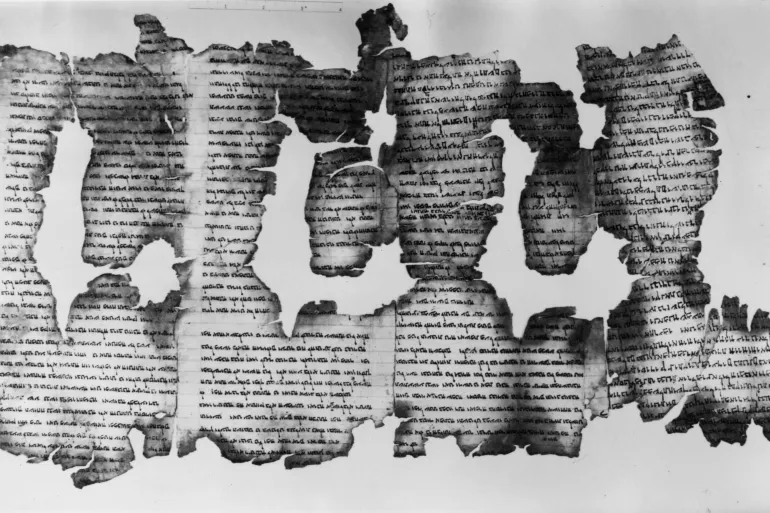
In 1967 the occupation seized the "Palestine Archaeological Museum" in Jerusalem and renamed it the "Rockefeller Museum," and moved the Dead Sea Scrolls found at Qumran in the West Bank to the Israel Museum. In 2013 it moved more than 250 artefacts weighing 30 tonnes from the occupied West Bank for an exhibition on Herod, according to Al Jazeera.
On 11 February 2026, occupation authorities signed an order expropriating 2,068 dunams at Sebastia near Nablus for "Shomron National Park," which the Israeli group Peace Now calls "the largest land appropriation for antiquities ever recorded."
Read: Sebastia Under Judaization → · Read: Looted West Bank Antiquities →

What do the ten examples have in common?
These examples may seem unrelated: a dress, a dish, a dance, a book, a mosque. But they follow a single pattern repeated since the Nakba:
- Taking: the item is taken from its owners, by purchase, confiscation, looting or "inspiration."
- Renaming: it is given a new name that cuts its link to Palestine, such as "Sabra," "Tzippori," "Shomron" or "AP."
- Re-presenting: it is presented to the world as "Israeli," in museums, on runways, in dance clubs and in shops.
- Exclusion: Palestinians themselves are barred from it, whether it is a book in a storeroom, a mosque behind a wall or an archaeological mound.
Why does the occupation need all this? Because heritage is evidence: evidence that a people lived here, farmed, cooked, embroidered, wrote and prayed, centuries before 1948. Whoever erases the evidence finds it easier to claim the land was "without a people."
But the ten examples also carry the answer: embroidery and dabke at UNESCO in Palestine's name; Hebron and Sebastia on the World Heritage List in Palestine's name; Israeli researchers documenting what was done by their own side. Palestinian heritage is being stolen, but it is also being preserved, told and reclaimed.
Frequently asked questions about the theft of Palestinian heritage
What is meant by the theft of Palestinian heritage?
The Israeli occupation's seizure of elements of Palestinian culture, tangible ones such as books, antiquities and holy sites, and intangible ones such as embroidery, food, dabke and place names, and presenting them as Israeli or depriving Palestinians of them.
When did the theft of Palestinian heritage begin?
Some forms began before the Nakba, such as borrowing from dabke in the 1940s, but it became systematic policy after the 1948 Nakba, with the looting of books and the Hebraization of names, then expanded after the 1967 occupation of the West Bank and Jerusalem to include holy sites and antiquities.
What are the best-known examples of Palestinian heritage theft?
Among the best known: presenting the Palestinian thobe, hummus, falafel and dabke as Israeli; looting about 70,000 books in 1948; looting the Beirut archive in 1982; renaming thousands of places; partitioning the Ibrahimi Mosque; and seizing the Sebastia archaeological site.
How do Palestinians counter the theft of their heritage?
Through documentation; registering elements with UNESCO in Palestine's name (embroidery in 2021, dabke in 2023); inscribing sites on the World Heritage List (Hebron in 2017, Sebastia in 2026); and keeping living practices alive, such as wearing the thobe and dancing dabke.
Do Israeli researchers acknowledge the theft of Palestinian heritage?
Yes, much of the evidence comes from Israeli researchers and organisations, such as Gish Amit, who uncovered the book looting; Dafna Hirsch, who described hummus's trajectory as "colonial appropriation"; Meron Benvenisti, who documented the Hebraization of names; and the groups Emek Shaveh and Peace Now.
Sources
- Bedouin women misled into embroidering gown for NYFW, Al Jazeera, 2017
- Palestinians decry cultural theft as Miss Universe contestants wear Bedouin clothes, Al-Monitor, 2021
- The Israeli Career of Hummus: Colonial Appropriation, Authenticity, and Distinction, Dafna Hirsch, 2026
- PepsiCo buys rest of Sabra, Obela brands, Food Dive, 2024
- 'Israeli' hummus is theft, not appropriation, Steven Salaita, The New Arab, 2017
- Rivka Sturman, published biography
- Ownerless property? The story of the books Palestinians left behind in 1948 (Arabic), Gish Amit, Institute for Palestine Studies
- Palestine Research Center, Wikipedia
- Sacred Landscape, Meron Benvenisti
- Saffuriyya, Zochrot
- Israel quietly hands Ibrahimi Mosque control to settler council, The New Arab, 2025
- Herod exhibit digs up controversy, Al Jazeera, 2013
- Civil Administration announces intent to seize approximately 1,800 dunams at the Sebastia archaeological site, Peace Now
More from the archive
 Palestinian heritage
The Dead Sea Scrolls: How the Israeli Occupation Seized a Palestinian Treasure Found on the Eve of the Nakba
 Palestinian heritage
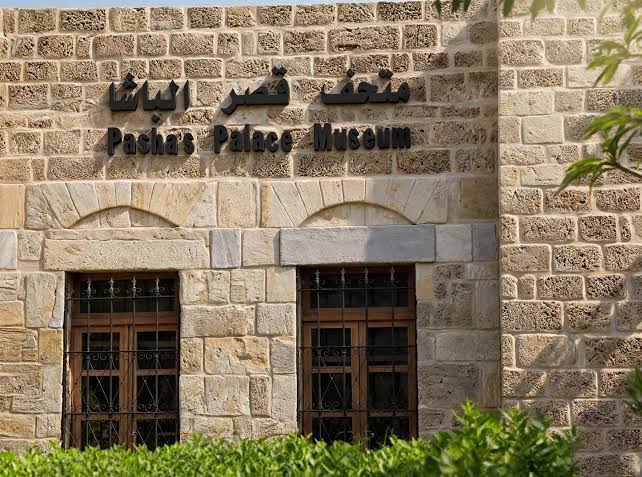
Gaza's Heritage Under Genocide: The Great Omari Mosque, Pasha's Palace and Central Archives
 Palestinian heritage
The Jaffa Orange: How Palestine's Orange Became an Israeli "Jaffa" Brand
 Download Our Palestine App
The whole archive in the palm of your hand: depopulated villages, the Nakba, the massacres and Al-Aqsa — free, with no ads to erase the story.



Comments
No comments yet — be the first to write one.
Add your comment
Name and email are optional. Comments appear after review.