
Hanna Mikhail (Abu Omar): Life, Thought and Disappearance
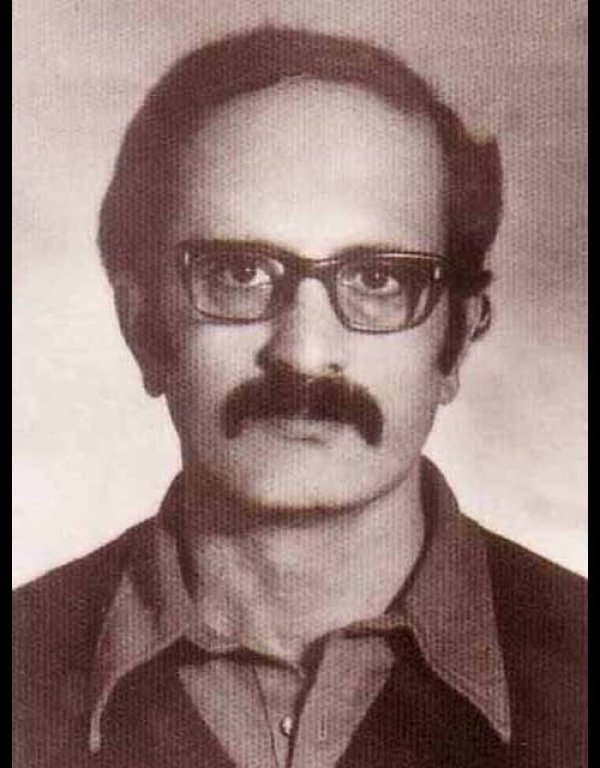
Hanna Ibrahim Mikhail, known as “Abu Omar,” was a Palestinian activist and thinker born in Ramallah in 1935 [1]. He earned a doctorate from Harvard and taught at Princeton and the University of Washington, then left academia in 1969 to join the Palestinian revolution in Jordan [2]. In July 1976 he vanished at sea with his comrades on the way to the besieged Palestinian camps in northern Lebanon; his fate remains unknown [2].
At a glance
| Item | Details |
|---|---|
| Name | Hanna Ibrahim Mikhail [3] |
| Nom de guerre | Abu Omar [3] |
| Born | Ramallah, 1935 [1] |
| Education | BS in chemistry, Haverford College; PhD, Harvard University [2] |
| Organisation | Fatah [3] |
| Wife | Activist Jehan Helou (1972) [2] |
| Fate | Vanished at sea off Lebanon, July 1976 [2] |
Timeline
| Date | Event |
|---|---|
| 1935 | Born in Ramallah [1] |
| 1948 | As a teenager, saw refugees pour into Ramallah in the Nakba [3] |
| 1952 | Graduated from the Friends School, Ramallah [1] |
| 1965–1966 | Taught Arabic at Princeton [1] |
| 1969 | Left academia to join the revolution in Jordan [2] |
| 1971 | Moved to Beirut; worked at the Research and Planning Centres [2] |
| 1972 | Married Jehan Helou [2] |
| 1974 | Declined an offer to be the first Palestinian delegate to the UN [3] |
| July 1976 | Vanished at sea off Lebanon with his comrades [2] |
Early life and education
Hanna Mikhail was born in Ramallah in 1935 [1] and was a teenager when refugees poured into his town in the 1948 Nakba [3]. He graduated from the Friends School in Ramallah in 1952 [1], then went to the United States, earning a BS in chemistry from Haverford College and a PhD in political science from Harvard [2]; his dissertation was on the jurist al-Mawardi, supervised by the orientalist Hamilton Gibb [1].
Academic career
Mikhail taught at Princeton and then at the University of Washington in Seattle [2], and seemed poised for a promising academic career [3]. At Princeton in the late 1950s he met Edward Said, who later wrote that he was immediately struck by his great modesty [1].
Joining the revolution
After the 1967 defeat Mikhail joined Fatah [3], and in 1969 he left academia to join the revolution in Jordan, where he helped set up its international relations and information departments [2]. He worked in the movement’s foreign relations, building ties with the French, Italian and American left [1].
In Beirut
In 1971 he moved to Beirut and worked at the Palestine Research Centre and the Planning Centre [2]. He became a member of the movement’s leadership in Lebanon under his nom de guerre “Abu Omar” [3] and worked in the “Western Sector” under Kamal Adwan [1]. In 1974 Yasser Arafat asked him to become the first Palestinian delegate to the UN; he declined, preferring to keep building the movement from within [3].
His thought
Abu Omar believed in what his comrades called “revolutionary realism” and in the democratic path as a lasting solution for the Palestinian struggle [2]. He envisioned a democratic Palestinian state with equal rights for Arabs and Jews [3]. His comrades remembered him as modest and courteous [2].
Vanished at sea
In July 1976, amid the Lebanese civil war, Abu Omar set sail with nine comrades and two sailors for the besieged Palestinian camps in northern Lebanon, and all of them vanished at sea [2]. The group was led by Abd al-Hamid Washahi, “Naim,” with Abu Omar as his deputy and political commissar [1]. Accounts of their fate differ, between capture by the occupation forces or by the Kataeb militia; former detainees in Syria’s Tadmor prison told his wife they had met him, but no trace of him was ever found [1]. Searches continued for years, and their fate remains unknown [2].
Legacy
Abu Omar remains a model of the intellectual who chose resistance over position. His life is revisited in academic forums and in his comrades’ writings, including a tribute by Elias Khoury and Jehan Helou in the Journal of Palestine Studies [2] [4].
Frequently asked questions about Hanna Mikhail
Who was Hanna Mikhail?
A Palestinian activist and thinker from Ramallah, known as “Abu Omar,” who left US academia to join Fatah.
When was Hanna Mikhail born?
In 1935, in Ramallah.
Where did he study?
At Haverford College and then Harvard University, where he earned his PhD.
What happened to Hanna Mikhail?
He vanished at sea with his comrades in July 1976 on the way to northern Lebanon; his fate remains unknown.
Who was his wife?
The activist Jehan Helou; they married in 1972.
Sources and references
Arabic-language sources are listed with translated titles.
- Belal Momen, “Hanna Mikhail: Edward Said’s Companion Who Chose Resistance and Struggle,” Aswat Online, 30 July 2019.
- “Forum Focuses on Life of Abu Omar, Shining Light on Revolutionary Palestinian Intellectuals,” Birzeit University.
- “Hanna Ibrahim Mikha’il (Abu ‘Umar),” Institute for Palestine Studies digital projects.
- Elias Khoury and Jehan Helou, “Two Portraits in Resistance: Abu ‘Umar and Mahjub ‘Umar,” Journal of Palestine Studies, Vol. 41, No. 4, Summer 2012.
More from the archive
 Download Our Palestine App
The whole archive in the palm of your hand: depopulated villages, the Nakba, the massacres and Al-Aqsa — free, with no ads to erase the story.



Comments
No comments yet — be the first to write one.
Add your comment
Name and email are optional. Comments appear after review.