
The al-Dabboya Operation 1980: Fatah's Ambush in the Heart of Hebron's Old City
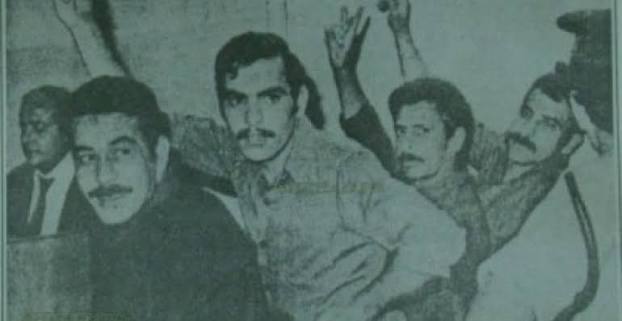
On the evening of Friday 2 May 1980, at about 7:30, Fatah fedayeen set an ambush near the al-Dabboya building in the heart of Hebron’s Old City, close to the Ibrahimi Mosque – a building seized by settlers from Kiryat Arba, who called it “Beit Hadassah.” From the rooftops they fired and threw grenades at settlers returning from the mosque through a narrow alley; six were killed and some twenty wounded. [1][2]
Al-Dabboya struck at the settler enclaves the occupation had planted in the heart of Hebron. Israel responded with a curfew lasting weeks and the deportation to southern Lebanon of Hebron mayor Fahd al-Qawasmi, Halhul mayor Mohammed Milhem and the sharia judge Sheikh Rajab Bayoud al-Tamimi. [1]
Contents
- At a glance
- Settlement in the heart of Hebron
- The fighters
- The operation
- Collective punishment
- Arrest and trial
- Between the accounts
- Timeline
- Frequently asked questions about the al-Dabboya operation
At a glance
| Item | Details |
|---|---|
| Date | Evening of Friday 2 May 1980, about 7:30 |
| Place | Around the al-Dabboya building (“Beit Hadassah”) near the Ibrahimi Mosque, Hebron Old City |
| Carried out by | Fatah |
| Fighters | Adnan Jaber, Yasser Zayadat, Tayseer Abu Sneineh and Mohammed al-Shoubaki |
| Method | An ambush with automatic weapons and grenades from the rooftops |
| Toll | 6 settlers killed and about 16–20 wounded |
| Israeli response | A curfew of about three weeks, the deportation of al-Qawasmi, Milhem and al-Tamimi, and the demolition of a house in Harat Jaber |
| Fate of the fighters | Arrested in September 1980 and sentenced to life on 17 November 1980 |
Settlement in the heart of Hebron
After the 1967 occupation Israel built the Kiryat Arba settlement on the edge of Hebron, and settlers then began pushing into the heart of the city. They seized the al-Dabboya building near the Ibrahimi Mosque, and every Friday evening armed settlers marched from Kiryat Arba through the area around the mosque to support the families installed in the building – a march the people of Hebron saw as a daily challenge to their city. [1]
The fighters
The sources name four of the fighters, all from the Hebron governorate and the northern West Bank: [1][2]
| Name | Nom de guerre | Home town | Role |
|---|---|---|---|
| Adnan Jaber Mahmoud | Adnan | Tayasir, born 1948 | Commander of the operation; trained in the USSR |
| Yasser Hussein Zayadat | Aziz | Bani Na’im | Says he was the operation’s real leader |
| Tayseer Mahmoud Abu Sneineh | Maher | Hebron | Chose the al-Dabboya building as the target and found the hideout |
| Mohammed Abd al-Rahman al-Shoubaki | Mujahid | Idhna | Supplied the weapons |
The fighters say they were trained directly by Khalil al-Wazir, “Abu Jihad.” [2]
The operation
At about 7:30 on Friday evening the fighters took up positions on the rooftops overlooking a narrow alley used by the settlers returning from the mosque. They opened fire and threw grenades from behind them; the settlers’ guards returned fire at once, and a clash followed with the forces that came to their aid. [2][1]
The operation killed six settlers and wounded between 16 and 20, according to the indictment and al-Diyar’s account. Occupation forces then besieged a house in Harat Jaber and demolished it. [1][2]
Collective punishment
The occupation imposed a curfew of about three weeks on Hebron and deported by air to southern Lebanon three of the area’s leaders: Hebron mayor Fahd al-Qawasmi, Halhul mayor Mohammed Milhem and the sharia judge Sheikh Rajab Bayoud al-Tamimi. Six other Palestinians were arrested on charges of sheltering and transporting the fighters. [1][2]
These three were elected leaders and a man of religion with no connection to the operation; their deportation became punishment of an entire city for rejecting the settlements.
Arrest and trial
In September 1980 four of the fighters were arrested; Adnan Jaber and Yasser Zayadat were caught on the bank of the Jordan River when a flare exposed their hiding place as they tried to cross. The four were tried before a military court in Nablus on charges including killing six Israelis and wounding sixteen, firing rockets at Kiryat Arba and planting mines. [1][2]
On 17 November 1980 they were sentenced to life imprisonment. [1]
Between the accounts
Death toll: a fedayeen statement in 1980 spoke of 13 killed and about 30 wounded, including the Hebron military governor, while the trial indictment gives 6 killed and 16 wounded, and al-Diyar 6 killed and 20 wounded. [1][2]
Who the dead were: Palestinian sources describe them as armed settlers marching from Kiryat Arba in support of the settler enclave, while the occupation describes them as worshippers and religious seminary students. [1][2]
Command of the operation: some accounts present Adnan Jaber as the commander, while Yasser Zayadat says he was its real leader. [1]
Number of fighters: al-Diyar names five, adding Omar al-Hroub, while the other sources speak of four. [2][1]
Timeline
| Date | Event |
|---|---|
| After 1967 | Kiryat Arba built; the al-Dabboya building seized [1] |
| Evening, 2 May 1980 | The al-Dabboya ambush [2] |
| May 1980 | Curfew; al-Qawasmi, Milhem and al-Tamimi deported [1] |
| September 1980 | The fighters arrested [2] |
| 17 November 1980 | Life sentences handed down [1] |
Frequently asked questions about the al-Dabboya operation
What was the al-Dabboya operation?
An ambush by Fatah fedayeen near the al-Dabboya building in Hebron’s Old City on the evening of 2 May 1980, targeting settlers from Kiryat Arba. [1][2]
What is the al-Dabboya building?
A building near the Ibrahimi Mosque seized by Kiryat Arba settlers, who called it “Beit Hadassah.” [1][2]
Who carried it out?
Adnan Jaber, Yasser Zayadat, Tayseer Abu Sneineh and Mohammed al-Shoubaki of Fatah. [1]
How did the occupation respond?
With a curfew of about three weeks and the deportation of Fahd al-Qawasmi, Mohammed Milhem and Sheikh Rajab al-Tamimi to Lebanon. [1]
What happened to the fighters?
They were arrested in September 1980 and sentenced to life on 17 November 1980. [1][2]
Read also on Palestinuna
Sources and references
- Fatah Information and Culture Commission – Lebanon, “One of Fatah’s most important battles: 34 years since the al-Dabboya operation in Hebron,” 3 May 2014, including Yasser Zayadat’s account (in Arabic).
- Hemmat Mostafa, “On this day: the al-Dabboya operation in Hebron,” al-Diyar, 2 May 2020 (in Arabic).
More from the archive
 Download Our Palestine App
The whole archive in the palm of your hand: depopulated villages, the Nakba, the massacres and Al-Aqsa — free, with no ads to erase the story.



Comments
No comments yet — be the first to write one.
Add your comment
Name and email are optional. Comments appear after review.