
The Al-Aqsa Mosque Sundial | Telling Time by the Sun Since 1927
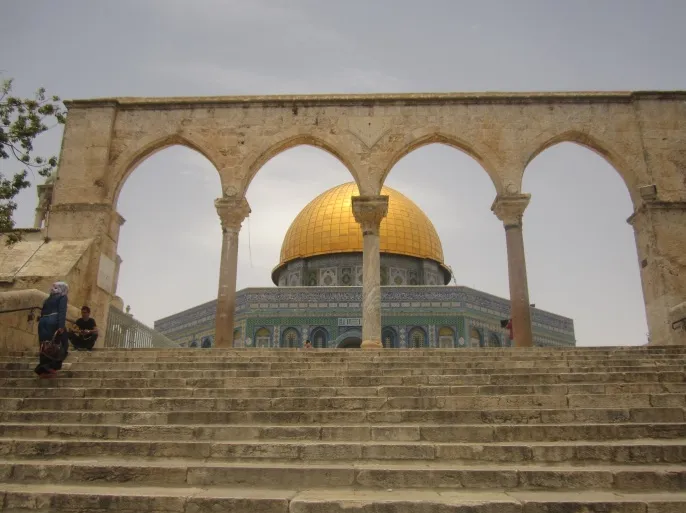
Above the southern arcade of the Dome of the Rock platform, on the stairway rising from the Qibli Mosque, stands a small sundial that few visitors to the blessed Al-Aqsa Mosque notice. It is the Al-Aqsa Mosque sundial, dating to 1927, and it still reads the time from the sun’s shadow today, as Jerusalemites and pilgrims have read it for nearly a century. [1]
Contents
- At a glance
- Who built the sundial?
- Description
- How does a sundial work?
- The sundial’s accuracy
- An example: reading the time
- Sundials in the Islamic tradition
- The sundial under occupation
- Notes on the information
- Timeline
- Frequently asked questions about the Al-Aqsa Mosque sundial
At a glance
| Item | Details |
|---|---|
| Type | Vertical sundial (wall sundial) |
| Location | Above the southern arcade of the Dome of the Rock platform, facing the Qibli Mosque |
| Year built | 1927, according to the only record in circulation |
| Built by | The Jerusalemite engineer Rushdi al-Imam |
| Height above ground | About 8 metres |
| Plate | Five-sided marble of unequal sides, about 100×150 cm |
| Gnomon | A metal rod about 25 cm long |
| Use | Telling the time by day and fixing prayer times |
Who built the sundial?
The sundial is attributed to the engineer Rushdi al-Imam, in the time of the Supreme Muslim Council, as a clock by which to tell the time by day and to know the prayer times, in an era when modern clocks were not yet common. [1]
Rushdi al-Imam al-Husseini was a Jerusalemite engineer who studied engineering in Istanbul. The Supreme Muslim Council tasked him with studying the condition of Al-Aqsa Mosque and estimating the cost of restoring it, and he then supervised the mosque’s first restoration between 1922 and 1925 alongside the architect Ahmad Kamal al-Din. [2]
Description
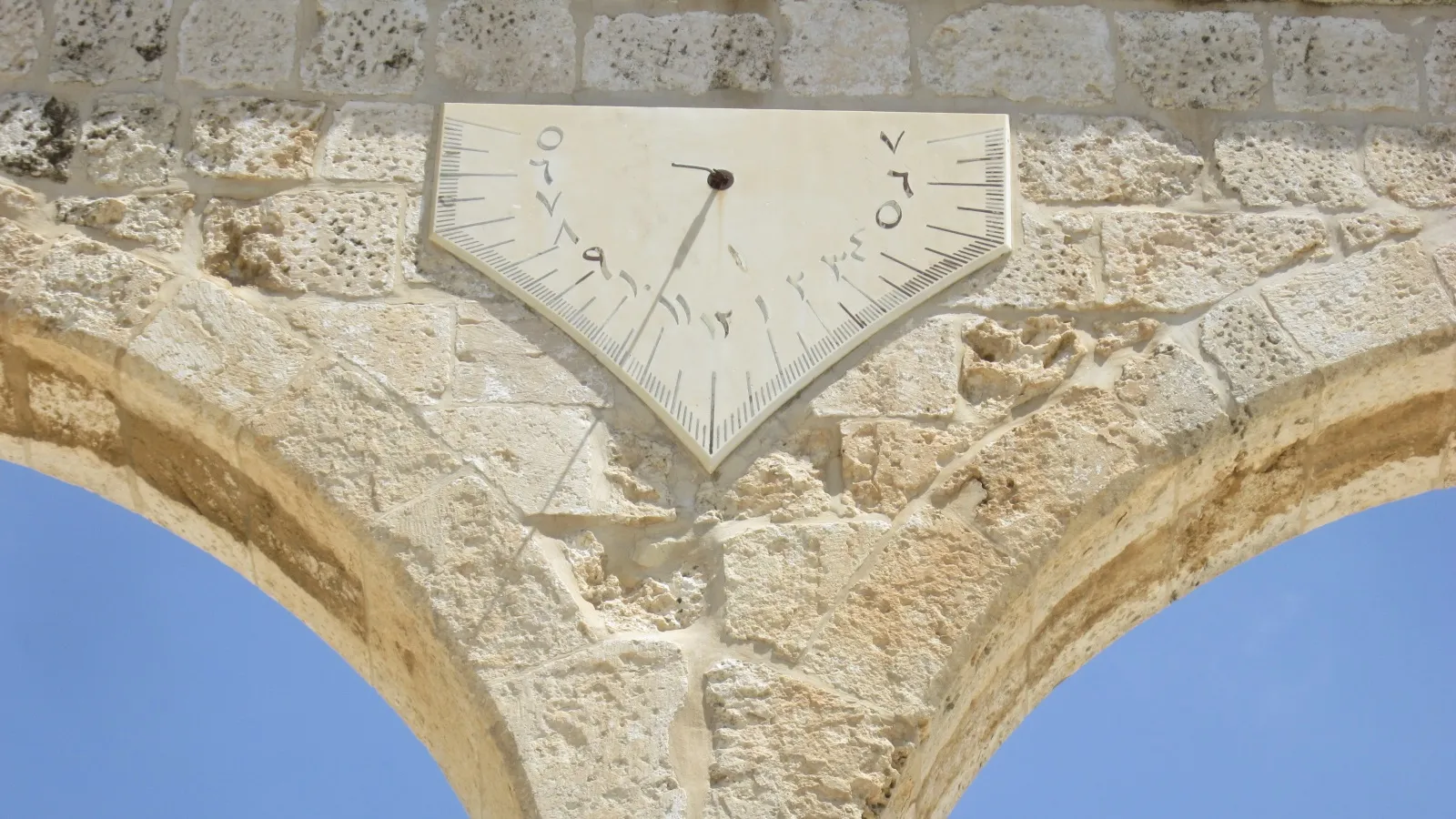
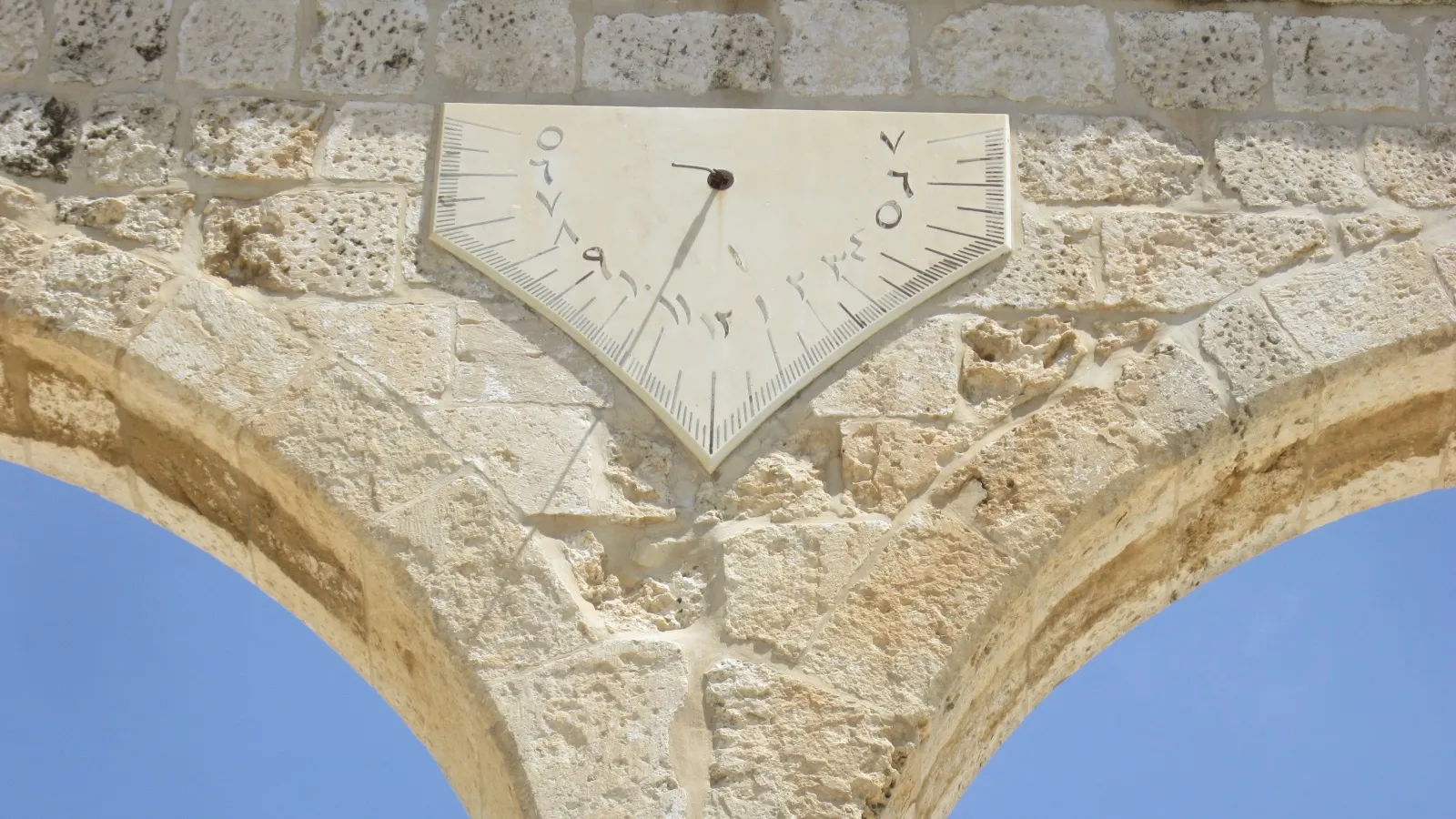
The sundial is carved on a five-sided marble plate of unequal sides, about 100×150 cm, engraved with lines marking the hours of the day; a metal rod about 25 cm long, the gnomon, projects from it and casts its shadow on the lines. The sundial stands about eight metres above the ground. [1]
The arcade wall is turned about 20 degrees from due south, and the gnomon is inclined at an angle equal to the latitude of Jerusalem, so that it points toward the Pole Star. [1]
How does a sundial work?
Sundials are of two kinds: horizontal ones, laid on the ground and read from above, and vertical ones, a rod fixed into a south-facing wall and pointing toward the Pole Star, whose shadow falls on lines drawn on the wall, each marking an hour of the day. The Al-Aqsa sundial is of the vertical kind. [1]
The Earth turns 15 degrees every hour, so the shadow moves across the sundial at almost the same steady pace. But the sundial gives the place’s true solar time, not clock time. [1]
The sundial’s accuracy
Some may think the sundial inaccurate because its time does not match the clock, but the difference is calculated and known. The modern clock assumes a sun moving at constant speed all year, while the real sun runs a little ahead or behind depending on the day of the year; this difference is called the equation of time. [1]
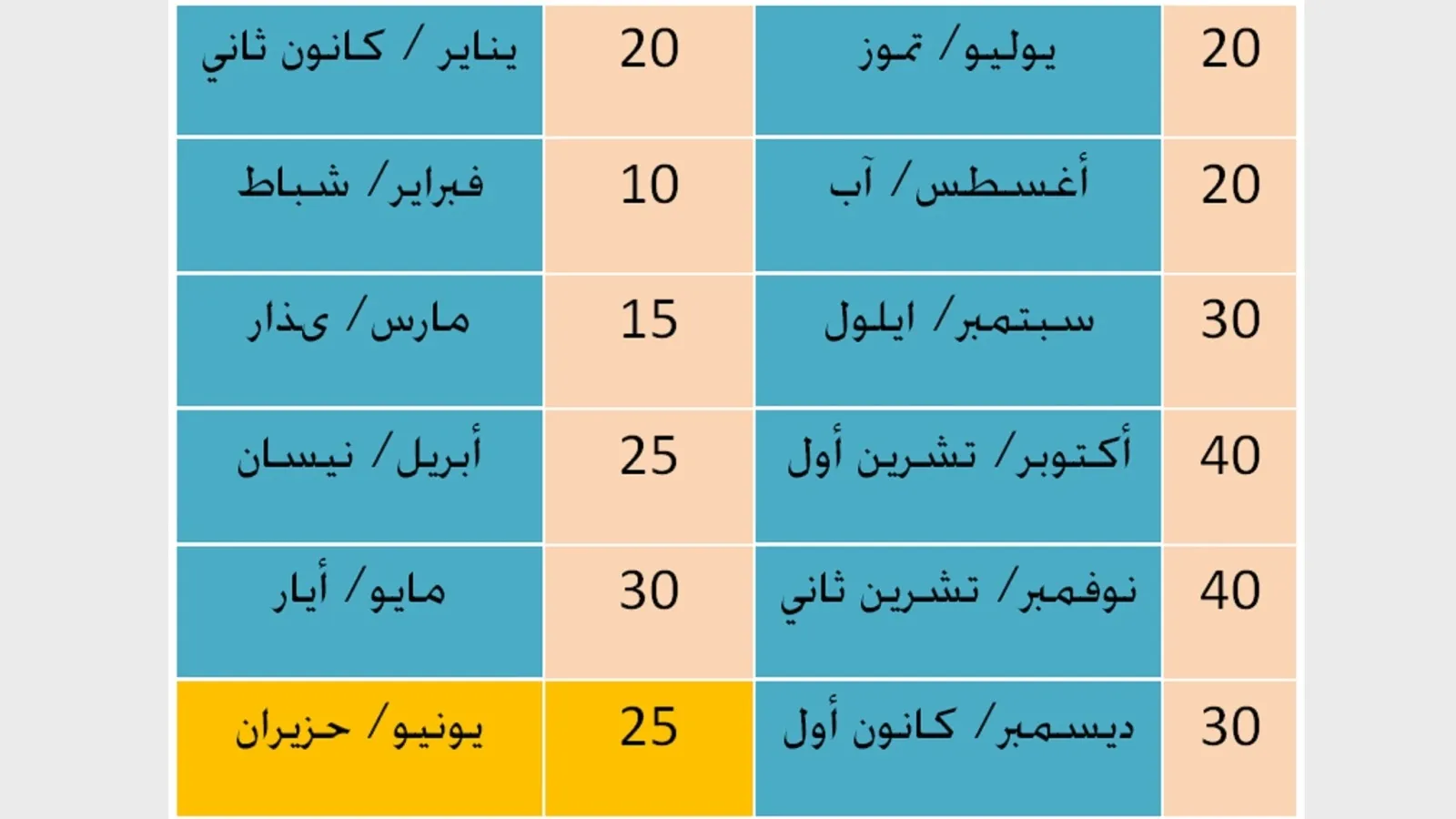
There are two causes for this difference: the Earth’s orbit around the sun is elliptical, so it speeds up when closer to the sun and slows down when farther away, and the Earth’s axis is tilted relative to the plane of its orbit. A second difference is added: clock time is uniform across the whole time zone, while the sundial measures the time of Jerusalem itself. Subtracting these differences from the sundial’s reading, using a monthly table, gives clock time. [1]
According to al-Dhulay’, a study presented in 2015 to a history of science conference in Istanbul proved the precision of the Al-Aqsa sundial’s construction and that it still works today, after examining the gnomon’s tilt and angle, the arcade wall’s orientation and the division of the hour lines, and matching photographs taken at set times with astronomical calculations. [1]
An example: reading the time
The Jerusalemite Ihab Abu Hammam photographed the sundial at 11:10 a.m. on 10 June 2015, when its shadow pointed to 10:35. [1]
| Step | Time |
|---|---|
| Reading of the shadow | 10:35 |
| Subtract 25 minutes, the table value for June | 10:10 (standard time) |
| Add one hour for daylight saving time | 11:10, the time the photo was taken |
Sundials in the Islamic tradition
Muslim timekeepers used sundials to fix the times of the noon and afternoon prayers, and most of them were astronomers or people with astronomical expertise. [1]
Among the most famous was the Damascene astronomer Ala al-Din ibn al-Shatir (1304–1375), chief timekeeper of the Umayyad Mosque, who made a sundial placed on the Minaret of the Bride in the mosque’s courtyard. [1][3]
The sundial under occupation
The sun has not changed its course, and the sundial’s gnomon has not been harmed since it was set in place, but reaching it is no longer possible for every Palestinian. The occupation imposes security permits on West Bank Palestinians to enter Jerusalem, limits the number and age of worshippers, and issues orders banning young Jerusalemites from the mosque, while its excavations beneath and around Al-Aqsa continue, causing cracks in its western and southern walls, according to Al-Aqsa preacher Sheikh Ikrima Sabri. [1][4]
Notes on the information
Year built: the 1927 date rests on a single record in circulation, and we found no other source confirming it. Rushdi al-Imam’s role: Al Jazeera Net describes him as a member of the Supreme Muslim Council, while the Al-Quds University study describes him as an engineer the Council assigned to the restoration work. Latitude: al-Dhulay’ gives the gnomon angle as 31.5 degrees, while Al-Aqsa Mosque lies at a latitude of about 31.8 degrees. The correction table: it combines the equation of time and the longitude difference between Jerusalem and the time-zone meridian, which explains the subtraction of 25 minutes in June. [1][2]
Timeline
| Date | Event |
|---|---|
| 1304–1375 | Ibn al-Shatir, chief timekeeper of the Umayyad Mosque in Damascus [3] |
| 1922–1925 | First restoration of Al-Aqsa, supervised by Rushdi al-Imam and Ahmad Kamal al-Din [2] |
| 1927 | The Al-Aqsa sundial built [1] |
| 10 June 2015 | Ihab Abu Hammam’s photo confirms the sundial’s accuracy [1] |
| 2015 | A study at a history of science conference in Istanbul [1] |
Frequently asked questions about the Al-Aqsa Mosque sundial
Where is the Al-Aqsa Mosque sundial?
Above the southern arcade of the Dome of the Rock platform, on the stairway rising from the Qibli Mosque. [1]
When was it built?
In 1927, according to the only record in circulation. [1]
Who built it?
The Jerusalemite engineer Rushdi al-Imam. [1][2]
Does it still work?
Yes, and it gives the time accurately once the difference between solar and clock time is corrected. [1][5]
Why does the sundial’s time differ from the clock?
Because the sundial gives Jerusalem’s true solar time, while the clock gives an averaged time uniform across the time zone. [1]
Sources and references
- Hani al-Dhulay’, “Read the time from the Al-Aqsa Mosque sundial,” Al Jazeera Net, 14 May 2017 (in Arabic).
- Khalil Ahmad Mahmoud Jamous, “The first restoration of al-Aqsa Mosque under the supervision of the Supreme Muslim Council (1922–1925),” Al-Quds University, 2026 (in Arabic).
- Arabi Post, “Ibn al-Shatir,” 17 October 2022 (in Arabic).
- Al Jazeera Net, “Ikrima Sabri reveals tight restrictions on worshippers and damage from excavations in the Al-Aqsa courtyards,” 19 February 2026 (in Arabic).
- Habib Mayabi, “The science of timekeeping and the watch: a story of Islamic civilisation’s creativity,” Al Jazeera Net, 16 June 2019 (in Arabic).
More from the archive
 Article
The Ma'alot–Tarshiha Operation 1974 | DFLP Fedayeen on the Nakba Anniversary on Tarshiha's Depopulated Land
 Article
Operation Dispelled Illusion 2006: The Kerem Shalom Tunnel and Shalit's Capture to the Wafa al-Ahrar Exchange
 Article
The Zuqaq al-Mawt Operation 2002: The al-Quds Brigades' Ambush in Wadi al-Nasara, Hebron
 Download Our Palestine App
The whole archive in the palm of your hand: depopulated villages, the Nakba, the massacres and Al-Aqsa — free, with no ads to erase the story.



Comments
No comments yet — be the first to write one.
Add your comment
Name and email are optional. Comments appear after review.