Al-Lajjun Massacre 1948: The Haganah Kills 13 Villagers near Jenin
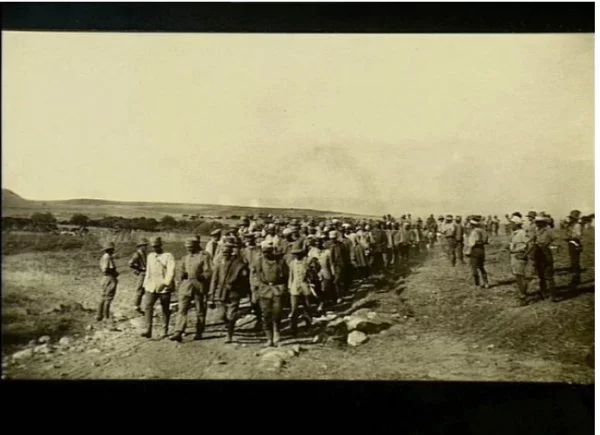
On 13 April 1948 the Zionist Haganah militia attacked the village of al-Lajjun in the Jenin district, at the entrance to Wadi Ara, killing 13 of its people and blowing up buildings in the village and nearby villages. Occupation forces returned to seize the village for good at dawn on 30 May 1948, expelled its people, and built Kibbutz “Megiddo” on its land. [1] [2] [3]
The al-Lajjun massacre came during the Zionist offensive that accompanied the battle of “Mishmar HaEmek” in April 1948, which targeted the villages of Marj Ibn Amer and drove out their people. It is one of the Zionist massacres against the Palestinian people. [2]
The al-Lajjun massacre at a glance
| Item | Details |
|---|---|
| Date | 13 April 1948 [1] [2] |
| Place | The village of al-Lajjun, Jenin district, on the southwestern edge of Marj Ibn Amer [2] |
| Perpetrator | The Haganah [1] |
| Killed | 13 [1]; 12 killed and 15 wounded according to the New York Times [2] |
| Destruction | 27 buildings blown up in al-Lajjun and nearby villages [2] |
| Final occupation | Dawn of 30 May 1948, by the Golani Brigade [2] [3] |
| Fate of the people | Expelled, most of them to Umm al-Fahm [4] [3] |
The village of al-Lajjun
Al-Lajjun was a Palestinian village on a low hill at the southwestern edge of Marj Ibn Amer, on both banks of Wadi al-Lajjun, near the junction of the Jenin–Haifa road and the road to Umm al-Fahm. [2] It lies about 16 kilometres northwest of Jenin; its name goes back to the Roman legion camp “Legio,” and it was a district seat in Ottoman times. [3]
Its population was 857 in 1931 and rose to 1,103 by the 1944/45 estimates, after people from Umm al-Fahm moved there to escape British persecution during the 1936–1939 revolt. [2]
Al-Lajjun was a thriving village:
- Six grain mills, driven by the water of springs and wadis. [2]
- A bus company founded by a man from Umm al-Fahm, which had seven buses in 1937 serving Umm al-Fahm, Haifa and Zir’in; it was later licensed for the Jenin route and renamed the “al-Lajjun Bus Company.” [2]
- A school founded in 1937, with 83 pupils in 1944. [2]
- A health centre and two mosques built in the early 1940s. [2]
The massacre: 13 April 1948
In April 1948, during the fighting around the settlement of “Mishmar HaEmek,” the Haganah launched an offensive on the villages of Marj Ibn Amer. On 13 April its forces attacked al-Lajjun, trying to reach the al-Lajjun crossroads and outflank the Arab Liberation Army. [2]
The attack killed 13 villagers. [1] The New York Times reported at the time that 12 were killed and 15 wounded in this offensive, and that the Haganah blew up 27 buildings in al-Lajjun and nearby villages. [2]
The occupation and depopulation of the village
According to New York Times reports, the village was occupied on 17 April and its women and children were removed; the paper called it “the most important place taken by the Jews” in that offensive. Yet the Arab Liberation Army commander reported that the 13 April attack failed, and the Army repelled a new Haganah attack on 6 May. [2]
At dawn on 30 May 1948 the Golani Brigade entered and finally occupied the village, and its Fourth Battalion likely expelled the villagers directly. [2] The village was destroyed, and most of its people took refuge in nearby Umm al-Fahm. [3] [4] During the second truce, in September 1948, the armistice line was fixed at al-Lajjun. [2]
Many of al-Lajjun’s people remained inside the territories occupied in 1948, but the occupation classed them as “present absentees,” barred them from returning to their village, and seized their land under the “Absentees’ Property Law.” [4]
Al-Lajjun today
In 1949 Kibbutz “Yosef Kaplan,” later renamed “Megiddo,” was established on the lands of Palestinian villages including al-Lajjun. [2] [3] All that remains of the village is the white stone mosque, turned into a carpentry workshop, a deserted mill, the health centre, and a few partly destroyed houses, one of them used as a chicken coop. The site is fenced and entry is barred. [2]
The village cemetery lies neglected; it holds the grave of Yusuf al-Hamdan, killed in the 1936 revolt. [2] In April 2019 residents found that a grave in the cemetery had been dug up and its stones smashed. [3] In 2024 Israeli plans emerged to “develop tourism” in al-Lajjun and 13 other depopulated villages in the al-Rawha region, which the people of Umm al-Fahm see as aimed at Judaizing the land and blocking any precedent for refugee return. A memorial plaque in al-Lajjun bearing the names of the martyrs of the 1936–1939 revolt was stolen. [4]
Conclusion
Al-Lajjun was a living village, with its mills, buses and school, until the Haganah attacked it on 13 April 1948, killing 13 of its people and blowing up its homes. Seven weeks later the Golani Brigade occupied it and drove its people to Umm al-Fahm, within sight of land they are still barred from returning to, while the occupation goes on erasing what remains of it.
Frequently asked questions about the al-Lajjun massacre
When did the al-Lajjun massacre take place?
It took place on 13 April 1948.
Who carried out the al-Lajjun massacre?
It was carried out by the Zionist Haganah militia, as part of its offensive on the villages of Marj Ibn Amer during the battle of “Mishmar HaEmek.”
How many people were killed in the al-Lajjun massacre?
Thirteen according to the Al Jazeera Net list, while the New York Times reported 12 killed and 15 wounded at the time.
When was al-Lajjun occupied?
The Golani Brigade finally occupied it at dawn on 30 May 1948 and expelled its people.
Where do the people of al-Lajjun live today?
Most took refuge in nearby Umm al-Fahm, and they are still barred from returning to their village.
Sources and references
Arabic-language sources are listed with translated titles.
- “Israeli Massacres against the Palestinian People,” Al Jazeera Net, 3 October 2004.
- “Al-Lajjun,” Interactive Encyclopedia of the Palestine Question, Institute for Palestine Studies.
- “Get to Know the Village of al-Lajjun in Palestine after Its Islamic Cemetery Was Dug Up,” Youm7, 15 April 2019.
- “Defending History: ’48 Palestinians Fight against Judaization of Ethnically Cleansed Nakba Villages,” The New Arab, 13 August 2024.
More from the archive
 Download Our Palestine App
The whole archive in the palm of your hand: depopulated villages, the Nakba, the massacres and Al-Aqsa — free, with no ads to erase the story.
Comments
No comments yet — be the first to write one.
Add your comment
Name and email are optional. Comments appear after review.