
Tiberias Massacre
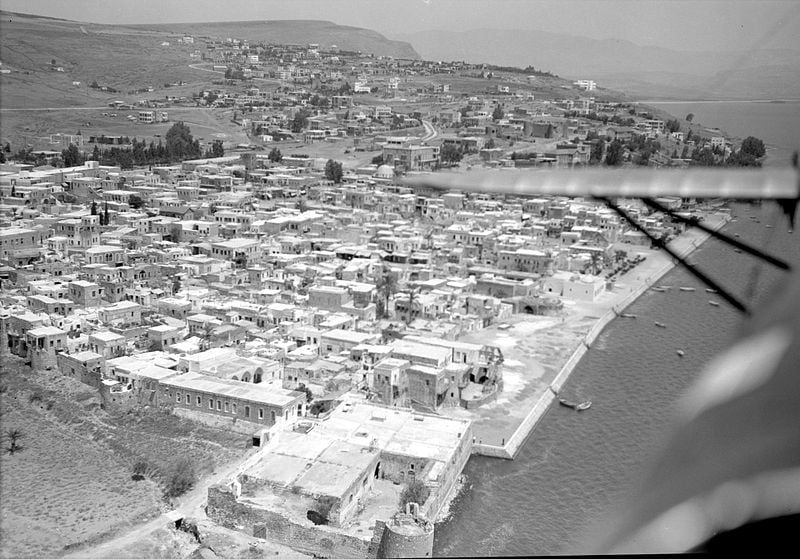
On 16 April 1948, two days before the fall of Tiberias, a Haganah force attacked a house in the city’s Arab quarter, killing 14 Palestinian civilians, among them children. That massacre was the opening salvo of the final battle for Tiberias, which ended two days later with the removal of all its Arab inhabitants, more than five thousand people, in a single day. [1]
Circulating Palestinian lists record this massacre under the date of 19 April 1948, stating that Zionist gangs blew up a house in Tiberias, killing 14 of its residents. [2] [3] This article tells the story of the massacre and its context in the last days of Arab Tiberias, and clarifies the dispute over its date.
The Tiberias massacre at a glance
| Item | Details |
|---|---|
| Date | 16 April 1948; circulating lists date it to 19 April [1] [2] [3] |
| Place | A house in the Arab quarter of the city of Tiberias [1] |
| Perpetrator | The Yavniel platoon of the Haganah’s Barak (Golani) Brigade [1] |
| Killed | 14 civilians, including children [1] [2] [3] |
| Pretext | Intelligence that an “Arab meeting” was to be held in the house [1] |
| Aftermath | The attack on the Old City on 17 April, and the fall of Tiberias and the expulsion of its Arab inhabitants on 18 April 1948 [1] |
From the March agreement to the siege
After a shooting incident on 8 March 1948, the city’s British commander, Colonel Anderson, mediated a “Tiberias Agreement” between the two sides, which provided that residents would continue their normal lives and contacts and that defense forces would stay in their positions and avoid clashes. But the local Jewish leadership, as historian Mustafa Abbasi argues, treated the agreement as a temporary, tactical step. [1]
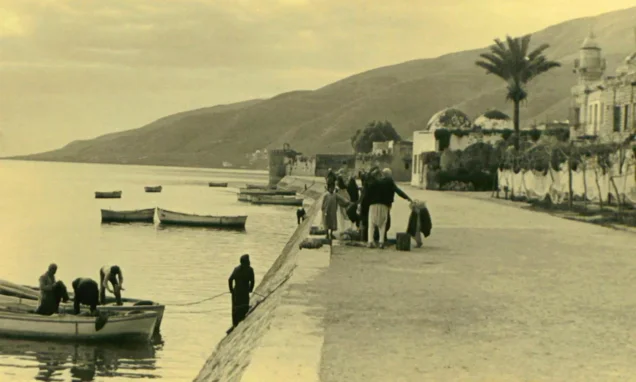
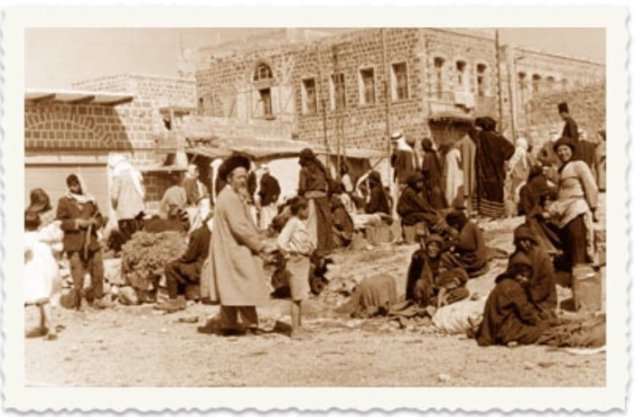
In early April the Arab fighters in the city were few and poorly armed: some 50 fighters had only rifles and little ammunition, and around 10 April a national committee was formed and Kamil al-Tabari took command of about a hundred fighters. [4] On 12 April the Haganah declared a general mobilization in Tiberias. [4]
On 13 April Colonel Anderson ordered Jewish forces out of the Old City and threatened to shell it; they ignored the order and the British backed down. On 15 April the British withdrew their forces from the Jub al-Ban neighborhood, leaving the Arab inhabitants without protection. [1]
Nasir al-Din: the massacre that came first
Khirbat Nasir al-Din was a small village on a hilltop overlooking Tiberias and its lake, about 3 kilometers southwest of the city. [5] On 12 April 1948 the same Yavniel platoon attacked it, on the pretext of blocking Arab reinforcements from reaching Tiberias, then blew up some of its houses and burned the rest. [1]
Sources differ over the number killed: 12, including women and children, according to the Arab sources cited by Abbasi; [1] 7 named victims according to testimonies collected by historian Nafez Nazzal; and 10 according to Aref al-Aref. [5] The WAFA list gives two accounts, one of which says a force disguised in Arab dress entered the village on 14 April and killed 50 of its inhabitants. [3]
The survivors of Nasir al-Din carried news of what had happened to Tiberias, and panic spread through the city. [1]
The massacre: 16 April 1948
On 16 April 1948 the Yavniel platoon of the Haganah’s Barak (Golani) Brigade attacked a house in the Arab quarter of Tiberias, acting on intelligence that an “Arab meeting” was to be held there, and killed 14 civilians, among them children. [1] Palestinian lists state that the house was blown up with the people inside. [2] [3]
Abbasi describes this attack as the “opening salvo” of the final stage of the battle for Tiberias. The British sent two armored cars into the area under attack, but withdrew them the next day, opening the way for the general Jewish offensive. [1]
16 or 19 April?
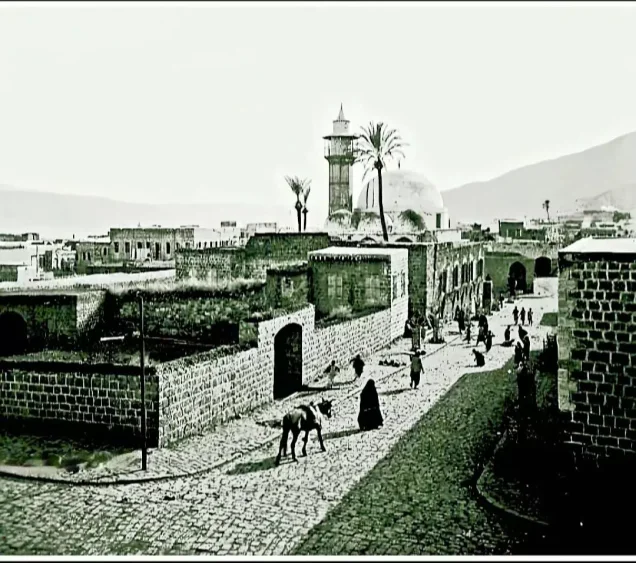
The Al Jazeera Net list of Israeli massacres, along with the list of the Palestinian National Information Center, dates the Tiberias massacre to 19 April 1948. [2] [3] But Tiberias fell on 18 April, and all its Arab inhabitants were removed that day, so by the 19th there were no Arabs left in the city to be killed in their homes. [1]
The matching toll (14 killed) and place (a house in the city) suggest that the incident meant is the 16 April attack detailed in Abbasi’s study, and that 19 April is the date the news was reported rather than the date it happened. This article therefore adopts the date of 16 April 1948.
The fall of Tiberias and the expulsion of its people
At dawn on 17 April, Golani and Palmach forces attacked the Old City, blowing up Arab homes as they advanced. After a brief battle the Arab fighters surrendered. That evening the Arab notables of Tiberias asked for British protection; the British refused and instead offered to help evacuate them. [1]
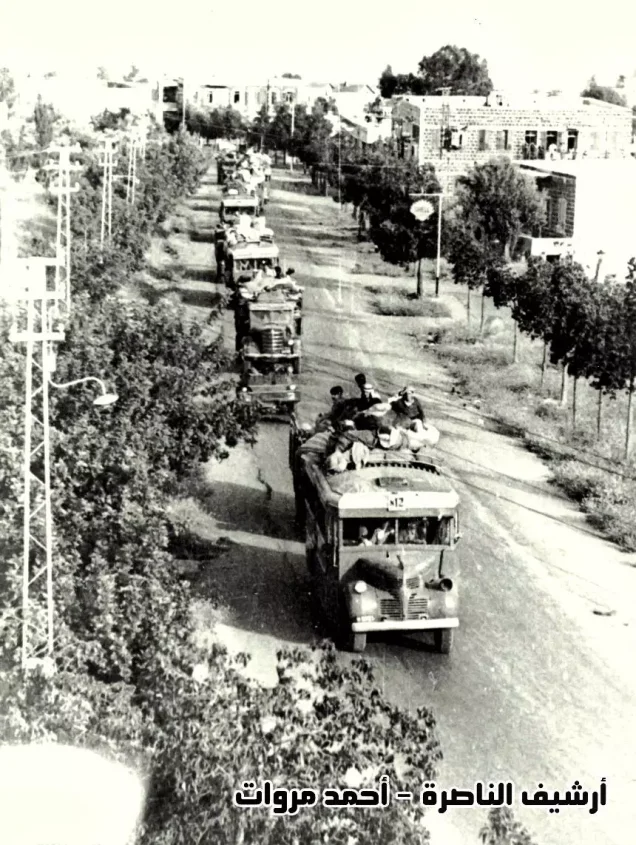
On 18 April the British imposed a curfew from 2 p.m. and sent about twenty empty buses. By 6:35 p.m. the operation was over: all of Tiberias’s Arab inhabitants had been taken to the border with Transjordan at Samakh, with a small minority going to Nazareth. [1] That evening a Haganah report stated: “Tiberias has been cleansed.” [1]
Mawteni 48 relates that some residents fled by boat across the lake and were fired upon, and that King Abdullah sent thirty trucks to carry the women and children. [4]
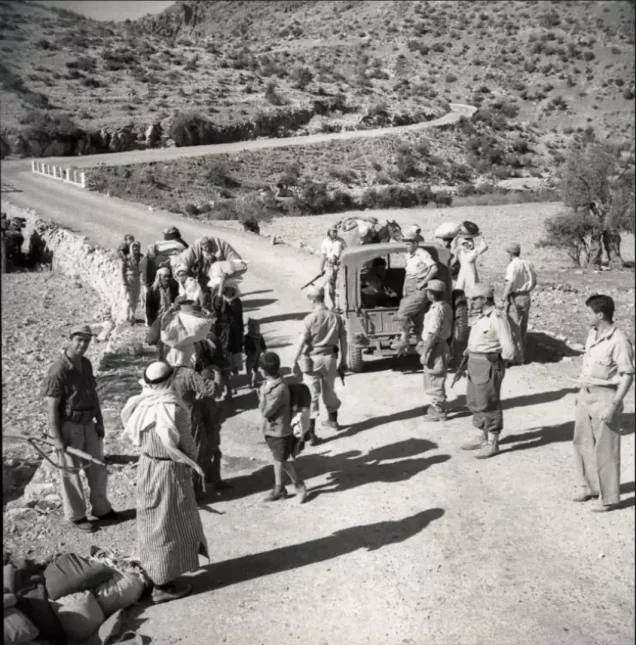
After the expulsion
As soon as the removal was over, reports of looting of Arab property began, and, as Abbasi writes, “the destruction of old Tiberias had begun.” [1] Mawteni 48 states that about 500 Arab houses in the city were demolished. [4]
The people of Tiberias never returned to their city. The villages of its district then fell and were depopulated one after another, among them Lubya, a village about 10.5 kilometers west of Tiberias, most of whose people were driven out on the night of 16 July 1948, and Samakh on the southern shore of the lake, whose people were expelled in late April 1948. [6]
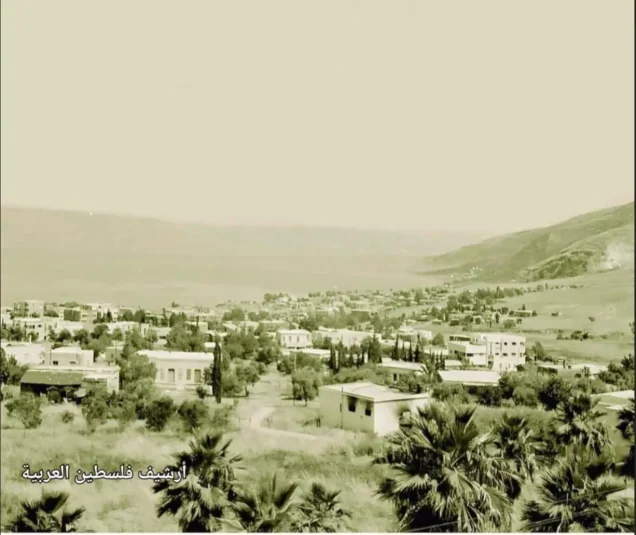
Read about Tiberias and its depopulated villages and the Zionist massacres against the Palestinian people.
Conclusion
The massacre at the house in the Arab quarter of Tiberias was not an isolated incident but the first link in the last three days of Arab Tiberias: 14 civilians killed on 16 April, an attack on the Old City on the 17th, and buses carrying the entire population of the city to the border on the 18th. In less than three days, an Arab presence in the city centuries old came to an end.
Frequently asked questions about the Tiberias massacre
When did the Tiberias massacre take place?
It took place on 16 April 1948 according to historian Mustafa Abbasi’s study; circulating Palestinian lists date it to 19 April 1948.
How many people were killed in the Tiberias massacre?
Fourteen Palestinian civilians were killed, among them children.
Who carried out the Tiberias massacre?
It was carried out by the Yavniel platoon of the Haganah’s Barak (Golani) Brigade, the same platoon that had attacked the village of Nasir al-Din four days earlier.
When did Tiberias fall?
Tiberias fell on 18 April 1948, and all its Arab inhabitants were removed that day by bus to the border with Transjordan at Samakh, with a minority going to Nazareth.
Sources and references
Arabic-language sources are listed with translated titles.
- Mustafa Abbasi, “The End of Arab Tiberias: The Arabs of Tiberias and the Battle for the City in 1948,” Journal of Palestine Studies 37, no. 3 (Spring 2008): 6–29.
- “Israeli Massacres against the Palestinian People,” Al Jazeera Net, 3 October 2004.
- “Israeli Massacres,” Palestinian National Information Center (WAFA).
- Saher Ghazzawi, “The Day Tiberias Was Occupied,” Mawteni 48, 23 May 2020.
- “Khirbat Nasir al-Din,” Palestinina.
- “Tiberias,” Depopulated Villages section, Palestinina.
More from the archive


 Download Our Palestine App
The whole archive in the palm of your hand: depopulated villages, the Nakba, the massacres and Al-Aqsa — free, with no ads to erase the story.



Comments
No comments yet — be the first to write one.
Add your comment
Name and email are optional. Comments appear after review.