
Safad City Massacre
In May 1948 Safad, the largest city of the Upper Galilee, fell to Palmach forces after two weeks of shelling and fighting. Palestinian lists record that the “Haganah” slaughtered about 70 of the city’s young men in Safad, while about a hundred of its sons were killed defending it, and its Arab population, some ten thousand people, was driven out, leaving only a few dozen elderly people who were expelled weeks later. [1] [2] [3] [4]
This article tells the story of the Safad massacre and the fall of the city: from the siege of the Jewish quarter, to the Ein al-Zeitun massacre at Safad’s gates, to the final assault and the expulsion of its people, and clarifies the differences between sources over the date and victims of the massacre.
The Safad massacre at a glance
| Item | Details |
|---|---|
| Date in Palestinian lists | 13 May 1948 [1] [2] |
| Fall of the city | 10–11 May 1948 [3] [4] |
| Perpetrator | The Palmach, the Haganah’s strike force, in “Operation Yiftach” under Yigal Allon [3] [4] |
| Victims according to the lists | About 70 of the city’s young men [1] [2] |
| Killed defending the city | About 100, with dozens wounded and prisoners held until the armistice agreements [3] |
| Related massacre | About 70 prisoners executed in the valley between Ein al-Zeitun and Safad after 1 May 1948 [5] [6] |
| Expulsion | About 10,000–12,000 Arabs; only about a hundred elderly Muslims and 34–36 elderly Christians remained, and they were later expelled [4] |
Safad on the eve of the Nakba
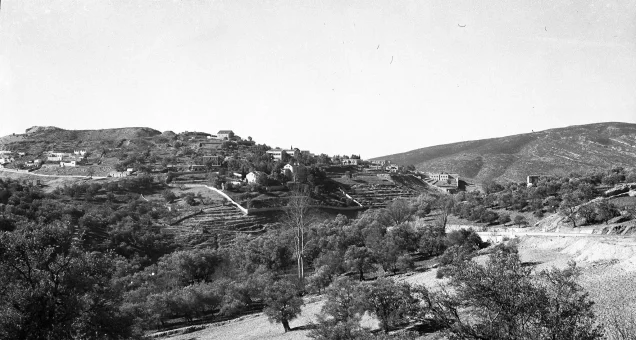
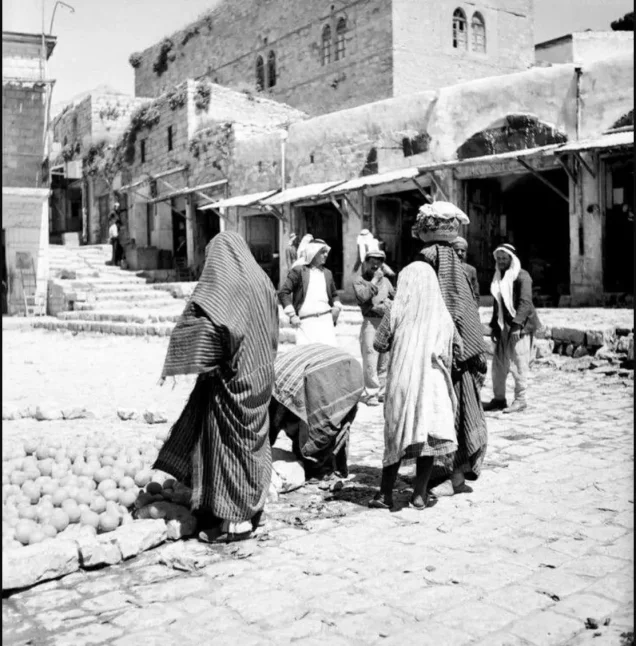
Safad was the city of the Upper Galilee and the center of its district. In 1947 it had about 13,500 inhabitants, of whom about 2,600 were Jews, most of them in the Jewish quarter, while Arabs were the majority of its population. [3] With its elevated position overlooking the Galilee, Safad was of strategic importance to both sides; Yigal Allon, commander of the Palmach forces, described Safad’s Arabs as the main obstacle to control of the Upper Galilee. [3]
The defenders of Safad
Local fighter Fayez Qaddoura organized the armed men in Safad; then, in early January 1948, Syrian officer Ihsan Almaz arrived, trained the volunteers and imposed a siege on the Jewish quarter. On 15 April the Jordanian officers Emile Jumean and Sari Fnaish arrived, and the next day a Syrian company of about 80 men. [3]
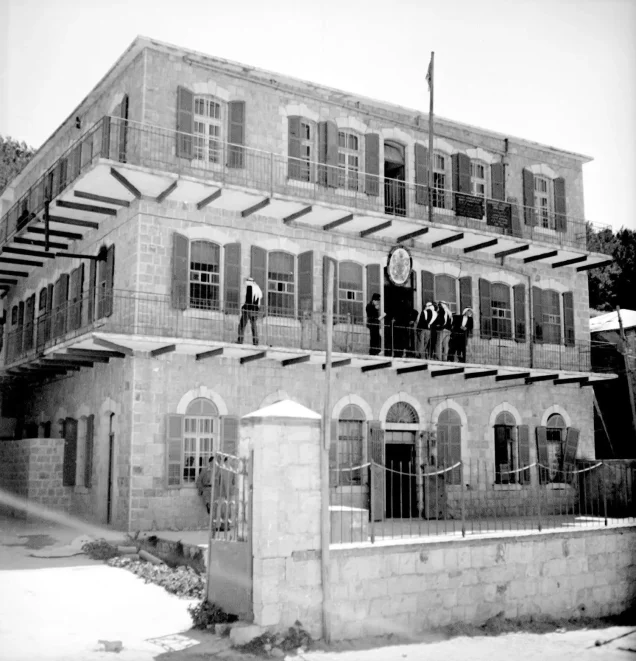
On 15 April the Arab volunteers entered the British police station and the Fouad al-Khouli building on the line between the Arab and Jewish quarters, and the British withdrew from the city in late April. But disputes among the officers split the townspeople; Almaz was removed, and Adib Shishakli took overall command after another Arab Liberation Army company arrived. [3]
Ein al-Zeitun: the massacre at Safad’s gates
On 1 May 1948 Palmach forces occupied the villages of Ein al-Zeitun and Biriya, each about a kilometer and a half from Safad. [6] [7] The siege of the Jewish quarter was broken and turned against the Arab neighborhoods. [3]
In the following days dozens of prisoners from Ein al-Zeitun were executed in a valley between the village and Safad, after being left bound for two days, on the orders of the commander of the Palmach’s Third Battalion, Moshe Kelman. [5] The number killed is estimated at about 70, and 37 young men selected from the village’s men and taken prisoner were probably among them. [6] [8] The WAFA list states that 70 were killed with their hands bound. [1]
The people of Safad watched the destruction of Ein al-Zeitun from the nearby hills, and their morale collapsed; the massacre was a prelude to the fall of the city. [5]
The fall of Safad: 10–11 May 1948
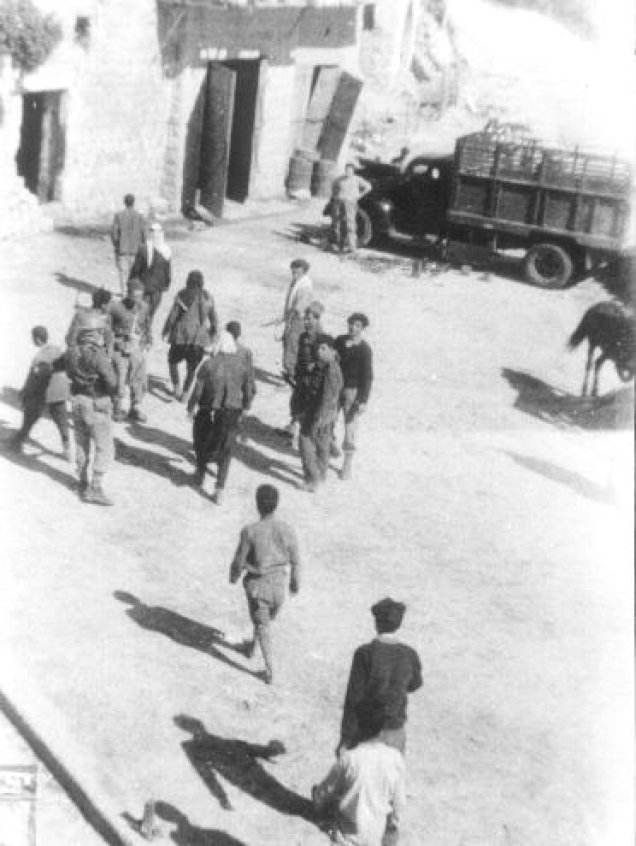
On 6 May 1948 the Palmach launched its first assault on Safad but failed to take the citadel. [4] On 7 May Arab Liberation Army artillery shelled the Jewish quarter, and a Jewish counterattack failed on 8 May. [3]
Then came the decisive assault on the night of 9–10 May, preceded by heavy mortar fire, including the “Davidka” mortar, used more to terrify the population with the noise of its blast than for its accuracy. [4] The Arab Liberation Army companies withdrew from the Arab city on the first day of the assault, leaving only dozens of local fighters and some volunteers who held out in the citadel “to their last breath.” By the end of 11 May Jewish forces had taken control of the Arab city. [3]
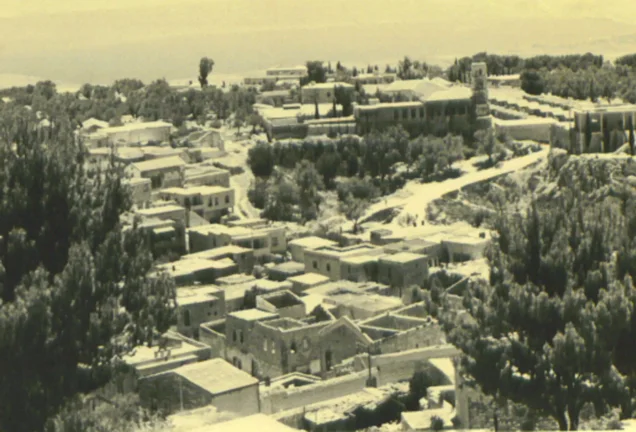
The Safad massacre: what do the sources say?
The lists of the Palestinian National Information Center and Al Jazeera Net record that on 13 May 1948 the “Haganah” attacked the city of Safad and slaughtered about 70 of the city’s young men. [1] [2]
But parts of this account need clarification:
- The date: Safad fell on 10–11 May, so the date of 13 May comes two days after its fall. [3] [4]
- The perpetrator: the attacker was the Palmach, the Haganah’s strike force, in “Operation Yiftach.” [3] [4]
- The figure: we found no source describing the execution of 70 young men inside Safad on 13 May. The figure itself, 70, matches the number of prisoners executed in the valley between Ein al-Zeitun and Safad, and both lists also record the Ein al-Zeitun massacre with the same figure. [1] [2] [5]
Most likely, then, the lists recorded the same victims twice: once under the name of Ein al-Zeitun, and once under the name of Safad, since the executions took place in a valley at the city’s gates. This is supported by the fact that, according to Wikipedia, the prisoners were executed “in a valley near Safad.” [4]
As for the toll in Safad itself, historian Mustafa Kabha records about a hundred killed defending the city and dozens wounded, and states that a number of its young men were taken prisoner and held until the armistice agreements were signed. [3]
The expulsion of Safad’s people
Safad’s Arab inhabitants were driven out under heavy fire before Jewish forces entered the city. [3] Before the war Safad had between 10,000 and 12,000 Arabs; after its fall only about a hundred Muslims, with an average age of 80, and 34–36 elderly Christians remained. The Muslims among them were expelled to Lebanon in late May or early June, and the Christians were taken by truck to Haifa on 13 June 1948. [4]
The depopulation of the villages of the Safad district followed; it is the district with the largest number of depopulated villages on Palestinina. [9]
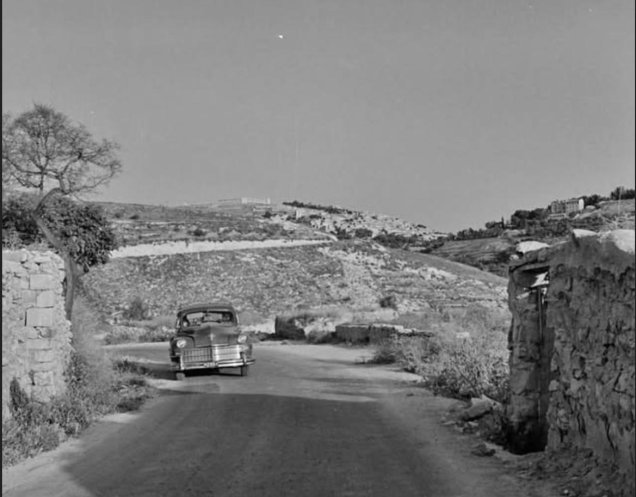
Read about Safad and its depopulated villages and the Zionist massacres against the Palestinian people.
Conclusion
In less than two weeks, from the occupation of Ein al-Zeitun on 1 May to the fall of the citadel on 11 May 1948, Arab Safad came to an end: bound prisoners executed in a valley at its gates, a hundred killed defending it, ten thousand of its people driven out under bombardment, and a few dozen elderly people expelled after them. The lists may differ over the exact date and place of the massacre, but they agree that Safad paid with the blood of its young men before it was emptied of its people.
Frequently asked questions about the Safad massacre
When did the Safad massacre take place?
Palestinian lists date it to 13 May 1948, but Safad fell on 10–11 May 1948, and the related executions took place in the valley between Ein al-Zeitun and Safad in the days after 1 May.
How many people were killed in the Safad massacre?
Palestinian lists give about 70 young men, the same figure as the Ein al-Zeitun prisoners executed near Safad. Historian Mustafa Kabha records about 100 killed defending the city.
Who occupied Safad in 1948?
It was occupied by Palmach forces, the Haganah’s strike force, in “Operation Yiftach” under Yigal Allon.
When did Safad fall?
Safad fell on 10–11 May 1948, after an assault that began on the night of 9–10 May.
How many people were expelled from Safad?
About 10,000–12,000 Arabs were driven out of Safad; only about a hundred elderly Muslims and 34–36 elderly Christians remained, and they too were expelled in late May and June 1948.
Sources and references
Arabic-language sources are listed with translated titles.
- “Israeli Massacres,” Palestinian National Information Center (WAFA).
- “Israeli Massacres against the Palestinian People,” Al Jazeera Net, 3 October 2004.
- Mustafa Kabha, “Safad and the Story of Its Fall in 1948,” Arab48, 29 September 2008 (republished on Palestine Remembered).
- “Operation Yiftach,” English Wikipedia (for comparison).
- Ali Saadeh, “70 Palestinian Prisoners Executed in the Ein al-Zeitun Massacre,” Arabi21, 3 May 2021.
- “Ein al-Zeitun,” Palestinina.
- “Biriya,” Palestinina.
- “Ein al-Zeitun massacre,” English Wikipedia (for comparison).
- “Safad,” Depopulated Villages section, Palestinina.
More from the archive
 Download Our Palestine App
The whole archive in the palm of your hand: depopulated villages, the Nakba, the massacres and Al-Aqsa — free, with no ads to erase the story.



Comments
No comments yet — be the first to write one.
Add your comment
Name and email are optional. Comments appear after review.