
Al-Abasiya Massacre
On 13 December 1947, two weeks after the partition resolution, 24 members of the Zionist Irgun gang stormed the village of al-Abbasiyya east of Jaffa, disguised as British soldiers. They opened fire on villagers sitting outside the village café, blew up several houses and planted time bombs in others. Seven Palestinians were killed in the attack, among them two women and two children; two of the wounded later died, bringing the toll to 9. [1] [2] [3]
This article tells the story of the al-Abbasiyya massacre: the village and its people, the details of the attack, its context in the wave of Irgun attacks after the partition resolution, and what became of the village until its people were driven out in 1948.
The al-Abbasiyya massacre at a glance
| Item | Details |
|---|---|
| Date | Saturday, 13 December 1947 [1] [2] |
| Place | The village of al-Abbasiyya, about 13 kilometers east of Jaffa [4] |
| Perpetrator | The Irgun, with a force of 24 men disguised as British soldiers [1] [3] |
| Method | Gunfire on villagers outside the village café, houses blown up, time bombs planted [1] [2] |
| Killed | 7 in the attack, among them two women and two children; two of the wounded later died, bringing the total to 9 [1] [3] [2] |
| Wounded | 7 seriously, and 5 more in the following days by exploding time bombs [1] |
| Fate of the village | Occupied by the Irgun on 4 May 1948; fell for good on 10 July 1948 [4] |
Al-Abbasiyya: the village and its people
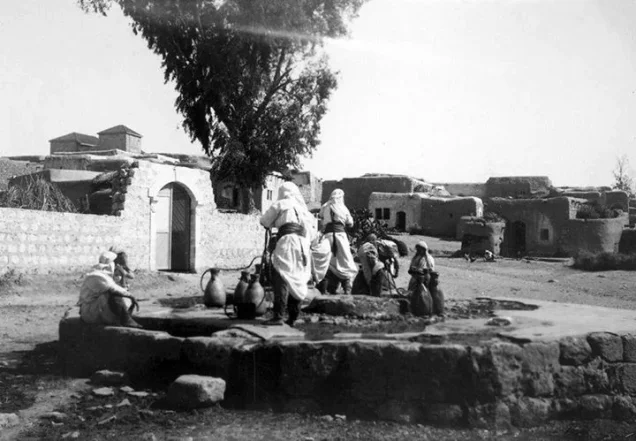
al-Abbasiyya, formerly known as “al-Yahudiyya,” was a Palestinian village in the Jaffa district, on flat land in the central coastal plain, about 13 kilometers east of the city of Jaffa. [4] Roads linked it to Jaffa, Lydda and Ramla, and the Jaffa–Lydda railway ran south of it. [5]
It was one of the largest villages in the district, with an Arab population of 5,650 in 1945. [4] Its people belonged to five clans, the Hamidat, Dalalsha, Battanja, Manasra and Masarwa, each with its own mukhtar. The village had a boys’ school opened in 1919, which became an intermediate school in 1941 with fourteen teachers and 293 pupils, and a girls’ school opened in 1943. [5] Al-Abbasiyya was known for its mat-making, and its mats were sold in the markets of Jaffa. [4]

Context: after the partition resolution
On 29 November 1947 the United Nations adopted the resolution to partition Palestine, and the country erupted. In the following weeks the Irgun escalated its attacks on Palestinian civilians in cities and villages. On the same day al-Abbasiyya was attacked, 13 December 1947, the Irgun carried out two other attacks: two bombs at Damascus Gate in Jerusalem that killed 5 and wounded 47, and bombs outside the Alhambra Cinema that killed 6 and wounded 25. [3]
The massacre: 13 December 1947
On Saturday, 13 December 1947, an Irgun force stormed al-Abbasiyya, coming from the direction of the settlement of Petah Tikva in four vehicles. Its members, 24 in all, were disguised as British soldiers. [3] [5]
The attackers began by opening fire on villagers sitting outside the village café, then threw hand grenades, blew up several houses and planted time bombs in others. [1] [2] [3]
British forces reached the village after the attack but did not intervene. They only partially surrounded the village, leaving the attackers an open route to withdraw northward. [1] [2]
The massacre did not end with the attackers’ withdrawal: in the following days the time bombs they had planted in the houses exploded, wounding 5 more people. [1]
The dead: 7 or 9?
Some sources say the attack left 7 dead, others 9, and both figures are correct. Seven Palestinians were killed in the attack itself, among them two women and two children aged three and four, and 7 others were seriously wounded. [3] Two of the wounded then died, a five-year-old boy and his twenty-year-old mother, [1] [2] bringing the toll to 9, the figure given in other lists. [2]
From massacre to expulsion
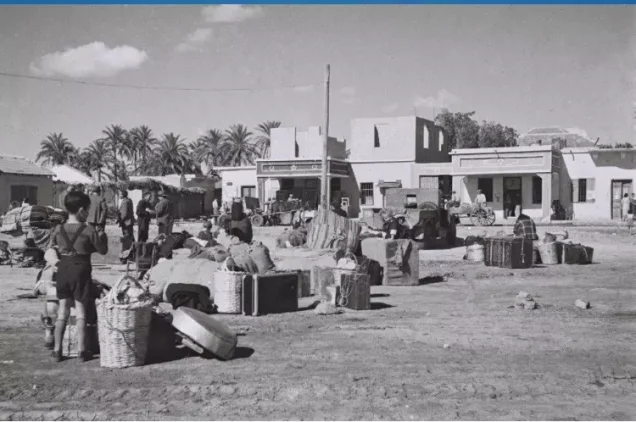
The December massacre was not the last al-Abbasiyya would see. On the night of 3 May 1948 the Irgun attacked the village and occupied it on 4 May, and most of its people were most likely driven out in that attack. [4] [5] Arab forces then retook it before the first truce on 11 June, and fighting continued around it until it fell for good on 10 July 1948 during “Operation Dani” to seize Lydda and Ramla. [4] [5]
Al-Abbasiyya today
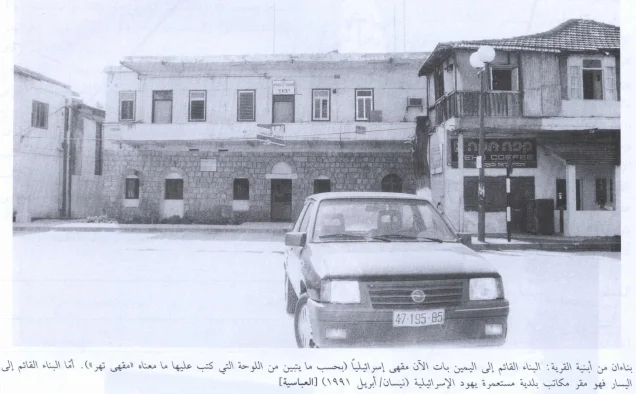
The settlement of Yehud was established on al-Abbasiyya’s land in 1948, followed by other settlements in later years, and part of Lydda airport (Ben Gurion Airport) was built on its lands. [5] Some of the village’s houses still stand, lived in by settlers or used for other purposes, while its main mosque stands abandoned and cracked. [5]
Read about Jaffa and its depopulated villages and the Zionist massacres against the Palestinian people.
Conclusion
The al-Abbasiyya massacre came in the first days after the partition resolution and was among the first attacks on Palestinian villages in that period: gunmen disguised as British soldiers, bullets fired at café patrons, and time bombs that kept exploding in homes for days after the attackers had left. Less than five months later the same Irgun returned to the village, occupied it and drove out its people, and a settlement and an airport now stand on its land.
Frequently asked questions about the al-Abbasiyya massacre
When did the al-Abbasiyya massacre take place?
It took place on Saturday, 13 December 1947, two weeks after the resolution to partition Palestine.
Where is the village of al-Abbasiyya?
Al-Abbasiyya, formerly known as al-Yahudiyya, is a depopulated village in the Jaffa district, about 13 kilometers east of the city of Jaffa.
Who carried out the al-Abbasiyya massacre?
It was carried out by the Zionist Irgun gang, with a force of 24 men disguised as British soldiers.
How many people were killed in the al-Abbasiyya massacre?
Seven were killed in the attack, among them two women and two children; two of the wounded later died, bringing the toll to 9.
When were the people of al-Abbasiyya expelled?
The Irgun occupied the village on 4 May 1948, when most of its people were most likely driven out, and it fell for good on 10 July 1948.
Sources and references
Arabic-language sources are listed with translated titles.
- “For Those Who Forgot the Massacres in Jaffa in 1948,” Yaffa 48, 9 May 2011.
- “Israeli Massacres,” Palestinian National Information Center (WAFA).
- “List of Irgun attacks,” English Wikipedia (for comparison).
- “al-Abbasiyya,” Palestinina.
- “The Village of al-Abbasiyya, Jaffa District: A Historical Overview,” Yafa blog (2019).
More from the archive
 Download Our Palestine App
The whole archive in the palm of your hand: depopulated villages, the Nakba, the massacres and Al-Aqsa — free, with no ads to erase the story.



Comments
No comments yet — be the first to write one.
Add your comment
Name and email are optional. Comments appear after review.