
The Acre Clock Tower

The Acre Clock Tower: The Ottoman Tower above Khan al-Umdan
The Acre Clock Tower is an Ottoman tower of a ground floor and four upper storeys rising above the entrance to Khan al-Umdan, the largest caravanserai in Acre, built by the governor Ahmad Pasha al-Jazzar in 1784 near the port. The tower was built in 1901, one of the clock towers the Ottomans raised in the cities of Palestine to mark the 25th anniversary of Sultan Abdul Hamid II's accession. It became one of the landmarks of Acre's Old City, a UNESCO World Heritage Site. The khan beneath it carries the story of a city most of whose people were expelled in 1948, and of an Islamic waqf "neither to be sold nor bought" that Israeli bodies have tried to seize. This guide covers the history of the tower and the khan and the story of their city.
Quick facts
| Arabic name | برج الساعة – عكا |
|---|---|
| Location | Above the entrance to Khan al-Umdan, southern Old City near the port |
| Built | 1901 CE |
| Period | Ottoman, under Sultan Abdul Hamid II |
| Occasion | 25th anniversary of Sultan Abdul Hamid II's accession |
| Storeys | Ground floor and four upper storeys |
| Clocks | Replaced with electric clocks in 2001 |
| The khan | Khan al-Umdan, built by Ahmad Pasha al-Jazzar in 1784 |
| Khan status | Islamic waqf of two floors and 48 rooms |
| World Heritage | Old City of Acre on the UNESCO list since 2001 |
Location
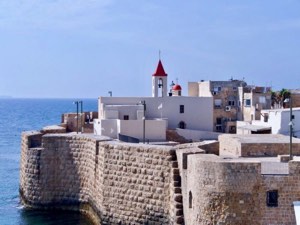
The tower rises above the entrance to Khan al-Umdan in the southern part of the Old City of Acre, near its historic port. Khan al-Shuna lies to the west of the khan and the Bab al-Bahr tower to its south. Overlooking the port and the sea walls, the tower has become a defining feature of Acre's skyline from the sea.
The tower: history and architecture
The tower was built in 1901 as part of the campaign of clock towers the Ottomans raised in the cities of Palestine, most of them for the 25th anniversary of Sultan Abdul Hamid II's accession, within a policy of modernising cities and promoting trade. Its site was chosen above the entrance to Khan al-Umdan, the heart of commercial life near the port. The tower has a ground floor and four upper storeys, topped by its clocks, which were replaced with electric clocks in 2001.
Khan al-Umdan
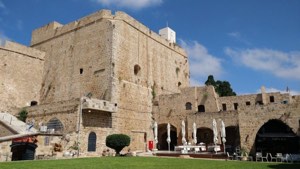
The governor of Acre, Ahmad Pasha al-Jazzar, built Khan al-Umdan in 1784, among his great projects in the city, which included its two walls, his mosque and bathhouse, and bringing water into the city. It was the largest caravanserai in Acre, where merchants arriving by sea lodged and stored their goods. Ottoman records describe the khan as "a waqf neither to be sold nor bought", made up of two floors and 48 rooms. Al-Jazzar endowed it to the charitable complex that later bore his name, and it was registered in the Ottoman land registry under number 642.
Ottoman clock towers in Palestine
The Acre tower was one of several Ottoman clock towers in the cities of Palestine. Others include the Jaffa tower in Clock Square, the Haifa tower opposite al-Jarina Mosque, which survived the demolition of the Old City, the Nablus tower at Bab al-Saha, the Safad tower near the Saraya, and the Jerusalem tower above Bab al-Khalil, which the British Mandate removed in 1922.
Acre and the Nakba
The 1946 census recorded 13,560 inhabitants in Acre, almost all Arab, with no more than 50 Jewish residents. On 17 May 1948 the city fell to Haganah forces and most of its people were expelled, while some remained in the Old City. The property of Palestinian refugees was sold at public auction, the Arabs who remained in the Old City were barred from restoring their homes, and by 2010 they made up only 35% of the city's population.
The tower and the khan today (2026)
The Clock Tower still stands above Khan al-Umdan, one of the landmarks of Acre's Old City, a UNESCO World Heritage Site since 2001. Yet the khan, though a registered Islamic waqf, was among the historic sites the Israeli company Amidar has tried to seize. This is part of wider pressure on the Old City, home to some 5,000 Arabs, including hotel and resort projects and eviction orders against Arab families. For the people of Acre, the tower and the khan remain part of their city's Arab and Islamic identity.
Frequently asked questions
Where is the Acre Clock Tower?
Above the entrance to Khan al-Umdan in the southern part of Acre's Old City, near the port.
When was the Acre Clock Tower built?
In 1901, under the Ottoman Sultan Abdul Hamid II, to mark the 25th anniversary of his accession.
Who built Khan al-Umdan?
The governor of Acre, Ahmad Pasha al-Jazzar, in 1784. It is an Islamic waqf of two floors and 48 rooms.
How many storeys does the clock tower have?
A ground floor and four upper storeys. Its clocks were replaced with electric clocks in 2001.
Is the clock tower part of a World Heritage Site?
Yes. It is part of the Old City of Acre, on UNESCO's World Heritage List since 2001.
Conclusion
Above a khan that al-Jazzar built for merchants arriving from the sea, the Ottomans raised a clock that has chimed for Acre for more than a century. The tower still looks over the port and the walls that repelled Napoleon, a witness to an Arab city and to a waqf "neither to be sold nor bought" that its people hold onto in the face of attempts to seize it.
More from the archive
 Download Our Palestine App
The whole archive in the palm of your hand: depopulated villages, the Nakba, the massacres and Al-Aqsa — free, with no ads to erase the story.


Comments
No comments yet — be the first to write one.
Add your comment
Name and email are optional. Comments appear after review.