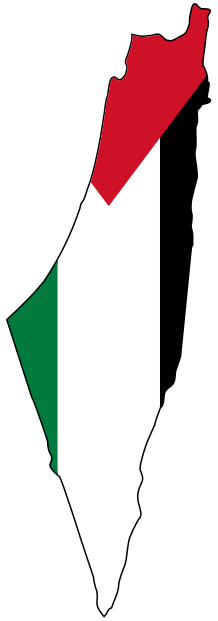
The Ramesses Gate in Jaffa

The Ramesses Gate in Jaffa: Gateway of the Egyptian Fortress in Canaanite "Yapu"
The Ramesses Gate is the remains of the gate of an ancient Egyptian fortress on the Jaffa hill in the old city of Jaffa, whose façade bore the name of Pharaoh Ramesses II, who ruled Egypt in the 13th century BCE. The fortress's story goes back to about 1460 BCE, when Pharaoh Thutmose III seized the Canaanite city of "Yapu" and the Egyptians installed a garrison that ruled the city for more than three centuries. The gate was burned at least twice in the late 12th century BCE, around 1135 and 1125 BCE, in what scholars believe was Canaanite resistance that ended Egyptian rule in Jaffa. This guide covers the gate's history and the story of the Canaanite city in which it stood.
Quick facts
| Arabic name | بوابة رمسيس – يافا |
|---|---|
| Location | Jaffa hill, old city of Jaffa |
| Ancient name of Jaffa | Yapu, a Canaanite city |
| Start of Egyptian rule | About 1460 BCE, after Thutmose III's campaign |
| End of Egyptian rule | About 1125 BCE |
| Associated pharaoh | Ramesses II (13th century BCE) |
| Inscriptions | Sandstone façade blocks bearing the name of Ramesses II |
| Phases | Destroyed and rebuilt at least four times |
| Last fires | About 1135 and 1125 BCE |
| On site today | A reconstruction of the gate façade |
The name
The gate is called the Ramesses Gate because the sandstone blocks that adorned its façade bear the name of the Egyptian pharaoh Ramesses II, one of ancient Egypt's most famous kings, who ruled in the 13th century BCE and campaigned in the Levant to crush revolts against Egyptian rule. Jaffa is the second most important site bearing traces of the Egyptian presence in Palestine after Beisan.
Location
The remains of the gate lie on the Jaffa hill, the rise overlooking the sea at the heart of the old city of Jaffa, near the Church of St. Peter, the old port and the Sea Mosque. This high ground overlooking the natural harbour has given Jaffa its military and commercial importance for thousands of years.
Yapu: Canaanite Jaffa
In the Bronze Age Jaffa was known as "Yapu", a coastal Canaanite city with a natural harbour on the Mediterranean. It first appears in written sources in the list of cities seized by Pharaoh Thutmose III in his first campaign in the Levant, after the Battle of Megiddo around 1460 BCE. An ancient Egyptian tale tells how his commander Djehuty took the city by a ruse, smuggling his soldiers inside hidden in baskets. From then on Yapu became an important Egyptian centre on the coast of Palestine.
The Egyptian fortress and its gate
The Egyptians built a fortress and garrison on the Jaffa hill that ruled the city for about three centuries, from the mid-15th to the late 12th century BCE. The fortress gate was more than a defensive structure: it housed administrators' offices, storerooms and garrison facilities on an upper floor roofed with cedar timbers. The gate was built and rebuilt at least four times, the first around 1400 BCE, while the phase whose façade was decorated with sandstone blocks inscribed with the name of Ramesses II is attributed to the 13th century BCE. A commemorative scarab of Pharaoh Amenhotep III and a bronze door hinge were also found on the site.
Fire and Canaanite resistance
Layers of ash and burnt mudbrick show that the gate was destroyed by fire at least twice in the late 12th century BCE: around 1135 BCE, and again around 1125 BCE in the final destruction that ended Egyptian rule in Jaffa. Arrowheads and a spearhead were found on the gate floor, suggesting a battle before the fire. Scholars believe the resistance to Egyptian rule came from Canaanite centres on the coastal plain, and that the destruction of the Jaffa fortress was part of the end of Egyptian control over Canaan.
Excavations
The Egyptian fortress and gate were uncovered in excavations on the Jaffa hill between 1955 and 1962, which found the façade blocks inscribed with the name of Ramesses II. Between 2011 and 2014 an international archaeological team re-excavated the gate, revealing its repeated phases of construction and destruction and radiocarbon-dating its fires. The original bronze door hinge was stolen after its discovery.
The gate today (2026)
In the 1990s a concrete reconstruction of the gate façade inscribed with the name of Ramesses II was erected on the site, and it is displayed to visitors today on the Jaffa hill, in a garden laid out on the rise. The gate is presented to visitors without reference to Jaffa's Arab history, in a city most of whose people were expelled in 1948. It remains a witness to the depth of Jaffa's history, the Canaanite city whose people resisted foreign rule more than three thousand years ago, and whose descendants still hold on to it.
Frequently asked questions
Where is the Ramesses Gate?
On the Jaffa hill at the heart of the old city of Jaffa, near the old port.
Why is it called the Ramesses Gate?
Because the sandstone blocks on its façade bear the name of the Egyptian pharaoh Ramesses II.
What was Jaffa's ancient name?
"Yapu", a coastal Canaanite city seized by Pharaoh Thutmose III around 1460 BCE.
When was the gate destroyed?
It was burned at least twice, around 1135 and 1125 BCE, in a destruction that ended Egyptian rule in Jaffa.
Is the gate on display today original?
No. What is displayed on the site is a concrete reconstruction of the gate façade erected in the 1990s.
Conclusion
On the Jaffa hill overlooking the sea, the Ramesses Gate sums up three centuries of Egyptian rule over the Canaanite city of "Yapu", and its fires bear witness to the people of the land who resisted until they ended it. It is part of the layers of Jaffa's history stretching back thousands of years, from Canaan to the Palestinian "Bride of the Sea" that still resists the erasure of its identity.
More from the archive
 Download Our Palestine App
The whole archive in the palm of your hand: depopulated villages, the Nakba, the massacres and Al-Aqsa — free, with no ads to erase the story.
Comments
No comments yet — be the first to write one.
Add your comment
Name and email are optional. Comments appear after review.