
Mahmoudiya Mosque in Jaffa

Mahmoudiya Mosque in Jaffa
Mahmoudiya Mosque in Jaffa: The Great Mosque at the Heart of the Old City
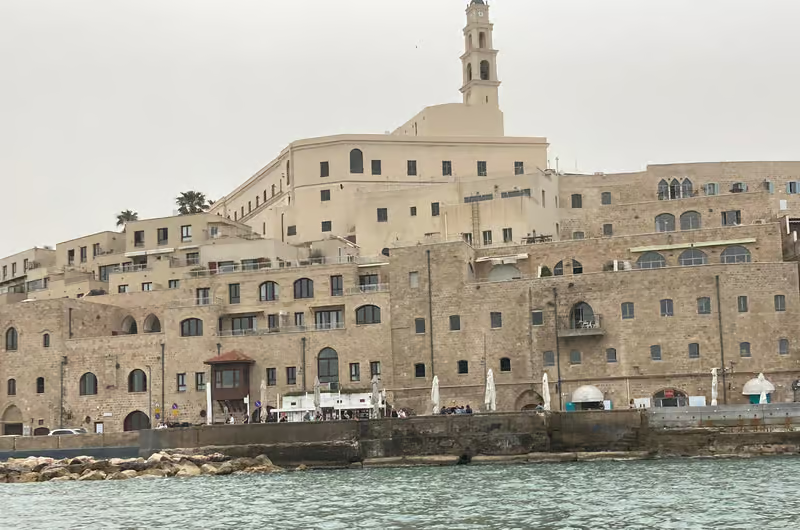
The Mahmoudiya Mosque, known as the Great Mosque of Jaffa and the Abu Nabbut Mosque, is the largest, widest and grandest mosque in Jaffa, standing in the old city on the Mediterranean shore, on Martyrs' Square by the Clock Tower. Sheikh Muhammad al-Bibi founded it in 1148 AH / 1735 CE, and Jaffa's Ottoman governor Muhammad Agha Abu Nabbut expanded it between 1810 and 1812 into a two-storey mosque with six domes and a minaret, fronted by the Mahmoudiya Sabil that gave it its name. It is one of the few Islamic and Arab landmarks left in Jaffa, after the city's mosques fell from 33 before the Nakba to just nine. This guide covers the mosque's history, architecture and significance.
Quick facts
| Arabic name | مسجد المحمودية – يافا |
|---|---|
| Other names | Great Mosque of Jaffa, Abu Nabbut Mosque, the New Mosque, the Town Mosque |
| Location | Old city of Jaffa, Martyrs' Square by the Clock Tower |
| Founded | 1148 AH / 1735 CE, by Sheikh Muhammad al-Bibi |
| Major expansion | 1225 AH / 1810 – 1812 CE, by Muhammad Agha Abu Nabbut |
| Style | Local Ottoman, influenced by the Istanbul style |
| Structure | Two storeys, six domes, one minaret |
| Sabil | Mahmoudiya Sabil (Suleiman Pasha Sabil) in front of the mosque to the west |
| Decoration | Marble inscriptions in naskh script and four Ottoman tughras |
| Status | Jaffa's largest mosque and one of its main surviving Islamic landmarks |
The name
The mosque has several names: al-Mahmoudiya after the Mahmoudiya Sabil in front of it to the west; the Abu Nabbut Mosque after the Jaffa governor who expanded it; the New Mosque to distinguish it from the city's old mosque; the Town Mosque because it was where Jaffa's people gathered on every occasion; and the Great Mosque of Jaffa as its largest mosque. It is said to have been the third-largest mosque in Palestine after al-Aqsa Mosque and the Ibrahimi Mosque.
Location
The mosque stands in the heart of the old city of Jaffa, on the Mediterranean shore, on Martyrs' Square where the Clock Tower stands, surrounded by public streets on all sides, the best known being Clock Square Street. Nearby are the Sea Mosque, the Church of St. Peter and Jaffa's old market, with the vegetable market and the port close by.
History and builders
- 1148 AH / 1735 CE: Sheikh Muhammad al-Bibi founded the mosque and endowed it with waqfs in 1158 AH / 1745 CE.
- 1225 AH / 1810 CE: Jaffa's governor Mir Muhammad Agha Silahshor, known as "Abu Nabbut", began expanding the mosque and adding to its buildings.
- 1812 CE: the building was completed, and Abu Nabbut endowed it with large waqfs; another of his endowment deeds is dated 1818.
- 19th century: al-Bibi's descendants added waqfs, and additions and restorations followed, documented by the inscriptions on its walls.
The mosque's endowment deeds are kept in the records of the Sharia Court in Jerusalem. Some sources differ on its date, with some giving 1710, but the surviving deeds place its foundation in 1735 and its major expansion between 1810 and 1812.
Architecture and decoration
The mosque is an example of local Ottoman architecture, at times influenced by the Istanbul style. It is a two-storey building crowned by six domes and a single minaret. Its main features include:
- Marble inscriptions: a semicircular panel above the south-western entrance, 95 cm high, of six lines in naskh script recording the start of construction, along with Quranic inscriptions above the mihrabs, the entrance to the dome and the sabil façade, and blue panels documenting the history of the mosque and its annexes.
- Tughras: four large Ottoman tughras on the sabil façade, the main entrance and the interior qibla walls.
- Floral decoration: on the minbar entrance, the preacher's chair, the mihrab, the entrance woodwork and the inverted capitals.
- Hybrid style: combining older and newer decorative elements in a style described as hybrid or Ottoman "rococo".
The Mahmoudiya Sabil
In front of the mosque to the west stands the Mahmoudiya Sabil, also known as the Suleiman Pasha Sabil, which gave the mosque its name. Its façade features semicircular arches and geometric panels, topped by inscriptions and an Ottoman tughra, and it once gave water to passers-by, worshippers and visitors to Jaffa's market.
Abu Nabbut and Jaffa's revival
Muhammad Agha Abu Nabbut governed Jaffa in the early 19th century and is credited with renewing the city after the destruction of Napoleon's campaign in 1799. Besides the Great Mosque, his projects included the Mahmoudiya Library attached to the mosque, Sabil al-Shifa, a Muslim cemetery, the repair of seven mills, a harbour and breakwater, the fortification of the city with a wall and moat, and the renewal of its markets.
Jaffa's mosques after the Nakba
Before the Nakba, Jaffa and its suburbs had 33 mosques serving a city whose population, with its surroundings, was about 130,000. In May 1948 the city fell and most of its people were expelled, leaving only about 3,000 Palestinians, gathered in the Ajami neighbourhood fenced in with barbed wire. The occupation authorities seized Jaffa's Islamic waqfs under the "Absentee Property" law and sold many at public auction, and only nine of the city's mosques remained, among them the Mahmoudiya Mosque, which still stands at the heart of the old city. In 2012 eight of Jaffa's mosques were restored with donations and support from Islamic institutions and Arab and Muslim countries.
The mosque today (2026)
The Mahmoudiya Mosque remains Jaffa's largest and best-attended mosque, hosting daily, Friday and Eid prayers, and a new imam and preacher was appointed in September 2026. But like the city's other mosques, it faces the threat of restrictions on the call to prayer after the Knesset passed a "Muezzin Law" in a preliminary reading on 1 July 2026, while Jaffa's Palestinians, numbering about 25,000, face urban Judaisation and evictions. The Great Mosque remains the beating heart of Arab Jaffa and a witness to its identity.
Frequently asked questions
Where is the Mahmoudiya Mosque?
In the old city of Jaffa, on Martyrs' Square by the Clock Tower.
Who built the Mahmoudiya Mosque?
Sheikh Muhammad al-Bibi founded it in 1735, and Jaffa's governor Muhammad Agha Abu Nabbut expanded it between 1810 and 1812.
Why is it called al-Mahmoudiya?
After the Mahmoudiya Sabil that stands in front of it to the west.
How many domes does the Mahmoudiya Mosque have?
Six domes and one minaret, in a two-storey building.
How many mosques remained in Jaffa after the Nakba?
Nine of the 33 mosques that stood in Jaffa and its suburbs before 1948, the largest being the Mahmoudiya Mosque.
Conclusion
On Martyrs' Square by the Clock Tower, the Mahmoudiya Mosque has stood for nearly three centuries as a witness to flourishing Ottoman Jaffa and to the "Town Mosque" that gathered its people in joy and sorrow. Despite the Nakba that uprooted most of them, its six domes and minaret still rise above the old city, a reminder that Jaffa's identity is Arab, however much changes around it.
More from the archive


 Download Our Palestine App
The whole archive in the palm of your hand: depopulated villages, the Nakba, the massacres and Al-Aqsa — free, with no ads to erase the story.



Comments
No comments yet — be the first to write one.
Add your comment
Name and email are optional. Comments appear after review.