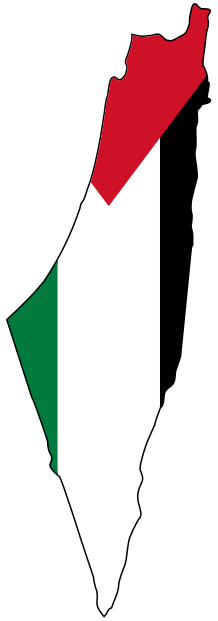
The Nazareth Saraya and Clock Tower
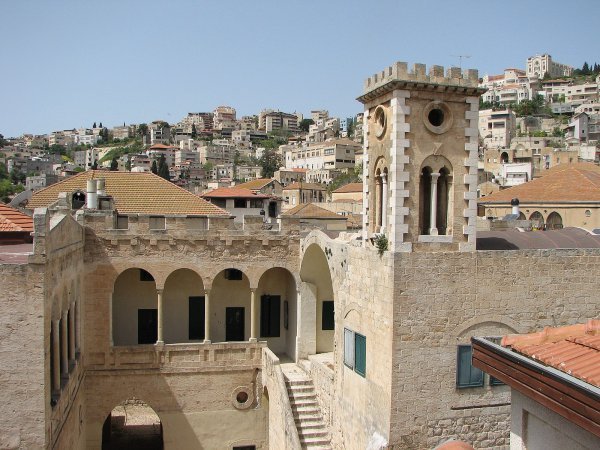
The Nazareth Saraya and Clock Tower
The Nazareth Saraya and Clock Tower: Zahir al-Umar's Seat in the Heart of the Old City
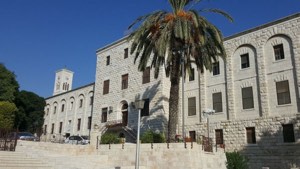
The Nazareth Saraya is one of the most important landmarks of the Old City of Nazareth. It was built by the ruler of Galilee Zahir al-Umar al-Zaydani in the 18th century, between 1730 and 1740, as the seat of the city's government and administration and as his residence, from which he oversaw security in the Nazareth area and Marj Ibn Amer. In the early 20th century a clock tower in the Italian Renaissance style was added to mark the 25th anniversary of Sultan Abdul Hamid II's accession, alongside six other towers in Jerusalem, Jaffa, Haifa, Acre, Safad and Nablus. The Saraya remained the seat of Nazareth's municipality until 1991, and the municipality is now restoring it as a museum of the city's history. This guide covers the history of the Saraya and its tower and their place in the life of Nazareth.
Quick facts
| Arabic name | سرايا الناصرة – برج الساعة |
|---|---|
| Location | Old City of Nazareth |
| Builder | Zahir al-Umar al-Zaydani, ruler of Galilee |
| Built | Between 1730 and 1740 CE |
| Original function | Seat of government and residence of Zahir al-Umar |
| Wings | Haremlik, selamlik, prison, stables |
| Additions | Upper arcade in the mid-19th century; clock tower in the early 20th century |
| Tower style | Italian Renaissance |
| Municipal seat | Until 1991 |
| Today | Under restoration to become a museum of the city's history |
Location
The Saraya stands at the heart of the Old City of Nazareth in the Lower Galilee, among its markets and alleys, close to the White Mosque and the Basilica of the Annunciation. It looks out over Marj Ibn Amer, whose security Zahir al-Umar oversaw from here.
History: from Zahir al-Umar to the municipality
- 1730–1740: Zahir al-Umar al-Zaydani built the Saraya as the seat of Nazareth's government and administration and made it his home. From here he oversaw security in the Nazareth area and Marj Ibn Amer as he extended his control over Galilee.
- Mid-19th century: an arcade was added to the building's upper floor.
- Early 20th century: the clock tower was built to mark the 25th anniversary of Sultan Abdul Hamid II's accession.
- Until 1991: the building remained the seat of the city's administration and municipality, which then moved to a new building.
- Today: the Nazareth municipality has begun restoration work to turn the building into a museum of the city's history.
Architecture: the haremlik and selamlik
The Saraya was designed in the manner of Ottoman palaces. It included the private living quarters of the ruler's family, known as the haremlik, and the wing for receiving visitors and guests, known as the selamlik, along with a prison and stables, bringing together government, residence and security in a single building. In the mid-19th century an arcade was added to its upper floor, enhancing the elegance of its façade.
The clock tower
In the early 20th century a clock tower in the Italian Renaissance style was added to the Saraya to mark the 25th anniversary of Sultan Abdul Hamid II's accession to the Ottoman throne. It was one of seven clock towers built in Palestine for the occasion, alongside those of Jerusalem, Jaffa, Haifa, Acre, Safad and Nablus, as part of an Ottoman policy of modernising cities. Added to the seat of government, the tower became a symbol of modern authority in the city.
The Saraya prayer hall and the White Mosque
In Zahir al-Umar's time Nazareth had no mosque, so he set aside a prayer hall for Muslims inside the Saraya. It served them until the White Mosque was completed in 1812, becoming the city's first mosque and one of its most prominent landmarks alongside the Basilica of the Annunciation, an image of the coexistence of Nazareth's Muslims and Christians.
Ottoman clock towers in Palestine
The Nazareth tower was one of seven Ottoman clock towers in Palestine: the Jaffa tower in Clock Square, the Haifa tower opposite al-Jarina Mosque, the Acre tower above Khan al-Umdan, the Safad tower near the Saraya, the Nablus tower (al-Manara) at Bab al-Saha, and the Jerusalem tower above Bab al-Khalil, which the British Mandate removed in 1922. The Nazareth tower stands out as part of the Saraya building itself and for its Italian Renaissance-inspired style.
Nazareth and the Nakba
Zionist militias occupied Nazareth on Friday 16 July 1948. Unlike many Palestinian cities, most of Nazareth's people remained in their city, and thousands of refugees from surrounding villages took shelter there, among them the people of Saffuriya, many of whom settled in the Safafra quarter. Nazareth became the main administrative and cultural centre for Palestinians inside the Green Line and the most important cultural and media centre for the Arab population of the areas occupied in 1948. Throughout those decades the Saraya remained the seat of its Arab municipality, until 1991.
The Saraya today (2026)
After the municipality moved to a new building in 1991, the Nazareth municipality began restoration work on the Saraya to turn it into a museum of the city's history. As a first step, its infrastructure was restored and the structure reinforced. The project is expected to bring one of the Old City's most important landmarks back to life, telling future generations the story of Nazareth from Zahir al-Umar to the present, in the hands of its own people.
Frequently asked questions
Who built the Nazareth Saraya?
The ruler of Galilee, Zahir al-Umar al-Zaydani, between 1730 and 1740, as the city's seat of government and his residence.
When was the clock tower of the Nazareth Saraya built?
In the early 20th century, to mark the 25th anniversary of Sultan Abdul Hamid II's accession, in the Italian Renaissance style.
What are the haremlik and selamlik?
The haremlik was the private living quarters of the ruler's family, and the selamlik the wing for receiving visitors and guests; both were part of the Saraya.
Where did Nazareth's Muslims pray before the White Mosque was built?
In a prayer hall that Zahir al-Umar set aside for them inside the Saraya, until the White Mosque was completed in 1812.
What will happen to the Nazareth Saraya?
The Nazareth municipality is restoring it to become a museum of the city's history, after it served as the municipal seat until 1991.
Conclusion
From Zahir al-Umar's seat of government and the city's first Muslim prayer hall, to an Ottoman clock tower and the home of an Arab municipality that endured after the Nakba, the Nazareth Saraya has carried nearly three centuries of the city's history. Now, as it prepares to become a museum, it stands as a witness that Nazareth, the capital of Palestinians inside the Green Line, still tells its own story.
More from the archive
 Download Our Palestine App
The whole archive in the palm of your hand: depopulated villages, the Nakba, the massacres and Al-Aqsa — free, with no ads to erase the story.
Comments
No comments yet — be the first to write one.
Add your comment
Name and email are optional. Comments appear after review.