
The Safad Clock Tower

The Safad Clock Tower: The Ottoman Bell Still Ringing in a City Emptied of Its People
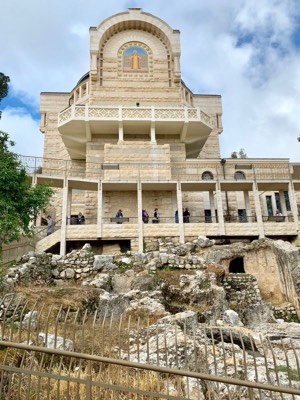
The Safad Clock Tower is an Ottoman tower of a ground floor and four upper storeys, built in 1901 beside the Saraya, the seat of Ottoman government in Safad. It was one of the clock towers the Ottomans raised in the cities of Palestine to mark the 25th anniversary of Sultan Abdul Hamid II's accession. Its original bell still rings every half hour, though Safad fell in May 1948 and all its Arab inhabitants were expelled. This guide covers the tower's history and its place in the story of Safad, capital of the Upper Galilee.
Quick facts
| Arabic name | برج الساعة – صفد |
|---|---|
| Location | Beside the Ottoman Saraya in Safad |
| Built | 1901 CE |
| Period | Ottoman, under Sultan Abdul Hamid II |
| Occasion | 25th anniversary of Sultan Abdul Hamid II's accession |
| Storeys | Ground floor and four upper storeys |
| Clocks | Electric clocks since 2002 |
| Bell | The original bell still rings every half hour |
| Fall of Safad | May 1948, with the expulsion of all its Arab inhabitants |
| Condition | Still standing |
Location
The tower stands in Safad, capital of the Upper Galilee, beside the Saraya that was the seat of Ottoman government in the city. Safad is crowned by the hill of its Mamluk citadel and overlooks northern Galilee and the road to Damascus.
The tower: history and architecture
The tower was built in 1901, the same year as the towers of Haifa, Acre and Nablus. It was part of the campaign of clock towers the Ottomans raised in the cities of Palestine, most of them for the 25th anniversary of Sultan Abdul Hamid II's accession, within a policy of modernising cities and promoting trade. Its site beside the Saraya placed it next to the symbol of Ottoman authority in the city. The tower has a ground floor and four upper storeys. Electric clocks were fitted in 2002, while its original bell still rings every half hour.
Ottoman Safad
Under the Mamluks Safad became one of the provinces of Syria after al-Zahir Baybars liberated its citadel in 1266. Under the Ottomans it was the centre of a sanjak in Galilee, and in the 18th century it came within the Galilee over which Zahir al-Umar al-Zaydani extended his control. Two devastating earthquakes struck it, in 1759 and 1837, the latter killing about 2,000 people. In the early 20th century the clock tower added a landmark of Ottoman modernity to the mountain city.
Ottoman clock towers in Palestine
The Safad tower was one of several Ottoman clock towers in the cities of Palestine. Others include the Jaffa tower in Clock Square, the Haifa tower opposite al-Jarina Mosque, which survived the demolition of the Old City, the Acre tower above Khan al-Umdan, the Nablus tower at Bab al-Saha, and the Jerusalem tower above Bab al-Khalil, which the British Mandate removed in 1922.
Safad and the Nakba
On the eve of the Nakba between 9,500 and 12,000 Arabs lived in Safad, according to different sources. After the British withdrew on 16 April 1948, attacks by Zionist militias continued until the city fell in May 1948. All its Arab inhabitants were expelled by force of arms, and settlers moved into their homes. Judaisation then reached the city's landmarks: the Red Mosque was turned into a nightclub, the Yunisi Mosque into an art gallery and the Juqandari Mosque into a synagogue, while Muslims are barred from praying in the city's mosques.
The tower today (2026)
The Clock Tower still stands in Safad, and its Ottoman bell still rings every half hour, in a city where its Arab people no longer live. Safad's expelled families and their descendants live in refugee camps in Syria and Lebanon and across the diaspora. Together with Safad's citadel and mosques, the tower remains a witness to the city's Arab and Islamic history.
Frequently asked questions
Where is the Safad Clock Tower?
Beside the Saraya that was the seat of Ottoman government in the city of Safad.
When was the Safad Clock Tower built?
In 1901, under the Ottoman Sultan Abdul Hamid II, to mark the 25th anniversary of his accession.
How many storeys does the clock tower have?
A ground floor and four upper storeys.
Does the tower's bell still ring?
Yes. The original bell still rings every half hour, while electric clocks were fitted on the tower in 2002.
What happened to the people of Safad in 1948?
The city fell in May 1948 and all its Arab inhabitants, numbering between 9,500 and 12,000, were expelled. Their descendants live today in refugee camps and the diaspora.
Conclusion
For more than a century the bell of the Safad Clock Tower has rung every half hour. It rang for the city's people in the days of the sultanate, and it still rings after their expulsion in 1948, as if counting the time that separates them from their return.
More from the archive


 Download Our Palestine App
The whole archive in the palm of your hand: depopulated villages, the Nakba, the massacres and Al-Aqsa — free, with no ads to erase the story.



Comments
No comments yet — be the first to write one.
Add your comment
Name and email are optional. Comments appear after review.