
First Gaza Massacre 1955: The “Black Arrow” Raid
At 8:30 p.m. on 28 February 1955, a force of Israeli paratroopers under Ariel Sharon crossed the armistice line into the Gaza Strip, then under Egyptian administration, and pushed more than three kilometers in. The force blew up the water station supplying the city, attacked an Egyptian army camp near the railway station, and ambushed the relief convoy heading to it. Thirty-nine were killed and 33 wounded. [1] [2]
Israel called this raid “Black Arrow”; Palestinians call it “the first Gaza massacre.” A year later came the second Gaza massacre in April 1956. Its consequences were not only military: it sparked an uprising in Gaza, pushed Egypt toward Soviet arms, and opened the road to the 1956 war.
The first Gaza massacre at a glance
| Item | Details |
|---|---|
| Date | 28 February 1955, 8:30 p.m. [1] [2] |
| Place | The Gaza Strip, near the railway station and the water station, more than 3 kilometers beyond the armistice line [1] [3] |
| Perpetrator | A force of Israeli paratroopers under Ariel Sharon, in Operation “Black Arrow” [1] [2] |
| Victims | 39 killed and 33 wounded, most of them soldiers [1] [2] [4] |
| Armistice Commission | Counted 36 military personnel and two civilians among the dead, and condemned Israel [5] |
| Security Council | Resolution 106 (29 March 1955) condemned the attack [6] |
| Consequences | The Gaza uprising of March 1955, and Egypt’s turn to Soviet arms [1] [7] |
Context: Egypt and the pacts
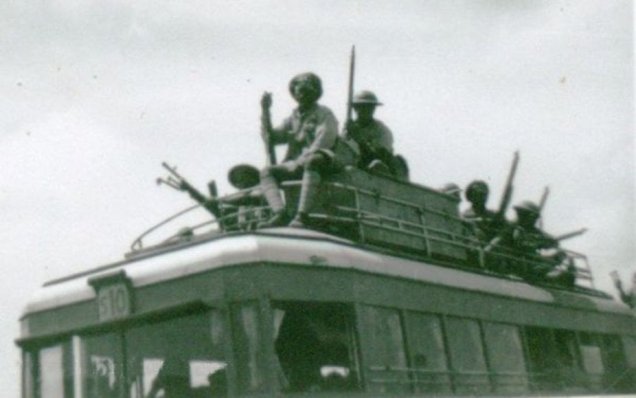
After the Nakba the Gaza Strip came under Egyptian administration. By the mid-1950s the Western powers were seeking to tie the states of the region into military pacts, foremost among them the Baghdad Pact, whose leading advocate was Iraqi prime minister Nuri al-Said, while Egypt after its 1952 revolution rejected these pacts. Arab accounts link the raid on Gaza to this Egyptian position, seeing it as a threatening message to Cairo. [4]
The circulating account says that on 14 August 1954, while Salah Salem, a member of Egypt’s Revolutionary Command Council, was meeting Nuri al-Said to persuade him to abandon the pacts and sign a joint defense treaty with Egypt, an Israeli force infiltrated some three kilometers into the Strip as far as the water station, killed its technician and mined it. Other sources, however, make the destruction of the water station and the killing of its technician part of the 28 February 1955 raid itself. [4] [1]
Israel, for its part, justified the raid as retaliation for the killing of an Israeli at Deir Rakhbut, a pretext Arab sources regard as no more than that. [1]
Behind the raid stood the occupation army’s chief of staff, Moshe Dayan, who since taking office in 1953 had sought to provoke military friction, adopting a theory of “provocation then response” under the pretext of “retaliation.” [1] He was backed by David Ben-Gurion, who returned to the government as defence minister, sworn in on 21 February 1955 after the resignation of Pinhas Lavon, just one week before the raid. [8]
The massacre: the night of 28 February 1955
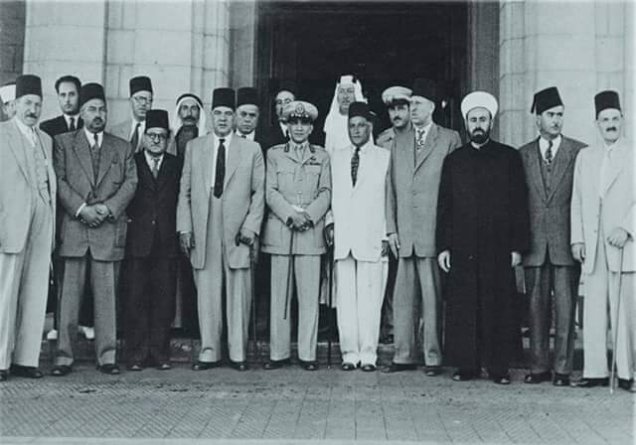
At 8:30 p.m. on 28 February 1955, several platoons of Israeli paratroopers crossed the armistice line and advanced more than three kilometers into the Strip, then divided their tasks: [1] [3]
- The first platoon raided the water station supplying Gaza’s inhabitants and blew it up, then headed for the house of the Gaza railway station manager. [1] [4]
- The second platoon attacked the Egyptian army camp near the station with machine guns, mortars and hand grenades. [1] [4]
- The third platoon took position on the road, mining it to prevent reinforcements from arriving. [1]
The water station exploded, and the explosion was accompanied by a hail of bullets on the Egyptian camp. [4]
The ambush of the relief convoy
The camp commander called for reinforcements from the nearest military post, and trucks carrying soldiers rushed to answer the call along the Rafah–Gaza road, but they fell into the ambush the Israelis had prepared. [1] [5] According to UN observers, one of the trucks was carrying about 35 military personnel, 22 of whom were killed in the ambush. [5]
The toll
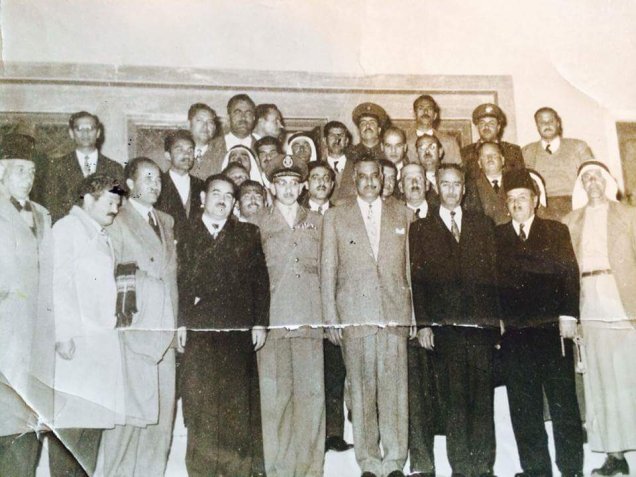
The massacre left 39 dead and 33 wounded. [1] [2] [4] The Egyptian-Israeli Mixed Armistice Commission counted 36 military personnel and two civilians among the dead. [5] Some sources give 38 dead. [3] Many of the victims were Palestinian and Egyptian soldiers in the camp and the relief convoy, along with the water station’s technician. [4] [3]
On the Israeli side, Sharon states in his memoirs that his forces lost eight killed and 14 wounded, and that the mission was completed “with heavy losses.” [1] [9]
The international response
On 6 March 1955 the Mixed Armistice Commission determined that the attack was “committed by Israel regular army forces against the Egyptian regular army force” in the Gaza Strip, upholding the Egyptian complaint and rejecting the Israeli counter-complaint. [6] [5]
On 29 March 1955 the UN Security Council adopted Resolution 106, which “condemns this attack as a violation of the cease-fire provisions” and as “inconsistent with the obligations of the parties under the General Armistice Agreement,” and “calls again upon Israel to take all necessary measures to prevent such actions.” [6]
After the massacre
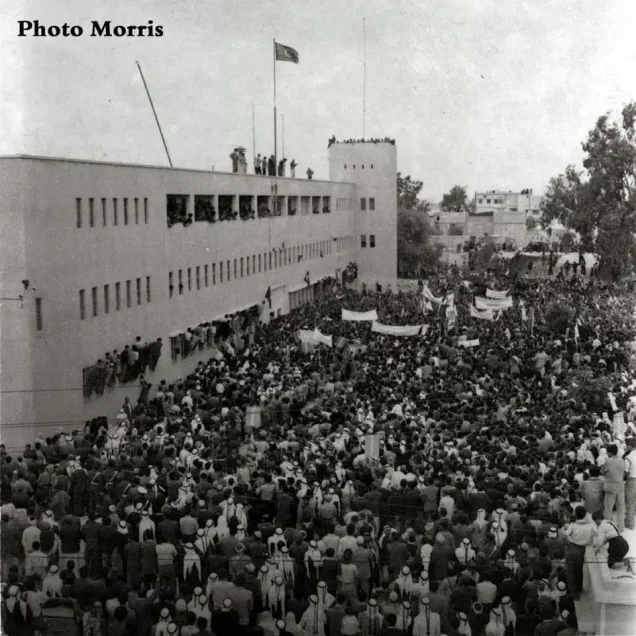
The day after the massacre, Gamal Abdel Nasser visited Gaza. [9] The people of the Strip took to the streets in large demonstrations in March 1955, among whose main demands was the rejection of the project to resettle Palestinian refugees in Sinai. [7]
Nasser said the raid would be a turning point. [1] On 10 March he told the US ambassador that arms had become “a matter of life,” complaining that Washington was withholding arms from Egypt while making deals with Israel and Iraq. [9] He turned east, and on 27 September 1955 concluded the Soviet arms deal, made in Czechoslovakia’s name, worth about $200 million and paid for in cotton and Egyptian goods. [1] [3]
Arab sources link this deal to the withdrawal of funding for the Aswan High Dam, then the nationalization of the Suez Canal, then the Tripartite Aggression of 1956. [1] In the same months the raids on the Strip escalated, with the two Khan Yunis raids of 1955, then the second Gaza massacre on 5 April 1956. [4]
Read about Gaza Hashem and the Zionist massacres against the Palestinian people.
Conclusion
In a single winter night of 1955 an Israeli force blew up the water station from which the people of Gaza drank, and ambushed soldiers coming to their comrades’ aid, killing 39. The Security Council condemned it, but its effects went beyond an international resolution: it set Gaza’s streets alight, pushed Egypt toward new arms, and opened a year of raids and massacres that ended with the occupation of the Strip in the autumn of 1956.
Frequently asked questions about the first Gaza massacre
When did the first Gaza massacre take place?
It took place on the evening of 28 February 1955, when a force of Israeli paratroopers crossed the armistice line into the Gaza Strip.
What was Operation Black Arrow?
It was the Israeli name for the 28 February 1955 raid on Gaza, carried out by paratroopers under Ariel Sharon, who blew up the water station, attacked an Egyptian camp and ambushed the relief convoy.
How many people were killed in the first Gaza massacre?
Thirty-nine were killed and 33 wounded; the Mixed Armistice Commission counted 36 military personnel and two civilians among the dead.
How did the Security Council respond?
The Security Council adopted Resolution 106 on 29 March 1955, condemning the attack as a violation of the cease-fire and the Armistice Agreement.
How is the first Gaza massacre linked to the Czech arms deal?
After the massacre Nasser decided to break the Western monopoly on arms, and in September 1955 concluded the Soviet arms deal in Czechoslovakia’s name.
Sources and references
Arabic-language sources are listed with translated titles.
- “28/2/1955: The First Criminal Aggression on Gaza,” Al Bayan, 27 February 2009.
- “Israeli Massacres,” Palestinian National Information Center (WAFA).
- “The Israeli Raid on Gaza, 1955,” Marefa encyclopedia.
- “Zionist Massacres between 1947 and 1996,” Palestine Remembered.
- Report of the Chief of Staff of UNTSO on the incident near Gaza (S/3373), 17 March 1955.
- UN Security Council Resolution 106, 29 March 1955.
- “Gaza Hashem,” Palestinina.
- “Overall Chronology: February 1955,” Interactive Encyclopedia of the Palestine Question, Institute for Palestine Studies.
- “Black Arrow: The Story of a Zionist Operation against Egypt,” Al-Mogaz, 18 October 2020.
More from the archive
 Download Our Palestine App
The whole archive in the palm of your hand: depopulated villages, the Nakba, the massacres and Al-Aqsa — free, with no ads to erase the story.



Comments
No comments yet — be the first to write one.
Add your comment
Name and email are optional. Comments appear after review.