St. George's Church in Acre
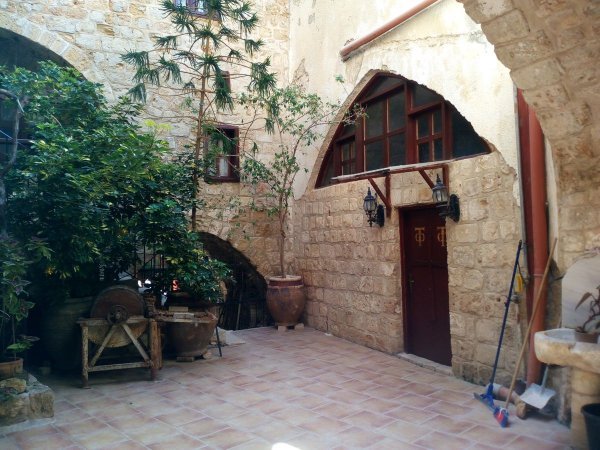
St. George's Church in Acre: The Greek Orthodox Cathedral of the Old City
St. George's Church, known locally as Mar Jiryis, is the Greek Orthodox church in the old city of Acre and the seat of the Metropolis of Acre under the Greek Orthodox Patriarchate of Jerusalem. According to local sources it dates from the Crusader period and was built over the remains of a Byzantine church, and its interior walls are clad in carved wood. Beside it stands a monastery built on Crusader ruins where the clergy live. The church holds a marble plaque bearing the names of two British officers who fell in the battles of Acre in 1799 and 1840, and the tomb of the New Martyr George the Cypriot. It remains the heart of the Arab Greek Orthodox community of Acre and the villages of western Galilee, which stayed in its city despite the Nakba. This guide covers the church's history, architecture and significance.
Quick facts
| Arabic name | كنيسة القديس جاورجيوس (مار جريس) – عكا |
|---|---|
| Other names | Mar Jiryis Church, St. George's Cathedral |
| Location | Old city of Acre |
| Denomination | Greek Orthodox, Patriarchate of Jerusalem |
| Status | Church of the Metropolis of Acre |
| Origins | Crusader period, over the remains of a Byzantine church, according to local sources |
| Interior | Walls clad in carved wood |
| Monastery | Adjoining monastery built on Crusader ruins |
| Tomb | New Martyr George the Cypriot |
| Feast | 23 April Julian (6 May Gregorian) |
St. George: the patron
The church bears the name of St. George, known to Arabs as Mar Jiryis and al-Khader. Sources agree that he was a Roman soldier under Emperor Diocletian. Most accounts say he was born in Lydda (al-Lid) in Palestine in the 3rd century to a noble family, while others place his birth in Cappadocia; he was martyred at the end of the 3rd century and his relics were brought to Lydda. He is one of the most venerated saints in Palestine, and many churches in the villages of Galilee bear his name.
Location
The church stands in the old city of Acre, inside the walls, among the city's alleys and markets, close to Acre's other churches, such as St. John's by the lighthouse and St. Andrew's in the Fakhoura quarter, as well as the al-Jazzar Mosque and Khan al-Umdan.
History
- Byzantine period: a Byzantine church stood on the site, and the later church was built over its remains.
- Crusader period: according to local sources, the present church dates from this period, and the adjoining monastery was built on Crusader ruins.
- Ottoman period: the young George the Cypriot, venerated by the Orthodox Church as a New Martyr, was martyred in Acre; his tomb is in the church.
- 1799 and 1840: two British officers fell in the battles of Acre and are commemorated on a marble plaque in the church; the first during Napoleon's failed siege of Acre, the second during the bombardment of the city in the campaign against Ibrahim Pasha's rule.
- 1948: the church and its community remained in the city after its fall and the expulsion of most of its people.
Architecture and features
The church is a stone building in the style of Acre's old churches, its interior walls clad in carved wood, with an iconostasis separating the sanctuary from the nave, as in Orthodox churches. It holds the tomb of St. George the Cypriot, where prayers are offered on feast days, and a marble plaque bearing the names of the two British officers. About five metres east of the church stands a monastery built on Crusader ruins, home to the clergy who serve the church and seat of the Metropolis of Acre.
The Metropolis of Acre and its parishes
The church is the seat of the Metropolis of Acre under the Greek Orthodox Patriarchate of Jerusalem, whose parishes lie in the villages of western and upper Galilee, including Kafr Yasif, Abu Snan, al-Rama, Sakhnin, al-Makr, al-Judeida, al-Buqei'a, Tarshiha, al-Ba'na, Kafr Sumei', Shefa-'Amr and I'billin. Community associations are active around the church, from the Orthodox Scouts to the women's association, Sunday school and choir.
The Feast of St. George in Acre
The community celebrates its patron's feast on 23 April in the Julian calendar (6 May Gregorian), or on the nearest Saturday. The celebration opens with a parade of Acre's Orthodox Scouts and invited troops from outside the city, followed by a festive liturgy presided over by the Patriarch of Jerusalem or the Metropolitan, with the church packed with worshippers from Acre and its villages, and closes with prayers at the tomb of St. George the Cypriot. In 2026 the feast was celebrated on Saturday 9 May.
Acre's Christians and the Nakba
Acre was an Arab city of Muslims and Christians, where mosques and churches stood side by side in the old city, some of the churches built under Zahir al-Umar. On 17 May 1948 the city fell to the Haganah, and most of its people were expelled to Lebanon and Syria, while some remained in the old city. St. George's Church remained a spiritual centre for the Greek Orthodox who stayed in Acre and for the people of the surrounding villages.
The church today (2026)
The church remains a living parish and the seat of the Metropolis of Acre, hosting liturgies, feasts and scout and youth activities. In an old city whose residents face pressure to leave and the Judaisation of its landmarks, the church, together with the al-Jazzar Mosque and the city's khans, bears witness to Arab Acre, Muslim and Christian.
Frequently asked questions
Where is St. George's Church in Acre?
In the old city of Acre, inside the walls.
Which denomination does the church belong to?
The Greek Orthodox Church; it is the seat of the Metropolis of Acre under the Greek Orthodox Patriarchate of Jerusalem.
How old is the church?
According to local sources it dates from the Crusader period and was built over the remains of a Byzantine church.
When is the Feast of St. George celebrated in Acre?
On 23 April Julian (6 May Gregorian) or the nearest Saturday, with a scout parade and a festive liturgy.
What are the church's main features?
Its walls clad in carved wood, the tomb of St. George the Cypriot, a marble plaque to two British officers who fell in the battles of Acre in 1799 and 1840, and the adjoining monastery.
Conclusion
Among the alleys of old Acre, over Byzantine and Crusader remains, St. George's Church bears witness to centuries of Arab Christian presence in the city. Its bells still ring and its scouts still march through the alleys on its patron's feast, just as some of Acre's people held on to their city despite the Nakba.
More from the archive
 Download Our Palestine App
The whole archive in the palm of your hand: depopulated villages, the Nakba, the massacres and Al-Aqsa — free, with no ads to erase the story.

Comments
No comments yet — be the first to write one.
Add your comment
Name and email are optional. Comments appear after review.