The Walls of Jerusalem
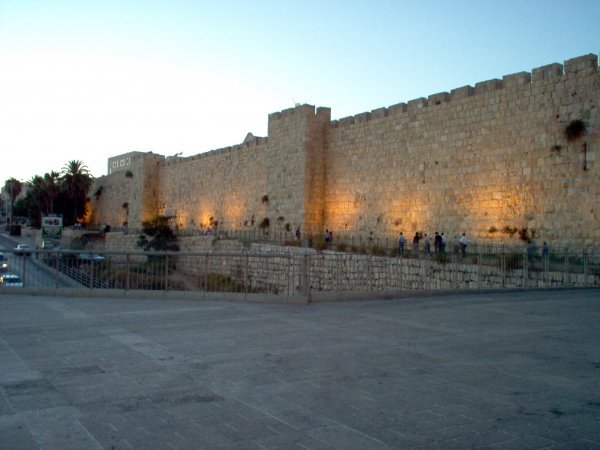
The Walls of Jerusalem: Suleiman's Walls, Gates and Towers
The Walls of Jerusalem encircle the Old City for about four kilometres, with watchtowers and eight main gates. The present walls were built between 943 and 947 AH (1536–1541) by order of the Ottoman sultan Suleiman the Magnificent. Before that the city had been without walls for more than three centuries, since the Ayyubid ruler al-Mu'azzam Isa demolished them in 1219. Together with the Old City they are on the UNESCO World Heritage List, and they have been on the List of World Heritage in Danger since 1982. Since the occupation of East Jerusalem in 1967 the walls and their surroundings have been targeted by excavations and Judaisation, to the point that a member of the occupation municipality called for them to be torn down. This guide covers the walls' history, gates, towers and situation today.
Quick facts
| Arabic name | أسوار القدس / سور القدس |
|---|---|
| Builder | Ottoman sultan Suleiman the Magnificent |
| Construction | 943–947 AH (1536–1541) |
| Length | About 3.7–4 km, depending on the source |
| Height | About 12–15 m |
| Thickness | About 3 m |
| Towers | 34, including the Stork Tower and the Kibrit Tower |
| Main gates | 8: seven open and one sealed (Bab al-Rahma) |
| Other sealed gates | Umayyad gates in al-Aqsa's walls: the Single, Double and Triple Gates, and Bab al-Jana'iz |
| UNESCO | World Heritage; on the List in Danger since 1982 |
History of the walls
- Canaanite (Jebusite) period: archaeological evidence shows the city was walled thousands of years ago, from the time of its Jebusite Canaanite founders.
- Roman and Byzantine periods: successive walls surrounded the city, and Suleiman's wall was later built on the ruins of the Roman wall.
- Umayyad period: the Umayyads built gates in the walls of al-Aqsa Mosque, including Bab al-Rahma and the southern Single, Double and Triple Gates.
- Ayyubid period: Saladin fortified the city after liberating it in 1187, and remains of Ayyubid walls have been found beneath the present wall. In 616 AH (1219) al-Mu'azzam Isa tore the walls down, fearing the Crusaders would use them, and Jerusalem remained without walls for more than three hundred years.
Suleiman's walls (1536–1541)
The present wall was built between 943 and 947 AH (1536–1541), in about five years, to protect the city from Crusader attacks and raids by bandits. Builders and craftsmen were brought from Cairo, Aleppo, Istanbul and other cities, and the cost exceeded 300,000 Ottoman coins. According to Palestinian sources, five years of Palestine's tax revenues were devoted to the work. The foundation inscription still reads: "Our master Sultan Suleiman son of Selim Khan ordered the building of this blessed wall in the year nine hundred and forty-seven." The result was a trapezoid-shaped wall about four kilometres long, 12–15 metres high and about 3 metres thick, with crenellations, arrow slits and gates with defensive bent entrances.
The gates of Jerusalem
The open gates
- Damascus Gate (Bab al-Amud), north: the grandest gate, built 1537–1539 over an earlier Crusader gate, and the main entrance for Palestinians to the Old City and al-Aqsa.
- Bab al-Sahira (known in English as Herod's Gate), north: built in 1538, about 500 metres east of Damascus Gate, and the closest gate to al-Aqsa. It stands on flat ground with no natural protection, and it was through it that the Crusaders entered Jerusalem.
- Lions' Gate (Bab al-Asbat), east: named after the pairs of lions carved on its façade, it leads to al-Aqsa.
- Dung Gate (Bab al-Maghariba), south: the smallest gate, opened under Suleiman around 1540 and widened under Jordanian administration in 1952. It leads to the Buraq Wall and the demolished Moroccan Quarter.
- Zion Gate (Bab al-Nabi Dawud), south: renewed in 947 AH (1540) under Suleiman and named after the nearby shrine of the Prophet David.
- Jaffa Gate (Bab al-Khalil), west: the gate of the roads to Hebron and Jaffa. In 1898 the Ottomans demolished part of the wall beside it to widen the entrance.
- New Gate (Bab al-Jadid), north-west: opened in 1887, in the late Ottoman period.
The sealed gates
- Bab al-Rahma (the Golden Gate), east: a double gate from the Umayyad period leading directly into al-Aqsa. According to one account, the Ottomans sealed it because of a belief that the Franks would return through it. The building inside is a prayer hall of al-Aqsa.
- The Single, Double and Triple Gates, south: Umayyad gates in al-Aqsa's southern wall, built in the time of Abd al-Malik ibn Marwan, some of them sealed in the Ottoman period for security reasons.
- Bab al-Jana'iz (Funeral Gate), east: sealed in the Ottoman period for security reasons.
Towers and the Citadel
Thirty-four towers for observation and defence are spaced along the wall. The best known are the Stork Tower (Burj al-Laqlaq) at the north-eastern corner and the Kibrit Tower, and there is a tower near Jaffa Gate built in 945 AH (1538). Beside Jaffa Gate stands the Citadel of Jerusalem, restored by the Mamluks and Ottomans, with an Ottoman mosque and minaret. The occupation authorities have turned it into a museum that presents the city's history from their own perspective.
From the Ottomans to 1967
- Late Ottoman period: the opening of the New Gate (1887) and the widening of Jaffa Gate (1898) connected the walled city to the new neighbourhoods growing outside it.
- 1948: fighting took place along the walls. The Old City remained under Jordanian administration until 1967, and the Jordanian authorities widened Dung Gate in 1952.
Under occupation since 1967
Israeli forces occupied the Old City in June 1967, and Israel later annexed East Jerusalem, a step declared null and void by UN Security Council Resolution 478. Since then:
- The demolition of the Moroccan Quarter: between 11 and 13 June 1967 the occupation bulldozed the Moroccan Quarter inside Dung Gate, endowed to the Maghrebis by al-Afdal, son of Saladin, in 1193. The quarter covered about 45,000 square metres, and some 135 historic buildings were destroyed, including the Buraq Mosque, the Maghariba Mosque and the Afdaliyya School. The Buraq plaza was built in its place.
- Excavations and Judaisation: the occupation authorities carry out illegal excavations near the foundations of the wall, seek to change the character of its surroundings and deliberately neglect some of its gates.
- Bab al-Rahma and its cemetery: the prayer hall inside Bab al-Rahma was closed by court order in early 2003. On 17 February 2019 a six-day popular uprising reopened it to worshippers, after which the occupation cut off its electricity and water and confiscated its furnishings. Around it lies the Bab al-Rahma cemetery, burial place of the Companions Ubada ibn al-Samit and Shaddad ibn Aws. In 2012 the occupation municipality decided to seize 1,800 metres of its southern land for tourist paths and "Talmudic landmarks".
- A call to demolish the wall: in January 2019 a member of the occupation municipality, active in settler associations, called for the wall to be torn down entirely or mostly, attacking Sultan Suleiman. The Palestinian Foreign Ministry urged the Arab and Islamic worlds and UNESCO to act.
- Bab al-Sahira: a settler outpost has been established opposite the gate, posing a danger to passers-by and residents.
The walls today (2026)
In 2026 the gates of Jerusalem saw some of the tightest restrictions in years. During the war on Iran, from 28 February, al-Aqsa Mosque and the holy places of the Old City were closed for about 40 days. On Holy Saturday (11 April), occupation forces turned the Old City into what Al Jazeera described as a military barracks, with iron barriers at the gates and signs limiting entry to "bracelet holders only". Since October 2023 Palestinians from the West Bank and Gaza have been largely barred from entering Jerusalem, while restrictions on worshippers around Bab al-Rahma continue.
UNESCO and legal protection
The Old City of Jerusalem and its walls are on the UNESCO World Heritage List, and they have been on the List of World Heritage in Danger since 1982 because of the occupation's practices. As part of occupied East Jerusalem, the walls are protected by the Fourth Geneva Convention and the 1954 Hague Convention for the Protection of Cultural Property, which prohibit altering the character of cultural property under occupation. UN Security Council Resolution 478 rejects any change to the status of the city.
Frequently asked questions
Who built the walls of Jerusalem?
The Ottoman sultan Suleiman the Magnificent built the present walls between 943 and 947 AH (1536–1541), on the ruins of older walls.
How long are the walls of Jerusalem?
About 3.7 to 4 kilometres depending on the source, 12–15 metres high and about 3 metres thick, with 34 towers.
How many gates does Jerusalem have?
Eight main gates: seven open (Damascus Gate, Bab al-Sahira, Lions' Gate, Dung Gate, Zion Gate, Jaffa Gate and New Gate) and the sealed Bab al-Rahma, as well as sealed Umayyad gates in al-Aqsa's walls.
Why was Jerusalem without walls before Suleiman?
Because the Ayyubid ruler al-Mu'azzam Isa demolished its walls in 1219, fearing the Crusaders would use them, leaving the city unwalled for more than three centuries.
Are the walls of Jerusalem a UNESCO site?
Yes. The Old City of Jerusalem and its walls are on the World Heritage List, and on the List of World Heritage in Danger since 1982.
Conclusion
For nearly five centuries Suleiman's walls have enclosed the holy places of Jerusalem: al-Aqsa Mosque, the Church of the Holy Sepulchre and the old quarters of its people. Under occupation their gates have become checkpoints, their surroundings a target for excavations, and some have even called for them to be demolished. Yet for Palestinians they remain the threshold of their capital and its holy places, and an Arab and Islamic witness to the city's identity.
More from the archive
 Download Our Palestine App
The whole archive in the palm of your hand: depopulated villages, the Nakba, the massacres and Al-Aqsa — free, with no ads to erase the story.
Comments
No comments yet — be the first to write one.
Add your comment
Name and email are optional. Comments appear after review.