
The Church of Saint Porphyrius
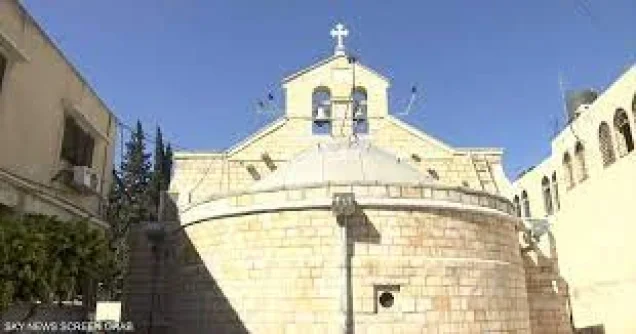
The Church of Saint Porphyrius in Gaza: Sixteen Centuries of Faith and the Massacre of the Genocide War
The Church of Saint Porphyrius, the Greek Orthodox church in the Zaytun quarter of Gaza's Old City, is the oldest active church in Gaza and among the oldest in the world still in use. A church has stood here since around 425 CE, built in honour of Saint Porphyrius, the 5th-century bishop of Gaza whose tomb it holds; the present building dates to the 12th century. During the genocide war on Gaza it became a refuge for hundreds of Christian and Muslim families, until an Israeli airstrike on 19 October 2023 brought down one of its buildings and killed 18 of those sheltering there. This guide covers the church's history, architecture, its role in the life of Gaza's Christians and what it endured in the war.
Quick Facts About the Church of Saint Porphyrius
| Arabic name | كنيسة القديس برفيريوس / كنيسة الروم الأرثوذكس |
|---|---|
| Location | Zaytun quarter, Old City of Gaza |
| Denomination | Greek Orthodox Patriarchate of Jerusalem |
| First church | Around |
| Current building | Crusader period, 1150s–1160s; renovated 1856 |
| Tomb | Saint Porphyrius, bishop of Gaza (died 420) |
| Interior | About 22.9 × 8.9 m |
| Status | Oldest active church in Gaza |
| 19 October 2023 | Israeli airstrike on the church compound kills 18 displaced people |
| UNESCO | Church complex recorded as moderately damaged |
Saint Porphyrius: The Name Behind the Church
Saint Porphyrius was bishop of Gaza from about 395 until his death in 420 CE. Born in Thessaloniki, he lived as a monk in Egypt and Palestine before being ordained in Jerusalem and sent to Gaza, then a largely pagan city. He is remembered in Orthodox tradition for spreading Christianity in Gaza, and his tomb lies in the north-eastern corner of the church that bears his name. His feast falls on 26 February (or 11 March in the Julian calendar used by the Orthodox Church in Gaza). The church is also known simply as the "Church of the Roman Orthodox".
Location
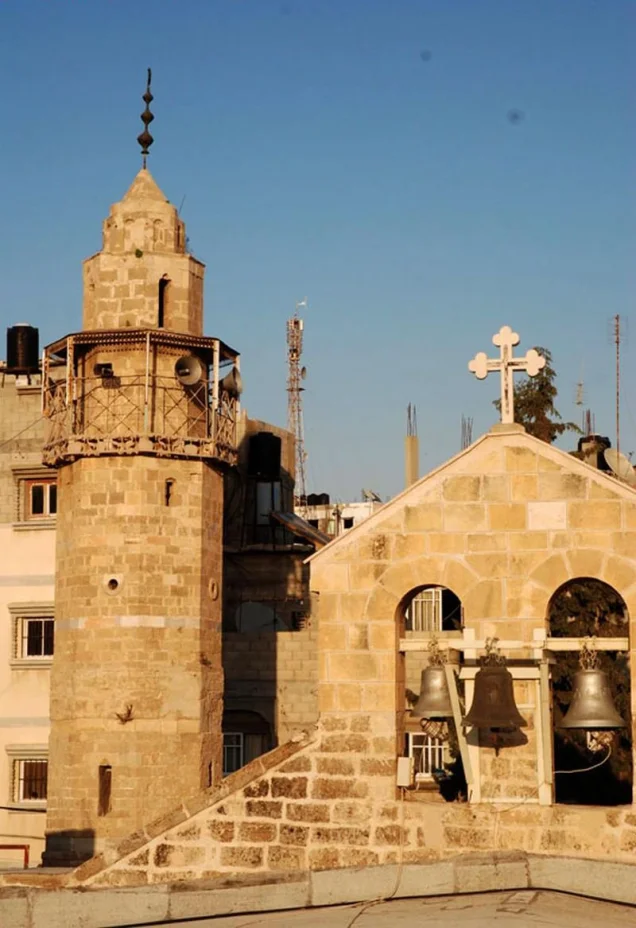
The church stands in the Zaytun quarter, in the Old City of Gaza, near the Great Omari Mosque and the Katib al-Wilaya Mosque, whose minaret rises beside the church. Together they form one of the oldest historic cores of the city, a symbol of the long shared life of Gaza's Muslims and Christians.
History Through the Ages
- Byzantine period: A church stood on the site by about 425 CE, a few years after the death of Saint Porphyrius.
- Early Islamic period: After the Muslim conquest in the 7th century the building was turned into a mosque, according to historical sources.
- Crusader period: The present building was constructed by the Crusaders in the 1150s or 1160s, in a similar style to the Crusader cathedral that later became the Great Omari Mosque.
- Mamluk and Ottoman periods: 15th-century records describe the church as also dedicated to the Virgin Mary. It was renovated in 1856 under Ottoman rule.
- Modern period: The church remained the spiritual centre of Gaza's Orthodox community, the largest Christian denomination in the Strip, under the Greek Orthodox Patriarchate of Jerusalem.
Architecture
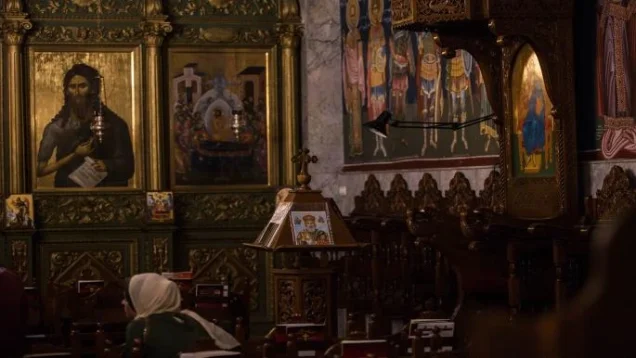
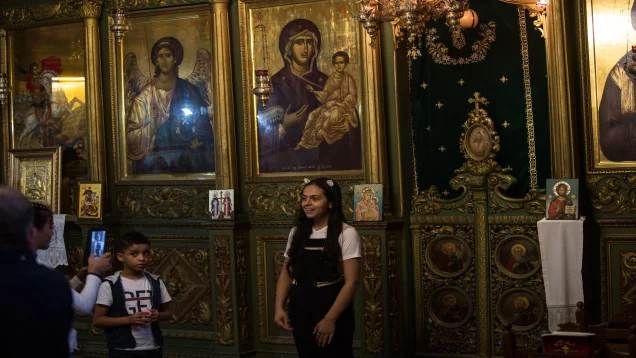
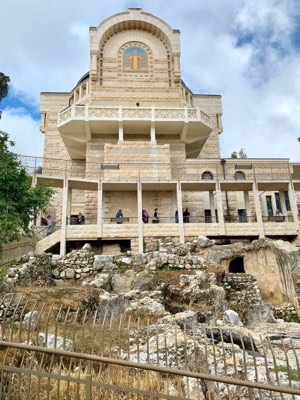
The church is a rectangular building, about 22.9 metres long and 8.9 metres wide inside, including the apse. It has a single aisle of two groin-vaulted bays, with a half-dome over the altar apse. The main western entrance has a portico of three marble columns carrying two pointed arches. Its thick stone walls, low windows and ancient columns, some of them reused from earlier buildings, give it the feel of a fortress of prayer. Inside, an iconostasis of icons separates the sanctuary, and the tomb of Saint Porphyrius lies in the north-eastern corner. Beside the church stand the halls and buildings of the compound, including an administrative building and community halls.
The Church and Gaza's Christians
Gaza's Christian community is one of the oldest in the world. There were about 35,000 Christians in Gaza in 1948, about 6,000 in the 1960s and about 3,000 in 2007; under the blockade imposed after 2007 many emigrated, and only about 1,100 remained in 2022. Most belong to the Orthodox Church, and the Church of Saint Porphyrius has been their spiritual home, where they baptise their children, marry and bury their dead.
A Refuge in Every War
In every war on Gaza, the church has opened its doors to the displaced. During the 2014 war about 2,000 Palestinians, Muslims and Christians, sheltered in the church compound. When the genocide war began in October 2023, hundreds of families again took refuge there, believing that a 1,600-year-old church would be safe.
The Massacre of 19 October 2023
On the evening of , more than 450 people were sheltering in the church compound. An Israeli airstrike hit two of the compound's halls, and at least one building collapsed onto the families inside. 18 people were killed, among them children, and many more were wounded. The church building itself was not destroyed, but the compound suffered heavy damage.
The Greek Orthodox Patriarchate of Jerusalem condemned the strike as a war crime, stressing that targeting churches and their institutions, and the shelters they provide to protect innocent civilians, cannot be ignored. The Israeli army said it had been targeting a nearby site and that a wall of the church was damaged. The massacre came two days after the strike on the courtyard of al-Ahli Arab (Baptist) Hospital, and shocked Christians around the world.
The Church Through the Genocide War
- October 2023: Besides the 19 October strike, the church's surroundings were hit earlier in the month, causing extensive damage to the compound.
- July 2024: A church annex was targeted again.
- Throughout the war: The church remained a shelter for displaced Christian families whose homes had been destroyed. According to Gaza's Government Media Office, Israel killed about 20 Christians during the war and repeatedly struck the three main churches in Gaza; more than 85% of Christians lost their homes completely or partially.
- Other churches: The Catholic Holy Family Church in Gaza City was also struck several times, including in July 2025, killing civilians sheltering there.
- UNESCO: In its assessment of Gaza's heritage, UNESCO recorded the Saint Porphyrius church complex as moderately damaged.
The Church Today (2026)
After the ceasefire of October 2025, the church continued to house dozens, or by the Patriarchate's account hundreds, of displaced Christian families. On 1 January 2026 the Christmas tree was lit in the church courtyard for the first time since the war began, ahead of Orthodox Christmas on 7 January, though the celebrations were limited to prayers. "Joy cannot be complete while our people still live in tents," a member of the church's board of trustees said. With only about 1,000 Christians left in Gaza, the church stands as a witness to the community's survival and to sixteen centuries of Christian presence in the city.
International Law and the Protection of Holy Places
The Fourth Geneva Convention protects civilians and the places where they shelter, and the 1954 Hague Convention protects buildings dedicated to religion as cultural property. Under Article 8 of the Rome Statute of the International Criminal Court, intentionally directing attacks against buildings dedicated to religion and against civilians is a war crime. The UN Commission of Inquiry on the Occupied Palestinian Territory has documented attacks on Gaza's religious and cultural sites during the war.
Frequently Asked Questions About the Church of Saint Porphyrius
Where is the Church of Saint Porphyrius?
In the Zaytun quarter of Gaza's Old City, near the Great Omari Mosque.
How old is the Church of Saint Porphyrius?
A church has stood on the site since around 425 CE. The present building dates to the 12th century and was renovated in 1856. It is the oldest active church in Gaza.
Who was Saint Porphyrius?
Bishop of Gaza from about 395 until his death in 420 CE, remembered for spreading Christianity in the city. His tomb lies inside the church.
What happened at the church on 19 October 2023?
An Israeli airstrike hit two halls of the church compound where more than 450 displaced people were sheltering, bringing down a building and killing 18 people, including children.
How many Christians live in Gaza today?
About 1,000, down from about 3,000 in 2007. Most belong to the Greek Orthodox Church, and more than 85% lost their homes in the war.
Conclusion
For sixteen centuries, the Church of Saint Porphyrius has kept the tomb of the bishop who brought Christianity to Gaza, standing beside the minaret of its Muslim neighbours in the heart of the Old City. In the genocide war on Gaza it opened its doors to the frightened, as it had always done, and paid with the lives of 18 of those it sheltered. Today its small, grieving congregation still prays beneath its ancient vaults, a living testimony that Gaza's Christians are part of its people and its story.
Photo gallery

More from the archive

 Download Our Palestine App
The whole archive in the palm of your hand: depopulated villages, the Nakba, the massacres and Al-Aqsa — free, with no ads to erase the story.
Download Our Palestine App
The whole archive in the palm of your hand: depopulated villages, the Nakba, the massacres and Al-Aqsa — free, with no ads to erase the story.



Comments
No comments yet — be the first to write one.
Add your comment
Name and email are optional. Comments appear after review.