The Night of the Gliders 1987: Fedayeen Who Crossed the Sky to the Gibor Camp Before the Intifada

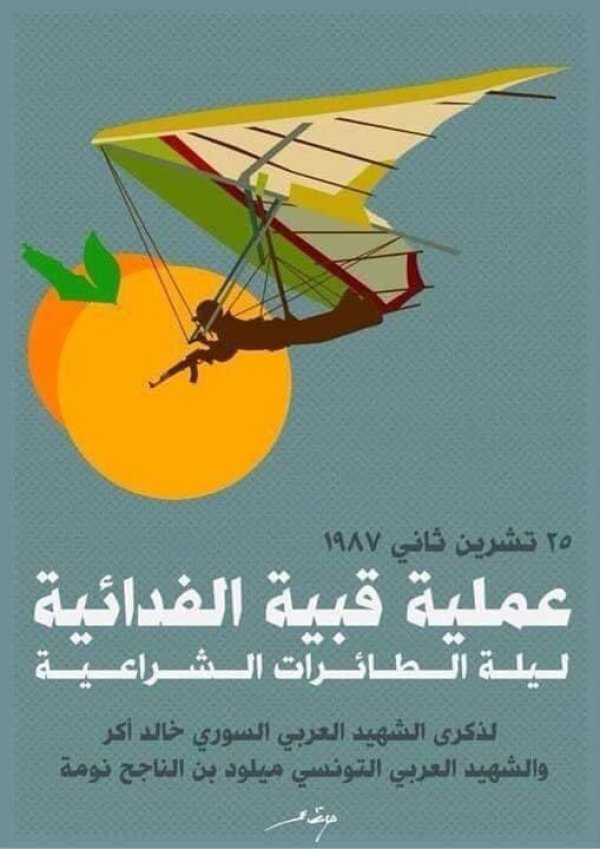
On the night of 25 November 1987 small gliders powered by engines like those of lawnmowers took off from the hills of southern Lebanon, flown by fighters of the Popular Front for the Liberation of Palestine – General Command: a Syrian, a Tunisian and two Palestinians. Flying close to the treetops they escaped the occupation’s radar, The Syrian fighter Khaled Mohammed Aker reached the Gibor camp east of Kiryat Shmona, built on the lands of al-Khalisa, and attacked it single-handed until he was martyred, while the Tunisian Milud bin Najeh Nouma, whose glider crashed in occupied southern Lebanon, fought until he too was martyred. [1][2]
Less than two weeks later the First Intifada broke out, and many see the “Night of the Gliders” as one of its sparks, shattering the occupation army’s aura and kindling fervour in the camps. [1][2]
Contents
- At a glance
- Why “Martyrs of Qibya”?
- The fighters
- Crossing over the border
- The attack on Gibor
- The reaction
- The spark
- In folk song
- Between the accounts
- Timeline
- Frequently asked questions about the Night of the Gliders
At a glance
| Item | Details |
|---|---|
| Date | Night of 25 November 1987, about 10:30 p.m. |
| Name | Operation “Martyrs of Qibya” |
| Carried out by | The Popular Front for the Liberation of Palestine – General Command |
| Fighters | Khaled Aker (Syria, Aleppo), Milud bin Najeh Nouma (Tunisia) and two Palestinian fighters |
| Means | Gliders with small engines and propellers |
| Weapons | A Kalashnikov rifle, a silenced pistol and hand grenades for each fighter |
| Target | The Gibor camp east of Kiryat Shmona, headquarters of the Nahal brigade |
| Occupation losses | 6 soldiers killed and several wounded |
| Fate of the fighters | Two martyred; the two Palestinians’ gliders came down inside Lebanon for technical reasons |
Why “Martyrs of Qibya”?
The General Command named it the “Martyrs of Qibya operation,” so that the Palestinian village in the Ramallah district would stay fixed in history and memory. [1]
On the evening of 14 October 1953 Unit 101, commanded by Ariel Sharon, then twenty-five, attacked Qibya under orders calling for “destruction and maximum killing.” The six-hour assault blew up some 40 houses, a school, a water pumping station, a police post and a telephone office, and killed 69 of the village’s civilians; 38 of the first 42 bodies recovered were women and children. The Security Council condemned the attack. Thirty-four years later the four fighters came to affirm that “no right is lost while someone still demands it.” [3]
The fighters
The unit had four fighters from three Arab countries: [1][2]
| Name | Country | Notes |
|---|---|---|
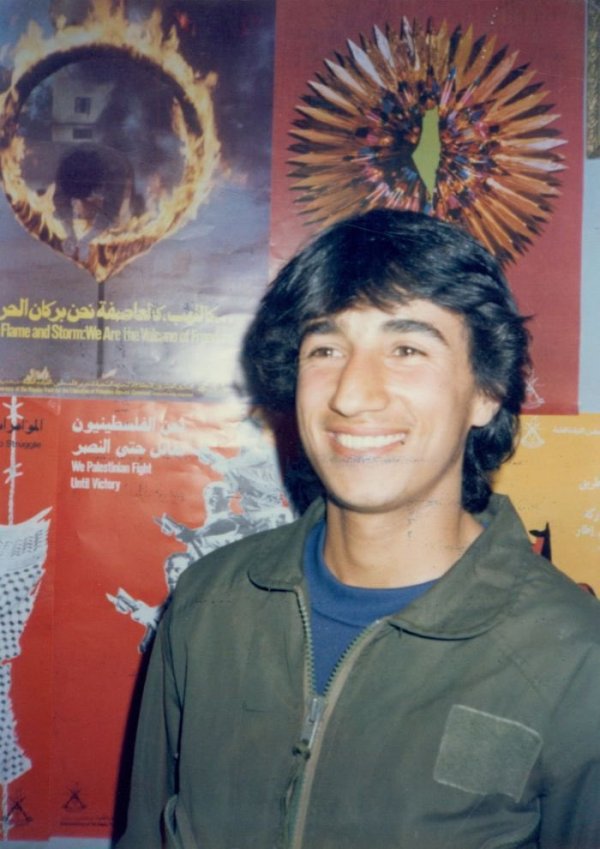
| Khaled Aker | Syria (Aleppo) | Joined the resistance in Lebanon at fourteen |
| Milud bin Najeh Nouma | Tunisia | Trained in Syria; known in his home town as “Father of the Intifada” |
| A Palestinian fighter | Palestine | His glider came down inside Lebanon for technical reasons |
| A Palestinian fighter | Palestine | His glider came down inside Lebanon for technical reasons |
The available sources do not name the two Palestinian fighters. [2]
Crossing over the border
The four fighters stood above Lebanon’s Bekaa Valley beside their gliders and saluted their commanders before taking off. The gliders flew with red and white wings, small engines and propellers; each fighter carried a Kalashnikov, a silenced pistol and hand grenades. At about 10:30 p.m. occupation soldiers heard the engines, fired flares and sent helicopters, but found nothing, because the gliders were flying close to the treetops. [1]
The attack on Gibor
Mechanical problems forced the two Palestinian fighters’ gliders to land inside Lebanon. Milud Nouma’s glider crashed in the occupied border strip of southern Lebanon, controlled by the occupation-allied South Lebanon Army militia, a few hundred metres from the border. He hid near the wreck after twisting his ankle in the violent landing until a joint patrol found him; he refused to surrender and fought until he was martyred. [1][2]
Khaled Aker landed quietly in a thorn field near the Gibor camp east of Kiryat Shmona, near Beit Hillel, headquarters of the Nahal brigade, which housed elite special forces. With the Kalashnikov in his right hand and the silenced pistol in his left, he fired on a passing military vehicle, killing the officer driving it and wounding a female soldier, then advanced on the camp, killing five soldiers and wounding others, until he was martyred by fire from a wounded soldier. [1]
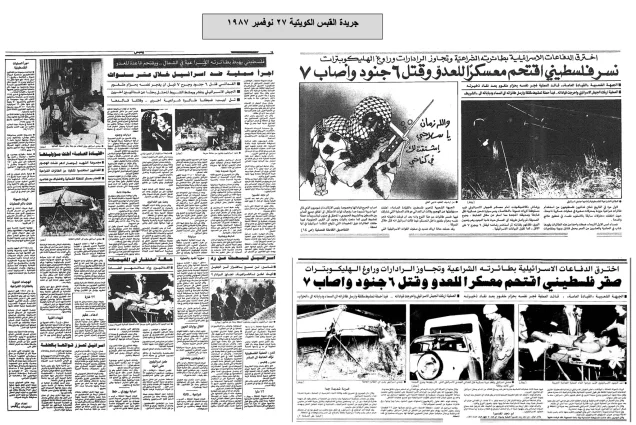
The six dead were the highest toll in an operation inside occupied Palestine in about a decade. [1]
The reaction
The operation shook the occupation’s military establishment: war minister Yitzhak Rabin admitted in the Knesset that the required procedures had not been followed at the camp, Prime Minister Yitzhak Shamir blamed Syria, and deputy chief of staff Ehud Barak vowed the Palestinian factions would pay. The camp guard alone was tried for cowardice. [1]
On the other side, young people in Gaza wrote “6:1” on the walls and chanted it at occupation soldiers, and the fedayee who crossed the sky became a symbol for a generation preparing to rise up. [1]
The spark
Less than two weeks later, on 8–9 December 1987, the First Intifada erupted, and many historians see the Night of the Gliders as one of its sparks. In his Tunisian home town Milud Nouma became known as “Father of the Intifada.” [1][2]
The occupation held Milud’s body for 21 years until it was returned to Tunisia in 2008 in an exchange between the occupation and Hezbollah, among eight bodies of Tunisian martyrs, and buried in his home region. Thirty-six years later, gliders returned to the skies of battle in the Al-Aqsa Flood operation of 7 October 2023. [2][1]
In folk song
The Palestinian people immortalised the operation in folk chants sung at celebrations and weddings, likening the glider to a dragonfly, among them:
The dragonfly flew on its wings, mother, it flew
and rose above its wounds with resolve and willThe dragonfly flew, mother, and came back home
and landed on “Tarshiha” in the campOn a glider it flew up high
and on your paths, my country, we plant blossoms
Between the accounts
Who attacked the camp? The commonly told Palestinian account holds that Khaled Aker attacked Gibor and that Milud Nouma was martyred in southern Lebanon, while Aed Amira says Milud Nouma penetrated the camp, then says his glider fell over the Hilta heights in southern Lebanon, where he fought until martyred. [2][1]
Death toll: six soldiers according to Ahmad al-Tanani, who notes the figure comes from the occupation, and “a large number” according to Aed Amira, while commonly told Palestinian accounts say Khaled Aker killed or wounded 37 soldiers and that Milud killed five before his martyrdom. [1][2]
Take-off point: the hills of southern Lebanon according to al-Tanani, and above the Bekaa Valley in the commonly told account. [1]
Qibya’s martyrs: 69 according to Gulf News, while other sources give 51 killed and 15 wounded. [3]
Timeline
| Date | Event |
|---|---|
| 14 October 1953 | The Qibya massacre led by Ariel Sharon [3] |
| Night of 25 November 1987 | The gliders take off from southern Lebanon [1] |
| About 10:30 p.m. | Occupation soldiers hear the engines but fail to locate the gliders [1] |
| 25 November 1987 | The Gibor camp attacked; six soldiers killed [1] |
| 8–9 December 1987 | The First Intifada erupts [2] |
| 2008 | Milud Nouma’s body returned to Tunisia [2] |
Frequently asked questions about the Night of the Gliders
What was the Night of the Gliders?
An operation by the PFLP–General Command on the night of 25 November 1987 in which fighters crossed the border from southern Lebanon in gliders, one of them attacking the Gibor camp. [1]
Who were the fighters?
Khaled Aker of Aleppo, Milud bin Najeh Nouma of Tunisia, and two unnamed Palestinian fighters. [1][2]
How many soldiers were killed?
Six soldiers according to the announced figures. [1]
How is it linked to the First Intifada?
The Intifada broke out less than two weeks later, and many see the operation as one of its sparks. [1][2]
What is the story of the “6:1” slogan?
A slogan Gaza youth wrote on the walls after the operation and chanted at occupation soldiers. [1]
Read also on Palestinuna
Sources and references
- Ahmad al-Tanani, “From the Night of the Gliders to the morning of the Flood: the memory of crossing over the border,” Noon Post, 6 October 2026 (in Arabic).
- Aed Amira, “Milud bin Najeh: a Tunisian who resisted the occupation with gliders,” Noon Post, 1 March 2024 (in Arabic).
- Mustapha Karkouti, “Yet another Sharon war crime exposed,” Gulf News, October 2003.
Video clips
Photo gallery

More from the archive
 Download Our Palestine App
The whole archive in the palm of your hand: depopulated villages, the Nakba, the massacres and Al-Aqsa — free, with no ads to erase the story.
Comments
No comments yet — be the first to write one.
Add your comment
Name and email are optional. Comments appear after review.