
Nabi Musa Uprising 1920: Causes, Events and Aftermath
The Nabi Musa Uprising of 1920: Causes, Events and Aftermath
The events surrounding the Nabi Musa festival in April 1920 marked an important turning point in modern Palestinian history. Religious celebrations in Jerusalem became intertwined with demands for independence, opposition to Zionism, and growing dissatisfaction with British policies. The violence that followed exposed the political tensions developing in Palestine after the First World War.
Often called the “Nabi Musa uprising” in Palestinian accounts and the “Nabi Musa riots” in English-language histories, these events did not mark the beginning of Palestinian political activity. They formed part of a broader movement concerned with independence and the country’s future under British rule.
What Was the Nabi Musa Festival?
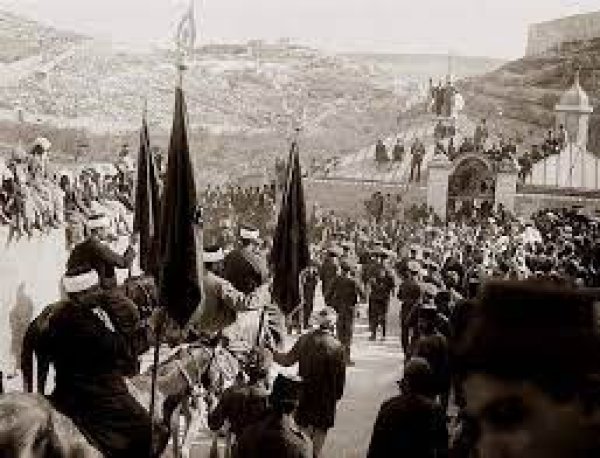
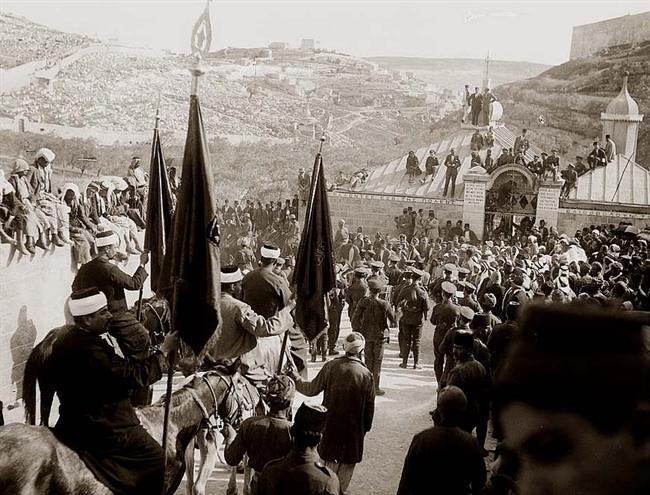
The Nabi Musa festival was a longstanding religious and popular tradition associated with Jerusalem and the Nabi Musa shrine near Jericho. Participants gathered in Jerusalem before travelling to the shrine in processions accompanied by banners, chanting, and communal celebrations.
The festival also brought together people from different towns and villages. Alongside its religious importance, it provided opportunities for social interaction and the exchange of news. In the politically charged atmosphere after the First World War, such gatherings could also become platforms for public demands. [3]
Palestine Before April 1920
The events took place after the collapse of Ottoman rule, while Palestine remained under British military administration. This distinction matters: the political and administrative arrangements later associated with the British Mandate were still taking shape.
The Balfour Declaration and British support for a Jewish national home raised profound concerns among Palestinian Arabs about their political future. Disappointment over unfulfilled hopes of independence combined with fears about immigration and the consequences of the Zionist project. [2]
How Did the Violence Begin?
On 4 April 1920, festival participants assembled in Jerusalem and around Jaffa Gate. Political speeches expressed demands for independence and opposition to Zionism amid an increasingly tense atmosphere.
The precise incident that turned the gathering into violence remains uncertain. Accounts described disputes involving a procession’s banner and confrontations among those present, but the Palin Commission found the evidence contradictory. Stories about a banner being seized or torn should therefore be presented as disputed accounts rather than established facts. [1]

Violence in Jerusalem’s Old City
The principal violence occurred between 4 and 7 April and spread through parts of Jerusalem’s Old City. Jewish residents were assaulted, and homes and shops were looted. Military interventions and other confrontations also took place. The events cannot accurately be described simply as a battle between demonstrators and British soldiers: civilians, particularly Jews, suffered heavily. [1]
British authorities imposed movement restrictions and martial law, but their preparations and response came under criticism. The investigation recorded isolated incidents after the main violence had subsided, including on 9 and 10 April. This helps explain why accounts sometimes give different dates for the end of the disturbances. [1]
Deaths and Injuries
Nine people were killed: five Jews and four Arabs. Claims that nine Jews and British soldiers were killed in addition to four Palestinians incorrectly inflate the death toll.
The detailed breakdown in paragraph 66 of the Palin Report lists 211 wounded Jews, 21 wounded Muslims, five wounded Christians, and seven wounded soldiers. Some later summaries give different injury figures; the numbers here follow that specific breakdown in the report. [1]
Trials and the Dismissal of Musa Kazim al-Husayni
More than 200 people, including Arabs and Jews, faced trial following the violence. Amin al-Husayni and Aref al-Aref, who had left the country, received ten-year prison sentences in absentia.
British authorities also dismissed Musa Kazim al-Husayni as mayor of Jerusalem and replaced him with Raghib al-Nashashibi. The consequences therefore extended beyond the streets, affecting municipal leadership and relations between Palestinian political figures and the British administration. [3]
The Palin Commission
The British-appointed Palin Commission investigated the violence, its causes, and the administration’s handling of events. Its report remains an important contemporary source, documenting testimony and examining official decisions.
A historical account preserved by the United Nations summarizes the commission’s findings on the wider political background: Arab disappointment over independence, opposition to the implications of the Balfour Declaration, and fears about political and economic subordination. [2]
The report should nevertheless be read critically. It was produced by officials of the governing British authority, and its interpretations should be distinguished from the evidence it recorded and compared with historical scholarship.
Historical Significance
The Nabi Musa events demonstrated how religious gatherings could become intertwined with nationalist mobilization. They also deepened mistrust among Palestinian Arabs, the Jewish community, and the British administration.
Their aftermath strengthened Palestinian nationalist sentiment and encouraged Zionist leaders to develop independent security organizations. The events are therefore best understood as a significant early episode in the conflict under British rule, rather than the sole starting point of Palestinian resistance. [3]
Understanding April 1920 requires attention to several connected dimensions: Palestinian demands for independence, British responsibility as the governing power, the development of the Zionist project, and the violence suffered by civilians. A careful account preserves this context while acknowledging uncertainty where the historical evidence remains contested.
More from the archive
 Download Our Palestine App
The whole archive in the palm of your hand: depopulated villages, the Nakba, the massacres and Al-Aqsa — free, with no ads to erase the story.
Download Our Palestine App
The whole archive in the palm of your hand: depopulated villages, the Nakba, the massacres and Al-Aqsa — free, with no ads to erase the story.



Comments
No comments yet — be the first to write one.
Add your comment
Name and email are optional. Comments appear after review.